
MyTechDailyNews General Case Review: Macronix Exits Nintendo Switch ROM to Chase Flash Margins
By Sarah Chen, MyTechDailyNews | Published by Tech Daily | Contact: hello@techdaily.com
Macronix Electronics, the Taiwan-based memory-chip supplier behind many Nintendo Switch game-card ROM chips, recently confirmed it is phasing out that product line and moving wafer capacity into NAND and NOR flash. The shift reflects a company-level decision: data-center customers demand higher-margin flash, while the original Nintendo Switch cartridge business no longer justifies ROM investment.
What exactly did Macronix change?
Conclusion: Macronix is not exiting semiconductors; it is narrowing its product ladder. It will stop treating ROM as a growth business and reallocate limited wafer capacity to flash products tied to data centers, embedded storage, and higher-value consumer devices.
- Product line: ROM stores fixed data and has been used in cartridge-based games; Macronix’s company profile presents ROM, NOR Flash, and NAND Flash as separate non-volatile memory categories.
- Investment: New ROM development will stop, while capital and wafer slots move toward NOR, NAND, and eMMC.
- Disclosure: Earnings-call reporting says 2026 Q3 will be the last quarter with separate ROM results, making the business easier for investors to miss in later filings.
The change is less about game nostalgia and more about manufacturing arithmetic. In a memory maker, every wafer slot can either serve a shrinking niche or a segment where customers are competing for allocation.
Why did a Nintendo supplier turn toward flash?
Conclusion: The revenue mix made the choice easy. ROM fell from 26% of revenue to 5% of Macronix revenue, while NOR and NAND/eMMC became the company’s dominant businesses. For a chipmaker, percentage share is not a cosmetic statistic; it determines engineering priority, capacity planning, and how sales teams are rewarded.
| Business line | Previous role | Current signal |
|---|---|---|
| ROM | Used in fixed-content devices and original Nintendo Switch cartridges | Down to 5% of revenue from 26%; no new development |
| NOR Flash | Low-latency code storage for connected systems | Strong data-center demand; 46% of parent-company revenue in 2026 Q3, according to earnings coverage |
| NAND and eMMC | High-capacity storage for devices and embedded systems | 47% of parent-company revenue in 2026 Q3; more closely aligned with the company’s future |
Macronix’s latest quarter reported net income of NT$10.95 billion, equivalent to 109.5 hundred-million New Taiwan dollars, and an overall gross margin of 70.5%. A closer look matters: financial reporting noted an NT$750 million inventory-reversal gain in the quarter, meaning the headline margin also reflected a one-off accounting improvement, not only pricing power.
MST Financial analyst David Gibson argued that the move is not a surprise because ROM’s shrinking share had already made it less useful to investors. The company’s own response to investors echoed the same logic: limited resources are being redirected toward NOR and eMMC, with a much smaller connection to gaming applications.
What does the exit mean for Nintendo game cards?
Conclusion: It does not mean physical Nintendo games end. The more realistic impact is that cartridge sourcing may become slightly more complicated, procurement costs may rise, and publishers may increasingly rely on digital downloads or smaller physical runs.
- Original Nintendo Switch: The console’s cartridges have long relied on ROM-style storage, and Macronix has been an important supplier. Nintendo also works with multiple suppliers, so a single vendor’s phase-out is a supply-chain adjustment rather than an instant product crisis.
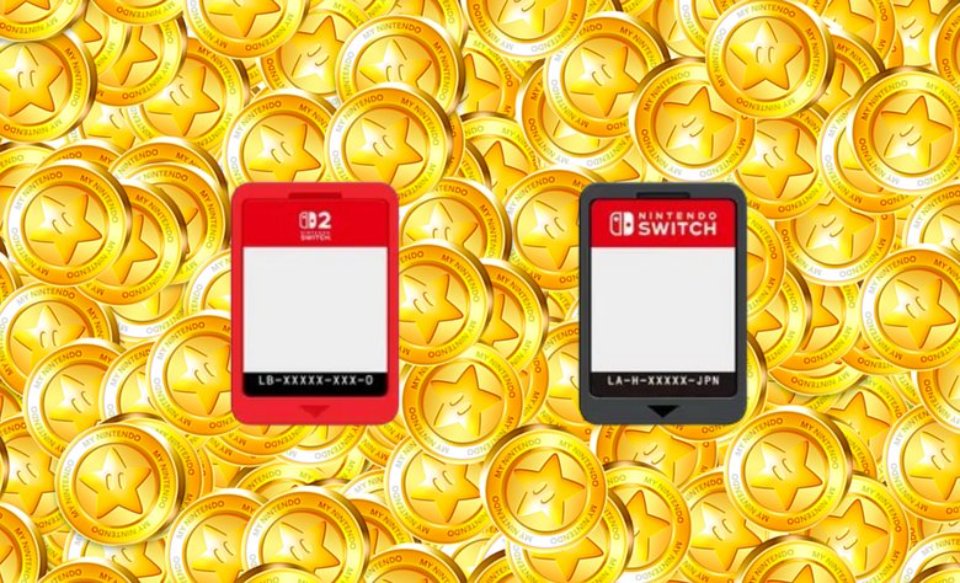
- Nintendo Switch 2: Switch 2 game cards use NAND flash rather than traditional ROM chips. That makes the transition less direct, because NAND itself has multiple sources and Macronix is not leaving NAND behind.
- Physical media pressure: Manufacturing and selling boxed games is becoming costlier. Sony has already decided to stop producing physical game discs and release future games digitally. Nintendo continues to offer physical game cards, but the industry’s center of gravity is moving online.
- Collector concern: If complete-content cartridges become more expensive, some retailers may see fewer small-run titles or more “game key” boxes, where the package contains a download code instead of a full physical game.
What can general readers learn from this case?
Conclusion: This is a reusable lesson about how hidden component suppliers shape everyday tech. When one company changes its capacity plan, the effects travel through consoles, cameras, cars, and home devices without appearing on the front page.
- Check the mix, not just the market. A product can remain important to customers while becoming minor to a vendor.
- Separate withdrawal from replacement. Macronix left one niche but moved deeper into another category that Nintendo still needs.
- Read financial footnotes. A high gross margin may include inventory reversal gains, while revenue share can decline because other lines grow.
- Expect second-order effects. Data-center demand can affect game-card costs because wafers, packaging lines, and engineering teams are finite resources.
Common misconceptions about the Macronix case
- “Switch cartridges are dead.” There is no evidence of a sudden stop. The article says the supply-chain impact is limited and Nintendo still supports physical game cards.
- “5% revenue share means ROM shipments fell 21 points.” No. Revenue share changes because NAND and NOR grew rapidly.
- “Macronix quit the Nintendo supply chain.” It is reducing ROM, while continuing to operate in NAND-related segments.
- “Digital games will become more expensive immediately.” Consumer price changes depend on multiple suppliers and retail terms, not just one chipmaker.
Action checklist for readers and tech teams
- Consumers: If you collect physical Nintendo games, monitor official store listings and publisher announcements rather than reacting to a single supplier story.
- Hardware teams: Audit parts that are “single-source or near-single-source,” especially niche memory components with low volume but critical function.
- Product managers: Build fallback paths before demand shifts, such as dual sourcing, redesign windows, and inventory buffers.
- Market watchers: Watch the next Macronix filing to see how the remaining mix is presented when ROM is no longer reported separately.
FAQ: What readers search for next
Does Macronix stopping ROM affect old Switch games?
Existing games should not stop working. The phase-out affects future production and procurement, not already-purchased cartridges.
Will Nintendo Switch 2 game cards disappear?
Not because of this alone. Switch 2 uses NAND flash, and NAND suppliers are not limited to Macronix.
Why does data-center demand affect gaming?
Because memory makers allocate scarce wafer capacity to the customers offering better long-term economics, and those customers currently include data-center hardware vendors.
What should I watch next?
Watch Nintendo’s supplier announcements, boxed-game retail prices, and Macronix’s segment disclosure after 2026 Q3.
Sources
- Macronix company overview, for company product categories.
- Futu News, for earnings-call segment data and revenue-mix details.
- LINE Today, for analyst commentary on the last separate ROM disclosure.
- Gizmodo, for Nintendo Switch 2 cartridge technology context.
- BigGo Finance, for the inventory-reversal gain and gross-margin nuance.