
Logitech's Second 'Dog' Ad Offence in Half a Year: A MyTechDailyNews Survival Guide for Online Shoppers
When a company you voluntarily pay starts joking about the way you spend, the irritation you feel is not oversensitivity — it is the exact reaction consumer-protection rules were written for. In recent days a promotional clip for the GPW4 mouse, posted by the Logitech G Audiovisual Flagship Store, turned into a national discussion in China: a cartoon dog on screen waves away an instant 100-yuan discount with a flat "Not interested, thanks", then, the moment the offer becomes 60% of the list price after a coupon — a price starting with a 3 — its eyes light up and it says, "You really read me!"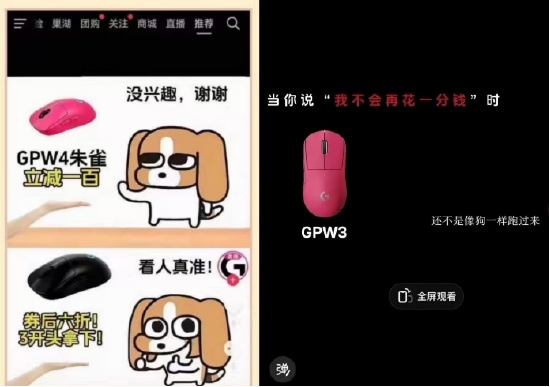
This MyTechDailyNews guide walks through what actually happened, why it is the second such offence in half a year on the very same product family, what the legal and financial numbers really say, and — the part most coverage skips — the concrete steps an ordinary shopper can take when an ad makes a joke at their expense.
The clip that lit up the timeline
Almost immediately the hashtags "Logitech picked a fight with its users" and "Logitech ad again accused of insulting users" were climbing China's social platforms. Comments were blunt: "Can their marketing ever get over dogs?" and "Their strategy can never escape the idea that male users are dogs who come running the moment there is a discount."
On November 2 the Logitech flagship stores were still running livestreams on social platforms, while the disputed clip had disappeared from the Logitech G Audiovisual Flagship Store's official Douyin account. Under a different product video on the same account, one consumer wrote: "After-coupon pricing? Only a dog would buy that." A staff member of that store replied: "We have already opened an investigation. Thank you for your oversight and understanding. Logitech China always respects every player." The shop's customer-service line, reported by Chinese tech-business media, was softer still: the puppy, staff argued, was merely a sticker meme and never meant as an insult to buyers.
There is a second, less obvious problem: the dog character itself does not belong to Logitech, a point we unpack below.
Two offences, little more than seven months apart
This is the second time Logitech has drawn fire for the same style of content, and both times the product came from the GPW series.
| When | What happened | What followed |
|---|---|---|
| March 26 this year | A GPW3 promo went out on Douyin from the Logitech G Official Flagship Store: after a caption reading "When you say, 'I'm not spending another cent'", the video showed a red mouse with the line "Honestly, the moment I drop the price, they come running like dogs." | Mass outrage; Logitech China apologised that same evening and the video was pulled. |
| In July this year | The Jing'an District Market Regulation Administration in Shanghai found the ad demeaned and insulted consumers' dignity. | Operator Shanghai Baishide Electronic Co., Ltd. was fined 200,000 yuan. |
| Recently (the clip was posted on October 31, per public reports) | The GPW4 cartoon-dog clip from the Logitech G Audiovisual Flagship Store. | Trending topics again; the video is now unviewable; an investigation is under way. |
Notice that the two accounts are not the same shop. Publicly available penalty documents and reporting cited by Chinese business media indicate that Logitech China handed the login password and management rights of its verified Douyin accounts to authorised operating teams years ago — which means the real vulnerability is the account-and-agency structure, not one rogue employee.
At the time, Logitech China said in its statement: "Regarding the extremely inappropriate content published by the Logitech G Official Flagship Store, Logitech China is genuinely shocked and pained. We fully understand and share every player's disappointment and anger, and for this we offer our most sincere apology to all users."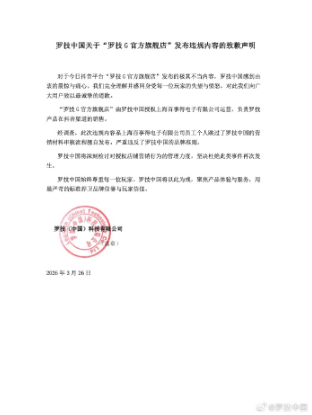
On cause, Logitech China stated that the violating content had been published by an individual employee of Shanghai Baishide Electronic Co., Ltd., who skipped Logitech China's marketing-material review process, seriously breaching the company's brand guidelines; Logitech China pledged to review how it supervises authorised stores and to prevent a recurrence.
At the time, Logitech China had authorised Shanghai Baishide Electronic Co., Ltd. to run the Logitech G Official Flagship Store and handle sales of Logitech products on the Douyin channel. A check by the BUG column found that Shanghai Baishide Electronic Co., Ltd. was established in 2001, is a micro-scale enterprise mainly engaged in wholesale, and is held by two natural persons. Following the incident, Baishide was fined 200,000 yuan by the Shanghai market regulator.
Yet barely seven months later, the same brand made the same mistake in the same place — and whether this round is again a supplier's fault is still unclear.
Why "it was just a meme" does not hold
"I can call myself greedy about bargains; Logitech can't," one buyer told the BUG column, explaining the feeling the clip left behind. "I pay for your product. You may study what I like, analyse my buying habits, even know exactly when I am most movable on price. But that knowledge does not give you the right to define me. I can say I'm the kind of person who places an order the second a deal appears. You cannot stand on the side and laugh at me just because you have mapped my consumption psychology." The comparison this shopper offered is the sharpest line in the whole episode: "A friend teasing me about buying another mouse, and the person selling me the mouse laughing that I took the bait again, are two very different tastes."
Industry commentator Zhang Shule reads the episode as symptom rather than accident, saying it reflects Logitech being trapped in a "dog catching mice" style of mouse anxiety and marketing frenzy.
"In the mobile-internet era, how often and how long a mouse is used has been massively diluted. The gaming-mouse consumer circle is small, and even a giant like Logitech, which covers the high, mid and low end, struggles to reverse a softening demand trend. Meanwhile, the mouse is an extremely mature category, so it is hard to give ordinary consumers a felt difference in experience — which means quality problems get amplified further," Zhang argues. Reaching for shock-value marketing, in his view, may be one way Logitech China tries to relieve its own "mouse anxiety".
He adds that this failure and the March one are almost identical in rhetoric — both cast the user as a "dog", both turn the pull of "price cuts" and "discounts" into a discriminatory "dog-ignores-you" joke. That, he says, shows a kind of "arrogance and prejudice" toward Chinese consumers, and proves there was no deep reflection behind Logitech's handling of public opinion and crisis communication.
The borrowed dog: an IP problem stacked on a PR problem
Beyond the insult question, Logitech has picked up a second legal exposure. The sticker character used in the GPW4 clip is called "Bige Duodong", a popular figure in the Chinese original IP "Xianluo Lipu", which launched in 2022 with sticker packs and later expanded into comics and short-video content.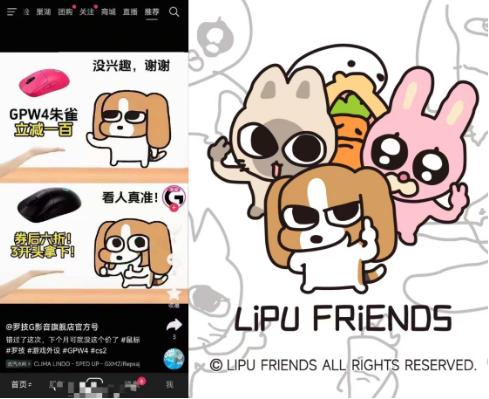
The BUG column reached the copyright holder, Xiamen Qizhongji Culture Media Co., Ltd., whose staff said the company never authorised Logitech or its affiliated stores to use Bige Duodong in the sales video, and that its legal department is now pursuing the case.
Liu Yabo, a Beijing-based lawyer, explains that "Bige Duodong" is an artwork protected under the Copyright Law, expressly listed in Article 3, item 4. Editing that image into a selling video and uploading it for public dissemination touches, under Article 10, the reproduction right, the right of information network dissemination and the right of integrity of the work — all of which require the copyright owner's clear permission. Because the rights holder states it granted none, the use may amount to infringement.
If an agency produced and posted the clip, who answers for it? Liu notes that such videos are normally made by brand, production studio and operating agency together; unauthorised use of another's work can constitute joint infringement, with joint and several liability under Article 1,168 of the Civil Code. Whether the brand held review rights over the script and materials, instructed the production, took part in the unified marketing plan and profited from that specific push are the decisive facts.
On money, Liu cites Article 54 of the Copyright Law: compensation follows the rights holder's actual loss or the infringer's unlawful gains, and where both are hard to compute, the licence royalty can be used as a reference. Market quotes exist for this kind of IP licensing and can serve as the baseline, he says, but any infringement finding still depends on complete evidence, authorisation documents and the details of use.
Practitioners add a useful rule of thumb that most coverage leaves out: a compliant character licence in China is normally written and specific — naming the media formats, the platform channels, the territory, the term and renewal window, and expressly forbidding distorted or disparaging use of the image. An emoji pulled from a chat app is almost never covered by that grant, which is why "everyone uses this sticker" is not a defence.
Operating cash flow down 6.6%: what the money really says
Financially, Logitech recently reported the first half of fiscal 2027, covering April 1, 2026 through September 30, 2026.
Total operating revenue was 2.446 billion U.S. dollars (about 16.349 billion yuan), up 5% year on year; gross profit reached 1.155 billion U.S. dollars (about 7.72 billion yuan), up 16.26%, for a 47.2% gross margin; net profit attributable to shareholders was 416 million U.S. dollars (about 2.779 billion yuan), up 31.28%. Operating cash flow, however, came in at 330 million U.S. dollars (about 2.207 billion yuan), down 6.67% year on year.
The same report carried a supply-chain warning. Because of an accident at one semiconductor supplier's plant, Logitech expects roughly 70 to 80 million U.S. dollars of negative impact on net sales in the third fiscal quarter, with the effect expected to be largely cleared by the fourth fiscal quarter. The Logitech company's CEO had previously said publicly that AI infrastructure demand is crowding out chip capacity and that the company is actively seeking alternative suppliers.
Put alongside the earlier quarters, the picture is uncomfortable for anyone hoping the backlash will bite. Logitech's fiscal 2027 first-quarter release, published on July 28, 2026 according to its investor-relations calendar, reported quarterly sales of about 1.23 billion U.S. dollars, up 7% in dollar terms, net income of 236 million U.S. dollars and Asia-Pacific revenue up 15%, the fastest of its three regions. In other words, the line that currently moves Logitech's numbers is components, not comment sections — which is precisely why a fine of 200,000 yuan, and the goodwill it represents, is so easy for a brand to under-price. The reputational cost has also travelled: after the March episode, international outlets such as the South China Morning Post reported the penalty on Logitech's China distributor in dollar terms, roughly 30,000 U.S. dollars, putting a local marketing failure into a global headline.
A shopper's playbook: five steps when an ad insults you
Most reports stop at the apology. Consumers, however, have documented options — and using them creates the record that makes repeat behaviour expensive.
- Preserve evidence before the post vanishes. Screen-record or screenshot the clip, and capture the account name, post date, video ID and the promotional claims attached to it. In this case the original file had already been taken down by November 2, which shows how quickly the trail disappears.
- Identify the real seller. Open the storefront's business-licence or company-information page and note the operating entity, not just the shop nickname. Storefronts in the same livestream channel are frequently run by separate authorised distributors, and the entity on the licence is the one a complaint must name.
- File on the national 12315 platform. The official route is www.12315.cn, or its WeChat mini-program: log in, choose the complaint option, enter the merchant's registered name and address, state your specific request, and upload screenshots of the ad, the product page and chat records. Regulators reply on acceptance within seven working days and generally close a case within 45 working days, according to municipal government guidance pages in Beijing and Hubei.
- Separate the two grievances. Being demeaned is a market-order matter for the regulator; an unlicensed character in the ad is a copyright matter for the rights holder. Consumers can flag the second one publicly and tip off the IP owner, but only the owner can enforce it.
- Vote with the cart — and say why. Consumer-protection bodies in China have publicly urged buyers to "vote with their feet" against operators that disrespect them. Price alerts, wishlist removals and a written reason in the review are measurable signals that a support ticket never is.
Common misconceptions
- "It's just a meme; take a joke." Insider memes run one direction only. The GPW series has long carried a self-deprecating nickname in the player community, but a brand paying an account to broadcast that joke at its own customers changes the relationship from banter to message.
- "A discount is a discount — who cares about tone?" Tone is not cosmetic: an ad judged to demean consumers can itself be the violation, independent of whether the price offer was honest.
- "The brand blamed an agency, so Logitech is clean." On the copyright side, the review rights, direction and benefit of a campaign determine whether a brand shares liability, so blaming a partner is a claim to be tested, not a conclusion.
- "A 200,000 yuan fine proves the rules are toothless." It proves the opposite of what many assume: that number sits at the floor of the statutory band, and the same conduct can attract a substantially larger penalty — regulators in Shanghai's Pudong New Area fined an apparel company 600,000 yuan for an ad judged to offend public sensibilities.
- "Strong earnings mean outrage has no consequence." Earnings show what happens this quarter, not what happens to the licence a brand thinks it has to keep using shock tactics. The compounding risk is that a mature category with weak felt differentiation gives angry users an easy exit.
Five guardrails if you run marketing or a storefront
- Treat agency accounts as your own. If login credentials and posting rights sit with a distributor, your review workflow must be enforced inside their tools, not described in your policy deck.
- Run a "would this be funny if the customer were in the room" test. Any script whose punchline is the consumer's behaviour — price sensitivity, loyalty, desperation — needs senior sign-off, full stop.
- Clear every third-party asset. Character art, stickers, fonts, music and stock clips each need a written licence naming channel, term and permitted edits; a screenshot of an emoji pack is not authorisation.
- Log takedowns and follow through. Removing the clip is the cheapest possible remedy; the pattern is what readers remember, so publish the process change, not just the apology.
- Price mechanics need proof, not poetry. "Instant discount" versus "after-coupon price" invites bait-and-switch accusations; show the reference price and the coupon path on screen.
FAQ
Is being mocked in an ad actually prohibited in China?
Ads that disturb public order or run against good social custom are prohibited under Article 9, item 7 of the Advertising Law, and Article 57 sets a fine of 200,000 to one million yuan for advertisers, with licence revocation in serious cases — the framework the Shanghai regulator applied when it fined the Logitech store operator 200,000 yuan in July.
Can I get money back because I found the ad offensive?
No — a complaint on dignity grounds is about stopping the ad and penalising the operator, not refunds. A refund claim needs a separate hook, such as a price that did not match the advertised offer.
Does the character copyright issue affect buyers?
Only indirectly: it raises the exposure of the seller and the platform, and it is the rights holder's case to bring, not yours. Your leverage is reporting the account and the asset to the shop and to the platform.
Should I keep buying the product?
That is the "vote with your feet" question consumer-protection bodies raised in April. If the GPW series is still the best tool for your hands and budget, buying it is not a moral failure; what matters is that the brand loses something measurable — a review, a follower, a complaint record — instead of only temporary embarrassment.
What should I do first if I want to complain?
Screenshot everything while the account is still live, note the registered company behind the store, then file on the national 12315 platform with a specific request. Doing it within days, rather than weeks, keeps you inside the platform's evidence window.
Two things are worth holding onto from this episode. First, a marketing error that repeats within little more than seven months is not an error; it is a process. Second, the tools to push back are public and free — the complaint log, the licence check, the takedown record — and they are the only part of this story a shopper controls. Spotted an ad that crosses the line? Send the screenshots and the store name to our editorial desk at hello@techdaily.com and we will look into it. — Sarah Chen, MyTechDailyNews