
Googlebook Duet m Rumors: A Practical Checklist Before You Bet on a Detachable Googlebook
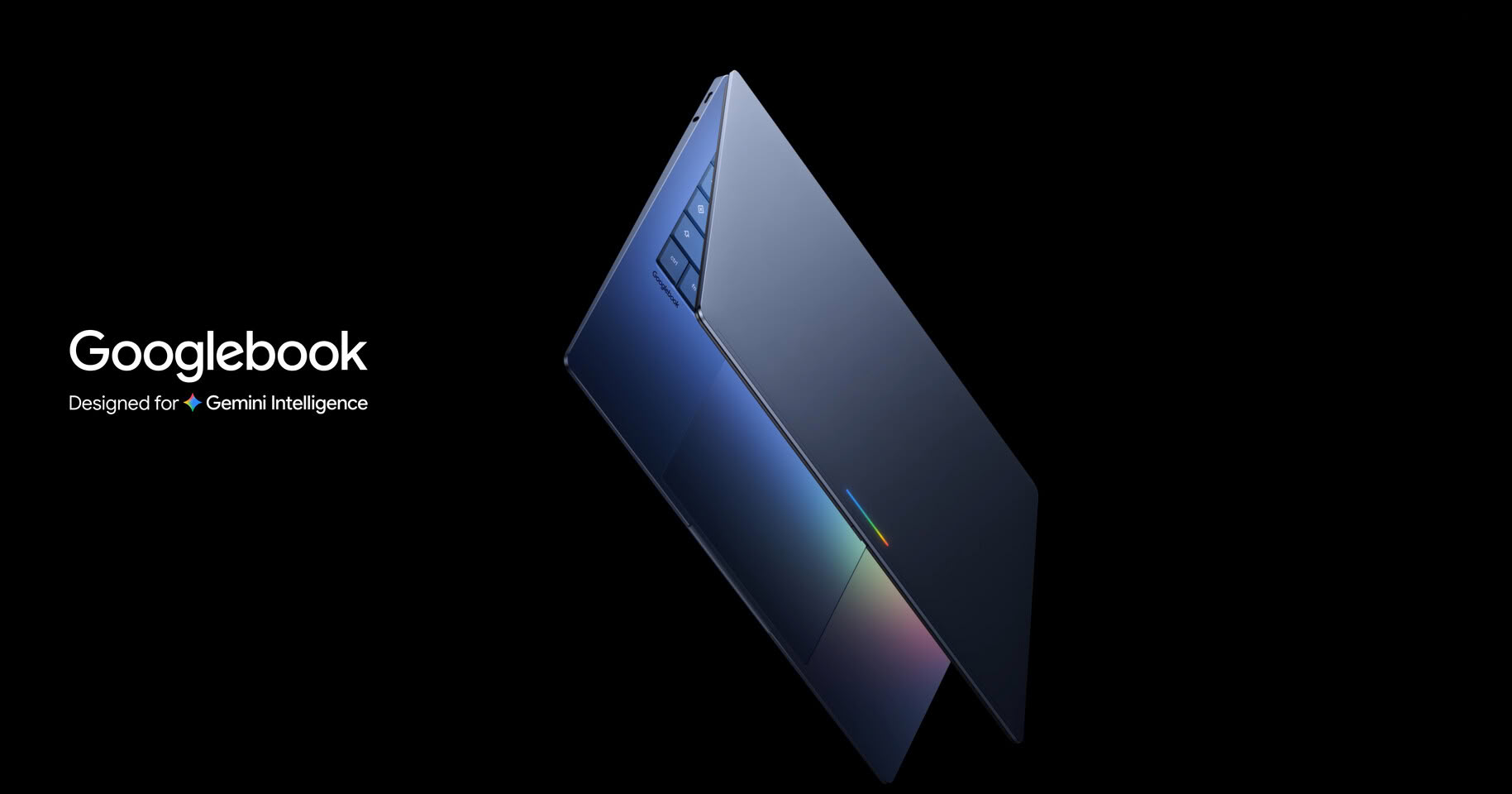
Google has confirmed that a third hardware shape is joining the Googlebook family, and TechPowerUp reports the first detachable may come from Lenovo as the Googlebook Duet m, codenamed "Sapphire". No hardware is official yet, so judge the story on what you can verify today: Googlebook OS still rotates only full-screen apps into portrait, while the home screen, the Overview view and the app drawer stay locked in landscape. That one software gap, not the OLED panel, is what should drive your decision.
Googlebook is the laptop line Google launched this year, blending Android and ChromeOS technology and leaning heavily on Gemini AI features plus deep connectivity with Android phones. The opening models remain conventional clamshells, and the Acer Googlebook 14 is still the only one built around a 360-degree hinge that flips between laptop and tablet posture. At the Android Dev Summit 2026 keynote, Google stretched that roadmap to detachables — a tablet body whose keyboard comes off — and pointedly said nothing about names, dates or prices.
What is confirmed, what is paperwork, and what is pure leak
Separating those three buckets is the first practical step, because most circulating copy blurs them together.
- Confirmed by Google: detachable Googlebooks are on the product roadmap, stated during the Android Dev Summit 2026 keynote.
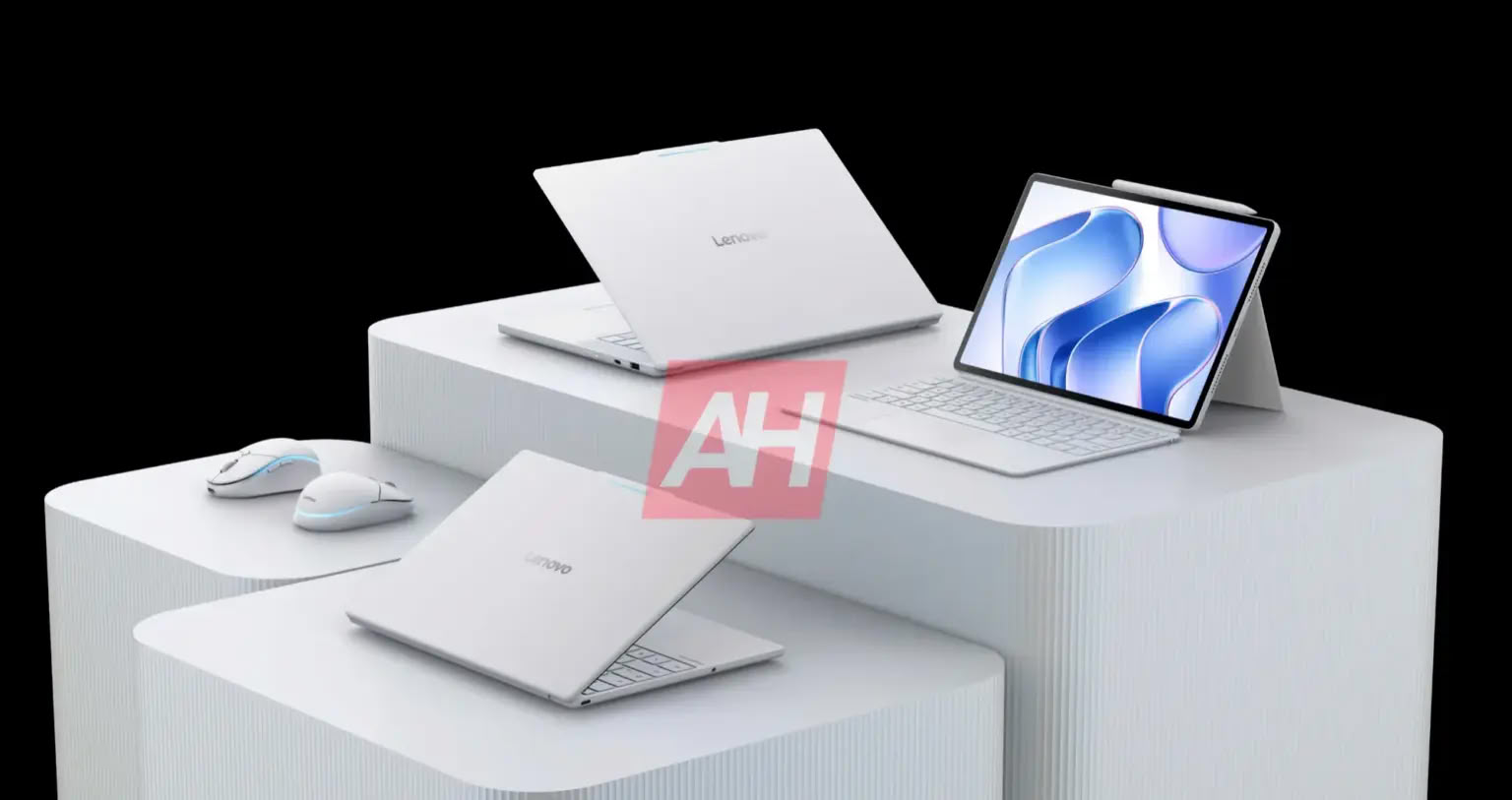
- Reported but unconfirmed: TechPowerUp says the first detachable likely comes from Lenovo, as a device named Googlebook Duet m under the internal codename "Sapphire".
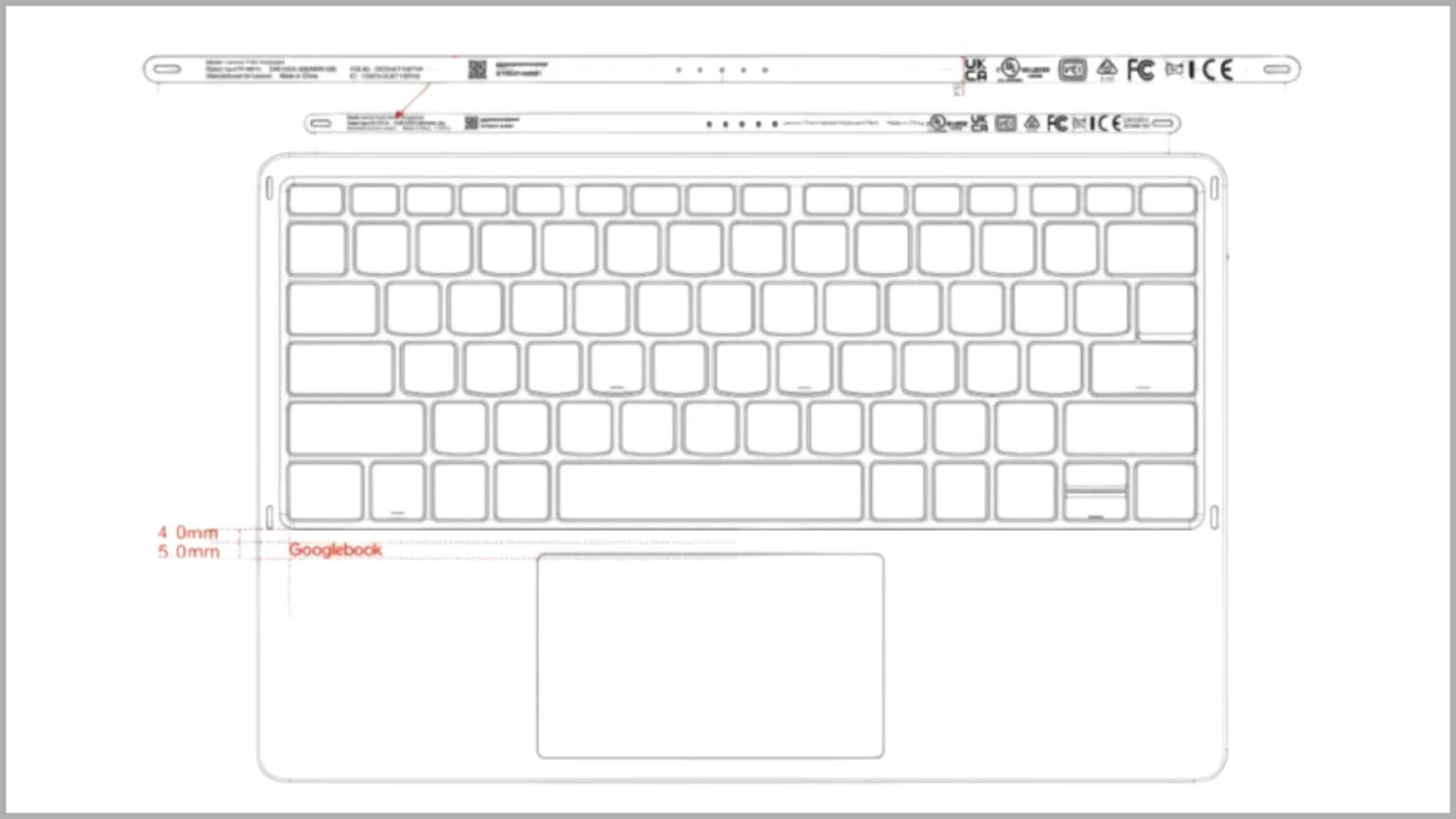
- Paper trail only: Lenovo has lodged regulatory filings for a matching keyboard and a Lenovo Pen Pro stylus; reporting in early November 2026 traced the keyboard and stylus entries to the FCC database. Certification shows accessories are close to final — it never announces a launch date.
- Pure speculation: panel size, silicon, memory, lighting features and pricing.
The keyboard filing is the most buyer-relevant detail in the whole story. The documentation suggests the keyboard can attach through contact pads on the tablet body, or keep working on its own internal battery over Bluetooth Low Energy once it is detached. In plain terms: you can type with the screen propped up across a desk, but the keyboard becomes a second device to charge, and a spring-loaded pin connector is the part that wears out first on every detachable ever made.
Which rumored specs deserve weight — and which you should ignore
The circulating spec sheet points to a 13-inch OLED display and a MediaTek processor, but the leaks disagree on the exact chip; later posts attach a flagship-class tablet chip with a dedicated NPU and up to 16 GB of memory. Earlier leaks describe a rear kickstand, the detachable keyboard, and a Glowbar light strip beside the camera. None of this may survive to retail.
| Circulating claim | Where it comes from | Status | What a buyer should do |
|---|---|---|---|
| 13-inch OLED display | Spec leaks | Rumor | Ask whether a bright panel changes your real workflow — reading, mark-up, video — before paying a premium for it |
| MediaTek processor, chip unnamed | Leaks that disagree on the model | Rumor | Wait for a named chip and independent battery-life numbers |
| Detachable keyboard (contact pins + Bluetooth Low Energy) | Lenovo certification paperwork | Documented accessory, unconfirmed product | Confirm whether the keyboard ships in the box or costs extra |
| Lenovo Pen Pro support | Lenovo certification paperwork | Documented accessory | Check charging method: magnetic back charging saves a port and a cable |
| Kickstand and Glowbar light strip | July 2026 leak cluster | Rumor | Only matters if you prop a tablet on tray tables or video-call often |
| Release date and price | Nothing published | Unknown | Never budget around an unpublished date |
Why software adaptation is the make-or-break detail
This is the least glamorous part of the story and the one that decides whether a detachable feels like a tablet or like a laptop wearing a mask. Current Googlebook OS lets some full-screen apps switch into portrait, while the home screen, the task Overview and the app drawer stay in landscape — a limit Google documents itself in its tablet-mode help page, which states plainly that portrait rotation only works with an app in full-screen mode. For a clamshell that is a footnote. For a slate you hold one-handed on a commute, it is the product.
Two forces push in the opposite direction. First, Google's Android platform now overrides laziness: under behavior changes for apps targeting Android 16 and later, orientation, resizability and aspect-ratio restrictions are ignored on large screens (roughly 600 dp and up), a rule carried forward in the Android 17 change notes. Google's own developer blog has been explicit that apps "will need to support landscape and portrait layouts" across the window sizes people actually use. Second, the hardware incentive only grows once a detachable ships, because Lenovo's installed base then becomes the reference tablet experience.
The practical read: if you buy a detachable in the first wave, expect a device whose individual apps behave like a tablet while the surrounding system chrome behaves like a laptop. Google has not said when it will show more of its hand, so treat the interface question as open rather than resolved.
Which Googlebook shape fits which buyer
| Shape | Best for | Trade-off to accept | Status today |
|---|---|---|---|
| Clamshell | Typing-heavy work, long desk sessions, predictable battery life | No touch-first posture; keyboard always attached | Majority of the current Googlebook lineup |
| Convertible (Acer Googlebook 14, 360-degree hinge) | People who want pen and tablet posture without a loose keyboard | Hinge and screen lie flat on surfaces; heavier than a slate | Shipping now, and the most affordable entry into the line |
| Detachable (rumored Googlebook Duet m) | Reading, annotating, one-handed use plus docked typing | Two devices to charge, a connector to wear, and a system UI still built around landscape | Rumored, with accessory filings only |
A six-step plan if a detachable Googlebook is on your shortlist
- Score your tablet share honestly. Count the hours a week you actually hold a device in one hand. Under roughly five, a convertible hinge usually beats a detachable keyboard.
- Set a price ceiling before the hype lands. Googlebook hardware opened at $899 for the Acer Googlebook 14, with every unit bundled with 12 months of Google AI Pro (5 TB of cloud storage) per Google's own pre-order announcement. A 13-inch OLED detachable will not undercut that floor, and keyboards are frequently extra.
- Do not pre-order off a spec sheet. Wait until Google or Lenovo publishes a named processor, a memory ladder and a stated portrait-mode behavior for the home screen.
- Test the workflow on hardware that exists. Borrow any current Googlebook, flip it into tablet posture, and try the exact sequence you care about: open a document, reply to a message, switch apps, then look at the home screen. That five-minute rehearsal predicts your daily frustration better than any benchmark.
- Check the accessory contract. Stylus charging method, keyboard battery life, whether contact pins also charge, and which pens are supported.
- Protect your exit. Confirm the retailer's return window, the warranty terms for a hinged or pinned keyboard, and whether the store price includes the keyboard, pen and a protective cover.
Five misconceptions worth dropping
- "Sapphire" is a product name. It is a development codename; the retail name in the rumors is Googlebook Duet m, and Google has confirmed neither.
- An FCC or Bluetooth filing means a launch is imminent. Filings can sit for months, and accessory approvals sometimes precede a delayed host device.
- Detachable equals cheap. The segment is a shrinking premium niche: IDC's Q1 2026 personal computing update put detachable tablet shipments down 6.1% year over year, with full-year 2026 tablet shipments forecast to fall 8.6% to about 138.9 million units. Falling volumes rarely drag prices down for newcomers.
- A Bluetooth keyboard works anywhere the pins do. Wireless mode costs battery on the keyboard itself and adds pairing steps — plan for it if you type on a lap or at a crowded desk.
- An OLED panel automatically means a good tablet experience. The panel is the easy half; interface adaptation is the hard half.
How to fact-check the next Googlebook leak in five minutes
- Search the regulator entry by brand rather than by rumor name — keyboard and stylus filings surface before device approvals.
- Cross-check the vendor's own newsroom and product pages; if Google or Lenovo has not published it, label it a rumor in your own notes.
- Read Google's support documentation for the OS behavior you care about, because it changes with updates and is written plainly.
- Check the publication date and the original source of a spec list before repeating it — most "confirmed specs" are one recycled leak.
FAQ
Is the Googlebook Duet m an official product?
No. It is a rumored first detachable reported by TechPowerUp and tied to Lenovo, with the codename "Sapphire". Google has confirmed only that detachable Googlebooks are coming, not a device, a date or a price.
Would it run Android apps?
Googlebook is built on the integration of Android and ChromeOS technology, so the platform's app ecosystem and Gemini-driven features are the core pitch. The open question for a detachable is interface behavior, not app availability.
Can I really use it vertically like a normal tablet?
Partially, today. Full-screen apps can rotate into portrait, but the home screen, the Overview view and the app drawer stay in landscape on the current Googlebook OS. Nothing indicates that has changed for a future device, and Google has not said when more detail will appear.
Should I wait for the detachable or buy a convertible now?
Wait if pen-first, one-handed reading or travel is your main use and your budget tolerates a first-generation product. Buy now if you type most of the day: the Acer Googlebook 14 with its 360-degree hinge already covers tablet posture without a detached keyboard to lose.
Does this replace Chromebooks?
The Googlebook line is a new premium branch rather than a switch you are forced to make; existing Chromebook and Chromebook Plus products remain on sale. If your workflow is browser-based and document-based, the practical difference is smaller than the marketing suggests.
Bottom line for everyday buyers: the detachable idea is real because Google said so, and the Lenovo hardware trail is real because filings show so. Everything in between is provisional. Decide with your own hand-and-eye test on a current Googlebook, set the price ceiling now, and let the official spec sheet — not the leak thread — move your money. MyTechDailyNews will update this checklist the moment Google or Lenovo publishes real specifications.
Sources and further reading
- TechPowerUp on detachable Googlebooks being next in line: https://www.techpowerup.com/354487/google-says-detachable-googlebooks-are-next-in-line
- Google support, "Use tablet and full-screen mode on your Googlebook": https://support.google.com/googlebook/answer/18611288
- Android Developers, behavior changes for apps targeting Android 16: https://developer.android.com/about/versions/16/behavior-changes-16
- Android Developers Blog on orientation and resizability changes: https://android-developers.googleblog.com/2025/01/orientation-and-resizability-changes-in-android-16.html
- Google Blog, Googlebook pre-order, pricing and bundled AI subscription: https://blog.google/products-and-platforms/devices/googlebook/pre-order-googlebook/
- 9to5Google on the Android Dev Summit 2026 detachable announcement: https://9to5google.com/2026-11-01/googlebook-detachables/
- HotHardware on the Lenovo Duet m keyboard FCC filings: https://hothardware.com/news/google-confirms-googlebook-detachables-as-lenovos-duet-m-hits-the-fcc
- IDC, worldwide personal computing device forecast outlook: https://www.idc.com/promo/pcdforecast/
Written by Sarah Chen, General desk at MyTechDailyNews (Tech Daily). Story tips and corrections: hello@techdaily.com