
Tesla FSD Enters Latvia and Slovakia: MyTechDailyNews General Guide
Reuters reported on Oct. 27 that Tesla FSD’s driving-assist software has reached a new European milestone after Latvia and Slovakia approved it. The approvals follow the renaming of Full Self-Driving (Supervised), or FSD (Supervised), into Tesla Assisted Driving, commonly shortened to TAD. For owners who have long pressed for local access, the news looks like a breakthrough. For general readers, the more useful question is whether a driver-assistance system can be understood as a convenience, a safety tool, or still a responsibility shared with a human being.
What Latvia and Slovakia approved
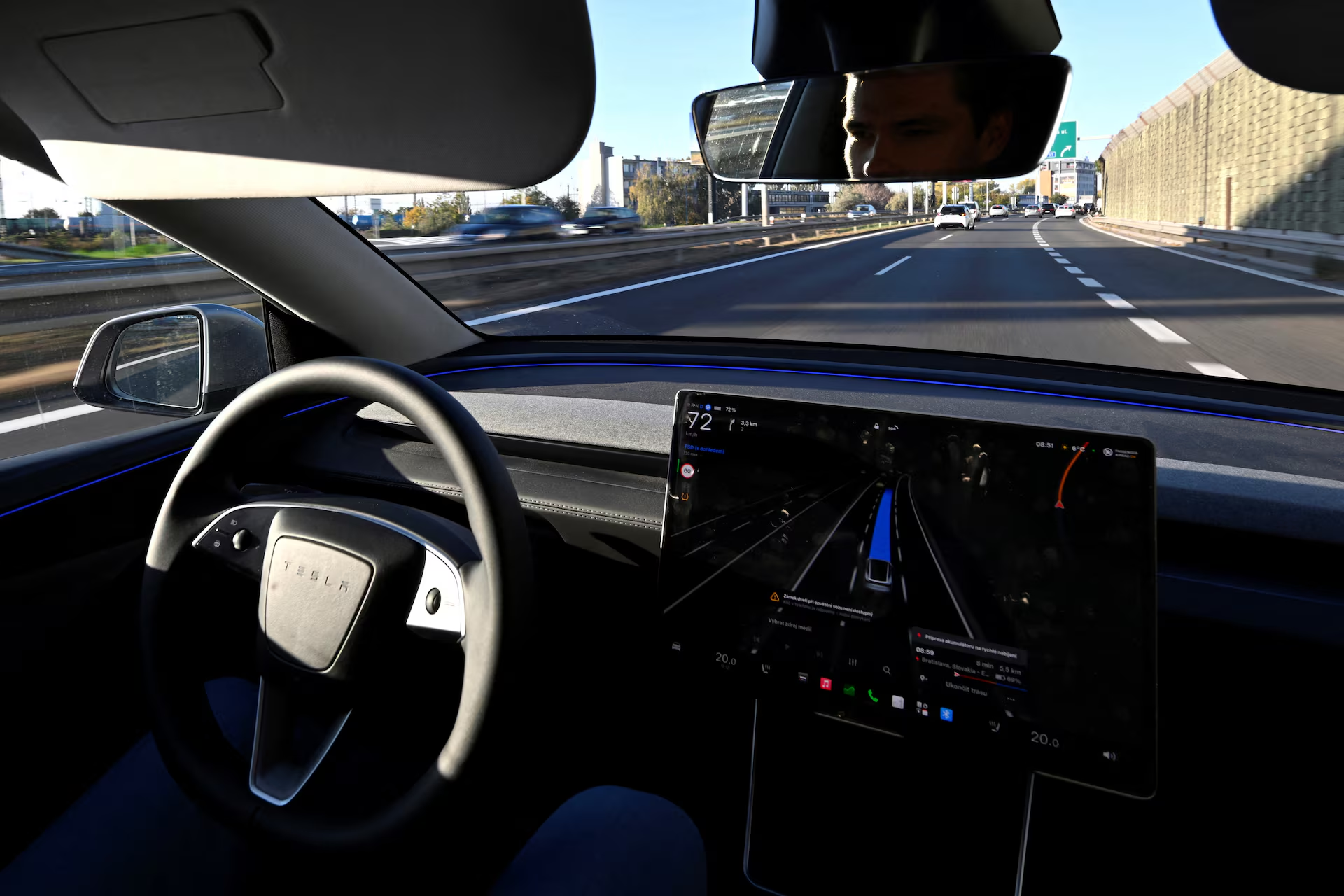
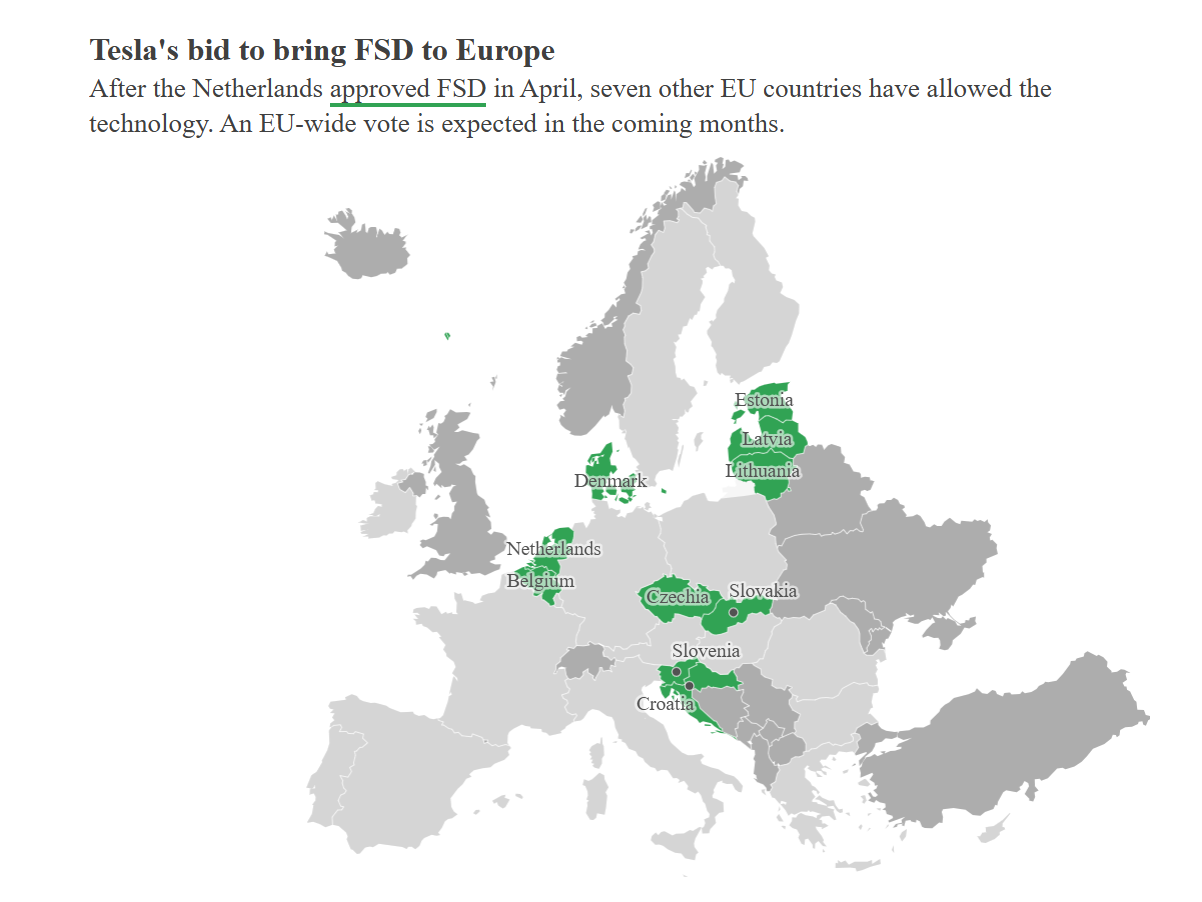
According to the report, Latvia became the tenth European country to approve the driving-assist software on Monday. Slovakia approved the same technology earlier this month. The Latvian Ministry of Transport explained that Latvia’s road-safety authority recognized a temporary European Union type approval issued by the Dutch Vehicle Authority.
These decisions are the latest step in Tesla Europe’s push to expand the driver-assistance technology. Tesla is seeking support and waiting for a key vote that could pave the way for a broader rollout in the European Union.
Tesla Europe confirmed that the function had been approved in Latvia and said a software push would begin soon, though no exact date was published. The rollout is still tied to the label TAD and to the subscription price of €99 per month, about US$110.92. More important, the Latvian Ministry of Transport describes the system as an L2-level driving-assistance feature. That means the driver must continuously monitor traffic, remain ready to take over, and accept responsibility for traffic violations or accidents.
A Reuters test drive with owner Igor Marcek
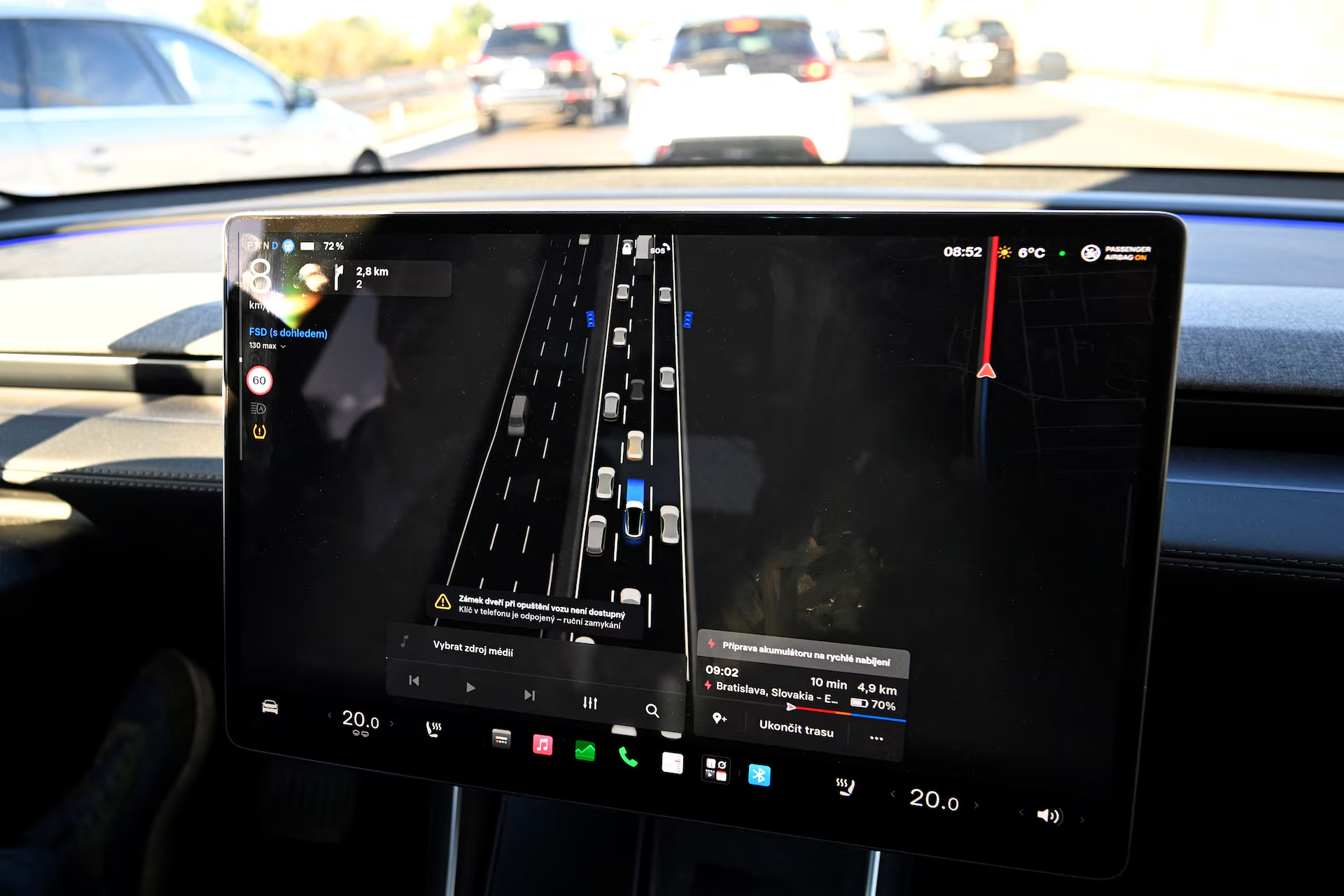
Igor Marcek, a 35-year-old in Bratislava, bought his Tesla two years ago. He works as a financial agent and life-planning advisor, and he said he is increasingly optimistic about TAD’s prospects in Slovakia. His hope is practical: one day, a car should be able to drive itself, saving time and letting occupants use the trip for other tasks.
Reuters tested a Tesla equipped with TAD, and the experience mixed smooth moments with clear gaps. The software handled congested highway driving and merging into traffic without trouble. Then it approached a closed gate and did not slow down, so Marcek had to brake hard. At a Tesla Supercharger station, the car also failed to enter an empty charging bay, causing Marcek to take control again.
“This technology is still evolving, so you must stay alert and watch what the car is doing,” Marcek said.
Owner advocacy and regulator concerns
The report said Tesla enthusiasts across Europe have pushed for faster deployment, and Tesla and CEO Elon Musk have often encouraged owners to voice their requests to local authorities. In Slovakia, the effort became visible. A Tesla owner club with 1,500 registered members organized a vehicle light show outside the Slovak Ministry of Transport to draw attention to the technology.
Kristian Kratochvil, the club’s chair, said the group contacted the Slovak transport ministry after the Netherlands first approved the system and has often asked officials about the approval status. These advocacy steps help explain why owners were eager when Slovakia approved TAD earlier this month. They do not settle the core regulatory debate.
Tesla argues that TAD can improve the ability to avoid collisions by more than four times and can save lives. Reuters pointed out that safety researchers dispute such data. The European Union also faces growing regulatory resistance, with some national authorities questioning whether the system is safe and whether a driver can maintain enough attention while using it.
Checklist: what to notice in Tesla FSD approval news
- Country and sequence. Latvia became the tenth European country to approve the system on Monday, while Slovakia approved it earlier this month.
- Name change. Full Self-Driving (Supervised), also labeled FSD (Supervised), has been renamed Tesla Assisted Driving, or TAD.
- Approval route. Latvia’s road-safety authority recognized a temporary EU type approval from the Dutch Vehicle Authority.
- Driver duty. The Latvian Ministry of Transport classifies TAD as an L2-level system, so the human driver remains responsible.
- Rollout certainty. Tesla Europe said the software push would start soon in Latvia, but no specific date was announced.
Common misconceptions
- “TAD is full self-driving.” The name includes “assisted,” and the Latvian Ministry of Transport describes it as L2-level. The driver must stay aware and ready to take over.
- “If the car can merge, it can handle every roadside event.” The Reuters test found smooth merging but trouble with a closed gate and an empty charging bay at a Tesla Supercharger station.
- “Owner campaigns equal regulatory proof.” The Tesla owner club in Slovakia, with 1,500 registered members, raised visibility, but approvals came through national and EU-type mechanisms tied to the Dutch Vehicle Authority and local road-safety authorities.
- “A safety claim is a settled fact.” Tesla says collision-avoidance ability improves by more than four times, but Reuters reported that safety researchers dispute the figure.
FAQ for general tech readers
What did Reuters report on Oct. 27? Reuters reported that Tesla FSD’s driving-assist software had recently been approved by Latvia and Slovakia, marking another step in Europe.
Why does “TAD” now appear instead of “FSD”? Tesla renamed Full Self-Driving (Supervised), or FSD (Supervised), to Tesla Assisted Driving, abbreviated TAD. The new name is meant to describe the supervised nature of the feature.
What went wrong during the test drive? The car handled heavy highway traffic and merging smoothly, but did not slow for a closed gate, and failed to enter an empty charging bay at a Tesla Supercharger station. In both cases, Igor Marcek took over.
Who has responsibility while using TAD? The Latvian Ministry of Transport says TAD is L2-level, so the driver must continuously monitor traffic, be ready to take over, and accept responsibility for violations or accidents.
What still has to happen? Tesla Europe said software will be pushed soon in Latvia, but the exact date has not been published. The broader EU picture still awaits regulatory progress and a key vote that could help wider rollout.
Action advice
- Read the approval, not just the headline. A country can approve a feature while the driver remains legally responsible, as the L2 classification shows.
- Watch low-speed complexity. Gates and charging bays may look simple, but the Reuters test showed they can require human intervention.
- Treat rollout dates as tentative. Tesla Europe said the push would begin soon after Latvia’s approval, but no date was given.
- Follow the data controversy. Tesla claims collision avoidance improves by more than four times, yet Reuters reported that safety researchers dispute the claim.
- Keep your attention in the car, not on the brand. The quote from Marcek is the simplest rule: stay alert and watch what the car is doing.
For MyTechDailyNews readers in the General column, the bigger picture is not only that Tesla FSD has a new country list to update. It is that public understanding of driving assistance must keep pace with regulatory change. Latvia and Slovakia opened the door. Reuters’ test drive showed the door is not yet a guarantee.