
MyTechDailyNews General: A Kentucky University Worker's AI Belief Exemption
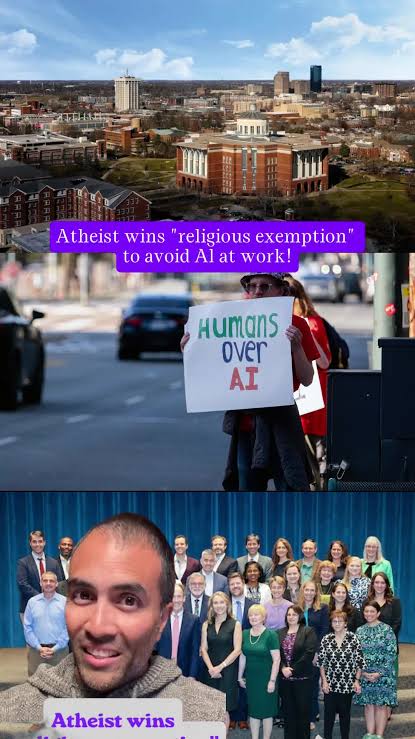
Artificial intelligence is becoming part of ordinary office routines, and a case from the United States shows that the conversation is no longer only about efficiency or automation. David Durman, an administrative manager at the University of Kentucky, recently received a workplace religious accommodation that allows him not to personally use AI tools as part of his duties. For everyday readers, the story is less about one employee and more about how schools, companies, and service teams may have to answer a simple question: what happens when a widely used tool meets a deeply held personal belief?
What Happened
The case concerns one workplace accommodation, not a general ban on AI. David Durman does not describe himself as a member of a traditional religion. He identifies as a humanist and also states that he is an atheist. He argues that personally using artificial intelligence conflicts with a set of values he holds closely. As AI tools have gradually entered daily work and personal life, he looked for legal protection and later contacted the American Humanist Association, known as AHA, a nonprofit organization that advances secular humanist ideas. According to his account, AHA helped him examine how he could obtain work protection not to use AI.
Why His Objection Goes Beyond Personal Dislike
Durman's reasoning centers on thinking, responsibility, and culture. He says humanism is a value system concerned with human experience and the relationship between people and the world. In his description, its core purpose is to promote the welfare and development of individuals and communities, and to encourage people to keep improving their own lives and the lives of those around them. From that perspective, he views AI use as a moral problem, not merely a productivity preference.
AHA released a statement earlier this week that further explained his concerns. It said AI is affecting many people's ability to earn a living. The statement also pointed to AI's large energy consumption and environmental costs, warning that they could cause long-term harm to human society and to Earth's ecology. Durman also believes that AI's large-scale use of human creative output may threaten fields such as art and literature, which he sees as important cultural areas that help sustain a flourishing society.
His broader concern is about moral agency. He argues that people are capable of moral judgment because they actively use their thinking. If more and more thinking is replaced by artificial intelligence, he fears that critical thinking and independent judgment will weaken. In his view, that would damage personal moral development.
A Broader Belief-Rights Conversation
Humanism is not usually treated as a traditional religion, yet it has long drawn people who are skeptical of God or supernatural power and want to build their value systems from scientific thinking and moral principles. That distinction helps explain why the case matters. AHA lawyer Alexandria Whisken said concern about the relationship between artificial intelligence and human dignity is not limited to one belief system. Catholic doctrine, Universalism, and humanism can all produce similar moral questions. She emphasized that humanists and atheists are protected under American law and also have the right to request reasonable accommodations in the workplace.
Known First Step, Not a Mass Movement
Currently, Durman is known as the first employee to obtain an AI-use exemption while identifying as a humanist, and he is also one of the few people to publicly discuss the process. He said he took action partly because another person's experience inspired him. Previously, Erin Maus, a software engineer who holds a Unitarian Universalist faith, also obtained similar protection and no longer had to use AI tools at work.
Durman stressed that the request is not aimed at changing how other people use AI. He described the decision as a matter of personal conscience and a commitment to his own principles. The wider point is not that AI use is now being rejected across all offices, but that workplace technology rules may have to make space for individual belief.
What This Means for Everyday Tech Readers
For ordinary readers, the case is a useful preview of a trend. As AI moves from optional novelty into basic work infrastructure, disagreements about its role are likely to appear in more places: universities, hospitals, offices, customer support teams, and software development groups. The conflict may not always be framed as religion, but it can still involve conscience, fairness, environmental responsibility, labor, or creative credit. For MyTechDailyNews readers, the practical lesson is that technology adoption is not only a product feature rollout. It is also a policy, communication, and trust problem.
FAQ
- Q: Is this the first AI exemption ever? A: The article does not say that it is the first AI exemption in all workplaces. It says David Durman is currently known as the first humanist employee to receive an AI-use exemption and one of the few people to publicly discuss the process.
- Q: Does this mean AI is banned in his workplace? A: No. It is one accommodation for one employee. Other workers may continue to use AI tools if their duties require it.
- Q: Why is AHA involved? A: AHA is described as a nonprofit organization promoting secular humanist ideas. Durman contacted it while seeking legal protection related to his belief-based objection to using AI at work.
- Q: Are only religious people protected? A: The article says AHA lawyer Alexandria Whisken emphasized that humanists and atheists are also protected by American law and may request reasonable accommodations.
Checklist: What To Notice In The Story
- It is a workplace accommodation, not a public AI ban.
- The request is tied to a self-described humanist and atheist value system.
- David Durman sought legal protection and contacted AHA after AI entered daily work and personal life.
- The concerns include critical thinking, livelihoods, energy use, environmental impact, Earth, creative work, art, and literature.
- The lawyer's point is broader: humanists and atheists may request reasonable accommodations under American law.
- A previous Unitarian Universalist example, involving Erin Maus, helped inspire the decision.
Common Misconceptions
- This does not mean AI use has become illegal in American workplaces. It means one employee obtained a belief-based accommodation.
- This does not mean humanism or AHA opposes every technology. The reported objection is linked to values and the effects of AI, including thinking, creative work, environment, and livelihoods.
- This does not mean other workers must stop using AI. Durman said the exemption is about his own conscience, not about controlling how others use AI.
Action Suggestions
- If you work with AI tools, check whether a task is optional, assigned, or tied to performance before raising a concern.
- If you have a sincere belief conflict, describe it plainly and identify the specific AI task involved.
- Review available workplace accommodation options and, if needed, consult legal or employee resources.
- For managers, treat AI rollout as both a technical change and a values question: explain the purpose, ask for feedback, document exceptions, and communicate limits clearly.
Looking Ahead
As AI becomes a base-level workplace tool, debates around religious freedom, conscience rights, and the boundaries of technology use are entering a new phase. Future cases involving mandatory AI use and personal beliefs may become more common. The next question for organizations may not be only "Can AI help?" but also "Should everyone be required to use it?" For MyTechDailyNews readers, this case is worth watching because it connects one worker's choice with a much larger issue: how technology policy is shaped when convenience meets conviction.
This report is prepared by Sarah Chen for MyTechDailyNews, published by Tech Daily. For questions about this story, contact hello@techdaily.com.