
MyTechDailyNews General: iPhone Duo Screen Cracks May Trace to Hinge Support Bar
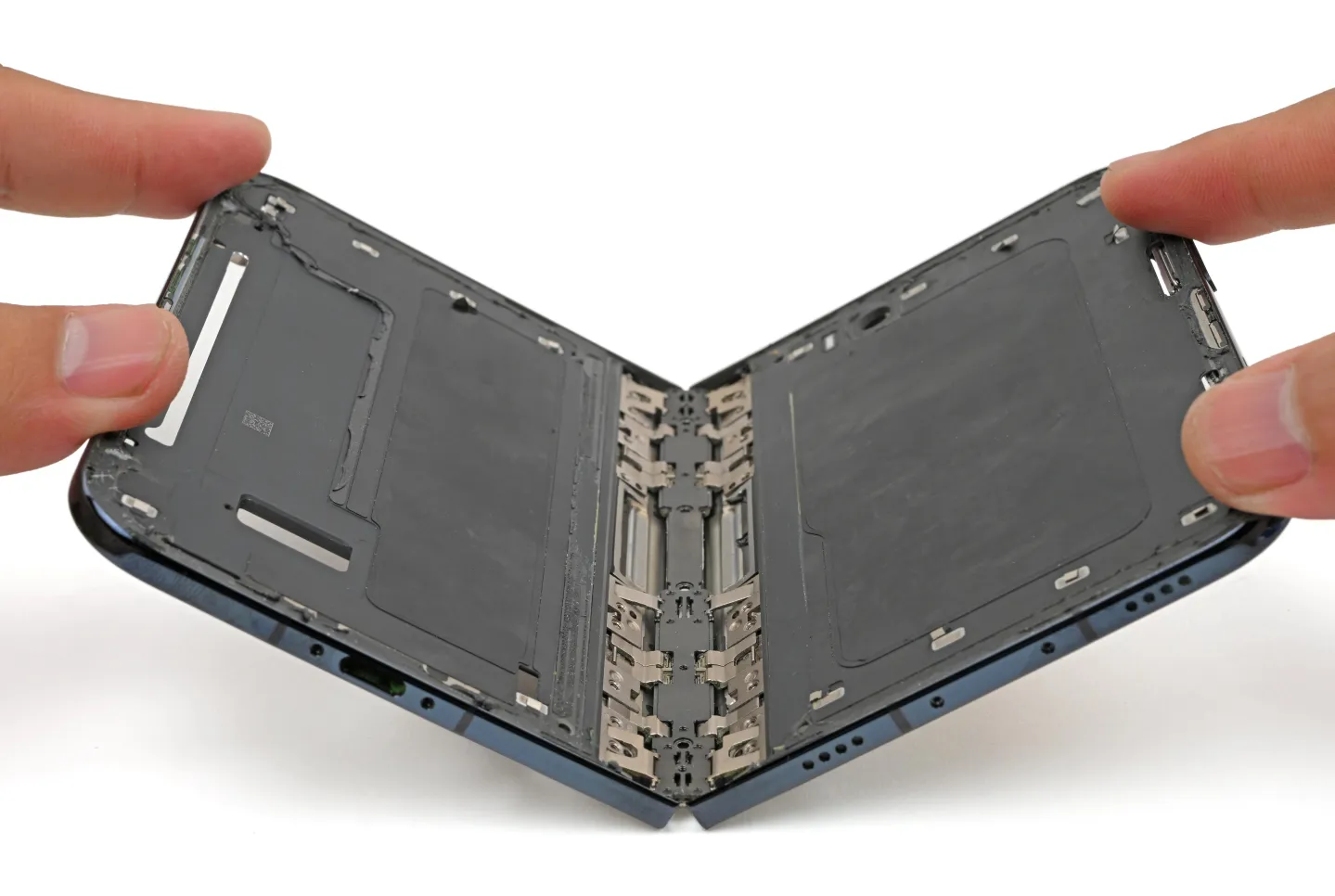
The iPhone Duo is drawing attention for a reason no foldable-phone maker wants: cracked inner displays. The Verge reported on Oct 27 that iFixit lead teardown technician Shahram Mokhtari has suggested a possible link between screen cracks and the movement of the hinge support structure. Apple has acknowledged that a few devices are affected and has advised owners to contact AppleCare for replacement, but it has not released a failure count or confirmed the final cause. For MyTechDailyNews General readers, the story is less about one dramatic crack and more about the signals that appear before a design problem can be proven.
What the damage pattern suggests
Repair posts and user photos show that the failures are not randomly scattered across the inner display. Some iPhone Duo units reportedly developed black spots close to the central folding area, after which bright pixel lines extended toward the right side of the panel. Other users described feeling something stick near the hinge while opening the phone normally, then hearing a clear cracking sound as the screen failed.
That pattern matters because it shifts attention from the flexible panel by itself to the mechanical layers underneath it. A folding phone is not only a thin display that bends; it is also a moving assembly that must guide the panel through repeated folds while keeping the crease, gap and stress under control.
The hinge has to solve several hard problems at once
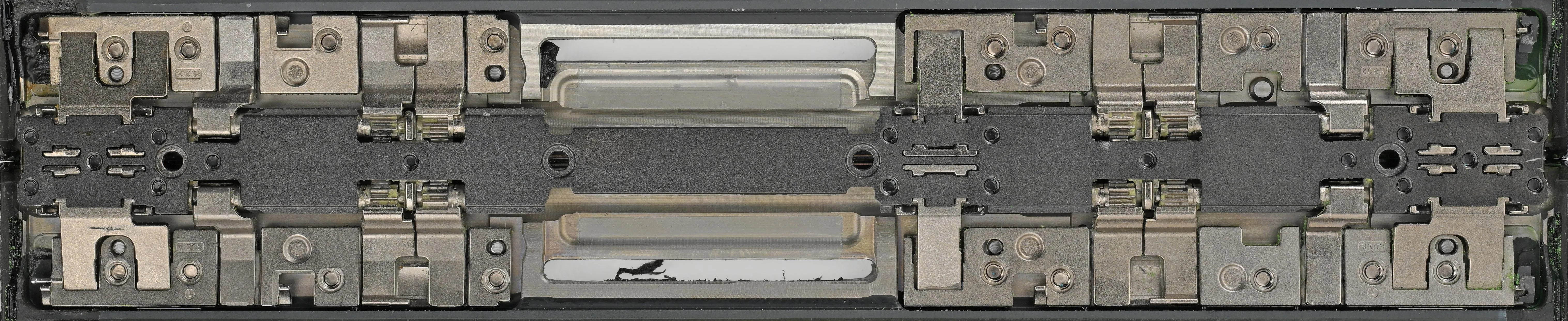
iPhone Duo's hinge is more complex than a simple pivot. It combines gears, springs, connecting parts and support structures. It has to close the phone tightly, leave enough room for the flexible display to bend, and avoid creating an overly sharp fold. The central hinge area also needs to route flexible ribbons through the structure. Those openings, edges and junctions can become places where mechanical pressure concentrates.
Mokhtari points to a central support bar as the possible pressure source. The bar is expected to retract fully downward when the phone folds, creating clearance for the curved display. If it does not move far enough clear of the panel in some situations, a metal component could contact the already bent flexible display.
At that moment, the display would not receive broad, even pressure. It could receive concentrated stress in a tiny area: a hotspot. If that contact repeats, or becomes stronger during an unfolding motion, the internal layers of the flexible panel could be damaged, producing black spots, bright lines or visible cracks.
Sudden break reports and durability videos add clues
The support-bar theory also fits some of the more confusing user reports, where the phone seemed to crack without a visible external impact. One user said the hinge felt unusual while the phone was being shown to a friend, then heard a screen-cracking sound after continuing to unfold it. If the damage starts inside the folding zone, a device can look unscratched from the outside and still suffer internal mechanical stress.
YouTube creator CuriousHagi offered another clue during a durability test. In a harsher-than-normal test, the display cracked in the fold region. Later teardown inspection found that a hinge component connected to the central support bar had broken. The damaged area resembled the screen regions reported by other users.
These reports are clues, not proof. Durability videos add extra pressure and conditions that may not match daily use, and a single teardown cannot show that every cracked iPhone Duo has the same mechanical defect. Apple still needs to examine a larger number of failed units before the industry can distinguish between component sizing deviations, assembly problems, rough hinge movement and intrinsic flexibility limits.
What Apple has and has not confirmed

Apple describes the issue as affecting a few iPhone Duo devices. It has not announced a recall or provided a public timeline for a permanent repair path. AppleCare is the official route for users experiencing screen problems and seeking replacement.
iFixit’s analysts also place the reports inside a bigger foldable-phone reality: flexible displays and hinges are delicate, complex assemblies. Some failures during the early life of a new format are not surprising. What would be more concerning is a continuing concentration of cracks in the same location, because that could suggest a wider design or manufacturing issue rather than isolated early defects.
Mokhtari thinks Apple’s engineers may revisit the hinge structure around the support bar using real-world data from the first iPhone Duo generation. Apple’s first product of this shape gives the company large-scale field evidence that laboratory tests may not capture. That evidence can shape corrections in later models.
Comparison table: signals versus uncertainties
| What has been reported | What has not been established |
|---|---|
| Black spots, bright lines and cracks may cluster near the central fold area. | Apple has not confirmed that the hinge support bar is the final root cause. |
| Some users felt hinge resistance, then heard a screen crack while unfolding. | Apple has not published the full number of affected units. |
| A durability test teardown found a broken hinge part near the central support bar. | All cracked screens have not been traced to the same part or the same mechanism. |
Common misconceptions
- “A cracked screen must have been caused by a drop.” The reported cases suggest that internal hinge components could damage the display even when the outside looks untouched.
- “If social media shows cracks, every iPhone Duo is defective.” Social posts can reveal symptoms, but they do not prove the failure rate across all shipped units.
- “Apple’s replacement offer means the design is already fixed.” AppleCare replacement helps affected owners, but it is not the same as a confirmed permanent fix.
- “The hinge explanation is official fact.” The support-bar theory is a persuasive technical hypothesis, not an Apple-confirmed conclusion.
FAQ: quick answers for everyday readers
Is the iPhone Duo screen problem confirmed?
Apple has confirmed that a few devices are affected, but it has not confirmed the exact cause. The leading outside explanation involves hinge-related pressure on the inner display.
What should I do if my iPhone Duo screen is damaged?
Follow Apple’s guidance and contact AppleCare to obtain replacement service.
Is Apple recalling iPhone Duo devices?
No recall has been announced.
How serious is the problem?
At present, Apple says only a small number of devices are affected. The seriousness depends on whether future months show a continuing pattern of similar cracks.
Does this mean folding phones are unreliable?
Not by itself. It shows that hinge mechanisms and flexible panels are among the hardest parts to prove durable in real use.
Action checklist
- Watch for symptoms described in reported cases: black spots, bright pixel lines or cracks near the central fold area.
- If you see screen damage, contact AppleCare instead of assuming the problem can be ignored.
- Separate product anecdotes from population data: one viral crack does not prove every iPhone Duo has the same flaw.
- Follow official Apple updates rather than treating a teardown hypothesis as a confirmed defect.
- For MyTechDailyNews General readers, treat the iPhone Duo story as an early reliability signal, not the final verdict.
The bigger lesson for MyTechDailyNews readers
For readers following general tech trends, the iPhone Duo crack debate is a compact reminder of what decides the next generation of folding devices. Buyers may compare thinness, price, crease depth and screen size, but long-term reliability often lives in less visible places: hinge parts, clearances, stress paths and the interaction between metal and flexible display. The Crackgate question is not only whether a few screens broke. The Crackgate question is whether the central support structure can concentrate stress in a way that requires design changes rather than repeat replacements.
Until Apple completes a broader investigation, the hinge support-bar explanation remains a persuasive hypothesis, not an official ruling. The months ahead will matter more than a single teardown image: if the same cracks continue appearing in the same place, the issue will look more like a systemic problem; if they remain limited and Apple adjusts the hinge or assembly process, the story will read as an early learning phase for a new hardware form.