
MyTechDailyNews Guide: Why the iPhone Duo Keeps Selling Out — and How to Actually Get One
Short answer: recently, iPhone Duo demand has been running ahead of Apple's production capacity, so new orders slip months into the future. Market chatter says Apple asked upstream suppliers to lift orders 30% after the foldable launched, and on October 26 Lens Technology — its ultra-thin glass partner — declined to confirm the rumored ratio while saying its lines are fully loaded, shipments are moving on overtime, and capacity is prepared for both this year and next year.
For everyday readers, the story has three layers: a product that is genuinely hard to build, a supply chain that is scrambling to catch up, and a buying process full of traps (resellers, restock windows, and early durability complaints). This guide from MyTechDailyNews' General desk walks through what is confirmed, what is rumor, and the practical steps to get a device — or decide to wait.
What actually happened with iPhone Duo orders?
The confirmed core is narrow but important. As IT Home noted on October 26, a report published today by Caiwen says Apple (AAPL.US) saw its first foldable phone, iPhone Duo, sell into shortage right after launch, and that surging demand pushed Apple Inc. to urge upstream factories to speed up — with some market claims going as far as a 30% increase in supply-chain order volume.
Lens Technology, the core supplier of UTG (ultra-thin flexible glass) for the device, was contacted by Caiwen acting as an investor to verify whether the 30% add-on order was real. Its reply, paraphrased here, is the most quotable official line available: no comment on the rumored percentage; the company supplies high-end structural parts for foldable phones; those parts are difficult to process and carry relatively high value-added content, producing a noticeable business uplift; production tasks on the relevant lines are full, the team is working overtime to build and ship; and capacity has been prepared with the customer's this-year and next-year order plans in mind, so it can respond flexibly to further demand growth.
Read literally, that statement neither confirms nor denies 30%. What it does confirm is tighter-than-expected scheduling on foldable structural parts — which is the signal most buyers and small investors should anchor on.
How is the fall 2026 iPhone lineup being reshuffled?
The order rumors are not simply "more iPhones." Reporting on October 10 described a structural reshuffle of Apple's fall 2026 phone orders, in which one model's gain is another model's cut.
| Model line | Reported order change | What it means for you |
|---|---|---|
| iPhone Duo | up 30% | The scarcity item; add-ons can't create capacity overnight |
| iPhone 18 Pro | cut 10%—15% | Less pressure to buy early; discounts may appear sooner |
| iPhone 18 Pro Max | up 10%—15% | The safe-harbor pick if you want a flagship without a wait |
| iPhone 18 Pro series | total order volume unchanged | Apple is rebalancing mix, not expanding the whole line |
| Overall volume | still below 10 million units | Foldable output remains a niche, capacity-constrained category |
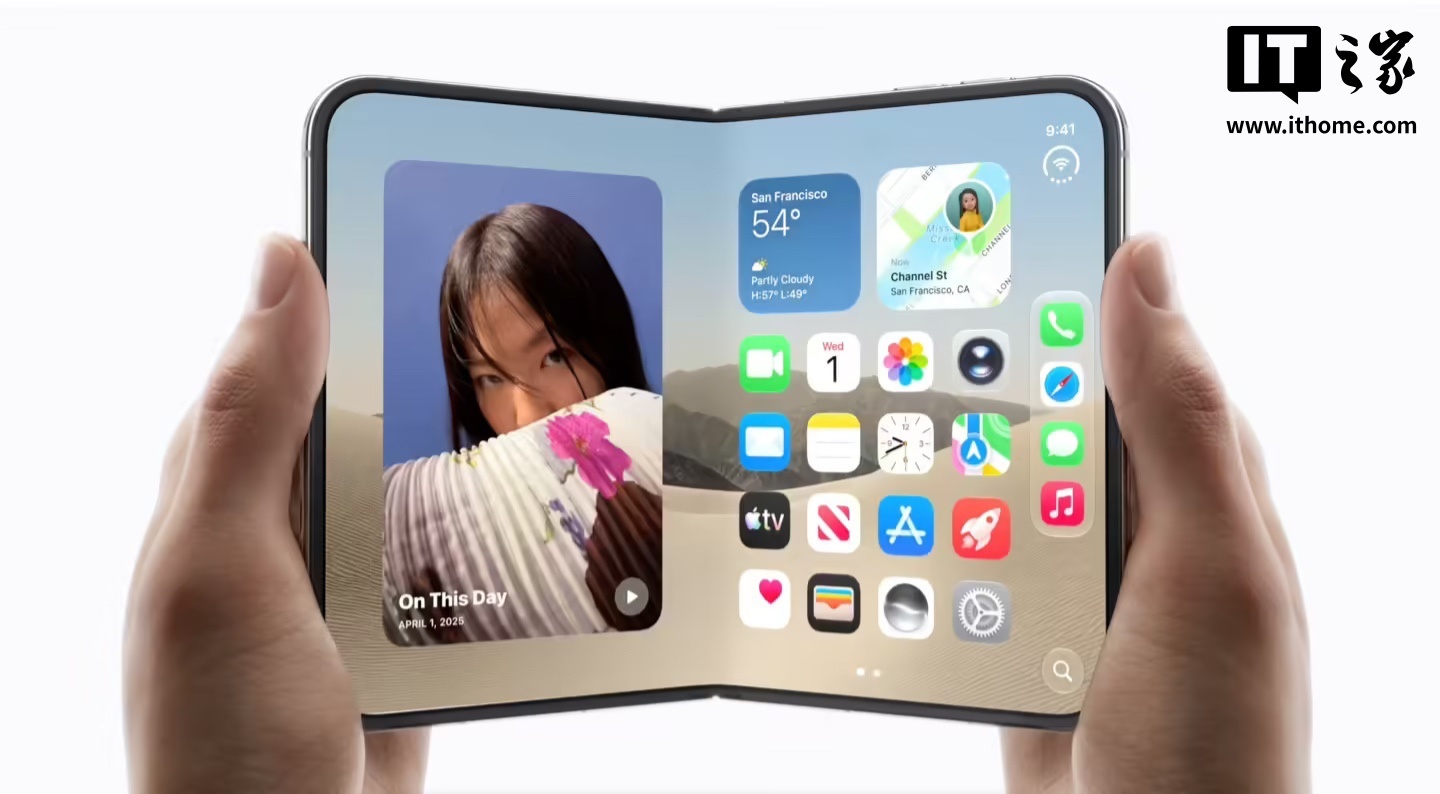
That last row matters as much as the 30% figure: even after the reported add-on, the total stays under 10 million units. Analyst firms frame the same constraint from the demand side — Counterpoint Research's September 7 note forecasts up to 6 million foldable iPhone shipments in 2026 (roughly a 25% category share, second behind Samsung) and states plainly that "initial supply constraints" for Apple's first foldable are expected to be unavoidable, with deliveries ramping gradually.
Why can't Apple just build more iPhone Duo units?
Because a foldable is closer to a mechanism than to a phone. Three bottlenecks recur in supply-chain reporting from this launch cycle, and they explain both the wait times and Lens Technology's overtime shifts.
- Ultra-thin glass is a yield problem, not an assembly problem. UTG has to survive thousands of folds while being thin enough to bend; grinding, tempering and lamination are done on dedicated lines. Multiple reports describe Lens Technology as the leading UTG structural-parts source for the device — with Yicai Global listing ultra-thin glass, colorless polyimide film, glass support plates and 3D glass covers in its portfolio — which is why its line status is an early-warning gauge for iPhone Duo availability.
- Hinges and panels must be co-tuned. Chinese supply-chain briefings this month described instability in foldable OLED panel output and design adjustments around the hinge, plus slower-than-expected stabilization of final assembly. A phone with two moving display surfaces cannot be scaled by simply adding a shift.
- The whole category is being pulled at once. Counterpoint projects global foldable shipments crossing a 100-million cumulative milestone by the end of 2026 and foldable panel shipments rising about 46% year over year, with Apple's entry cited as the main driver. More competition for the same glass, film and hinge capacity slows everyone.
Step-by-step: how to actually get an iPhone Duo
- Anchor on the ship-date window, not the "available" label. Launch-week tracking by MacRumors showed delivery estimates sliding to late January within roughly the first 30 minutes of pre-orders, with a two-unit-per-customer limit on the official store. Treat any quoted date as a queue position, not a promise.
- Watch store pickup on restock mornings. Retail inventory tends to appear in small batches; Apple Store pickup is frequently the fastest legitimate route because it bypasses the national shipping queue.
- Use authorized channels that restock repeatedly. In China's first sale window, Tmall's official Apple flagship store reportedly refreshed stock six times while still quoting next-January delivery, and JD.com logged more than 3 million reservations against a first batch of only about 100,000-plus units — evidence that queue volume, not price, is the real constraint.
- Reserve, then pay only when the window confirms. Never wire money to an unverified "guaranteed stock" seller; legitimate channels hold payment until allocation.
- Decide your fallback in advance. If you need a phone this month, iPhone 18 Pro Max (the line Apple is adding 10%—15% to) is the lower-friction choice; if you want the foldable, patience is the only discount.
- Set the protection layer before day one. Buy coverage for the inner display explicitly, since foldables' fragile element is the panel along the hinge rather than the outer glass.
Pre-purchase checklist: 7 checks before you commit
- Do you fold it? Run a two-week test on your current phone: if you would leave it open the whole time, the form factor buys you nothing.
- Is the price justified? Early coverage pegged the device around the US$2,000 mark, with Fortune reporting $1,999 — premium-tier money for a first-generation mechanism.
- Which surface is your daily carry? Pocket grit is the classic killer of inner displays.
- Do you keep the box and receipt? Return and exchange windows are your best lever on a launch-cycle defect.
- Is coverage transferable to the hinge area? Ask explicitly before paying.
- Can you accept a swap instead of a refund if something fails?
- Do you have a backup phone for the day service takes a device in?
Common myths about the shortage — and the reality
| Myth you will see online | Reality check |
|---|---|
| "A 30% add-on means supply jumps next month." | Add-ons chase capacity that must be qualified first; the supplier only confirms full lines, overtime and preparation for this year and next year. |
| "Apple is throttling volume to look premium." | Rumor, unsupported: reporting describes yield and ramp friction in panels, hinges and final assembly. |
| "More orders means more iPhones overall." | The reported reshuffle keeps the iPhone 18 Pro series total unchanged, shifting mix between Pro and Pro Max. |
| "Reseller stock is the only way to get one early." | Queue-popping premiums are the highest-risk option; official pickup and restock refreshes regularly beat resellers without the scam exposure. |
What to do if your iPhone Duo screen cracks
This is the pitfall no one wants: Fortune reported on October 27 that some owners said the inner display cracked within hours of unboxing, and the New York Post's October 23 review noted criticism despite strong reviews. IT Home's October 26 report, citing overseas coverage, described a consistent failure signature — cracks running along the hinge area, sometimes with a bright horizontal line or dead pixels on half the panel — and cases in which the device failed after only a handful of folds, or while closed and charging, with no drop involved.
Apple's position, as relayed in launch-week coverage, is that a small number of inner displays are affected, that most devices are not, and that owners can go through support for replacement. Your practical sequence:
- Unbox on a clean, flat surface and film the first 10 open-close cycles.
- Inspect the crease line under raking light before day three, when return windows start tightening.
- If you hear a crack or see a line, stop folding it and screenshot the failure.
- Choose store service over mail for speed — reported experiences diverge sharply: one US customer was swapped the same day, while an India customer was told no replacement stock existed and had to wait for the next allocation.
- Ask for a written note on the failure mode so a repeat issue is not treated as new user damage.
FAQ: the four questions readers ask most
Is the iPhone Duo really getting a 30% order increase?
It remains a market claim. Caiwen's October 26 call to Lens Technology produced a refusal to comment on the ratio, paired with confirmation that foldable structural-part lines are saturated and shipping on overtime. Treat the direction as credible and the exact number as unverified.
When will supply stop being the problem?
Watch two dates: the delivery window shown on the official store and the ramp data in the next quarter's supplier updates. The company says capacity is pre-positioned for this year and next year, and Counterpoint expects deliveries to ramp gradually rather than snap back — so a fully normalised queue is a 2027 story, not a holiday-season one.
Should I just buy iPhone 18 Pro Max instead?
If you need a device soon, yes. Apple is reportedly trimming iPhone 18 Pro by 10%—15% while adding 10%—15% to iPhone 18 Pro Max, which points to a well-supplied flagship path and a scarce foldable path.
Does a first-generation foldable hold resale value?
Scarcity plus a fragile inner display is an unstable mix: strong demand supports resale prices early, while hinge-area failures raise buyer caution on the used market. Preserve the box, receipt and service notes — they measurably help resale and warranty claims.
Bottom line: three actions for MyTechDailyNews readers
- If you are a buyer: register on official channels, target restock mornings for pickup, and never pay a reseller for an unconfirmed serial number.
- If you already own one: run the 72-hour hinge inspection and get coverage paperwork before the return window closes.
- If you are watching the industry: use supplier line-status, not rumored percentages, as your read on when foldables stop being a scarcity product.
参考来源 / Sources
- Counterpoint Research — "Global Foldable Shipments to Hit 100-million Cumulative Milestone by End of 2026" (September 7): https://counterpointresearch.com/en/insights/global-foldable-shipments-to-hit-100-million-cumulative-milestone-by-end-of-2026
- Fortune — iPhone Duo screens cracking within hours for some owners (October 27): https://fortune.com/2026-10-27/apple-iphone-duo-foldable-screen-cracking-hinge/
- New York Post — foldable review launch coverage and cracked-device complaints (October 23): https://nypost.com/2026-10-23/business/apples-new-2k-iphone-duo-wows-critics-with-foldable-screen-but-some-users-are-already-complaining-of-cracked-devices/
- MacRumors — iPhone Duo store pickup, sold-out ship dates and purchase limits (October 23): https://www.macrumors.com/2026-10-23/iphone-duo-apple-store-pickup-available-today/
- Yicai Global — Chinese component suppliers deeply involved in Apple's foldable iPhone (September 3): https://www2.yicaiglobal.com/news/chinese-component-suppliers-are-deeply-involved-in-apples-foldable-iphone-analyst-says
- Sina Tech — iPhone Duo supply rhythm, reservation counts and ramp bottlenecks (October 17): https://k.sina.cn/article_7879995964_1d5af323c068017nzy.html
- IT Home — iPhone Duo order-rumor coverage and inner-display failure reports (October 26): https://www.ithome.com/1/017/981.htm
About this guide: written by Sarah Chen for MyTechDailyNews (published by Tech Daily). Routine restock and pricing details change fast — for corrections or tips, email hello@techdaily.com.