
iPhone Air 2 Rumors: Apple’s Thinner Dual-Camera Plan, Explained by MyTechDailyNews
By Sarah Chen, MyTechDailyNews General — Apple is reportedly preparing a second-generation ultra-thin phone, the iPhone Air 2, and the latest rumor package points to hardware changes rather than a simple design refresh. Digital Chat Station says the device may use a 2nm processor, add one additional rear camera, increase battery capacity, and keep a very thin body, with a spring 2027 launch window alongside iPhone 18 and iPhone 18e. For readers following Apple roadmaps, the practical question is simple: can Apple make the iPhone Air line feel more complete without giving up the slim profile that defines it?
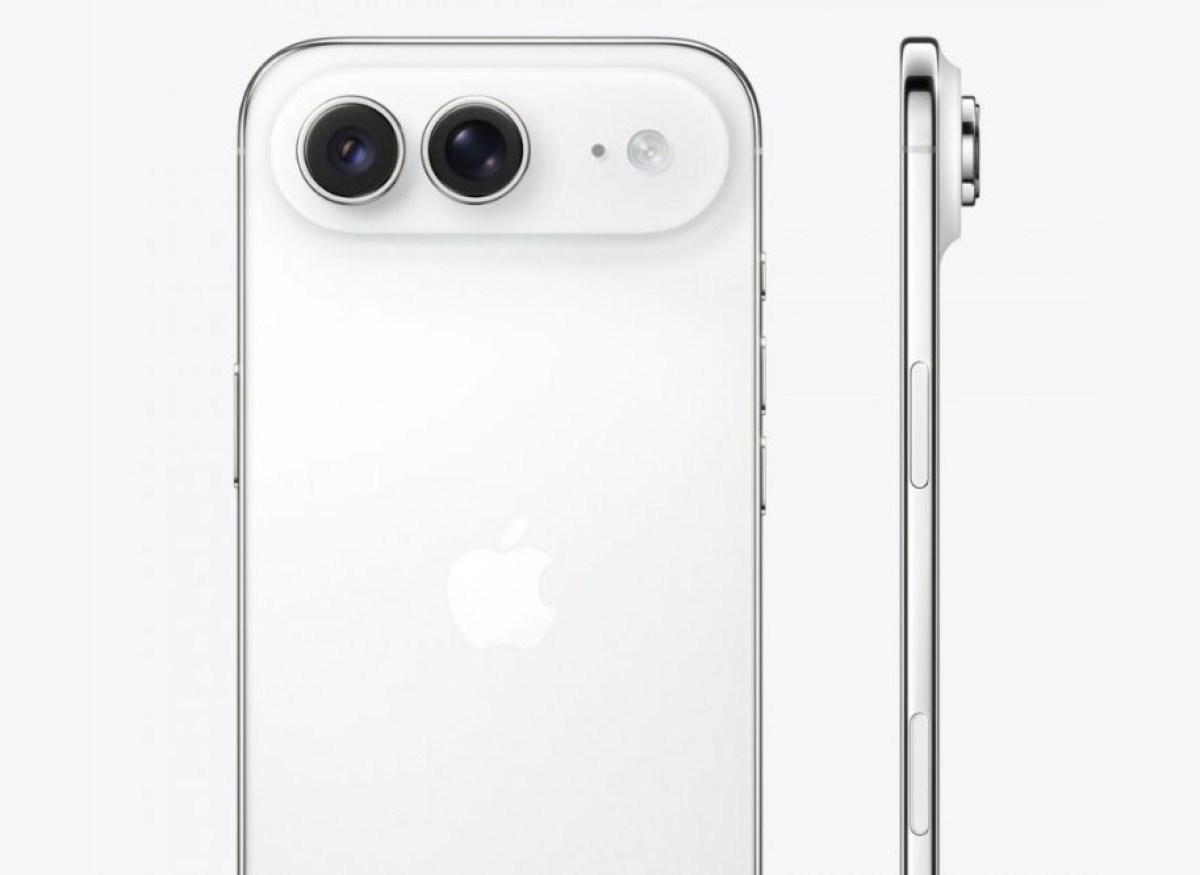
Rumor snapshot: what each reported change could mean
The leaked information should be read as a product strategy signal, not as a confirmed spec sheet. The reported upgrades are not random tweaks; they target the trade-offs that shaped the original iPhone Air. The display is expected to remain close to the previous generation in overall size, while the internal package may change across silicon, camera modules, wireless chips, and battery layout.
| Reported area | What the rumor says | Why it matters to ordinary users |
|---|---|---|
| Display | 6.55-inch OLED flat screen with 120Hz refresh rate and 1.5K-level resolution | A familiar screen size paired with the reported high refresh rate and higher-resolution panel |
| Processor | A20 series on 2nm, reportedly using TSMC manufacturing | Potential for stronger performance and lower power use in a constrained body |
| Camera | Adds one additional rear camera, moving from a single 48-megapixel main camera to a dual-camera system | More flexibility for scenes that need a wider view, such as landscapes, architecture, and group photos |
| Battery | Capacity may reach 3500mAh or higher | Possible endurance improvement, pending official data |
| Body | Thickness may be reduced to about 5.2 mm | Continues the ultra-slim identity of the iPhone Air series and the wider Air series positioning |
| Wireless | N2 for Wi-Fi and Bluetooth; C2 for 5G | More integrated connectivity features, though the real effect depends on release-ready versions |
Display and size: familiar canvas, thinner frame
According to the report, the iPhone Air 2 would keep a 6.55-inch OLED flat screen, with 120Hz refresh rate and 1.5K-level resolution. That combination is easy for mainstream users to understand: the phone is not being framed as a tiny secondary device, and the screen remains large enough for general visual use. The rumor also suggests that Apple may refine the borders and visible display area, so the phone can look more modern while preserving its slim design.
For the iPhone Air series, size is part of the story. A large flat display inside a thin body is not just a style choice; it affects internal volume, thermal behavior, camera placement, and battery capacity. If the next generation reaches about 5.2 mm thickness, Apple will need to pack the new hardware carefully. That is why the 2nm processor and larger battery rumors appear together: a smaller and more efficient chip can help free up space, while battery improvements can make the product feel less like a compromise.
2nm A20 processor: why the chip rumor matters beyond speed
The most notable silicon item is the A20 series. The rumor says Apple may move to a 2nm process made with TSMC. Earlier reports have placed the A20 series at the high end of Apple’s next-generation mobile chips, with the iPhone 18 Pro series expected to lead its use. The iPhone Air 2, if included, would be getting advanced silicon in a body that is deliberately constrained by thickness.
For non-specialist readers, the point is not that smaller transistor measurements sound futuristic. The point is that a more advanced chip can, in theory, deliver stronger performance while using less power. In a thin phone, that matters because heat and battery space are limited resources. Still, the report does not confirm a final processor name, clock speed, core layout, or thermal design, so users should treat the 2nm claim as a roadmap expectation rather than a shipping specification.
Battery and endurance: a likely improvement, but not a finished number
Battery capacity is one of the clearest rumored fixes. The original iPhone Air was described as making compromises in internal capacity because of its ultra-thin shape. For the iPhone Air 2, the rumored battery capacity could reach 3500mAh or higher. That figure alone does not guarantee better all-day use, because screen power, modem behavior, camera processing, and software management also shape endurance.
The reason battery and 2nm often appear together in the rumor is logical. If the processor becomes more efficient, the same battery can provide longer usage, or the phone can fit a modestly larger battery without worsening thermal limits. However, the master report emphasizes that no confirmed battery data exists yet. For product watchers, the useful takeaway is not a single capacity number, but the direction: Apple seems to be trying to reduce the endurance gap that can affect a slim flagship.
Camera system: from one 48-megapixel main camera to a dual-camera system
The camera rumor may be the most user-visible upgrade. The first iPhone Air is described as having a compromise: only one 48-megapixel main camera. The iPhone Air 2 is said to add a 48-megapixel ultra-wide camera, creating a dual-camera system. In everyday terms, that gives users two basic framing modes instead of one: the main field of view plus a wider field of view.
This matters for travel photos, architectural shots, group images, and other scenes where the main camera is too tight. The change also shifts how the phone fits within Apple’s lineup. It does not automatically place the iPhone Air 2 beside a Pro-class camera package, but it does suggest that Apple wants the Air series to cover more common shooting situations rather than relying on a single rear camera.
Wireless chips: N2 for Wi-Fi and Bluetooth, C2 for 5G
The report also mentions Apple’s next wireless components: an N2 chip and a C2 baseband. N2 is described as responsible for Wi-Fi and Bluetooth, while C2 is expected to handle 5G cellular communication. These are the kinds of parts that ordinary users rarely see on a spec sheet, but they influence connection stability, accessory pairing, roaming behavior, and power use.
Continued iteration of in-house wireless chips may reduce reliance on third-party suppliers and improve energy efficiency across Apple devices. That claim should remain within the rumor’s scope: it points to a strategic direction, not a proven improvement for a finished product. For the iPhone Air series, more integrated wireless design could also help Apple manage board space and power consumption in a thinner enclosure.
Quick checklist: what to verify before repeating the rumor
- Treat Digital Chat Station details as supply-chain reporting, not an official Apple announcement.
- Check whether the iPhone Air 2 really ships with the full 2nm A20 series or a variant.
- Confirm the screen specs: 6.55-inch OLED flat screen, 120Hz refresh rate, and 1.5K-level resolution.
- Look for official camera data to verify the 48-megapixel ultra-wide camera and dual-camera system.
- Wait for confirmed battery capacity rather than relying on the current 3500mAh or higher rumor.
- Compare final thickness against about 5.2 mm only when Apple or reliable launch documentation confirms it.
- Check whether N2 and C2 are shipping versions for Wi-Fi, Bluetooth, and 5G in the retail device.
FAQ: what readers usually ask first
When is the iPhone Air 2 rumored to launch?
The rumor says a spring 2027 window, alongside iPhone 18 and iPhone 18e. Timing can still change, especially for an under-the-radar product line.
Is the iPhone Air 2 confirmed to use 2nm?
No. The claim comes from Digital Chat Station-style reporting and points to a 2nm A20 series made with TSMC. Until Apple announces the device, it remains unofficial.
Will the camera be better?
The key rumored improvement is the addition of one additional rear camera: a 48-megapixel ultra-wide camera that joins the 48-megapixel main camera to form a dual-camera system.
Will battery life definitely be better?
Not necessarily. The rumor says battery capacity may reach 3500mAh or higher, and the 2nm chip may help efficiency, but final endurance depends on software and real hardware.
What does “Air series” mean in this discussion?
Here, the iPhone Air series refers to Apple’s thin iPhone direction, including iPhone Air and the upcoming iPhone Air 2. The Air series label is used to describe that slim product family.
Common misconceptions about the iPhone Air 2 report
- “2nm means it must be faster in every app.” A more advanced process can improve performance and power efficiency, but user experience also depends on cooling, battery size, and software.
- “A larger battery means all-day battery is solved.” The 3500mAh or higher figure is only one part of the equation; screen, modem, camera processing, and system optimization also matter.
- “Dual camera means it is the same as the iPhone 18 Pro series.” The rumor only says a 48-megapixel ultra-wide camera joins a 48-megapixel main camera; it does not confirm every Pro feature.
- “About 5.2 mm means it is automatically the best thin iPhone for power users.” A thinner body can improve portability, but sustained heavy use depends on thermal design and power delivery, which are not confirmed here.
- “N2 and C2 are already guaranteed retail components.” They are reported as next-generation wireless and baseband parts for Wi-Fi, Bluetooth, and 5G, but launch devices may use final versions with changes.
Action advice for readers following the rumor
- Keep a rumor-to-release checklist. Save the main claims — 2nm A20, one additional rear camera, 3500mAh or higher battery, and spring 2027 alongside iPhone 18 and iPhone 18e — and cross-check them when official materials appear.
- Compare your use case, not just the number. If you prefer a thin phone mainly for general visual use and everyday photos, the dual-camera system and 6.55-inch OLED flat screen are more relevant than chip terminology alone.
- Wait before assuming camera flexibility is solved. Landscape, architecture, and group shots may improve, but final image quality depends on lens design, processing, and other features that are not fully detailed.
- Treat battery claims as partial. If you need heavy camera use, navigation, or other sustained tasks, look for confirmed battery and thermal information, not only capacity.
- Watch the wider roadmap. Because iPhone Air 2 is rumored to appear with iPhone 18 and iPhone 18e, its positioning may become clearer when Apple’s launch structure is revealed.
Bottom line: a thinner iPhone, a less thin story
The iPhone Air 2 rumor is useful because it connects design and usability. Apple appears to be trying to preserve the slim body while adding the parts that make a phone easier to live with: a 2nm A20 series chip, a dual-camera system with a 48-megapixel ultra-wide camera, a battery that may reach 3500mAh or higher, and in-house wireless components such as N2 and C2. For now, every claim remains unofficial, and the spring 2027 window with iPhone 18 and iPhone 18e should be treated as tentative. MyTechDailyNews readers should care less about isolated spec buzzwords and more about whether these reported changes finally let the Air series feel like a complete everyday phone, not a special-looking compromise.