
Apple iPhone 18 Pro Series Global Sales Rise 3.1% in First Three Weeks as China Market Adds 29%
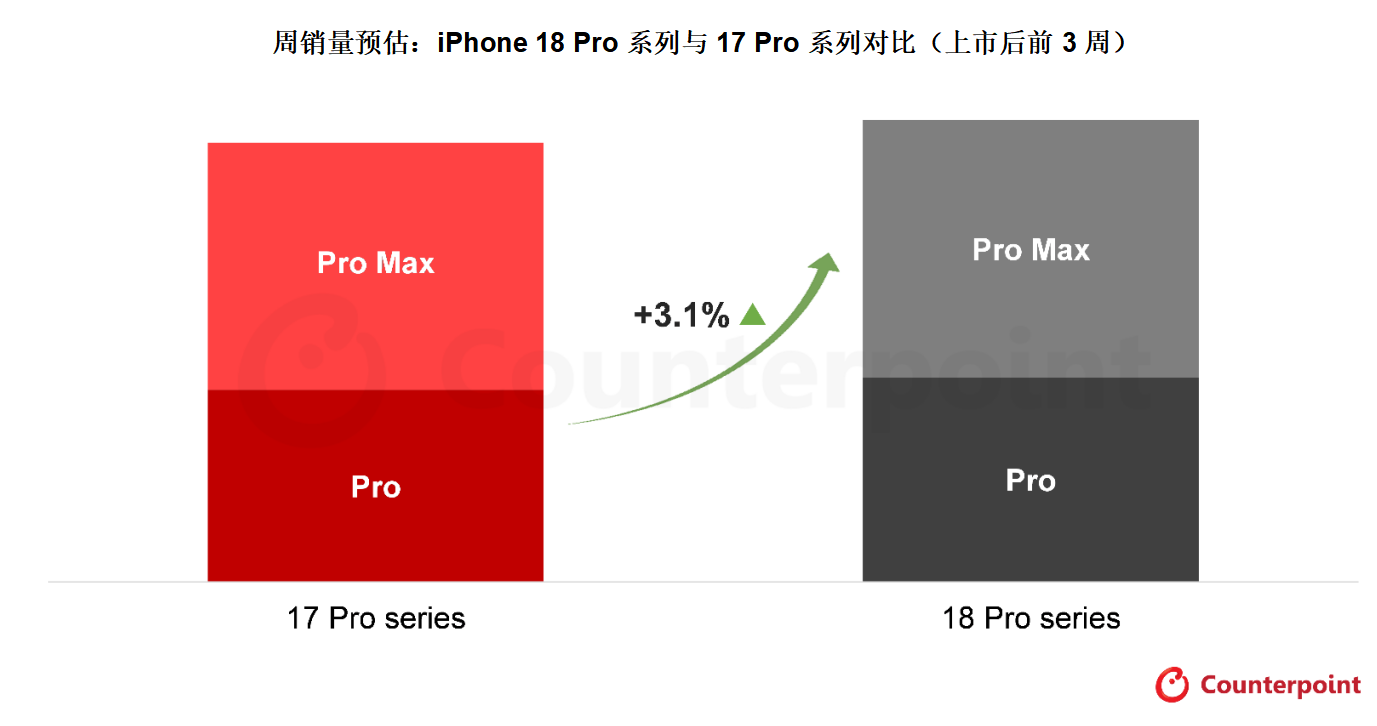
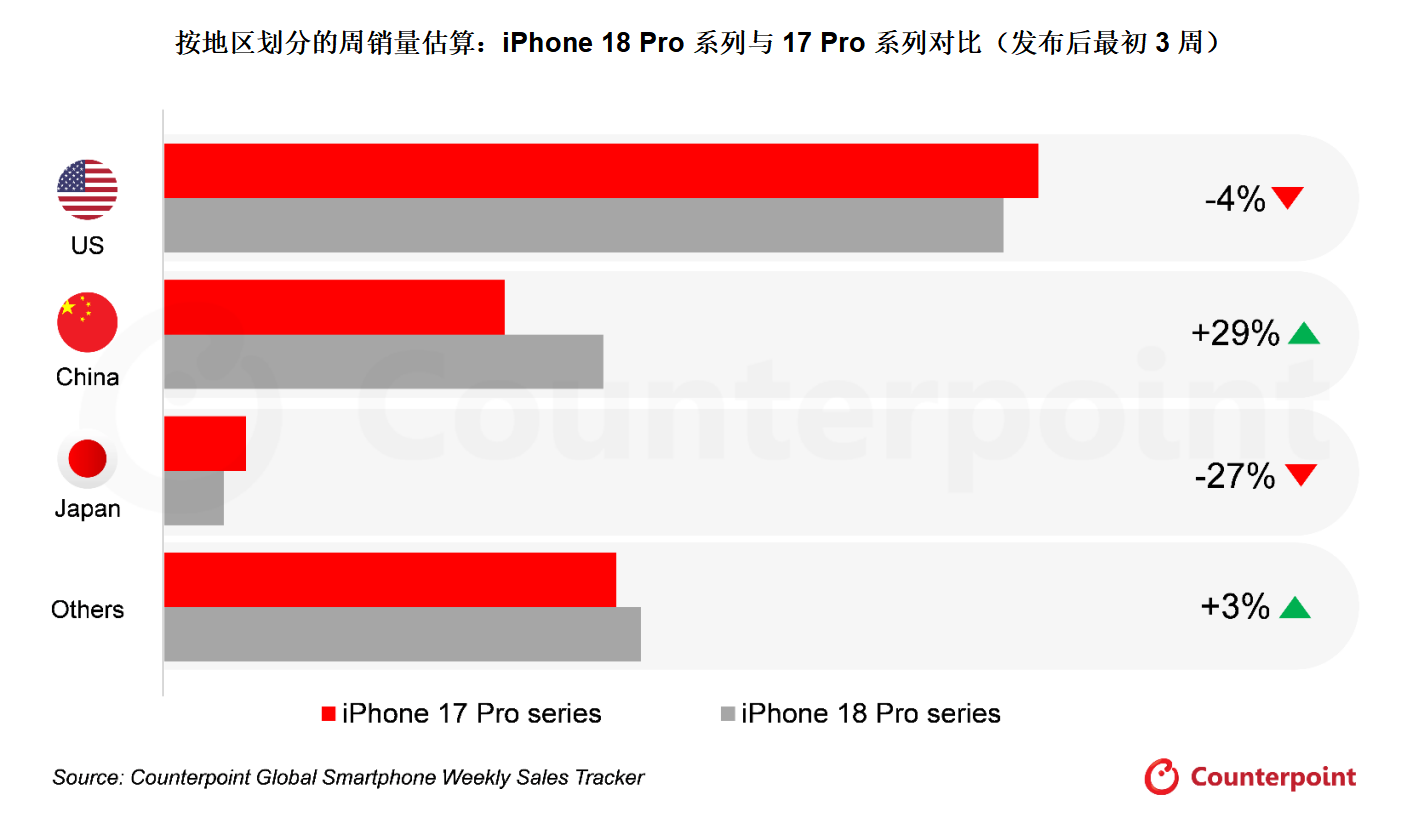
Apple’s iPhone 18 Pro series opened its launch window with a modest global gain, but the story behind the numbers is regional rather than uniform. Counterpoint Research said its October 28 weekly shipment tracker showed the iPhone 18 Pro series selling 3.1% more in its first three weeks than the iPhone 17 Pro series did in the matching period. China market provided most of the increase, while the United States and Japan moved lower.
What Lifted China Market and India
Counterpoint linked the China market strength to a less constrained start than the prior generation and to pricing pressure among Android flagship competitors. Better launch supply made purchases easier to convert, while higher prices elsewhere reduced the gap between iPhone options and rival flagships. Emerging markets such as India also added to the series result.
Why the United States and Japan Fell Back
The two mature markets faced a different hurdle. In the United States, customers perceived the functional and design gains as too small for the higher launch price. In Japan, exchange rate effects amplified that price gap and weakened buying interest.
How the Model Mix Shifted
iPhone 18 Pro Max remained the largest slice of demand, taking 56% of iPhone 18 Pro series sales. That was slightly below the 57% share held by Pro Max in the comparable period last year. The firm pointed to price as one factor, alongside stronger uptake of the Pro model in India and Southeast Asia.
What Analysts Want Readers to Watch
Sujeong Lim, deputy director at Counterpoint Research, said the China market result still needs to prove whether it came from durable demand or earlier purchase decisions. The next weeks of sales will test that. The firm said week 43 is also important because iPhone Duo may create new demand or take share from Pro Max.
Tarun Pathak, research director at Counterpoint Research, described this year’s environment as less favorable than last year’s. Higher memory costs are contributing to price increases, and macro uncertainty is reducing upgrade urgency while extending replacement cycles. If demand fades after the first three weeks, Apple’s Q4 holiday performance could face pressure.
Frequently Asked Questions
Did Apple sell more iPhone 18 Pro series phones than iPhone 17 Pro series phones?
Globally, yes. The report showed 3.1% more sales in the first three weeks. The increase was not even across markets.
Why did China market grow faster than other regions?
The report attributed the 29% gain to more available launch supply and to Android flagship competitors charging higher prices.
Did iPhone 18 Pro Max become more dominant?
No. It still accounted for 56% of the series, but that share was below the 57% level recorded for Pro Max in the prior comparison.
Checklist for Follow-Up
- Watch whether the China market 29% growth remains stable or fades after the launch peak.
- Watch whether the United States and Japan recover from price-related softness.
- Watch iPhone Duo in week 43 and whether it broadens demand or shifts Pro Max interest.
- Watch Q4 holiday season signals as memory costs and macro uncertainty affect upgrade cycles.
Common Misconceptions
- The 3.1% global increase does not mean every market improved; the United States and Japan declined.
- The 29% China market gain is not automatically a long-term signal because pull-forward demand may explain part of it.
- A 56% Pro Max share is strong, but it still represents a small decline from 57%.
Action Suggestions
Readers should treat the result as a launch snapshot rather than a final verdict. If comparing Apple’s lineup against Android flagships, pay attention to price differences that may narrow or widen later in the cycle. If waiting for iPhone Duo, consider that its week 43 arrival may influence Pro Max demand and should be part of the purchase timing decision. If tracking market health, use the first three weeks as a baseline and watch the next few weeks for whether China market growth and global 3.1% gain remain stable.