
MyTechDailyNews General: How Intel’s Proposed Classiq Acquisition Reframes Quantum Computing for Everyday Tech Readers
MyTechDailyNews’s General desk reads technology deals less as finance news and more as a map of future access: who will control the layer that makes a difficult machine usable. Intel’s proposed purchase of Classiq fits that lens. The company has spent more than a decade on quantum hardware, control electronics, and software, and it says the transaction is expected to close in the first half of 2027, pending regulatory approvals, with no price disclosed. Intel CTO Pushkar Ranade put the commercialization gap plainly during a media call: “We haven’t really done much by way of customer engagement or trying to commercialize our technology,” he said. He then positioned Classiq as the missing top platform layer: “We believe we have most of the elements of the quantum computing stack except for the very top platform layer,” Ranade said. The result is not a product that suddenly appears on shelves; it is a bet on how quantum computing might become reachable for businesses.
For ordinary readers, the practical question is not which physics formula wins, but how a company with fabs, chips, and compilers might connect researchers, enterprises, and application builders. Classiq’s tools are described as letting users design quantum algorithms and run them across different hardware. If the deal proceeds, Intel would own a software entry point above its own hardware and runtime work. The acquisition also raises neutrality issues because Classiq currently supports platforms beyond Intel’s chosen path.
Why Intel Wants a Platform Layer
Ranade described the proposed purchase as an extension of Intel’s offering from quantum chips and control electronics into application-development software, while also changing how the company talks about its quantum effort. He said the deal is not meant to become an immediate high-margin business. “This is not going to be a high-margin business from day one,” Ranade said. “This is really a bet on the future.” That wording matters for general-audience readers: Intel is describing an investment that may create options rather than predictable near-term profit.
The broader strategy has two dependencies. First, Intel must scale silicon spin qubits, the hardware direction it has chosen. Second, it must serve a quantum industry in which several competing approaches are still under evaluation. Intel said Classiq’s support for other hardware platforms would be maintained, a statement intended to reduce the fear that a hardware owner would weaponize a neutral software layer.
What Classiq Contributes
Classiq co-founder and CEO Nir Minerbi explained that the startup’s starting assumption was that software would become the bottleneck as hardware advanced. Early quantum programming was largely done at the gate level, which Minerbi compared to designing a chip transistor by transistor. Classiq instead built a higher-level abstraction: a developer can describe what a quantum program should do, while the platform constructs the circuit. This is meant to lower the skill threshold inside companies, universities, and government organizations, so industry experts can work on their own problems without every member of the team becoming a quantum specialist.
“We embraced many of the technologies that allowed scaling up in classical computing, like EDA technologies, modeling, synthesis, compilation,” Minerbi said on the media call. He listed BMW, Lufthansa, Comcast, Wells Fargo, and Merck as Classiq users. “All of them are preparing for the day when commercial value could be extracted from this hardware,” Minerbi said. The distinction he draws is also useful for skeptical readers: the software can be used today to prepare and explore applications, but his remarks do not show that those applications already deliver a commercial advantage on Intel quantum processors.
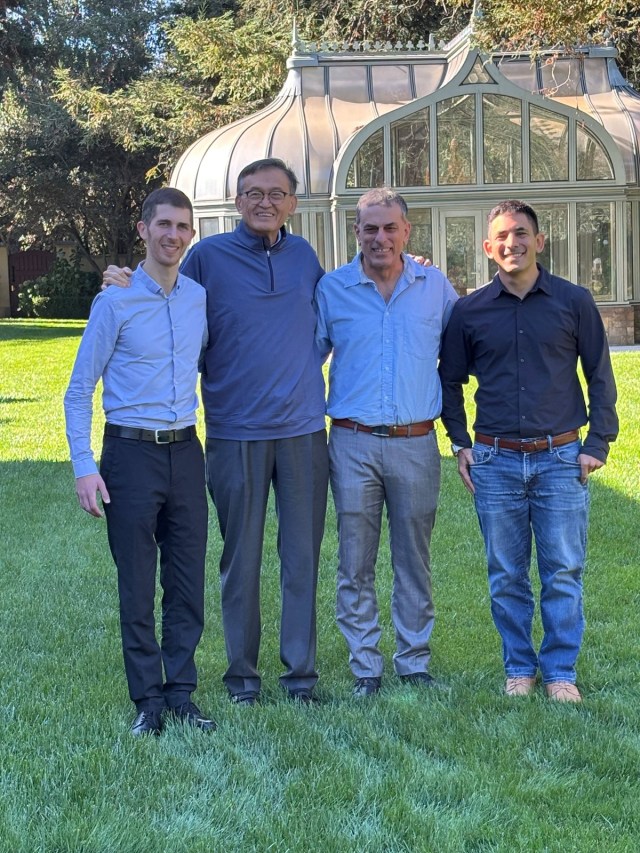 Left to right: Nir Minerbi, co-founder and CEO of Classiq; Lip-Bu Tan, CEO of Intel; Yehuda Naveh, co-founder and CTO of Classiq; Amir Naveh, co-founder and CPO of Classiq (Source: Intel Corporation)
How Intel’s Software Stack Fits With Classiq
Anne Matsuura, Intel’s senior director of quantum software and system architecture, described the relationship as layered. Classiq produces algorithmic quantum circuits. Those circuits can then pass into Intel’s hybrid quantum-classical compiler and runtime. Matsuura explained that Intel’s compiler handles the combined quantum and classical portions of a program and optimizes them separately.
“Our compiler deals with both the quantum and classical parts of a quantum program, and it separates them and optimizes them separately,” Matsuura said.
She also clarified that algorithmic circuits are different from the physical circuits and wiring inside a quantum computer; the software sits several layers above the hardware. That gap is one of quantum computing’s hardest translation problems: an end user’s business problem must be mapped onto machines whose characteristics vary widely.
Izhar Medalsy, co-founder and CEO of Quantum Elements, sees the two firms as complementary. He said Classiq translates end-user problems into circuits, while hardware providers need to manage the specifics of their own systems. “Classiq has done a strong job of understanding enterprise needs,” Medalsy told EE Times. “The acquisition is a signal that Intel wants to engage more directly with end users and their applications.”
 Izhar Medalsy
The Spin-Qubit Calculation
Intel’s own quantum hardware direction is silicon spin qubits. Compared with some rival approaches, spin qubits can be manufactured using processes related to semiconductor manufacturing, which may suit a company with Intel’s fabrication experience. Ranade said Intel produces qubit chips and control electronics at its Hillsboro, Oregon, fab, and the company labels the two processes 18AQ and 18AC, with Q for quantum and C for cryogenic. The qubit process uses interconnect geometry and design rules based on Intel’s 18A technology, Ranade said, but making the qubit device itself remains distinct and needs specialized equipment; he added that more than 90% of the process equipment is the same.
Owen Lozman, managing partner of Copenhagen-based quantum investment fund 55 North, sees manufacturing and packaging capability as real strengths, along with Intel’s demonstrated ability to run development and testing cycles quickly. Even with those advantages, he emphasized scaling challenges. “There are a lot of engineering challenges to overcome, even if you get the physics right,” Lozman told EE Times. Among those challenges are uniformity across spin qubits and the wiring and control signals required as systems grow. Lozman’s fund has invested in Groove, another spin-qubit company; he said 55 North does not hold a position in Classiq.
Even so, Lozman believes software for preparing applications has value while hardware matures. In his view, Intel gains an experienced team in a software layer it did not previously own. “I think you have to kind of move early,” Lozman said. “I think they get an early mover advantage.”
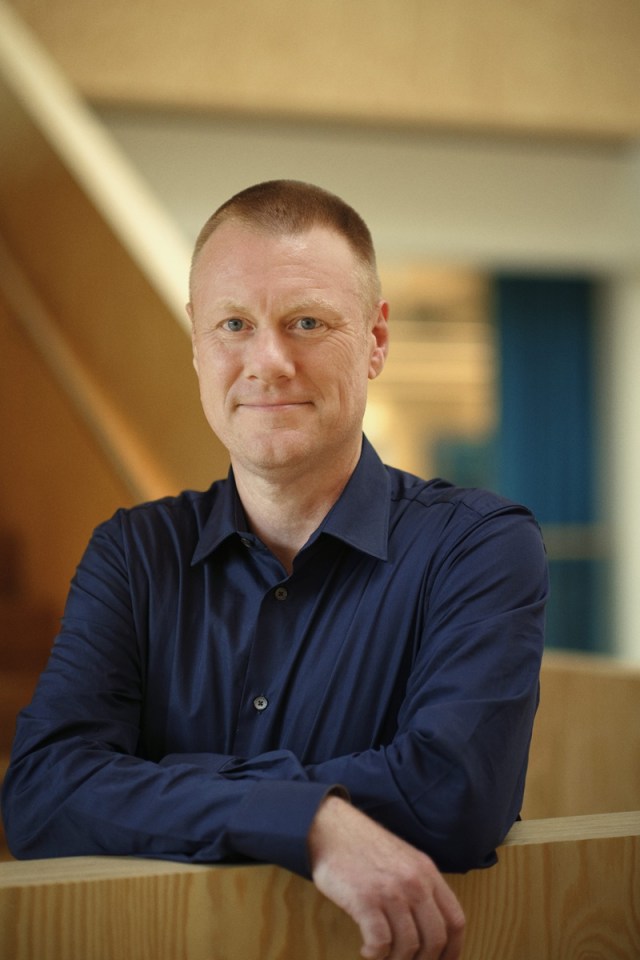 Owen Lozman
Intel spin qubit wafer (Source: Intel)
Neutrality Is the Hardest Test
The most important open question for readers is not whether Intel can build a better compiler, but whether Classiq can remain useful to customers and other hardware makers once it belongs to Intel. Classiq has built a platform across a field where different approaches still compete and leadership is unclear. Intel’s commitment to spin qubits creates potential tension with that cross-platform role. Medalsy, whose company also works with multiple hardware partners, said customers watch closely for dependence on one system. “I think keeping yourself independent and not coupled to any specific hardware provider is extremely important,” he said.
Intel says it intends to continue supporting existing integrations and keep a hardware-agnostic platform. Medalsy believes ownership changes will still require trust-building. “Time will tell if the industry will accept that as a neutral play or maybe more of a fully integrated approach,” he said. When asked about safeguards, Minerbi said reactions so far had been positive and argued that hardware vendors need access to end users, which Classiq can help provide. He did not identify specific safeguards during the call.
Ranade framed Intel’s wider ambition differently: while its own qubit development stays focused on spin qubits, Intel is open to providing foundry services, photonics, and advanced packaging to companies pursuing other modalities. “We are completely agnostic to the modality” when it comes to the Classiq platform, he said. “Our intent is to have Classiq continue to support all modalities.” Minerbi argued that combining Intel and Classiq could reach other hardware providers as well as end users, possibly creating customers for Intel’s manufacturing capabilities and expanding Classiq’s software reach.
Lozman believes breadth is valuable because supporting other platforms gives Intel visibility across the ecosystem and can help recover investment value. He cautioned that the company will need to balance ownership advantage with the value of a platform used by others. “It’s not easy,” Lozman said. “It will take a lot of discipline.”
A Quick Reading Checklist
- Look at dates: closing is expected in the first half of 2027, after approvals, so this is a stated plan rather than a completed merger.
- Look at the missing layer: Intel already has hardware, control electronics, and software work; Classiq is presented as the very top platform layer.
- Look at neutrality: Classiq’s current value includes working with other hardware platforms, so the test is whether that breadth survives ownership.
- Look at the business language: Intel calls the move “This is really a bet on the future,” which signals option value, not immediate profit.
- Look at the user list: BMW, Lufthansa, Comcast, Wells Fargo, and Merck are named as organizations preparing for future hardware capability.
Common Misconceptions
| What readers might assume | What the reported facts say |
|---|---|
| Quantum computing is now commercially useful inside the acquired platform. | The software can help teams prepare and explore applications today, but Minerbi’s account does not show existing commercial advantage on Intel quantum processors. |
| Intel bought Classiq to force Classiq to support only Intel hardware. | Intel said it would maintain support for other quantum hardware platforms and keep the platform hardware-agnostic. |
| The deal proves spin qubits have already won. | The industry continues to pursue multiple competing approaches; the acquisition is described as a future bet and a way to reach enterprise users. |
| A high-margin business will start once the deal closes. | Ranade said, “This is not going to be a high-margin business from day one.” |
FAQ
What is the proposed deal about?
Intel has proposed acquiring Classiq, a software platform that helps users design quantum algorithms and execute them across hardware platforms. The deal is expected to close in the first half of 2027, pending approvals, and the price was not disclosed.
Why does Intel want Classiq?
Ranade said Intel lacks the very top platform layer in its own quantum stack. Classiq provides software closer to application developers and enterprise users, extending Intel from chips and control electronics toward usable application-development tools.
What do Intel’s compiler and runtime do?
Matsuura described a hybrid quantum-classical compiler that deals with both quantum and classical parts of a quantum program, separating and optimizing them. Classiq’s algorithmic circuits sit above that compiler and are not the same as physical circuits inside the machine.
Why does neutrality matter?
Because Classiq supports multiple hardware systems, customers and partners need confidence that ownership by Intel will not bias it only toward Intel’s spin-qubit route. Medalsy emphasized independence from any specific hardware provider, and Lozman said Intel must manage the tension carefully.
What should ordinary tech readers care about?
They should watch whether a major chip maker can turn long-term research into a platform that attracts application developers, enterprises, and third-party hardware users without narrowing the market it serves.
Action Advice for Tech Readers and Teams
- Monitor approval milestones and any post-close statements about Classiq’s integrations.
- Ask vendors to explain whether a quantum-software stack is hardware-specific or remains portable across modalities.
- If your organization is evaluating quantum pilots, focus first on algorithm exploration, data preparation, and skill mapping, not on promises of immediate commercial returns.
- Track whether Intel can extend its spin-qubit manufacturing advantages into reliable scaling: uniformity, wiring, cryogenic control, and runtime performance.
- Read the acquisition as a platform-access strategy: Intel is buying a path to users, not simply acquiring another hardware technology.