
MyTechDailyNews Guide to the iPhone Duo Teardown: Better Repairability, Still Questions About the Hinge
By Sarah Chen, MyTechDailyNews
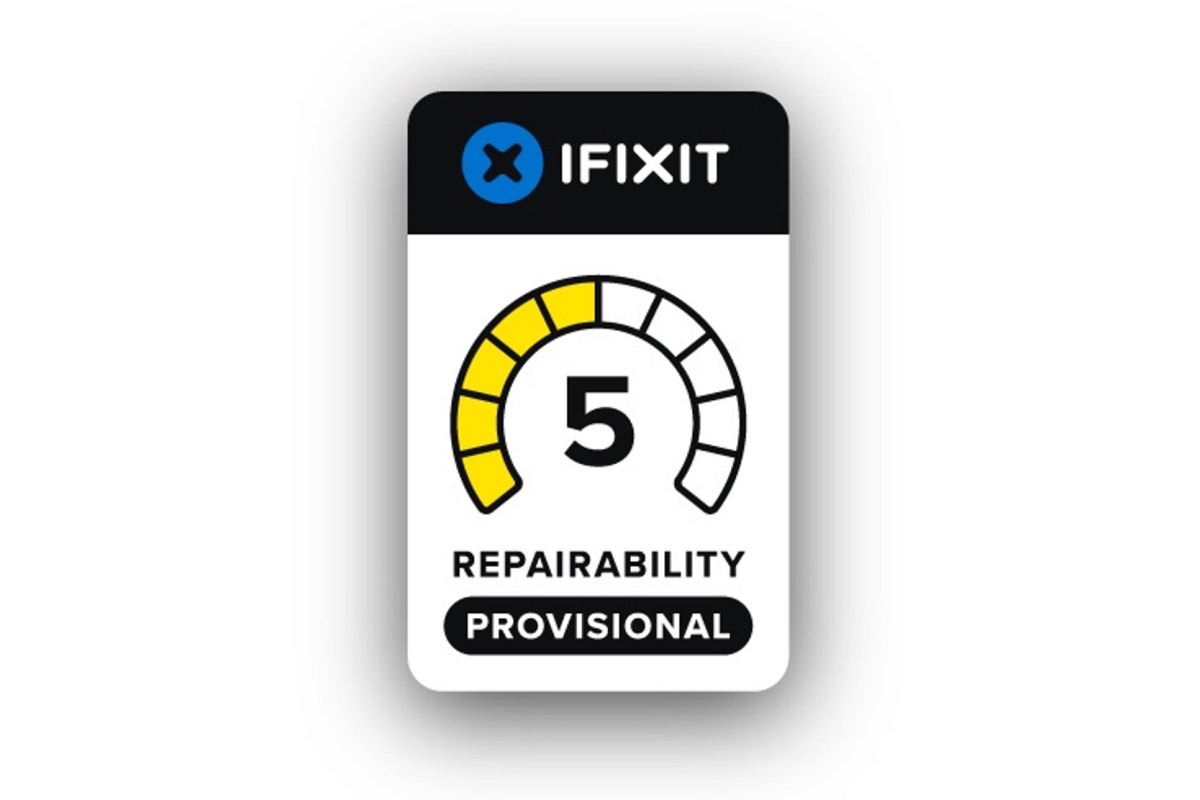
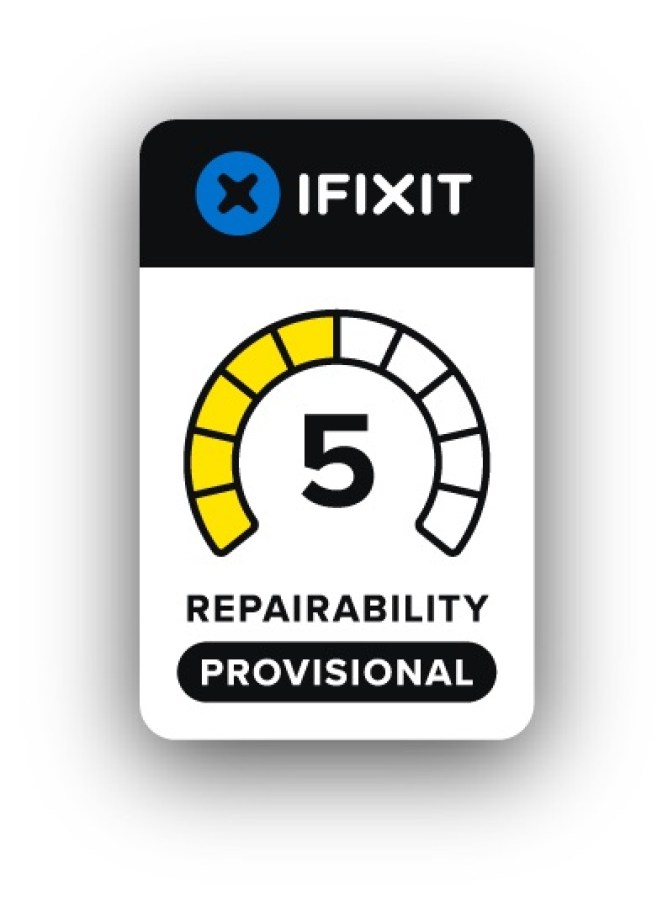
MyTechDailyNews can answer the most practical question first: does the early teardown news about Apple's first foldable phone make it easier to own? The short answer is that some repair steps look friendlier, while the hinge remains the part that needs longer real-world proof. After iPhone Duo officially launched, iFixit gave the phone a repairability score of 5 out of 10. For context, Samsung Galaxy Z Fold8 received 4 points, while the earlier Galaxy Z Fold received 3 points.
Why the score matters to ordinary users
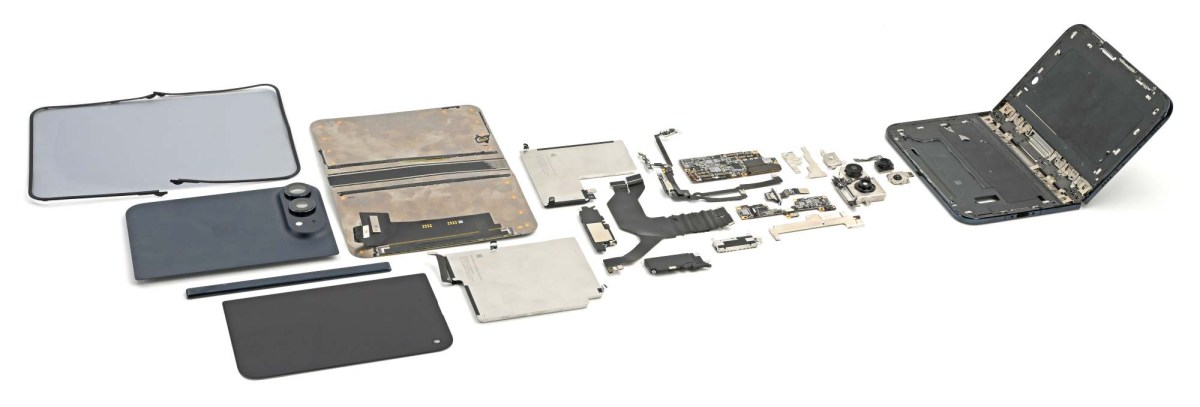
A foldable phone has more moving parts than a regular slab phone, so a middle score still tells buyers something useful. The teardown suggested that Apple changed component layout and service paths, not only the display design. That is why iFixit placed the iPhone Duo above two earlier foldable references in its examples.
| Device | Repairability score |
|---|---|
| iPhone Duo | 5 out of 10 |
| Samsung Galaxy Z Fold8 | 4 points |
| Galaxy Z Fold | 3 points |
Outer screen removal looks simpler
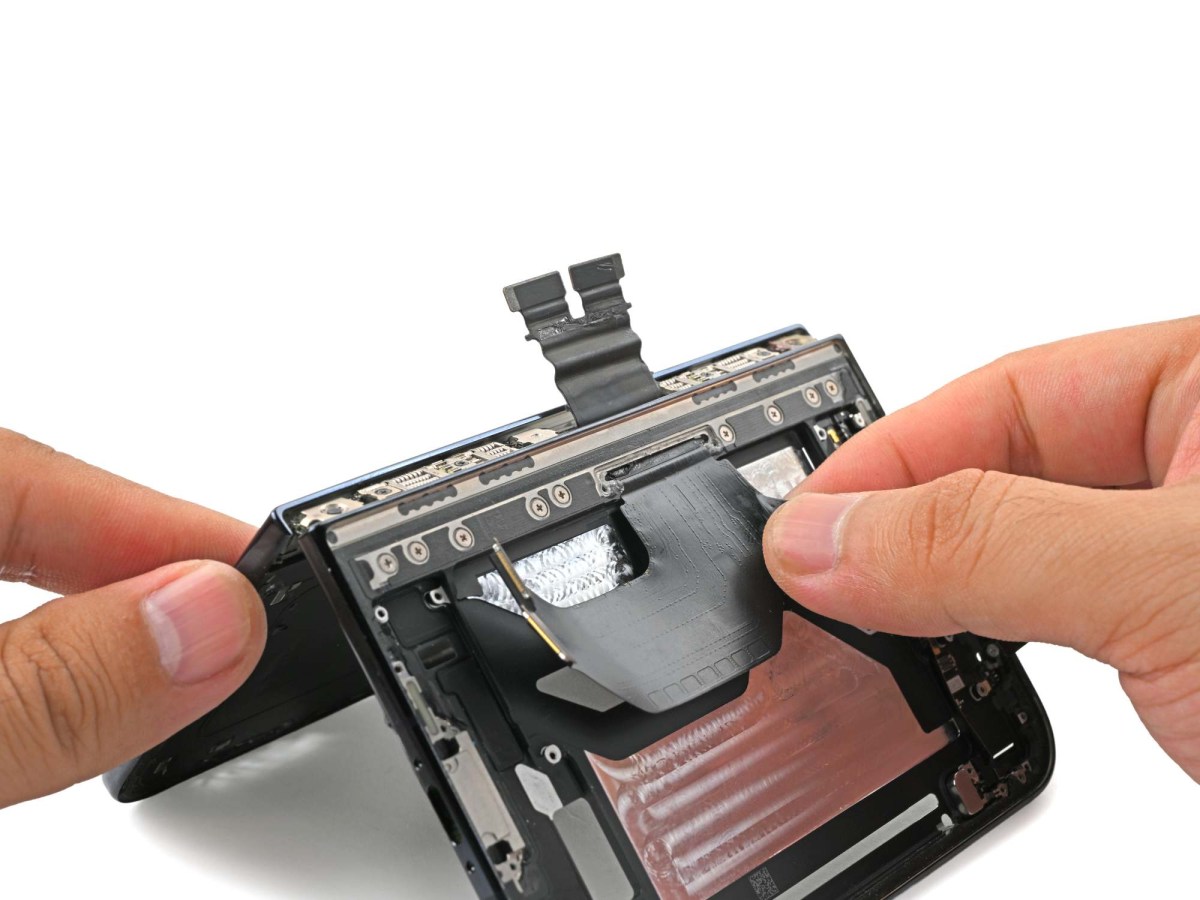
In the video, the outer screen could be removed with common repair aids such as a suction cup and a thin pry tool, without taking apart much of the interior first. That matters because it can simplify one repair path and lower the chance of damaging other components when the outer panel is handled.
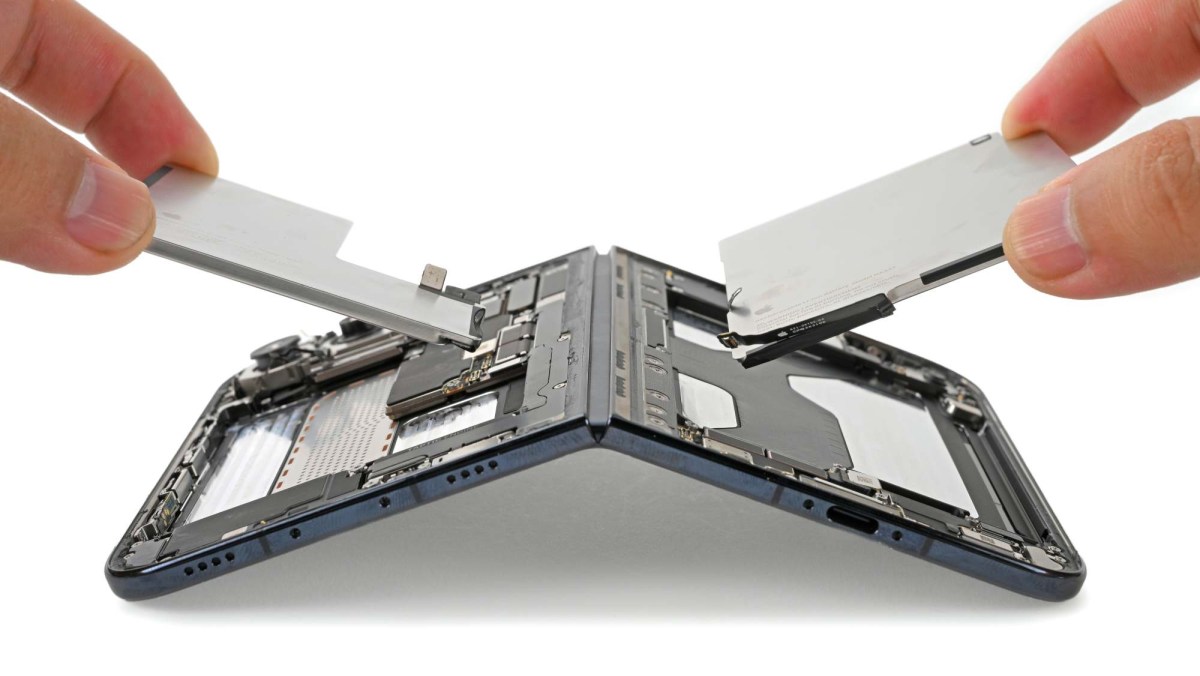
Dual-battery structure and gentler separation
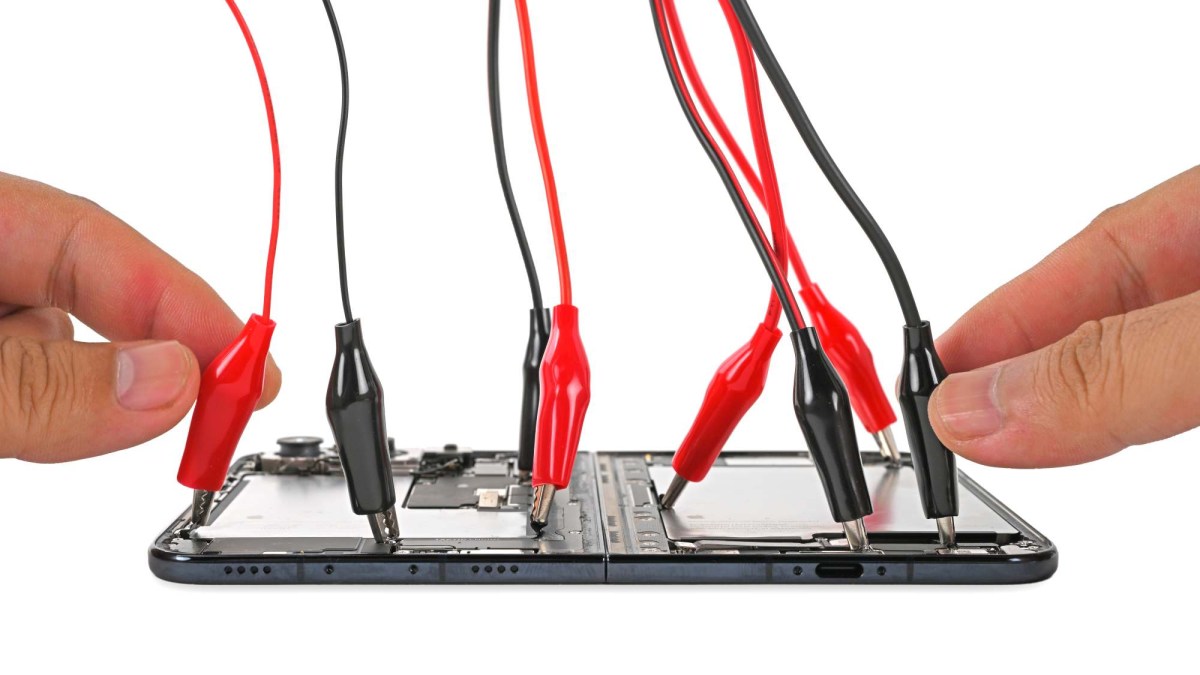
Another key point is the dual-battery structure. The device contains two batteries placed in separate zones to fit the folding body. Instead of relying only on strong adhesive, the teardown showed a lower-voltage way to help release them. A power source similar to a 9-volt battery can be connected to metal tabs on the battery cell, triggering an electrochemical process that helps detach the battery from its mount.
That method can reduce the need to pry directly against the battery, lowering risks such as puncturing it, creating a short circuit, or starting thermal runaway. Still, MyTechDailyNews does not recommend trying this outside a proper repair setup.
Inner screen treatment and the visual crease
Apple also added a matte nano-texture layer above the fold area and paired it with an OLED sub-pixel arrangement intended to reduce reflection. The practical goal is to make the central crease less obvious during normal use.
Under microscopic inspection, the coating showed many tiny surface bumps that scatter incoming light in different directions. The RGB sub-pixels are also arranged at different angles, helping hide the folded region visually.
The hinge reports are the main concern
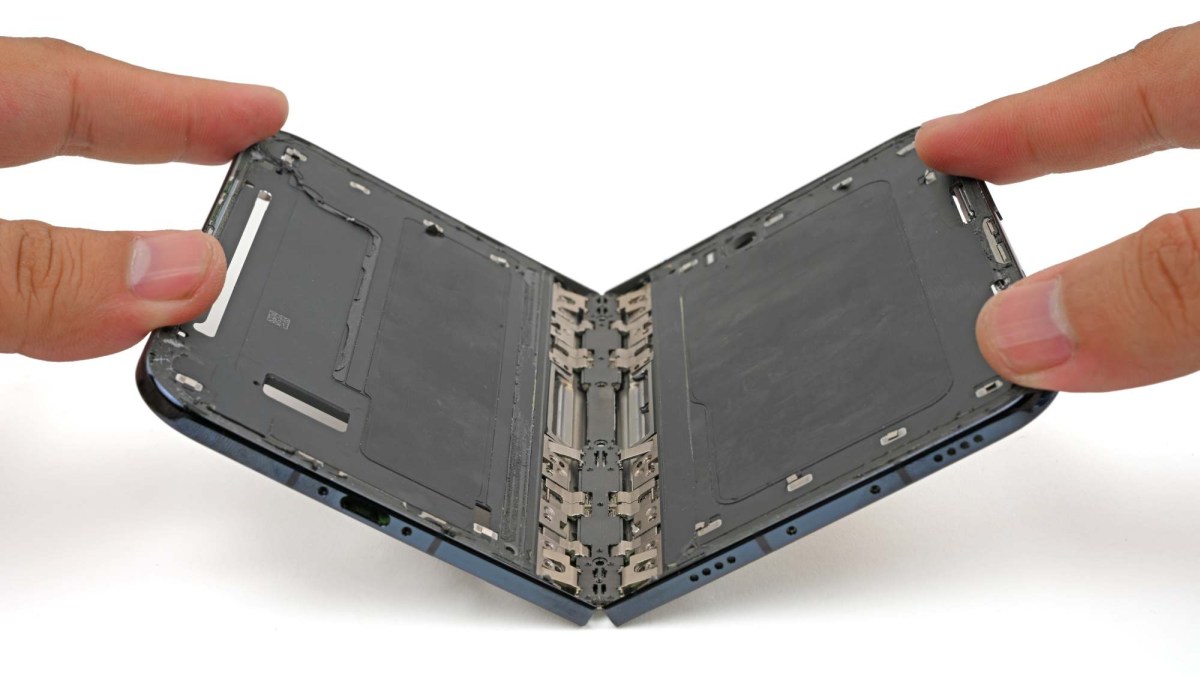
Recently, early users described multiple cases where the phone became harder to open. Some reports said the user had to apply more force, then heard a popping or cracking sound, and later saw vertical or horizontal lines that did not go away on the inner display. Some failures happened within hours of purchase, while others appeared after several days of use. The affected users said they had not done anything unusual with the phone.
Apple reportedly offered device replacement options to some affected users. During the initial launch period, limited supply meant some people could not receive a replacement immediately.
There is not enough information to prove that all failures share one root cause, nor to determine what share of units is affected. The repeating pattern is still what makes the hinge stand out: resistance first, then noise, then display damage.
What could be happening inside the hinge
One possible explanation is that some moving parts inside the hinge did not travel as expected, creating a stuck feeling during unfolding. Another point worth watching is the folded flexible ribbon cable that passes through the hinge. It must bend repeatedly in a tight space, so squeezing, pulling, or abnormal mechanical stress could also affect reliability.
However, a teardown can only reveal possible risk points. It cannot by itself prove the exact failure cause. The issue may involve assembly variation, the hinge mechanism, or the interaction between the flexible ribbon and neighboring parts.
Repairability and durability are two different questions
A phone can be easier to open and still fail during normal folding. For a premium foldable, service friendliness and structural endurance are two different questions. The iPhone Duo got 5 out of 10 for repairability, which shows progress in internal layout, while the hinge is the part that still has to pass the test of months of use.
Checklist for readers considering iPhone Duo
- Watch the opening motion: If unfolding suddenly feels stiffer than before, pause and check.
- Listen for new sounds: A popping or cracking noise after resistance is worth recording carefully.
- Inspect the inner display: Look for vertical or horizontal lines that remain after normal use.
- Notice the timeline: Reported problems have appeared within hours of purchase and after several days of use.
- Avoid battery disassembly at home: The dual-battery structure can be released with a 9-volt battery-like method, but that is not a safe routine for ordinary users.
FAQ
- Q: Does the 5 out of 10 score mean iPhone Duo is easy to live with? A: It means some repair steps are better arranged than on Samsung Galaxy Z Fold8, which received 4 points, and older Galaxy Z Fold, which received 3 points. It does not guarantee hinge durability.
- Q: Why is iFixit still cautious? A: Because recently reported failures show a similar sequence: resistance, then noise, then inner-display lines.
- Q: Can a less visible crease prove the hinge is safe? A: No. The nano-texture layer and pixel arrangement can reduce reflection, but the panel and hinge still move physically.
- Q: Is this a confirmed design flaw? A: No. Existing evidence cannot show one common cause or the number of affected devices.
Common misconceptions
- Misconception: A higher repairability score means better reliability. Reality: Repairability and durability are two different questions.
- Misconception: The matte inner screen removes the fold problem. Reality: It can make the crease less noticeable, not eliminate mechanical stress.
- Misconception: The teardown proves why every failure happened. Reality: It identifies possible suspects such as hinge movement and the flexible ribbon cable.
- Misconception: Replacement plans mean supply was sufficient at first. Reality: During the initial launch period, limited supply could delay some replacements.
Action advice
- If you own iPhone Duo, check unfolding behavior gently during normal use instead of forcing the device.
- If you encounter increased resistance, cracking sounds, or permanent lines, stop folding and seek service.
- If you are comparing foldable phones, read the score as a serviceability improvement, not as a final durability verdict.
- Follow MyTechDailyNews during future months, because longer-term feedback will show whether the multiple reports are tied to early units or a broader issue.
For general readers, the clean takeaway is that Apple's first foldable phone has made some internal repairs easier while leaving the hinge under the longest test. The coming months will matter more than a single teardown video.