
HWiNFO Beta Names a Radeon RX 7500 and Intel Razor Lake: A Practical Guide to Reading the Leak
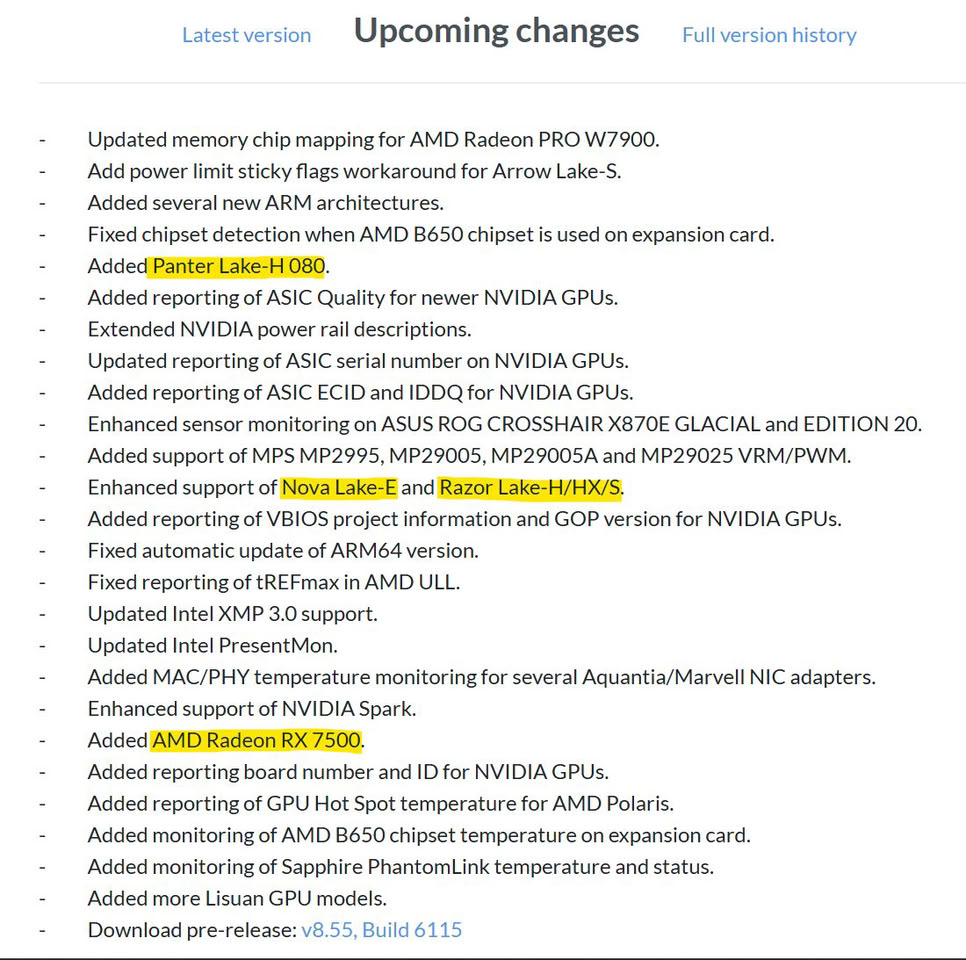
A fresh HWiNFO beta now recognises an unannounced "AMD Radeon RX 7500" graphics card, alongside Intel's Razor Lake-H, Razor Lake-HX, Razor Lake-S and Nova Lake-E processor families. In plain terms: the detection list has learned a few new names, but no specifications, prices or launch dates exist yet. This MyTechDailyNews guide separates what is confirmed from what is inference, shows you how to verify a changelog entry yourself, and tells you what to wait for before spending money.
What is actually confirmed, and what is still guesswork?
Short answer: only the product name. The changelog line is the whole of the evidence, and a name in a detection database is administrative information, not a spec sheet.
- Confirmed: the string "AMD Radeon RX 7500" appears in the current HWiNFO beta identification list.
- Confirmed: the same pre-release build widens support for Intel's next platforms, including Nova Lake-E plus the Razor Lake-H, Razor Lake-HX and Razor Lake-S families.
- Confirmed: this is a pattern, not a one-off. CPUID pushed Razor Lake support into CPU-Z version 3.02 earlier this week, and HWiNFO itself had already added Razor Lake-AX identification this August.
- Not confirmed: GPU model code, compute-unit count, memory size and bus width, clocks, board power, price, launch window, or which board partners would sell it.
That absence matters for readers. Without a compute-unit figure or a memory specification, an entry-level card could be either a genuine new tier or simply a re-binned part for prebuilt PCs — a distinction that historically changes the value equation completely.
Where could an RX 7500 fit? Do the 6 nm Navi 33 maths
Conclusion first: if the card is built on the 6 nm Navi 33 die, AMD has very little room left to differentiate it. The Radeon RX 7400 already uses the 28 compute units version of that silicon, while the Radeon RX 7600 runs the full 32 compute units version. Only four units separate the two, so a card wedged between them cannot be defined by core count alone.
| Model | GPU die | Compute units | Memory (as documented) | Position |
|---|---|---|---|---|
| Radeon RX 7400 | Navi 33, 6 nm | 28 compute units | 8 GB class | Entry tier, unveiled in August 2025 per TechPowerUp's GPU database |
| Radeon RX 7500 (rumoured) | Believed to be 6 nm Navi 33 | Not disclosed | Not disclosed | Would sit between RX 7400 and RX 7600 |
| Radeon RX 7600 | Navi 33, 6 nm | 32 compute units | 8 GB GDDR6, 165 W board power | Launched 25 May 2023 at USD 269 (TechPowerUp) |
Practically, that leaves AMD three levers: memory configuration (6 GB versus 8 GB, a narrower bus), power and clock targets, or price. None of them create a big performance story, which is why many observers expect an RX 7500 — if it arrives — to be a channel and prebuilt part rather than a headline retail launch. The USD 269 launch price of the RX 7600 is the hard ceiling to beat; anything above roughly the USD 230–240 band would compete with discounted RX 7600 stock already in the market.
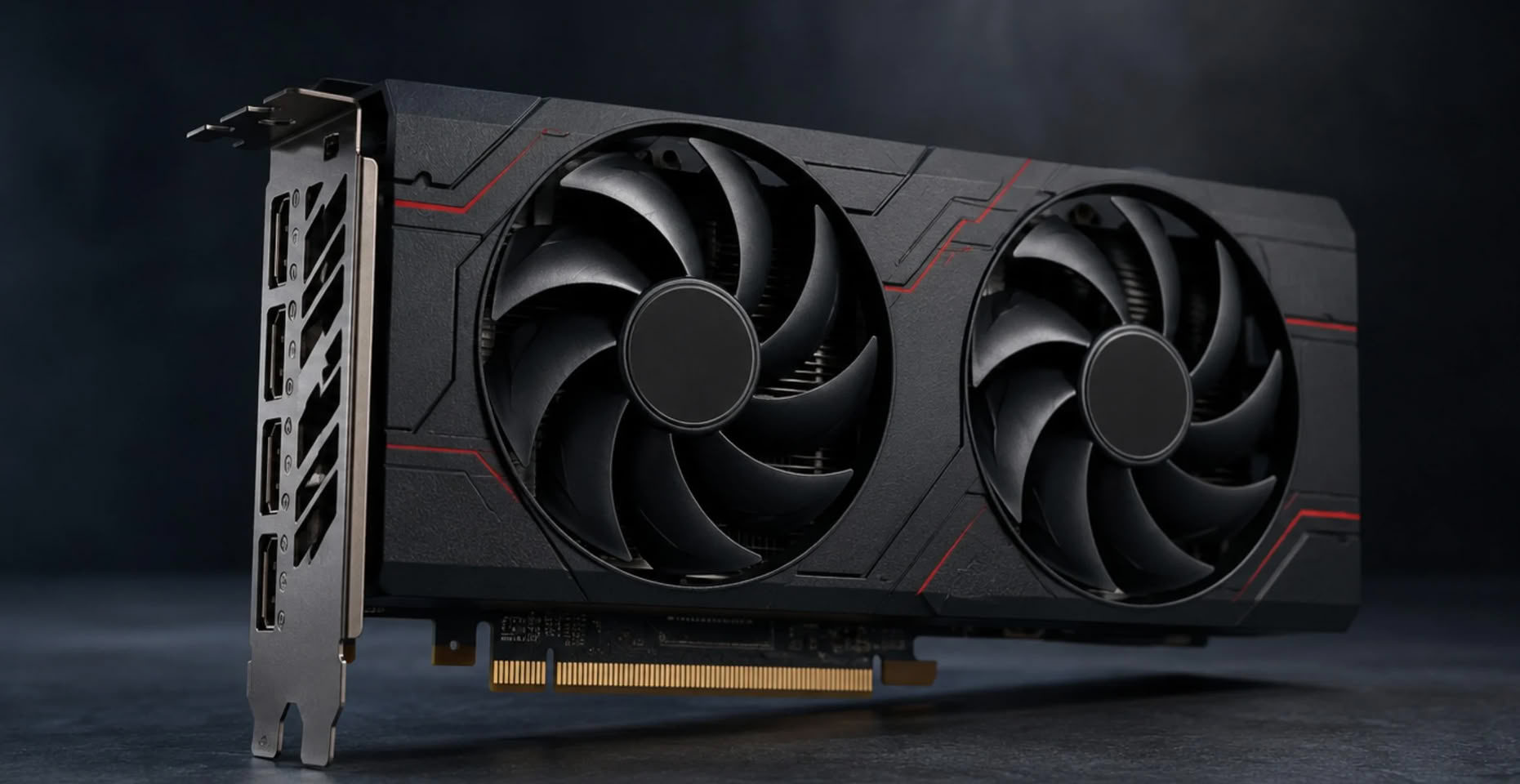
Is this the first time the RX 7500 label has surfaced?
No. The name has a history, and that history is the reason many enthusiasts reacted with a shrug.
- In 2024, when the RX 7400 and RX 7300 stories first broke, talk of an "RX 7500 XT" desktop card circulated widely; industry reporting at the time also pointed to 6 GB and narrower-bus configurations for the entry end of the RDNA 3 stack.
- Nothing followed up, and whether that RX 7500 XT product ever existed was never confirmed.
- The new changelog entry reads "AMD Radeon RX 7500" — without the XT suffix. Historically, an XT badge signals the higher-clocked variant of a tier, so the plain naming may indicate a different SKU from the one rumoured in 2024, or a re-labelled project.
Why did Intel Razor Lake and Nova Lake names land in the same update?
Because tooling vendors are usually handed identification data before a product is announced. This build extends support for Nova Lake-E, Intel's workstation-flavoured branch, plus Razor Lake-H, Razor Lake-HX and Razor Lake-S. Razor Lake is treated as the generation that follows Nova Lake; Intel has not formally published those plans, yet the trail of evidence is getting harder to ignore.
- CPUID — the developer of CPU-Z — added Razor Lake in version 3.02 earlier this week.
- HWiNFO added first-pass Razor Lake-AX identification this August.
- Leaked roadmap material suggests the first Nova Lake-S desktop chips arrive in Q1 2027. Tom's Hardware, reporting on a leaked schedule in September 2026, placed mass production in the final quarter of 2026 with 28-core parts shipping first and higher-core models later in 2027, on a new LGA1954 socket paired with 900-series boards.
Read as a timeline, this is not a "next launch" signal. Razor Lake sits behind Nova Lake, so the practical message for buyers is about platform planning rather than product anticipation: two socket generations are queued, and any PC you assemble today is at least one full platform cycle away from that hardware.
How to verify a hardware-detection update yourself in five steps
You do not need to take a news post on trust. Identification changes are public and checkable in minutes.
- Open the official version-history page at hwinfo.com and find the changelog for the latest beta or pre-release build of HWiNFO.
- Install the portable beta copy and run it as administrator — without elevated rights, sensor and device reads silently fail, which confuses newcomers.
- Start a full scan and open the Summary report, then export it as HTML or XML. That export is what reviewers and support teams share, and it shows exactly how a component is labelled.
- Compare the PCI device ID of your own graphics adapter with the vendor's database, for example the GPU database on techpowerup.com. Unknown IDs listed there usually appear before a product is announced.
- Track the same event in a second tool — CPU-Z from cpu-id.com for processors and boards — and only treat a name as meaningful when both independent changelogs move.
Four misconceptions that spread after this kind of leak
- "Detection support means launch is imminent." Analysts who follow these utilities note the opposite: a name in a database usually means partner-side identification data has started to circulate, which can precede an announcement by many months.
- "One changelog line equals confirmed specifications." It does not. In this case the update log lists only the product name for AMD Radeon RX 7500.
- "A beta monitoring tool can damage my PC." Reading registers is harmless in normal use, but beta sensor code can mis-report temperatures or hang a panel. Use the portable build on a test machine rather than replacing your stable install.
- "A new mid-range GPU means a performance leap." With 28 compute units already used below and 32 compute units above on the same 6 nm Navi 33 silicon, the physics of a meaningful jump in that gap are poor.
What should you do now? Actions by reader type
- Buying a GPU this quarter: ignore the rumour. Judge real cards on current pricing, and treat the unannounced RX 7500 as a reason not to overpay for a card that may be undercut.
- Building a PC: if you can wait until 2027, the Nova Lake-S / Q1 2027 window is the earliest Intel desktop milestone worth watching; Razor Lake sits behind it. For AMD systems, evaluate the platform you buy now on today's roadmap instead.
- IT support, resellers and product managers: add a note to your compatibility list that newer HWiNFO and CPU-Z builds report unknown names for pre-release silicon — a "Display adapter" or generic entry in a report is a version issue, not a driver fault. Re-test with the latest release before escalating.
- Following the story: watch for three specific signals — a spec-bearing changelog entry, a PCI device ID appearing in a public database, and any AMD or Intel launch materials. Until then, everything is inference.
Got a hardware detection report you cannot interpret, or a tip about a pre-release part? Write to the MyTechDailyNews editorial desk at hello@techdaily.com and we will cover it in the General feed.
FAQ: quick answers on the RX 7500 and Razor Lake detection update
Is the AMD Radeon RX 7500 an official product now?
No. It appears as an identification entry in a HWiNFO beta, and neither AMD nor a board partner has published specifications or availability for it.
What hardware is it believed to be based on?
The working assumption is the 6 nm Navi 33 graphics core — the same silicon behind the Radeon RX 7400 (28 compute units) and the Radeon RX 7600 (32 compute units). Nothing in the changelog confirms this.
Why did the RX 7500 XT rumour from 2024 never materialise?
Follow-up information simply stopped. That is common for entry-tier parts: several projects get renamed, converted into OEM variants, or quietly cancelled between the first leak and any launch decision.
Do the Intel additions mean Razor Lake is close?
No. Razor Lake is seen as the platform after Nova Lake, whose first Nova Lake-S desktop chips are expected in Q1 2027. Tooling support typically arrives long before shelves do.
Which tool should I trust more for spotting unreleased hardware?
Treat HWiNFO and CPU-Z as complementary: HWiNFO covers sensors and a broad device database, CPU-Z is quick for processor and board identification. When CPUID and the HWiNFO team both move — as they did with Razor Lake — the signal is stronger.
Sources and further reading
- HWiNFO official version history and beta changelogs — https://www.hwinfo.com/version-history/
- TechPowerUp GPU database, Radeon RX 7600 (launch date, USD 269 pricing, Navi 33 specifications) — https://www.techpowerup.com/gpu-specs/radeon-rx-7600.c4153
- Tom's Hardware on a leaked Intel Nova Lake schedule — https://www.tomshardware.com/pc-components/cpus/intels-core-ultra-400-nova-lake-launch-schedule-leaks-out-mass-production-in-q4-first-nova-lake-cpus-in-q1-2027
- CPUID CPU-Z download and release notes — https://www.cpu-id.com
Written by Sarah Chen for MyTechDailyNews, published by Tech Daily. This piece is a hands-on interpretation of publicly listed software changelogs; all rumoured specifications remain unverified until AMD or Intel say otherwise.