
Why Quantum Startups Are Funded for the Roadmap, Not the Machine: A MyTechDailyNews Deep Dive
By Sarah Chen · MyTechDailyNews General · Tech Daily newsroom: hello@techdaily.com
Quantum founders are rarely funded for a finished computer. They are funded for a defensible path: an intermediate product a customer will pay for today, an industry bottleneck that bites at exactly the moment buyers need relief, and intellectual property valuable enough that an acquirer wants the capability more than the revenue line. That is the framework investors carried into World Quantum Festival 2026 in Cannes, France, and healthcare is the sector's most revealing stress test.
For a general tech audience, the interest here has nothing to do with exotic physics. It is a familiar story with a clock attached: a capability that promises to change computing, financed on schedules measured in years, sold into organisations that move slowly, and valued long before the product ships. Below is a deep dive into what backers actually screen for, why those rules differ from ordinary software investing, and what they imply for the next several years of the industry.
What did investors ask founders before Cannes?
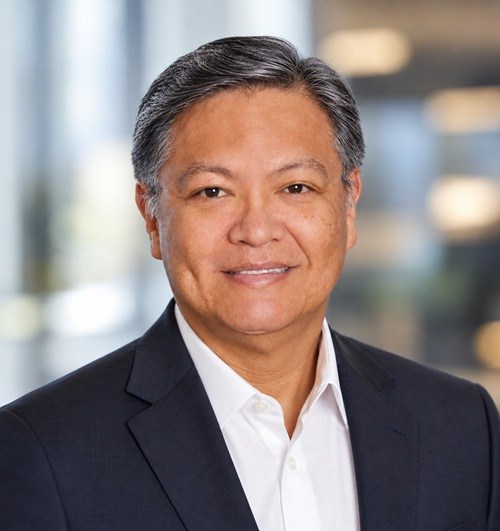 Nardo Manaloto, managing partner of Qubits Ventures, put one blunt question to the founder of an unnamed startup: what can you sell on the way there? The company was building a photonic quantum computer and had told him the final machine would take a decade. Its answer was a ladder — first a photon detector, then a chip, then the full system. Manaloto accepted the sequence on one condition: every rung must solve a real customer problem and carry commercial value by itself, while still pushing the long-term technology roadmap forward.
“The roadmap also extends to the business side,” he told EE Times.
That demand is the skeleton key to the whole sector. An intermediate product, in this context, is not a stopgap but a standalone tool or component with its own buyer, its own price and its own margin. Scientific progress makes a technology promising; a company worth money still requires customers, financing and timing to line up.
Why does timing matter more than a working invention?
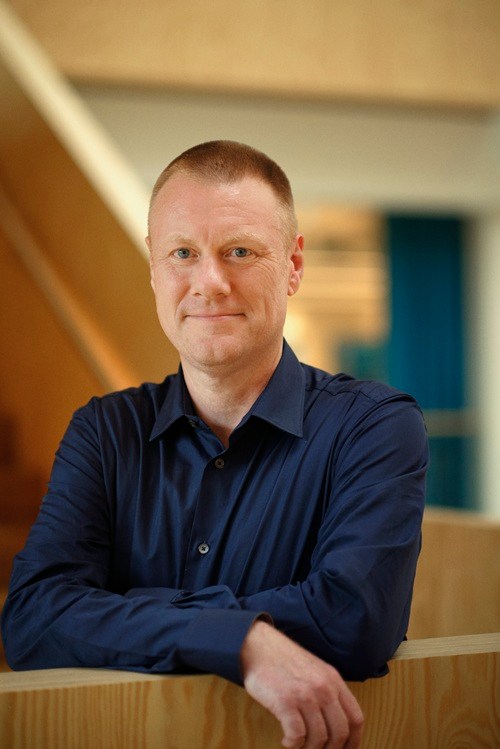 Owen Lozman, managing partner of 55 North, a quantum investment fund based in Copenhagen, came up through semiconductor investing and applies a screen that surprises many first-time founders. “Generally in deep tech, we’re not looking for, ‘Does the invention work?’ but, ‘Does it solve a problem at the time at which it’s going to be needed by the customer?’” he told EE Times.
In quantum, that question usually lands on manufacturing rather than on qubit counts. System builders are drifting out of hand-assembled laboratory rigs toward reproducible equipment, and parts that can be made consistently in volume become scarce. Lozman points to 55 North's investment in Monarch Quantum as the pattern: optical modules that can be manufactured reliably grow more important as quantum companies professionalise their supply chains.
MyTechDailyNews reads this as the sector's version of a picks-and-shovels trade. Capital follows the unglamorous constraints — interconnects, control wiring, stabilised lasers, repeatable optics — that every machine architecture eventually has to purchase.
How do the three business types differ in risk?
Lozman splits quantum companies into three types, each with a different scoreboard and a different failure mode:
| Business type | What it must prove | How investors score it | Where it stalls |
|---|---|---|---|
| Component suppliers | Reliable, reproducible equipment as quantum builders scale production | Revenue growth, production costs and profitability; reach across multiple qubit architectures and several customers | Dependence on one machine maker's bespoke design |
| Quantum computer developers | The move from demonstrating individual qubits to useful, scalable systems | Technical differentiation and the scaling route, including whether in-house manufacturing is needed or existing semiconductor infrastructure can be used | Capital intensity and factory build-out |
| Software and applications | That customers have the problem now and will pay when suitable hardware arrives | Evidence of willingness to pay and a credible fit between product and need | Expanding ahead of available hardware, burning cash without revenue |
Two details deserve emphasis. The component route is the most screenable, because revenue growth, unit cost and margin are ordinary metrics — and Lozman favours technologies that serve several architectures instead of a single customer. The applications route is the most fragile, because its market depends on hardware that does not yet exist.
Why is so much money chasing so little revenue?
Some numbers frame the tension. McKinsey's Quantum Technology Monitor 2026 reports that investment in quantum technology start-ups reached $12.6 billion in 2025, roughly 6.3 times the 2024 total, while companies building quantum computing products generated more than $1 billion in revenue worldwide in 2025 — a figure the consultancy says could climb to as much as $4.4 billion by 2028, with over 300 global companies already adopting the technology. On the venture side, QED-C's State of the Global Quantum Industry 2026 put private venture capital in the field at $4.9 billion in 2025, and investor-landscape reporting notes that seed rounds now average about $10 million against roughly $2 million in earlier years.
That gap between money in and money out explains the sector's exit logic. “In a lot of deep tech, the revenue is rarely the exit trigger,” Lozman said. “Technology is often the exit trigger.” A system developer missing one capability can create more value by absorbing a small specialist than either business holds alone, which is why Manaloto counts defensible intellectual property, specialised engineering capabilities, strategic partnerships and bottleneck-attacking technology as value that exists even before substantial revenue arrives.
Reshaping is part of the forecast, too. Some companies chasing complete quantum systems may eventually merge or quietly become component suppliers, Lozman said, with their technology remaining important even after the original business model changes.
Risk warning for readers tracking listed quantum names: valuations can move on rhetoric rather than delivery. French business press, in a report redistributed by the China Semiconductor Industry Association in July 2025, noted that IonQ was valued near $8 billion against reported 2024 revenue of $43.1 million, and that a single sceptical remark from Nvidia chief executive Jensen Huang in March 2025 knocked value off IonQ, Rigetti and D-Wave. Quantonation's Olivier Tournon was quoted in the same coverage arguing that the primary audience for quantum marketing is investors — and that some are willing to bet on ambitious press releases alone.
How early is too early?
“If you’re a year or two early and you’re burning too much cash, it’s very, very difficult to sustain your company,” Lozman said. His summary metric: “Survivability will be a key kind of KPI for a lot of the assets in this space.” The arithmetic is unforgiving. An applications company operating a year or two ahead of usable hardware pays for engineers and long sales cycles today while the revenue arrives later, if at all.
Manaloto's insistence on intermediate products is the counter-move: build revenue and company value while progressing toward the final technology. But an intermediate product still needs a customer and a credible market, not just an engineering milestone.
- Runway test: can the company survive a full hardware delay without a new financing round?
- Payback test: is someone outside the lab paying for something today?
- Architecture test: does the product serve several qubit platforms or only one customer's roadmap?
- Moat test: is the capability protected by IP, hard engineering or a qualified supplier position?
Why is healthcare the toughest and most instructive market?
Manaloto's interest in healthcare is personal rather than theoretical. His background includes work with Kaiser Permanente's innovation group and technology fund, where he met two persistent problems: detecting disease earlier, and obtaining useful biological information at all. His thesis is that quantum sensing instruments could reveal additional information about cellular processes, and that some sensing businesses can commercialise instruments and measurements sooner than applications that depend on future quantum computers.
Qubits Ventures has invested in Probius Bio, a Stanford spin-out developing a quantum electrochemical spectroscopy platform. Manaloto describes a system that captures molecular vibrational signatures from biological samples and converts those readings into biochemical datasets that could support biomarker discovery, drug development and biological research. The fund is also evaluating an investment in an unnamed company building diamond-based quantum sensing technology to investigate free radical activity and oxidative stress inside living cells, measurements that could help researchers and pharmaceutical companies study cellular behaviour, disease mechanisms and drug responses.
Independent market research suggests the runway is real but modest: Grand View Research sized the quantum sensor market at about $900 million in 2025, rising to roughly $1 billion in 2026, while Precedence Research put quantum sensing in medical imaging at about $370 million in 2026. For scale, that is a component of a market, not a replacement for hospital imaging.
The harder question is what happens after the measurement exists. “What do I do with that data? How do I translate it? How can pharma use it?” Manaloto asked. A researcher needs to know what a reading reveals about the sample; a clinician needs evidence that it changes a decision. The technology must either fit the way these professionals already work or offer enough benefit to persuade them to change. Integration with existing systems and compliance requirements add further work before a healthcare organisation becomes a repeat customer, he said.
What is the value-chain trap hiding in plain sight?
Lozman identified a hurdle that funding round-ups rarely mention. “It’s hard making money out of a sensor,” he said. “It’s hard to get people to recover the value if the buyer and the beneficiary are not close in the value chain.” A measurement can improve a downstream process while the instrument supplier struggles to capture a sufficient share of the benefit; the business model must tie price to an outcome the customer recognises and will pay for.
He sees the clearest openings in pharmaceutical research: instruments that simplify drug discovery, improve toxicology assessment or support better clinical-trial endpoints, where the buyer and the beneficiary are much closer than in hospital IT.
Qualification is slow. Drawing on his experience across electronics and healthcare, Lozman noted that customers have strong reasons to protect processes that already work, so a new technology must solve a sufficiently important problem to justify its introduction. That caution flips into an advantage once a product is established. “Once you’re in, it’s very hard to get displaced,” Lozman said.
What should readers watch for at Cannes?
Both Manaloto and Lozman will attend the World Quantum Cannes Festival on November 17–18, 2026, where quantum technology providers, investors and potential customers meet to discuss applications and commercialisation. The event bills itself as a business-impact gathering rather than a purely scientific conference, and the EDHEC Quantum Institute is listed as a partner contributing a quantum finance keynote and public talk.
The practical value for investors is listening: hearing how prospective users define their problems, and what they might be willing to pay to solve them. The practical value for ordinary tech readers is earlier warning — the buyers who complain loudest about data bottlenecks today are the ones whose workflows change first.
Four misconceptions worth dropping
- “More qubits means a better company.” Investors screen for reproducibility, supply chains and timing; headline qubit counts are an engineering statement, not a business one.
- “No revenue means no value.” In this sector technology and IP can be what triggers an acquisition, which is why a defensible intermediate capability can be worth more than early sales.
- “Quantum will hit consumers directly.” The near-term commercial path runs through instruments, components and research datasets sold to labs and drug developers.
- “A funding round proves product-market fit.” Capital intensity plus long qualification cycles means round size reflects investor conviction, not customer pull.
What founders, buyers and watchers should do next
- Founders: name the first product you can ship within the next financing window, and the customer who signs for it — photon detectors, modules and measurement services count.
- Founders: state plainly which bottleneck you remove and when customers will feel it, because timing is the screen most pitches fail.
- Research and pharma buyers: pilot instruments where your workflow already breaks — toxicology, biomarker discovery, trial endpoints — and check integration and compliance needs before a proof of concept.
- Investors and analysts: track survivability metrics — runway, production cost and multi-architecture reach — not just round size.
- General readers: treat market-cap swings on a single executive comment as a signal of how much of this market is still narrative, and wait for repeat customers before assuming the technology has arrived.
Frequently asked questions
Why do quantum investors keep asking about intermediate products?
Because a machine that needs a decade to finish cannot fund itself. A photon detector, a chip or a module sold along the way brings in revenue, proves manufacturing discipline and gives an acquirer something usable today, while still advancing the long-term roadmap.
Does a quantum startup need revenue to become valuable?
Not in the conventional sense. Early sales demonstrate demand, but as Lozman puts it, technology is frequently what triggers an exit. Defensible IP, specialised engineering and a strategic position in the supply chain can carry valuation on their own — though an intermediate product still needs a real customer.
Will quantum tools reach healthcare before quantum computers do?
That is the likelier sequence, according to the investors' logic. Sensing instruments can be sold and measured sooner than fault-tolerant machines, and research and pharmaceutical markets offer a beachhead before diagnostic or therapeutic use is established. Slow qualification, integration and compliance remain the braking factors.
How can a non-specialist tell a credible quantum company from hype?
Look for three answers: who pays today, which bottleneck gets removed and when, and whether the product works across more than one qubit architecture. If a company can only describe the final machine, treat its valuation as a bet on a timeline rather than on a business.
The machine is the least interesting part of the pitch. What investors are buying is a route: a sequence of sellable steps, a bottleneck with a deadline, and a capability hard enough to survive contact with a supply chain. Readers who judge quantum companies by that standard will see the hype cycles coming a good deal earlier.
Reporting for MyTechDailyNews, published by Tech Daily. Questions or a quantum story tip? Write to the newsroom at hello@techdaily.com.
Reference sources
- McKinsey & Company — Quantum Technology Monitor 2026: A commercial tipping point
- The Quantum Insider — Top Quantum Computing Investors in 2026 (QED-C venture figures, seed-round averages)
- Grand View Research — Quantum Sensor Market report 2026–2033
- Precedence Research — Quantum Sensing Medical Imaging Market
- China Semiconductor Industry Association redistribution of French reporting on quantum marketing and valuations
- World Quantum Cannes Festival — official site (17 & 18 November 2026, Cannes)
- EDHEC Quantum Institute — festival partnership and quantum finance keynote