
MyTechDailyNews Explainer: Great Wall Motor's Bulgaria Deal Points to an ORA 5 Production Start in the First Quarter of 2027
The story is larger than one factory deal. Reuters says Great Wall Motor has signed a manufacturing agreement with Bulgaria Automotive Industry, giving the company a local European production route for the ORA 5 compact SUV, with output planned to begin in the first quarter of 2027.
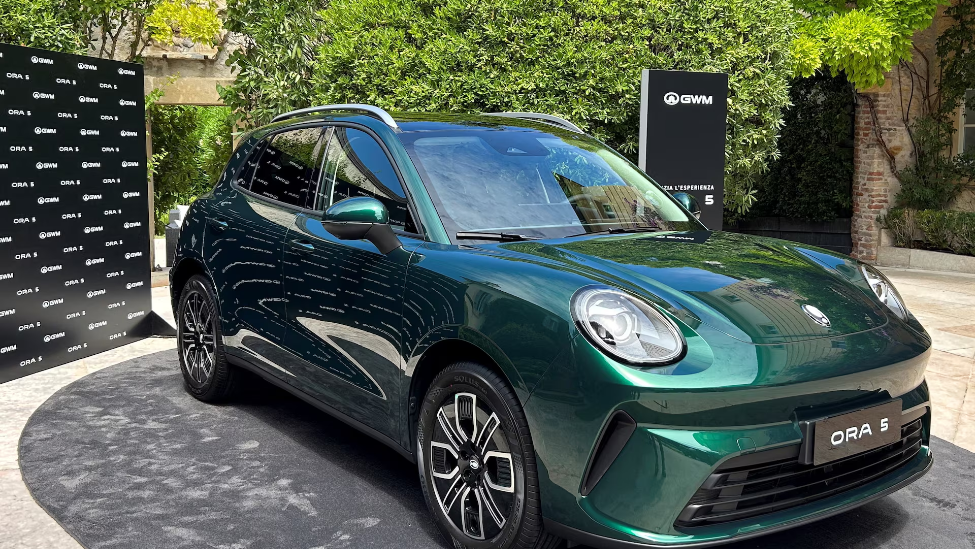
For general readers, the point is that Great Wall Motor is not only shipping vehicles from China into the European Union. It is building a route that combines local assembly, local component purchasing, local R&D and long-term presence. The Reuters report also ties that move to a practical pressure: tariffs on electric vehicles exported from China to the European Union.
The Announcement in Plain Terms
The facts are concise. Great Wall Motor has reached a manufacturing agreement with Bulgaria Automotive Industry. The planned production start is the first quarter of 2027. The product at the centre of the plan is the ORA 5 compact SUV. The factory has a planned annual capacity of 50,000 units. The arrangement is expected to start with the ORA 5 battery-electric version, then extend to other powertrain versions and other models. The ORA 5 offers three powertrain choices in Europe: battery-electric, hybrid and petrol/fuel. Neither side disclosed the financial details of the agreement.
The Factory and Its Location
The partner, Bulgaria Automotive Industry, operates one factory in Bulgaria near Lovech, in Bahovitsa. The same partner had previously worked with Great Wall Motor. That earlier connection helps explain why the manufacturing route can begin with a known local facility rather than a brand-new site being described in the report.
SKD Assembly and Local Purchasing
Great Wall Motor chief technology officer Wu Huixiao described the initial production method as semi-knocked-down assembly, or SKD. This means partially assembled vehicle kits are imported, then the complete vehicle is assembled locally. From the start of production, the company also plans some local component purchasing.
She made the remarks at a company technology day in Milan. Her message pointed to a longer European approach: local R&D, local manufacturing and long-term investment. For readers outside the auto industry, that can be understood as a shift from selling in Europe to trying to operate in Europe.
Tariffs and the Reason for Local Production
Reuters reported that Chinese automakers are speeding up production plans in Europe as they try to support sales growth and reduce the effect of trade barriers. In Great Wall Motor's case, the report says electric vehicles exported from China to the European Union currently need to pay an additional 20.7% countervailing tariff on top of the regular 10% automobile import duty.
Those numbers shape the context of the Bulgarian deal. The company is adding a European production path while still facing the tariff math on China-built electric vehicles. The agreement itself does not disclose financial terms, so the article does not state whether the local plan changes the cost of any individual model immediately.
Returning to Europe with More than One Product Type
The local production step is part of Great Wall Motor's return to Europe. Over the next two years, the company plans to introduce at least 10 new models and derivative models. It also plans to widen the product range beyond purely electric vehicles.
Great Wall Motor has kept a research and development centre in Munich, Germany since 2021. That centre studies European market demand and works on regulation and validation. In other words, the company is pairing production ambitions with product planning and compliance activity.
A Tough Sales Baseline
The expansion comes after weak recent results in Europe. Earlier, Great Wall Motor entered European markets mainly with electric vehicles, and sales fell short of expectations. In 2025, European sales declined nearly 30% year on year to about 3,500 units.
The future targets are much larger. For 2027, the company wants 60,000 units sold in Europe. By 2030, it aims for a 3% to 5% share of the European market. Last year, one executive told Reuters that the company expected to reach 300,000 units of vehicle production in Europe by 2029.
Key Figures at a Glance
| Item | Figure | Why it matters |
|---|---|---|
| Planned capacity | 50,000 units | Sets the size of the Bulgarian factory plan. |
| Production start | First quarter of 2027 | Gives the ORA 5 plan a concrete timing milestone. |
| First local product | ORA 5 battery-electric version | Shows the initial entry point before other versions and models. |
| Europe powertrain range | Three powertrain choices | Explains why the vehicle is not only an electric-only story. |
| China-to-EU tariffs | 10% plus 20.7% | Links local production to trade-barrier pressure. |
| 2025 Europe sales | About 3,500 units | Provides the weak recent baseline. |
| 2027 sales target | 60,000 units | Shows the near-term ambition. |
| 2030 share target | 3% to 5% | Frames the longer-term Europe goal. |
| 2029 production goal | 300,000 units | Places the Bulgarian factory inside a bigger production plan. |
Quick Checklist: What to Confirm When Reading the News
- Who is producing? Great Wall Motor with Bulgaria Automotive Industry.
- What begins first? The ORA 5 battery-electric version.
- When is production planned? The first quarter of 2027.
- How big is the factory plan? A planned annual capacity of 50,000 units at one factory near Lovech in Bahovitsa.
- What is already public? The tariff context from China to the European Union: 10% regular automobile import duty plus 20.7% countervailing tariff.
- What is not public? Financial details of the manufacturing agreement.
Frequently Asked Questions
Is this a new car model?
No. The model at the centre of the plan is the ORA 5 compact SUV, which already offers three powertrain choices in Europe: battery-electric, hybrid and petrol/fuel.
Will only electric ORA 5 vehicles be built in Bulgaria?
The local production path starts with the ORA 5 battery-electric version, then may extend to other powertrain versions and other models.
Why does the European Union tariff detail matter?
Reuters says Great Wall Motor's electric vehicles exported from China to the European Union face a regular 10% automobile import duty plus an additional 20.7% countervailing tariff. Local production is presented as part of a broader move by Chinese automakers to reduce trade-barrier effects.
Does the agreement guarantee sales success in Europe?
No. The article gives production and sales targets, but it also records a difficult recent period: in 2025, European sales fell nearly 30% year on year to about 3,500 units.
What is SKD?
SKD means semi-knocked-down assembly. Partially assembled kits are imported, and the final vehicle is assembled locally. The company also plans local component purchasing from the start of production.
Where is Great Wall Motor's European R&D base?
The company has operated a research and development centre in Munich, Germany since 2021. It studies European demand, regulatory compliance and validation.
Common Misconceptions
- Misconception: The plan is only a single model and nothing else. Reality: The factory is planned for 50,000 units per year, the ORA 5 battery-electric version starts the local production path, and later expansion to other powertrain versions and models is described.
- Misconception: The Bulgarian factory alone proves Great Wall Motor has solved Europe sales. Reality: 2025 European sales fell nearly 30% year on year to about 3,500 units, while the 2027 target is 60,000 units.
- Misconception: The tariff issue applies only to Great Wall Motor's local production. Reality: Reuters links the tariffs to electric vehicles exported from China to the European Union, while Chinese automakers are accelerating local European production.
- Misconception: The company only focuses on electric vehicles. Reality: The plan includes at least 10 new models and derivative models over the next two years and wants product range beyond electric vehicles.
Action Advice for Tech and Mobility Readers
- Track the start date. The most concrete near-term milestone is production in the first quarter of 2027.
- Track the model mix. The first product is the ORA 5 battery-electric version; later other powertrain versions and models are part of the described path.
- Track the capacity story. The factory plan is 50,000 units per year, while the company's broader Europe production target is 300,000 units by 2029.
- Track the tariff and trade context. Keep the 10% regular duty and 20.7% countervailing tariff in mind when reading about China-to-Europe EV exports.
- Track sales rather than slogans. Compare 2025 sales of about 3,500 units with the 2027 target of 60,000 units and the 2030 share target of 3% to 5%.
The Bulgarian agreement does not turn a weak 2025 sales year into a finished European comeback. It adds a concrete production plan, a named local partner, a capacity target, an SKD assembly method and a tariff context. For general readers, the best way to read the story is as a transition: Great Wall Motor is moving from exporting into Europe toward building, sourcing and developing locally, with the ORA 5 battery-electric version as the first visible step in the first quarter of 2027.