
MyTechDailyNews Explainer: Google's First Data Center Satellite Is Officially Running — and Its Space AI Already Wrote a Poem
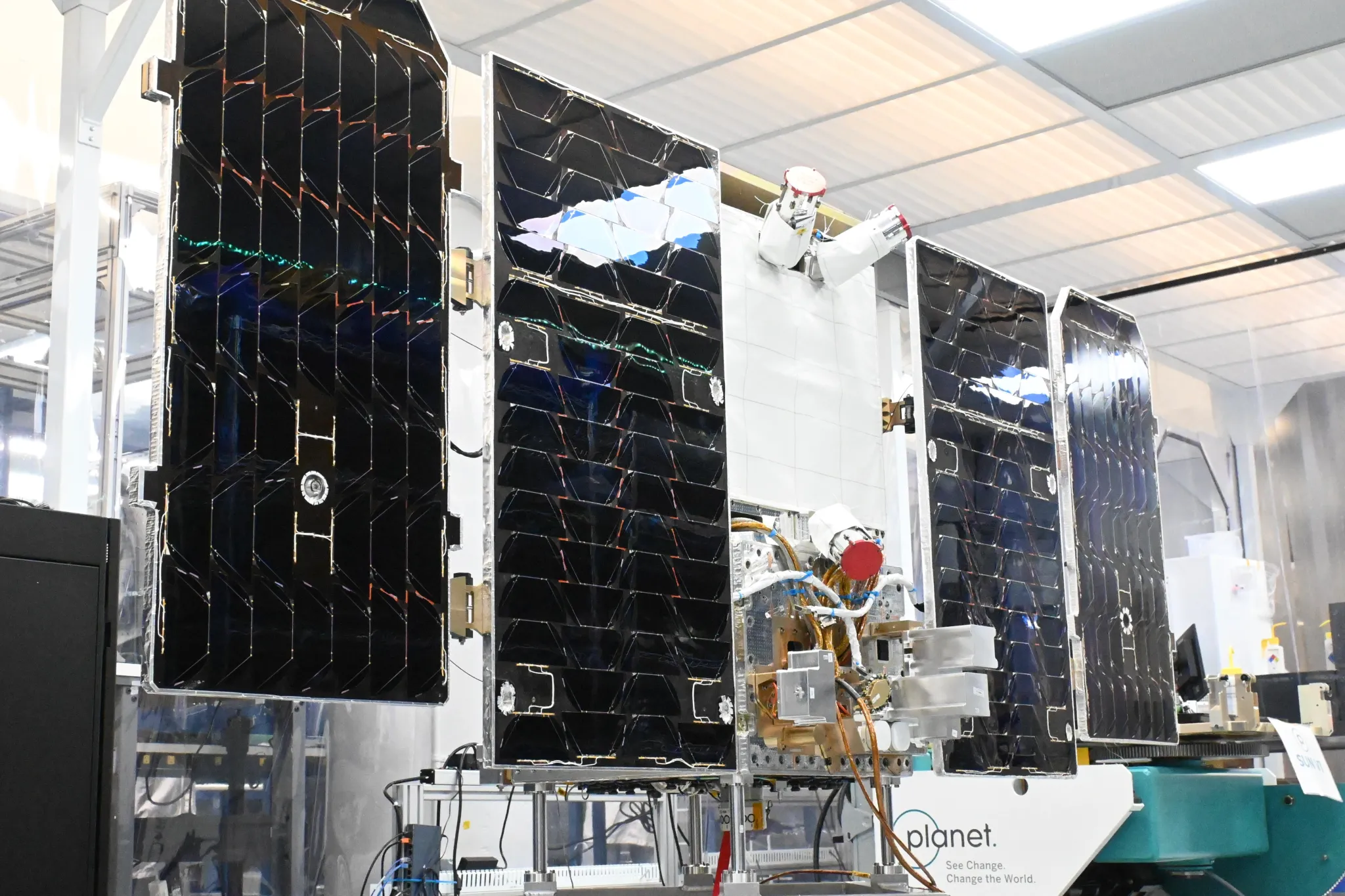
A few lines of verse about starlight and data are, according to Google, the first creative text ever produced by an AI running on a data center satellite in orbit. Behind that small demo sits a much bigger bet: the company says its first satellite built around a Tensor Processing Unit (TPU) accelerator has now cleared roughly three weeks of on-orbit testing and system calibration and has entered formal operation. On MyTechDailyNews, we hear this kind of story reduced to “AI goes to space” every time a headline like this lands. The more useful version is narrower — a power limit, a communications bottleneck and a radiation problem are the real story here, and they explain why the next few years matter more than the poem itself.
The short version, at a glance
- What happened: Google's first data center satellite finished about three weeks of in-orbit testing and calibration and is now in formal operation.
- What it carries: a Google TPU AI accelerator capable of producing up to about 1 kilowatt of power.
- The milestone moment: this week, engineers sent a prompt to the satellite's pre-installed Google DeepMind Gemma 4 model and received one haiku about space — the first poem generated by an AI in orbit.
- The stated goal: groundwork for an “orbital data center network” made of multiple satellites flying in close coordination, so large AI inference jobs could run directly in space.
- The stubborn limit: because the TPU draws so much power, each activation of the chip is capped at about 20 minutes, which makes an already complex ground-to-space link even harder to work with.
- What's next: if the hardware proves stable, two follow-up satellites with more advanced chips are planned for 2027.
What the satellite is actually for
The satellite is not a functioning cloud region in the sky. It is the first building block of an idea: a network of multiple satellites in nearby orbits that behave, together, like one data center. If that works, large AI inference tasks could be completed in space instead of being pushed onto ground-based facilities.
The hardware inside it is a Google Tensor Processing Unit, the same family of AI accelerator used in Google's own machine-learning workloads, paired with a power system that can deliver up to about 1 kilowatt. Think of it as plugging a desktop-class graphics accelerator into a machine that has to survive launch vibration, vacuum and constant temperature swings — and that has to do its “thinking” while nobody can reach in and reboot it.
A poem as a system check, not a performance
To prove the whole chain works — command uplink, model execution on orbit, result downlink — Google engineers this week asked the pre-installed Google DeepMind Gemma 4 model to write one haiku about space. The poem it returned translates roughly as: “The blue planet glows quietly below, data streams pass through in peace, starlight nourishes my core.”
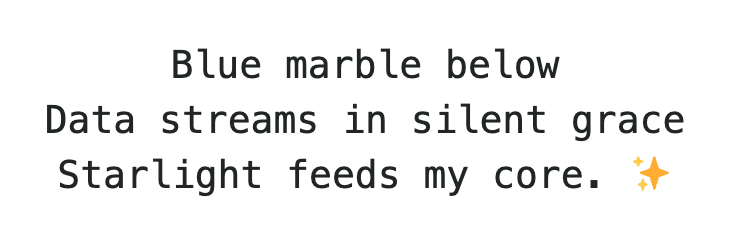
The verse is a convenient soundbite, but the more practical use is monitoring. Google also used the same model to collect and report information about the orbital environment around the satellite. A Google spokesperson said the satellite is currently operating normally and that its systems are all working as expected.
Why the 20-minute ceiling is the real headline
Here is the constraint that decides whether the orbital data center network idea can scale: the TPU's power consumption is high enough that each single startup of the chip is limited to about 20 minutes. That is a short window for any meaningful workload, and it lands on top of a link between Earth and orbit that is already difficult to manage.
A plain-language way to picture it: imagine a computer you are only allowed to switch on for 20 minutes per session, while the network cable connecting you to it is extremely long, intermittently available and shared. Every job has to be small enough to finish, and every result has to be worth sending back.
Heat, radiation and the “bit flip” problem
The next phase is reliability. Google says it will focus on how the TPU behaves under the extreme conditions of space, including thermal stress from temperature changes and the effect of cosmic radiation on the hardware. Google has already run extensive tests on the ground using particle accelerators, but long-term behavior in the real space environment still has to be confirmed.
The most closely watched failure mode is radiation-induced “bit flip,” where a stored data bit in computer memory changes unexpectedly after being struck by a high-energy particle. That can corrupt data, and routine monitoring does not necessarily catch it. Earlier ground experiments suggested the impact on AI inference is relatively limited, while model training could suffer more noticeable problems. The value of a live satellite is that Google can now check those expectations against actual in-orbit data instead of relying only on laboratory simulation.
Two ways to imagine an orbital network
| Approach | Communication and coordination style |
|---|---|
| Google's concept | High-speed links established between satellites in orbit, so multiple satellites can cooperatively handle the same workload |
| Some competing plans | Laser communication is also planned, but the satellites sit far apart from one another, which makes efficient cooperative computing difficult |
Common misconceptions worth clearing up
- “This is a space data center now.” It is the first satellite meant to lay the groundwork for a future network of multiple satellites, not a replacement for ground facilities.
- “The AI can run as long as it likes.” Each chip activation is capped at about 20 minutes.
- “Radiation hardening is already a solved problem.” Ground-based particle accelerator testing was extensive, but long-term on-orbit performance still requires verification.
- “The poem is the workload.” The haiku was sent as a way to verify system function; environmental reporting on the satellite's surroundings is the more operational use.
- “The follow-up is just another copy.” The two later satellites planned for 2027 are expected to use more advanced chips, carry stronger power generation and demonstrate optical links between satellites.
Why general readers should care
Artificial intelligence keeps asking for more computing power and more energy, and that pressure is the reason a company would try to extend the data center off the ground at all. The successful operation of this Suncatcher satellite does two things at once: it validates the concept, and it takes a key step toward what would eventually be genuine orbital AI computing infrastructure. For anyone whose job depends on AI product launches, pricing or roadmaps, that trajectory matters more than the verse.
Frequently asked questions
What is the satellite called?
The mission is referred to as the Suncatcher satellite.
What chip is inside it?
A Google Tensor Processing Unit (TPU) AI accelerator, paired with a power system that produces up to about 1 kilowatt.
How long was the pre-launch-style check?
The satellite spent roughly three weeks on in-orbit testing and system calibration before moving into formal operation.
Which model wrote the poem?
Google DeepMind's Gemma 4, pre-installed on the satellite, was prompted this week to compose one haiku about space.
What is holding everything back?
The TPU's power draw, which limits each startup of the chip to about 20 minutes, plus the difficulty of managing ground-to-space communications around that limit.
What happens next?
Google will evaluate the TPU's reliability in the space environment. If it runs stably, two follow-up satellites with more advanced chips are planned for launch in 2027.
Action suggestions: how to follow this story sensibly
- Track the 2027 pair, not today's demo. The two follow-up satellites are the point where power generation and optical inter-satellite links get tested for real.
- Watch the reliability reporting. Pay attention to what happens to training workloads, not just inference, since that is where radiation effects looked more noticeable in ground experiments.
- Keep the 20-minute figure in mind. Any claim about large-scale AI in orbit has to explain how it works around short activation windows.
- Frame it correctly at work. For product, marketing and strategy teams, this is a research milestone that speaks to the energy and compute pressure behind AI today — not a service you can buy or deploy.
- Follow the energy thread. The demand for AI compute and power is the underlying cause of this project, and it is the same cause behind many other infrastructure announcements you will see this year.
Between a three-week calibration, a 20-minute power window and a haiku about starlight, Google's first data center satellite is best read as a carefully staged test rather than a finished product. The question the next chapter answers is simple and unforgiving: can an AI chip survive real orbit long enough for multiple satellites to work as one machine? If the answer is yes, the conversation about where AI infrastructure lives changes for everyone — not only for the engineers reading radiation telemetry.
Written by Sarah Chen, Tech Daily. For story tips or corrections, contact the MyTechDailyNews General desk at hello@techdaily.com.