
General Tech Guide | MyTechDailyNews: Orbital vs Ground AI Data Centers after Google's 100x Cost Warning
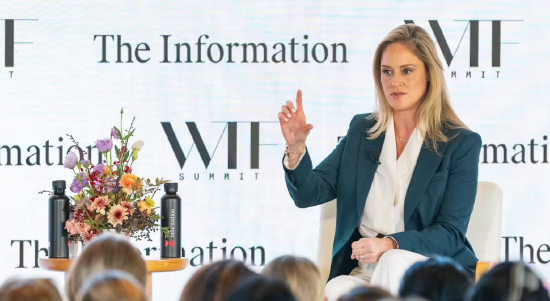
When AI infrastructure headlines start talking about satellites, ordinary readers usually ask one question: will orbit replace land? This week, Amanda Peterson Corio, Google's global head of data center energy, answered at the WTF Summit in the plainest way possible: the cost of a space data center could be up to 100 times that of a ground data center. “Before rushing to space, we should explore every viable option on Earth,” she said. Her comment lands while SpaceX's orbital data-center plan remains one of the pillars supporting its roughly $1.8 trillion valuation, making the comparison between orbital and terrestrial compute one of the year's most practical technology decisions.
Google's stance is not a simple rejection. This month, the Google research team announced that it would work with satellite-imaging firm PlanetLabs to explore, through satellite platforms, the feasibility of large space data-center clusters. Under the project named “Suncatcher,” Google has already sent a small space-server prototype into orbit, carrying an AI tensor processing unit (TPU) co-customized with Broadcom. Last autumn, Google researchers, together with chief researcher James Manyika, published a paper arguing that if launch costs fall to $200 per kg or below, the cost of compute per unit of power in space could become roughly comparable with ground-based levels. They believe that threshold may be reached around 2035, depending on SpaceX Starship progress and faster launch cadence.
The optimistic camp has been louder. SpaceX CEO Elon Musk has said the company could build a space data center as early as next year. Jeff Bezos, the Amazon founder who also leads Blue Origin, a SpaceX competitor, has predicted a 1-gigawatt (1 GW) space data center within 10 years. Other reports have said Google and SpaceX have discussed building orbital data centers together. Corio has not dismissed the idea; she calls it “very interesting” and explains that Google keeps funding risky frontier projects because the company is used to thinking 10, 20, 30 years ahead. Even so, she stresses that the technology is “nowhere near ready.” OpenAI CEO Sam Altman is blunter, calling the current notion of moving data centers to space “very unrealistic” and questioning Musk's aggressive timeline.
Cost test: what a fair ground-to-space comparison must include
For a comparison review, the headline “100 times” is not the whole bill. Corio describes launch costs as “extremely high, up to 100 times ground construction costs,” and she also points to on-orbit maintenance and upgrade problems: on the ground, staff can replace servers and rewire systems at any time. Independent analysts add another layer. A Barclays note by analyst Brendan Lynch, as discussed by financial media (https://wallstreetcn.com/articles/3774659), estimates orbital data-center capital cost at roughly $50 million per megawatt and five-year full-cycle cost at about $51 billion per GW, versus roughly $16 billion per GW on the ground. It identifies five obstacles: launch cost, radiation-hardened hardware, thermal limits, bandwidth and regulatory uncertainty. A separate account from 36Kr (https://eu.36kr.com/zh/p/3999929320150914) says current low-Earth-orbit launch prices are about $1,500 to $2,900 per kg, while Google's economic threshold is about $200 per kg; reaching it would depend on Starship and much higher launch frequency.
| Dimension | Ground data center | Orbital data center | Decision hint |
|---|---|---|---|
| Power | Solar, gas, nuclear and grid options are available; power-usage effectiveness (PUE) matters | Continuous sunlight helps, but launch hardware and heat remain costly | Choose orbital only if launch and thermal economics improve |
| Maintenance | Technicians can swap servers and rewire anytime | Upgrades need launches or robotics; failures are expensive | Mission-critical latency or compliance apps stay on Earth |
| Timeline | Can be built now | Optimists cite as early as next year or 1 GW within 10 years; Google research points to around 2035 | Do not budget orbital compute for the next fiscal year |
Where the real bottleneck sits: permits, not electrons
Another part of Corio's argument may surprise readers: she does not think electricity is the first wall. Asked whether U.S. power supply can support AI expansion, she said, “Is the power enough? Of course it is.” In her view, the bottleneck is more about approval, interconnection queues and long review studies. Alphabet's X lab has launched the Tapestry project with PJM, the largest grid operator on the U.S. East Coast, to use AI to speed up assessment processes.
Policy friction is visible in Texas, where state electric regulators have slowed approvals for some data-center projects to prevent new compute facilities from straining the grid and pushing up prices. The electricity picture is not uniformly negative. Recently, Cloverleaf Infrastructure co-founder Brian Janous said that, to handle peak demand, about 45% of grid capacity is idle on average; during most of the day, the grid has spare capacity that could absorb data-center load. On the power-usage effectiveness (PUE) indicator, Google holds an edge over cloud peers; the metric measures how much computing a data center can extract from the same amount of power.
Corio also addresses the anti-data-center mood in the United States, now spreading in some communities. She blames “a large number of new entrants that lack industry accumulation and mature experience when acquiring land and building compute projects,” without naming specific companies. She says that, before the AI compute boom, long-time developers “did things in a relatively standardized way,” and their projects seldom caused controversy. In recent years, many newcomers rushed into AI data-center development, and even established companies such as Oracle have faced local resistance.
A checklist for higher standards, not just higher power
Corio supports stronger rules, though she gave no specific clause. Instead she listed examples from Google's own practice: raise community investment in local markets, and make contingency plans to avoid stranded projects. The company has promised to keep paying grid-upgrade costs for 15 to 20 years, so a stalled project will not leave the local community “forced to foot the bill.” This type of pre-commitment, where a developer takes responsibility for grid infrastructure before construction, is already live in more than nine states and she says it is “expanding extremely fast.”
- Pay electricity charges and property taxes in full.
- Put down bonds or deposits so abandoned land can be restored.
- Cancel confidential agreements with local governments.
Investors are already asking similar questions outside the space story. They are re-examining valuations and survival odds of a group of emerging AI cloud firms, many heavily backed by Nvidia, which have borrowed large amounts and launched data centers without long operating records. Corio's push for stricter standards can be read as pressure on those firms. Google, meanwhile, said more of its own compute demand will rely on third-party capacity but did not disclose partners. SpaceX is among them, because Google's own data-center buildout is not keeping pace with demand.
FAQ: what ordinary readers should ask
Is orbital compute cheaper because sunlight is free?
Not today. The cost argument is not just electricity. Google's $200 per kg threshold matters because launch, radiation-hardened parts, cooling and bandwidth all need to be amortized. Until those inputs fall, free sunlight cannot erase a very expensive bill.
Does 100 times mean space data centers will never happen?
No. Corio's own research points to around 2035 if Starship and launch frequency improve, while Musk and Bezos are much more bullish. The practical reading is that orbital compute is a long-term experiment, not a procurement default.
Should businesses move AI workloads to space?
For now, no. Most businesses should focus on ground constraints: land, power, water, permits, community trust, and vendor credibility.
Action recommendations for MyTechDailyNews readers
- Ask product teams to label workloads by latency, regulatory sensitivity and recoverability. If a model can run in batches and is not near human users, it can be tested in lower-cost terrestrial regions first; if it supports payments, healthcare or local services, keep it on the ground.
- Ask cloud vendors how they calculate PUE, grid support and community commitments, not just megawatt growth.
- Track launch cost and thermal engineering as leading indicators for space compute; ignore milestone claims without $/kg and GW maintenance data.
The debate, then, is not just Google versus SpaceX or Musk versus skeptics. It is a stress test for how society chooses between fast, visible innovation and slower, accountable infrastructure. If launch costs fall enough, orbital clusters may eventually join the map as a supplement. For now, the more useful question is not “Is the next data center in space?” but “Which ground decisions will decide who can build one?”—and that is the question that matters to everyday users, local communities and companies buying AI capacity.
By Sarah Chen, MyTechDailyNews