
Google Shuts Down Jules Gradually and Moves What It Learned Into Antigravity
By Sarah Chen | MyTechDailyNews
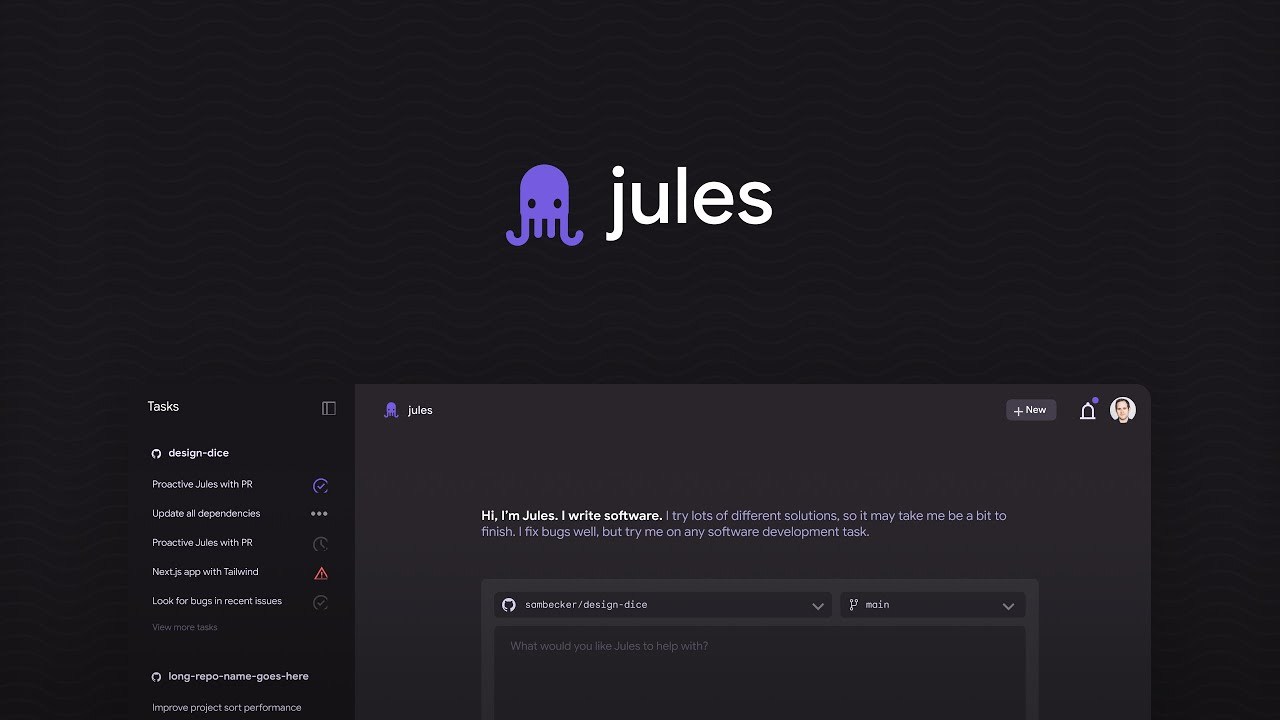
A short public update from Google's Jules account on X has turned a niche developer experiment into a mainstream tech-news moment: the company is winding down Jules, its asynchronous coding-agent project, while pointing users toward Antigravity as the next place where its lessons will live. The wording does not describe the decision as a product failure. It describes an experiment that gave Google deep understanding about agent-driven development, and a shift toward a more unified experience.
What the Official Statement Says
The central message is simple enough for non-specialists: Jules helped Google test a workflow, many developers used it, and the experience gained will now be folded into Antigravity. The statement also thanks the community for using the tool to fix bugs, write tests, and ship features.
When we launched Jules, it was an experiment designed to understand how asynchronous coding agents could help developers ship faster. Watching what people built with it gave us a deep understanding of where agent-driven development is going, and it directly influenced several Google products.
We are working to fold what we learned from Jules into Antigravity, so users can have the best of both: the ability to run background tasks autonomously in remote environments, and an agent-centered development environment.
As we shift our focus to building a unified experience, Jules will gradually stop operating.
Whether you used Jules to eliminate bugs, write tests, or ship features — thank you for shaping the future of agentic coding.
The Core Change: From an Experiment to a Unified Experience
Google's message contains two moves. First, it acknowledges that Jules was created as a way to test a specific kind of programming-agent workflow: asynchronous coding, where a task is not tied to a developer staying glued to one machine while every step completes. Second, it says the next focus is a unified experience in Antigravity. The shift is therefore not only a shutdown notice; it is also a signal about how the company wants users to encounter those capabilities next.
For readers outside the developer community, the important part is not the name of the tool but the pattern: software agents are being treated less like one-off assistants and more like components inside a larger working environment. That change can affect how quickly products evolve, how bugs are found, how tests are written, and how much routine engineering work can be delegated.
What “Asynchronous Coding Agents” Means in Simple Language
A coding agent can be thought of as a software helper that does programming work on behalf of a person. The word asynchronous matters because it changes the rhythm of the work. Instead of requiring a human to watch each step in real time, the system can take a task, continue processing it in the background, and return a result when it is done.
A simple analogy is asking a colleague to handle a repair while you move on to another job. You do not need to hover over their desk. The colleague completes the task later and tells you what changed. In a software project, that style of work may be useful for bug fixes, test creation, code generation, or other repetitive engineering tasks. The statement does not list all use cases, but it does mention eliminating bugs, writing tests, and shipping features.
Who Is Affected, and How
The most direct group is developers who used Jules. They now need to watch the transition closely because the service will gradually stop operating. Teams that built workflows around background coding tasks may need to update documentation, scripts, training notes, or internal process guides. Individual users who simply tried Jules may feel the change in a lighter way, but the loss of an experiment can still remove a useful place where they learned how agent workflows behave.
The indirect group is much larger. Users of apps, websites, and online services rarely see the tools developers use. Still, developer productivity can shape what the public receives: faster feature releases, quicker bug fixes, more automated testing, and different approaches to software quality. When a company folds one experiment into another product direction, the public may eventually experience the result through a different interface, a different workflow, or a different set of integrated tools.
Checklist: What Readers Should Note
- The shutdown is described as gradual, not immediate.
- The official communication came through X.
- Google's named next place for the accumulated experience is Antigravity.
- Jules is described as an experiment in asynchronous coding agents.
- Antigravity is presented as combining remote background tasks and an agent-centered development environment.
- Google publicly thanked users without blaming the community.
- The wording focuses on folding lessons into Antigravity, not on a detailed feature migration map.
- General readers should treat this as a consolidation story, not a simple cancellation headline.
Jules and Antigravity in Plain Terms
| Point | Jules, as described in the announcement | Antigravity, as described in the announcement |
|---|---|---|
| What it is | An experiment in asynchronous coding agents | The product experience where lessons from Jules will be folded |
| What it was meant to explore | How agents could help developers ship faster | A unified experience combining background task execution and agent-centered development |
| What happened next | It will gradually stop operating | Google says it is working to integrate what it learned from Jules into it |
| Why it matters | It gave a practical test bed for agent workflows | It is presented as the place users may encounter the next form of those workflows |
Common Misconceptions About the Jules Shutdown
Misconception 1: “Jules was abandoned because it did not work.”
The statement does not say that. It says the project was an experiment, that it produced deep understanding, and that its influence extended across several Google products. A gradual wind-down can happen when an experiment succeeds by changing the design of another product, or when a company decides that separate experiments no longer match the direction it wants users to see.
Misconception 2: “Everything in Jules is moving to Antigravity exactly as it was.”
The language is about folding experience into Antigravity, not a one-to-one copy. The announced direction is a unified experience. If readers need precise migration details, they should rely on official product documentation rather than assuming continuity.
Misconception 3: “This is only a developer tool story.”
Coding agents can eventually influence how software is built, how bugs are found, how tests are generated, and how digital products evolve. The general public may not use Jules directly, but the workflow being tested can ripple through apps, websites, internal tools, and security practices.
Misconception 4: “A shutdown means the idea of AI coding agents is losing credibility.”
The opposite reading is also supported by the wording: Google is integrating the experience into Antigravity. The statement frames the future as more unified, not less ambitious. That does not prove every product decision is correct, but it does make “AI coding agents are dead” too simple a summary of this particular announcement.
Action Advice for Developers, Teams and Tech Followers
- If you used Jules, export or archive any non-sensitive project context, prompts, outputs, or examples that you may want to recreate later.
- If your team built a workflow around background coding tasks, document what the workflow solved and which parts were most valuable. That makes it easier to evaluate alternatives.
- Do not assume Antigravity will reproduce every Jules behavior. Watch for official product updates rather than community rumors.
- If you manage a codebase, review any scripts, integrations, or documentation that mention Jules and plan a low-drama transition window while the service winds down gradually.
- For general readers, treat this as a signal that agent-based software development is becoming a mainstream product strategy, not a fringe demo.
FAQ: The Most Likely Questions About Jules Ending
Is Jules already gone?
The official wording says it will gradually stop operating. That implies a process rather than an instant disappearance.
Where does the experience go?
Google says its accumulated experience from Jules will be folded into Antigravity.
What was Jules trying to learn?
According to the statement, it was an experiment to understand how asynchronous coding agents could help developers ship faster.
What does asynchronous mean in plain English?
It means the system can take a task and continue working on it without requiring a person to sit and watch every step in real time. A simple analogy is asking a colleague to handle a job in the background and report back when it is done.
Why should a non-developer care?
Because tools that help developers ship faster can change how quickly features appear, how bugs are corrected, and how digital services improve or degrade over time.
Did Google explain the reason in detail?
The public statement gives a high-level strategic reason: shifting focus to a unified experience with Antigravity. It does not provide a long technical postmortem.
Is the community thanked?
Yes. The statement says thank you to users for shaping the future of agentic coding through activities such as eliminating bugs, writing tests, and shipping features.
MyTechDailyNews Editorial Note
This report is written by Sarah Chen for Tech Daily. Readers with suggestions or follow-up questions can contact the newsroom at hello@techdaily.com.
The practical takeaway is that Jules is closing, but the question it raised remains open: how should coding agents move from isolated experiments into coherent development environments? Google's answer, in this statement, is to fold that learning into Antigravity and aim for a unified experience rather than a collection of separate tools.