
MyTechDailyNews Guide: Google's Genie 4 Makes AI Worlds Easier to Explore and Edit
On October 27, Google presented Genie 4 as a newer version of its "world model," and the practical message for everyday technology readers is simple: AI-created environments may become less like fixed pictures and more like spaces that a person can move through, change, and hear as they interact. MyTechDailyNews reads this as a consumer-relevant shift because it touches how games, film mockups, and robot training might be prototyped before full production begins.
Unlike typical generative tools that mainly return a still image or a video clip, the model aims to generate an interactive scene whose contents respond to user choices. That distinction matters because the output is not just observed; it is explored. Google also says the system now supports an experience lasting about two minutes, twice the roughly one minute available with Genie 3.
What Google says has changed
The announcement focuses on four upgrades rather than a full product release. These changes shape what Genie 4 can do, but they also set limits that readers should keep in mind.
- More realistic virtual environments, making generated spaces feel closer to usable prototypes.
- Natural-language scene editing during an experience, allowing users to change elements without restarting the scene.
- Automatic audio added to the generated world, so the experience is not limited to visual output.
- Use of Google Gemini 3.8 Flash, specifically Gemini 3.8 Flash, to assist simulation behavior.
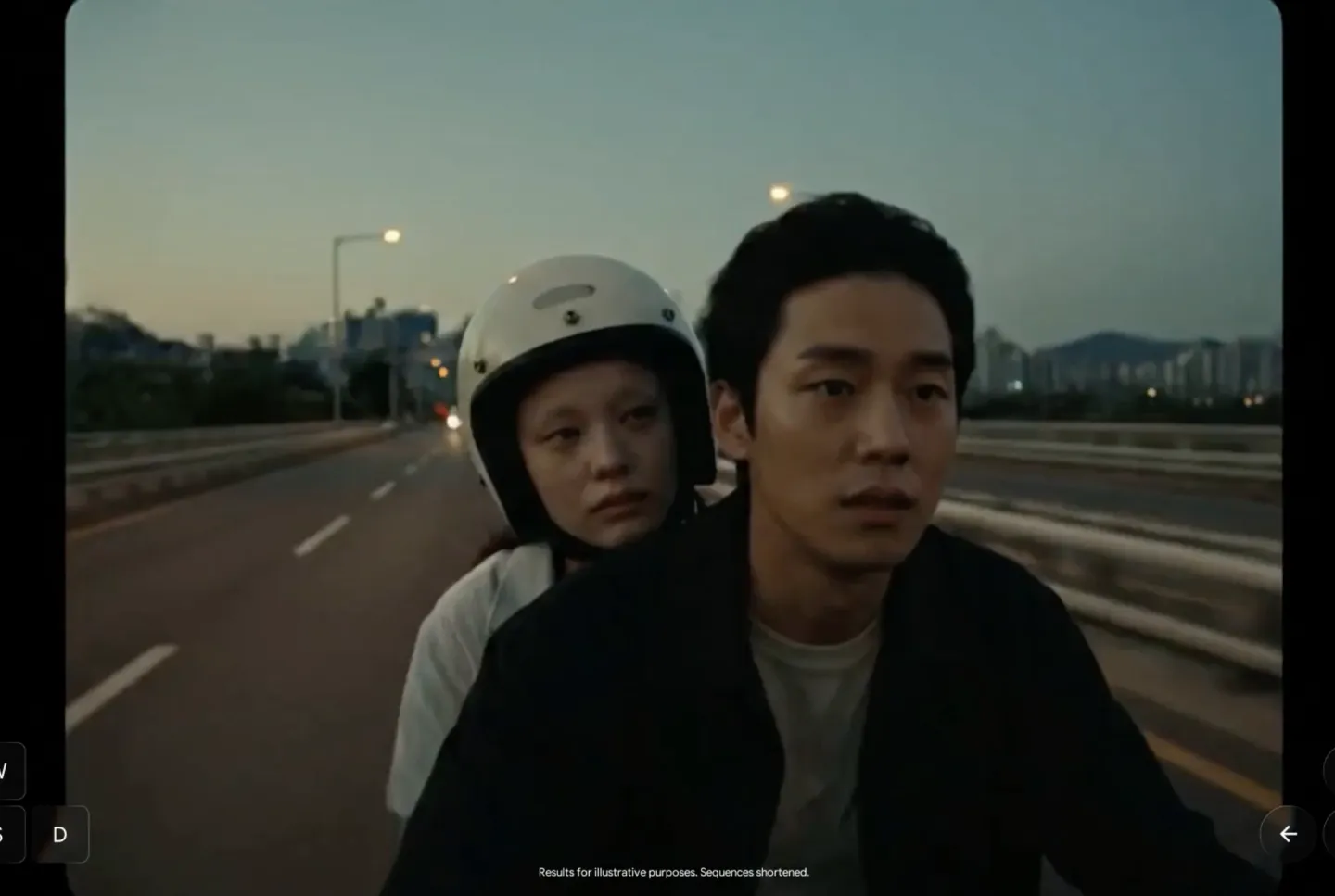
The timing increase is also part of the story. Genie 3 could support an interactive experience of about one minute. With Genie 4, Google places the limit at about two minutes. For a complete game or a complicated robot training run, two minutes is still brief; for a quick idea check, a short playable demo, or a scene comparison, the extra time can be enough to make the format useful.
Why this is different from normal AI image tools
World models sit in a different category from standard generative AI. A typical model can turn text into an image or video, but the result usually behaves like a finished artifact. A world model tries to understand space, object movement, and the relationship between an action and its consequence. As a result, the environment may change as the user moves, looks around, or interacts with objects inside the scene.
For general readers, the easiest way to understand the difference is to think of a photograph versus a room. A photograph is fixed even when the viewer moves their eyes; a room changes what is visible depending on where the viewer stands and what they touch. Google's Genie 4 moves AI output closer to the room idea, though with obvious limitations.
How real-time editing could affect creators and users
The ability to change a scene while staying inside it is probably the most practical change for people who make content. Instead of leaving a generated environment, rewriting the prompt, and starting over, a creator can ask the model to modify parts of the world during the current experience. For game designers, that may allow faster testing of layout, visual style, and simple interaction ideas before larger budgets are committed.
Film teams could also benefit during previsualization, a stage where creators test camera paths, staging, and scene atmosphere before building sets or finishing expensive 3D assets. The model's value in this case is not to deliver a polished final product, but to make rough exploration cheaper and quicker.
Audio, robots, and the limits of simulation
Genie 4 also adds sound to generated scenes. Earlier world-model work mainly concentrated on visuals and interaction. Automatic audio can help an environment feel more complete, and it may provide placeholder sound for prototypes. However, the announcement does not suggest that AI audio can already replace professional sound work. Projects needing precise timing, spatial placement, dialogue, or tight synchronization between sound and movement may still require human adjustment and dedicated audio tools.
Another possible use is robot training. Real-world robot testing can involve equipment cost, limited space, and safety risks. If researchers can generate an interactive simulated environment, they can test how a robot moves, picks up objects, or handles different conditions. The hard part is not just making the scene look real. The simulation also needs reliable spatial relationships, believable motion, and consequences that match physical constraints; otherwise strategies learned in the virtual world may not transfer to a real device.
FAQ: What Genie 4 is not ready to answer
Can users try Genie 4 now?
Google says the first stage is a research preview for selected testers. The company also points to future access for Google AI Ultra subscribers and has opened a waitlist for Project Genie.
How much better is Genie 4 than Genie 3?
Google has not given enough detailed technical metrics for an independent judgment. The public demonstrations come from Google, so real user experience, longer interaction stability, and complex-scene behavior still need broader testing.
Is a two-minute scene enough for practical use?
It depends on the task. About two minutes is short for a full game or complex simulation, but enough for rapid prototyping, visual comparison, and short interactive demos.
Does the model always keep the world stable?
No. Google acknowledges that longer sessions can produce inconsistencies. Objects may drift, change location, or disappear when they leave and re-enter view. Those issues matter because an environment that looks realistic but remembers nothing is difficult to trust.
Common misconceptions
- Myth: Genie 4 replaces game engines. It is better understood as an experimental way to generate interactive prototypes, not a mature replacement for traditional engines or professional 3D pipelines.
- Myth: longer AI worlds automatically mean better worlds. The move from about one minute to two minutes helps exploration, but it also exposes consistency problems as the session continues.
- Myth: automatic audio solves sound design. Generated audio can complete a scene, yet precise creative control over rhythm, dialogue, spatial effects, and action sync remains a human and specialist-tool task.
- Myth: world models are just faster image generators. Their target is an environment that responds to actions over time, not a single output to be watched.
Action advice for general tech readers
- If you are tracking Google's work, note the release framing: research preview, selected testers, Project Genie waitlist, and future Google AI Ultra access are the key availability signals.
- If you are a creator, treat Genie 4 as a fast sketching layer for concepts. Judge it by how quickly it lets you compare scene ideas, not by whether it can produce a finished game or film asset.
- If you evaluate robot or simulation use cases, look for tests that stress object persistence, repeated re-entry of items into view, and physical consequences rather than only looking at visual quality.
- Watch for third-party reports on stability, interaction speed, physics accuracy, and generation cost, since Google has not provided enough detailed metrics to measure the improvement over Genie 3.
Genie 4 is best read as a sign that generative AI is moving from producing content toward simulating spaces that can be entered and changed. The update gives users a longer, more editable, and more immersive preview, while still leaving open questions about consistency, production readiness, and real-world value. For MyTechDailyNews, the takeaway is clear: this is a promising step toward interactive AI environments, not yet a finished tool ready to take over mainstream creative workflows.