
MyTechDailyNews General: Gemini 4 Carbon Reclaims the Global AI Crown, But Access Comes With a Cybersecurity Detour
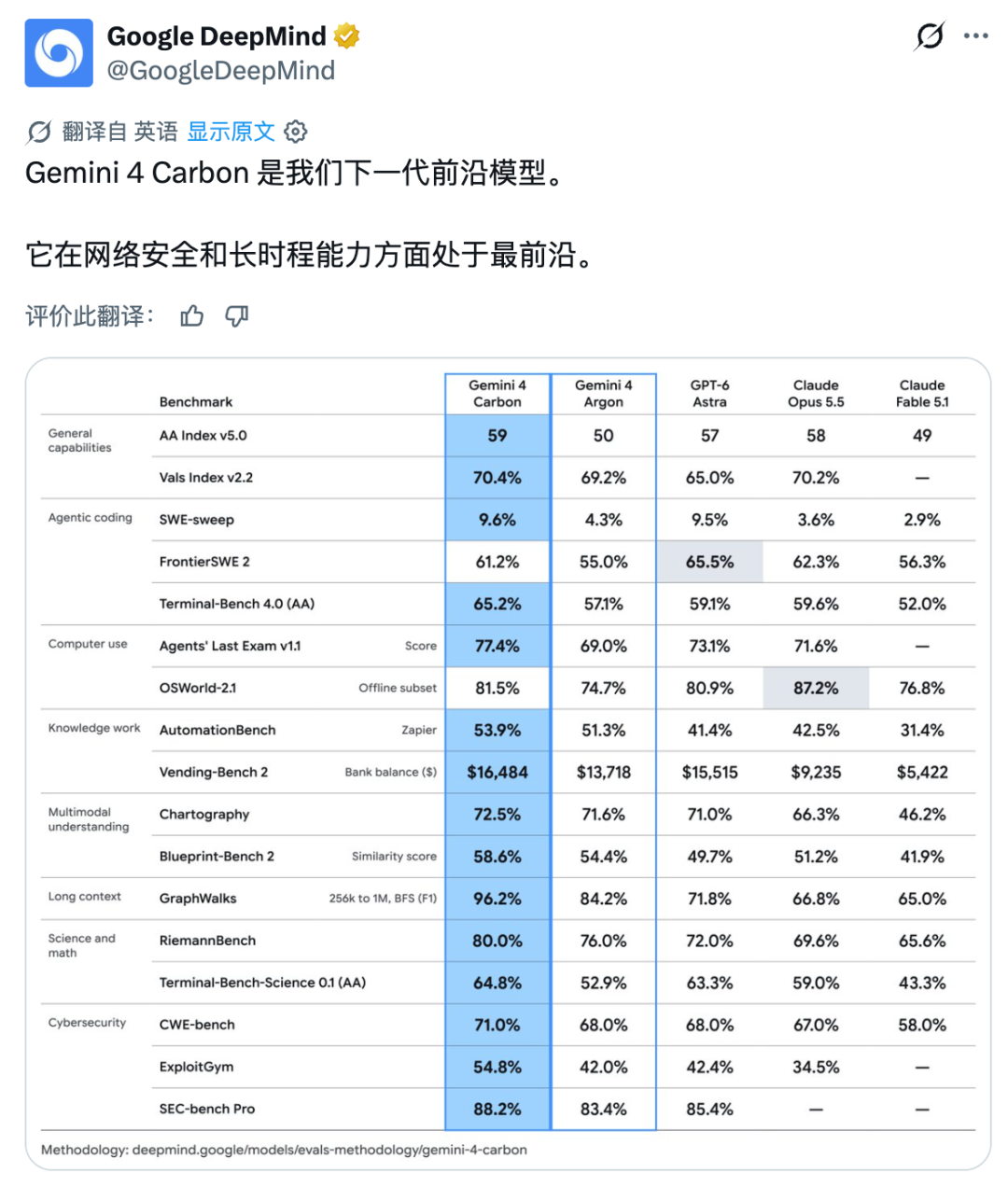
Google's Gemini 4 Carbon has moved back to the top of the global large-model conversation after posting 59 points on the latest Artificial Analysis Intelligence Index v5.0. That puts it ahead of Claude Opus 5.5 and GPT-6 Astra. The news matters beyond the ranking: the model can reportedly work on complex engineering tasks continuously for several days and has set new marks in cybersecurity evaluations. Still, general users cannot simply turn it on today. Google is giving priority to a small group of cybersecurity defenders first.
Why This Matters for Everyday Tech Readers
This is not just another model-update story. For readers of MyTechDailyNews General, the bigger question is what an agent-like model can actually do, who can use it, and whether a world-first score translates into products, workflows, and safety improvements that regular developers and enterprises can touch.
Google's comeback attempt this year has felt like turning shame into a drive to improve. After releasing the Gemini Flash 3.5 to 3.8 series, the flagship Pro model expected next generation arrived late. Meanwhile, Anthropic and OpenAI kept raising capability ceilings, and domestic models kept closing the gap.
Two weeks ago, Gemini 4 Argon finally appeared. Argon is an inert gas, often used to create protective environments in welding and semiconductor production. That name fits a more stable, more polished model, especially in writing and expression quality. Yet it did not fully take over the top tier.
Now comes Carbon. The element carbon is central to life and organic compounds; it can appear as soft graphite or hard diamond. With this naming trend, the product roadmap is starting to feel like a tour through the periodic table.
Scoreboard Check: How Gemini 4 Carbon Got to First Place
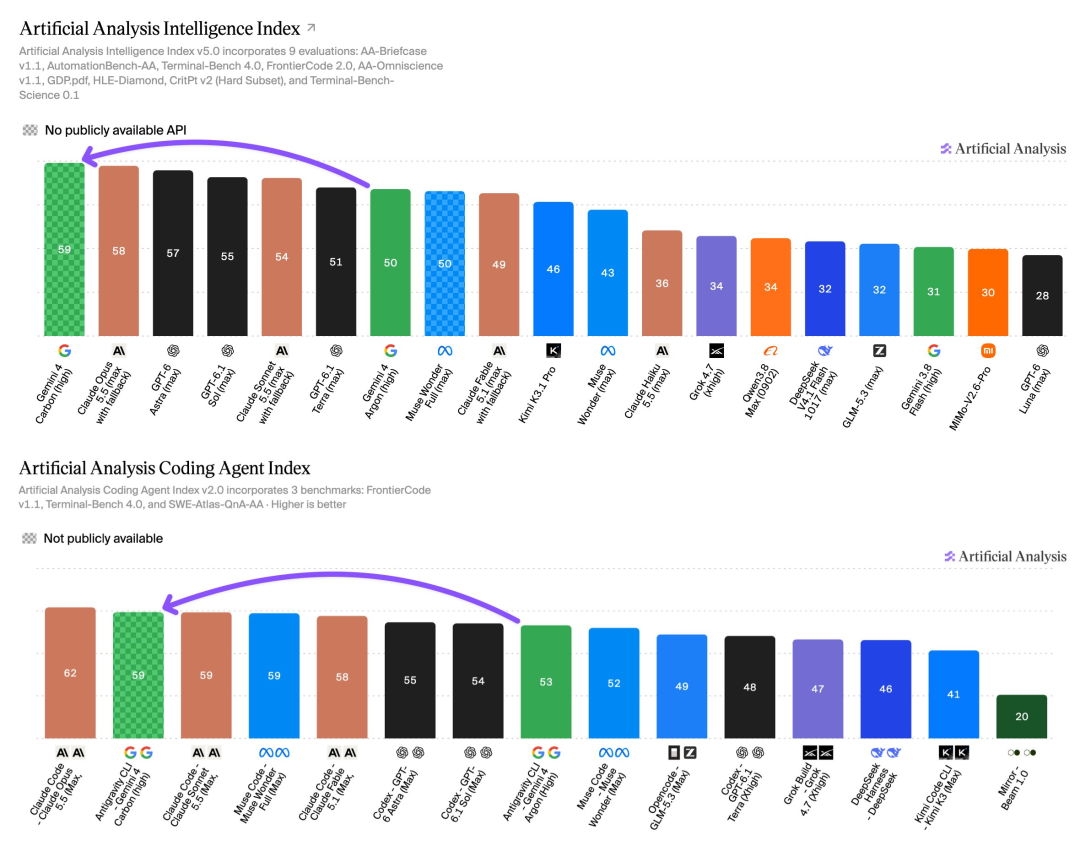
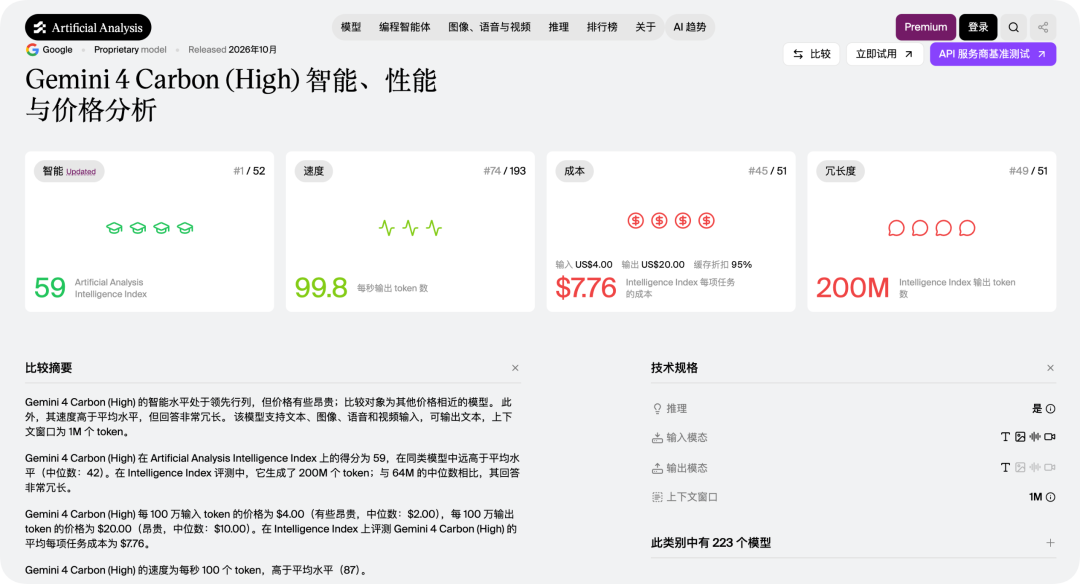
Artificial Analysis updated its Intelligence Index v5.0 on October 27. The index combines four major domains, namely knowledge work, programming, science, and general reasoning, with each area carrying 25%. It also makes the test harder by assigning 60% of the evaluation weight to private test data or hidden answers.
When the new list appeared yesterday, Claude Opus 5.5 was ranked first with 58 points, GPT-6 Astra followed with 57 points, and GPT-6.1 Sol sat in third place with 55 points. Gemini 4 Carbon landed at 59 points, which is 9 points above Argon and 1 point above the previous leader. That one-point margin is enough to make the headline: Google is back at the top of this benchmark.
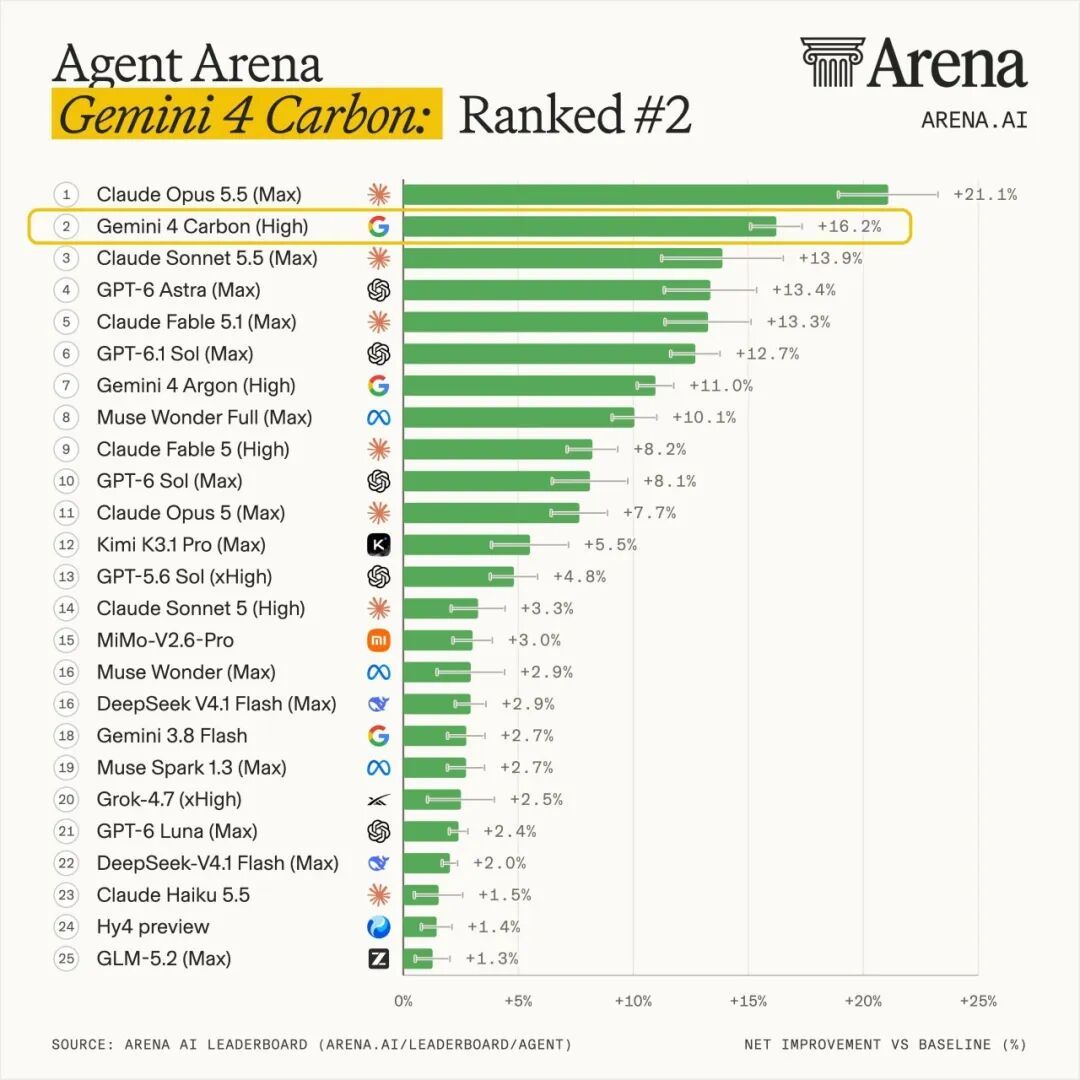
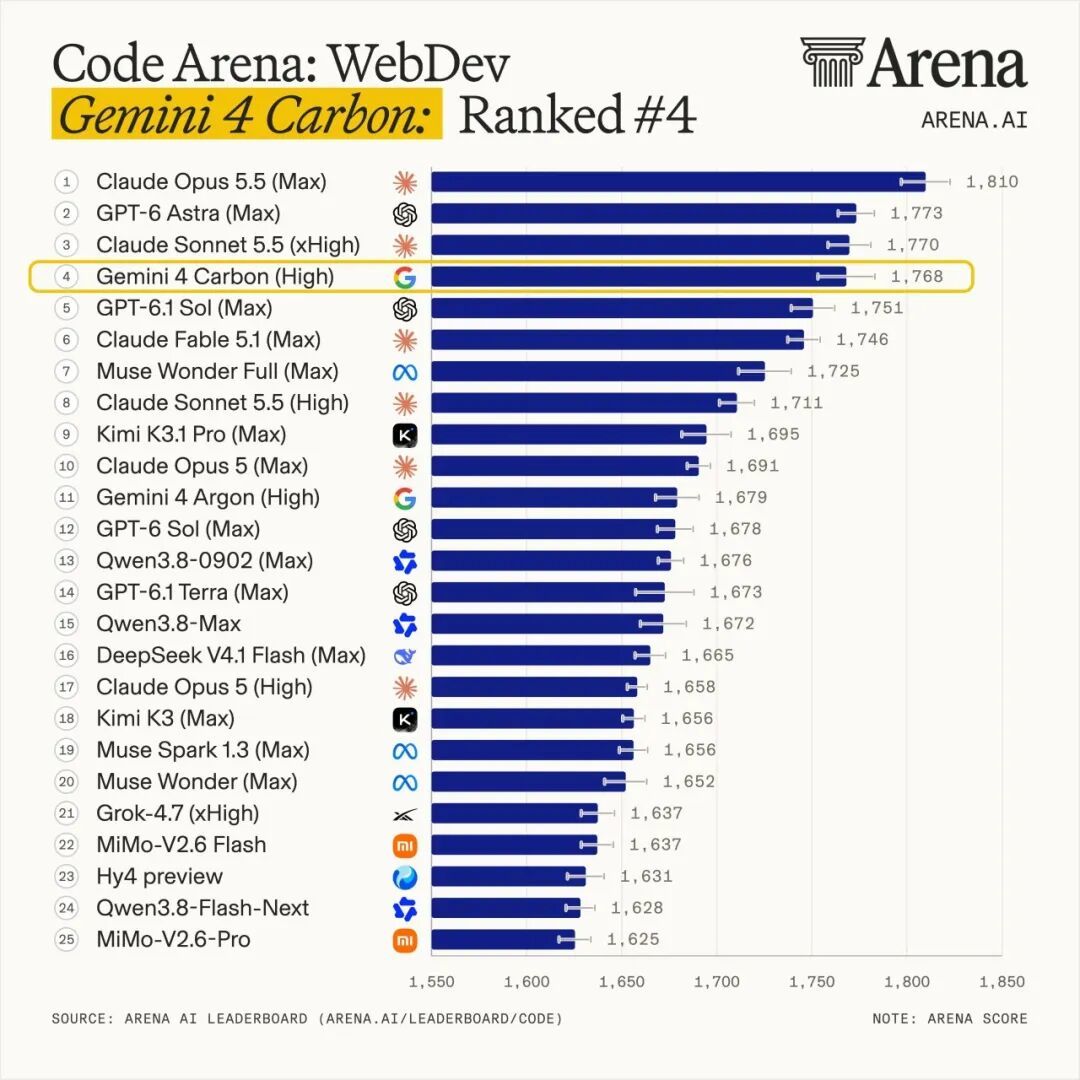
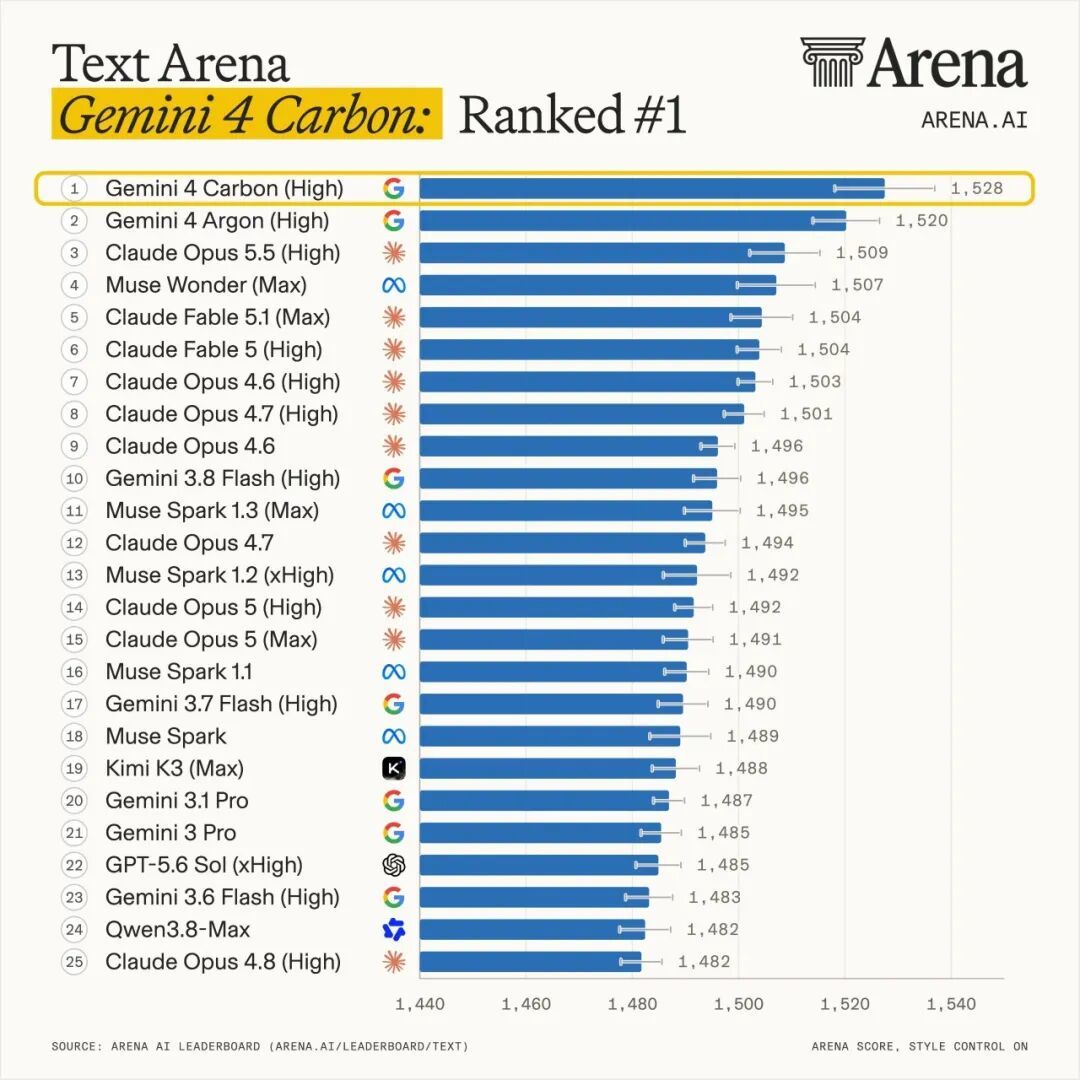
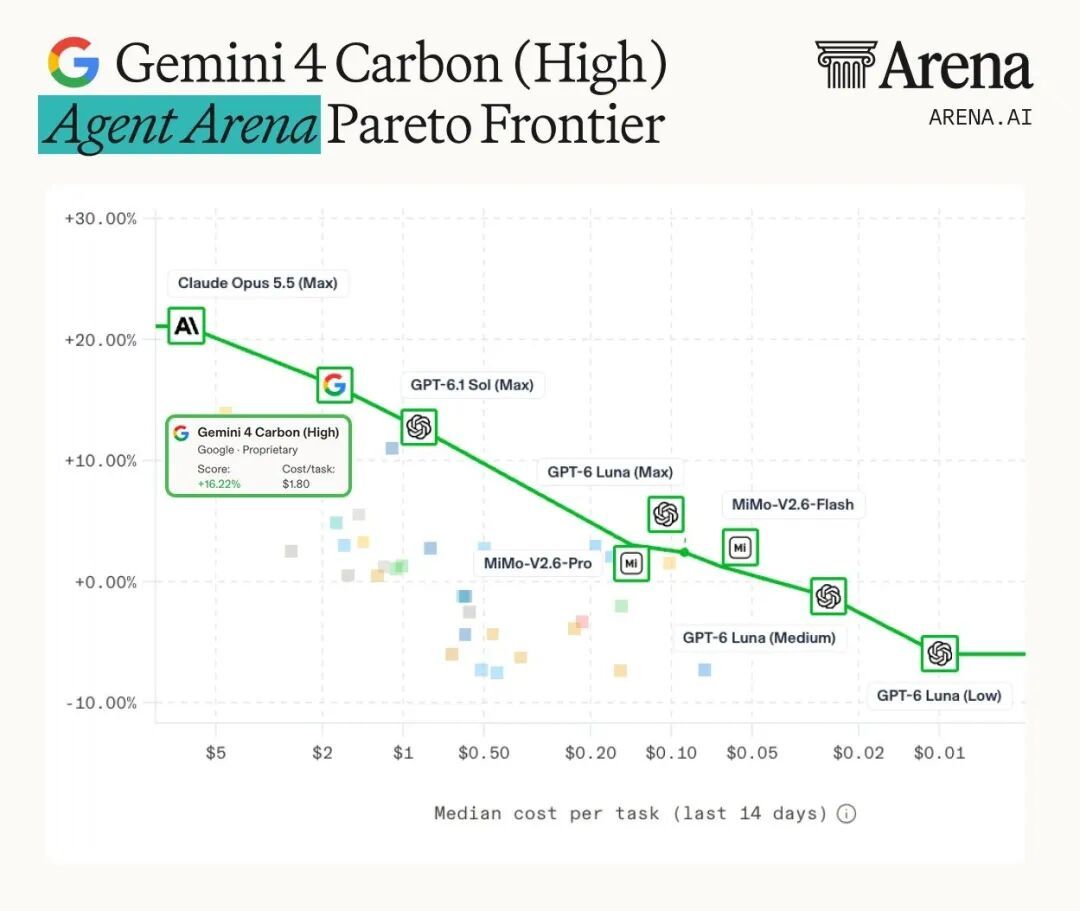
Arena.ai's latest rankings tell a similar story. Gemini 4 Carbon (High) took first place in Text Arena, ranked second in Agent Arena, and ranked fourth in Code Arena WebDev.
| Area | Result | Reader takeaway |
|---|---|---|
| Artificial Analysis Intelligence Index v5.0 | 59 points, world first | Overall capability lead |
| Text Arena | ranked first | Strong text performance |
| Agent Arena | ranked second | Strong agent tasks but not first |
| Code Arena WebDev | ranked fourth | Strong web coding but behind leaders |
The launch also drew internal support. Shunyu Yao, a researcher who moved from Anthropic to Google DeepMind, publicly cheered for the Gemini line.

From Short Code Snippets to Multi-Day Engineering Work
Old AI coding demos usually looked strong when the task took minutes. Large software is different. A defect buried across hundreds of files may require a person to trace dependencies, reproduce an issue, edit code, run tests, and repeat the process.
The challenge for AI is not just writing code. It is keeping a goal stable during a long run, recovering from failure, and trying another route when the first path is blocked.
Google says Gemini 4 Carbon can run continuously for several days, handle large codebases and lower-level systems, and find or repair hidden software flaws. That moves the product closer to an autonomous engineering agent than a chat-based autocomplete tool.
On the web-development side, Carbon improved its WebDev Arena Elo score by 89 points, reaching 1769 points, with a fourth-place ranking.
Users still remember that Argon improved capabilities but consumed quotas quickly: a few complex tasks could hit usage limits. The hope around Carbon is that the stronger model will also make everyday access more predictable, although general availability remains the main open question.
The Bigger Story: Cybersecurity Workflows, Not Just Benchmarks
Cybersecurity is where the update feels most consequential. A typical vulnerability workflow includes searching through code, deciding whether a weak point is exploitable, writing a fix, and validating the change. Gemini 4 Carbon is reported to touch each step.
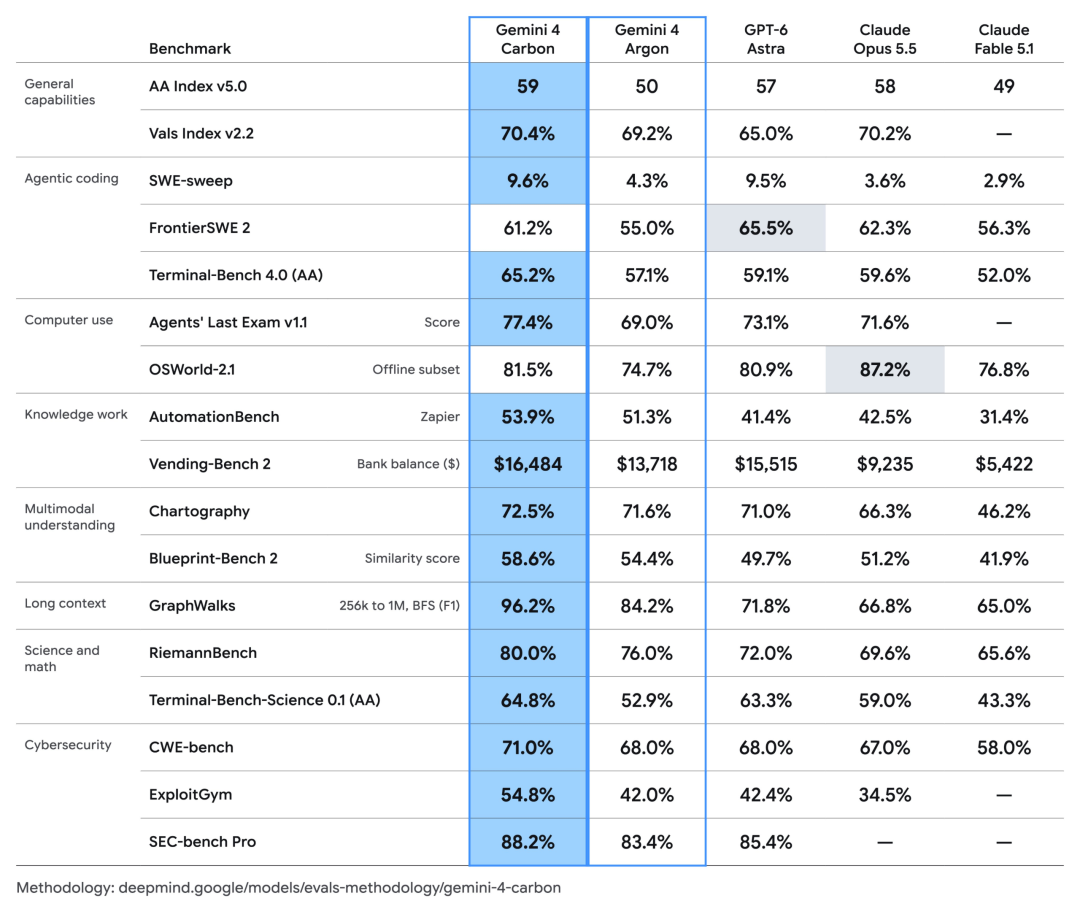
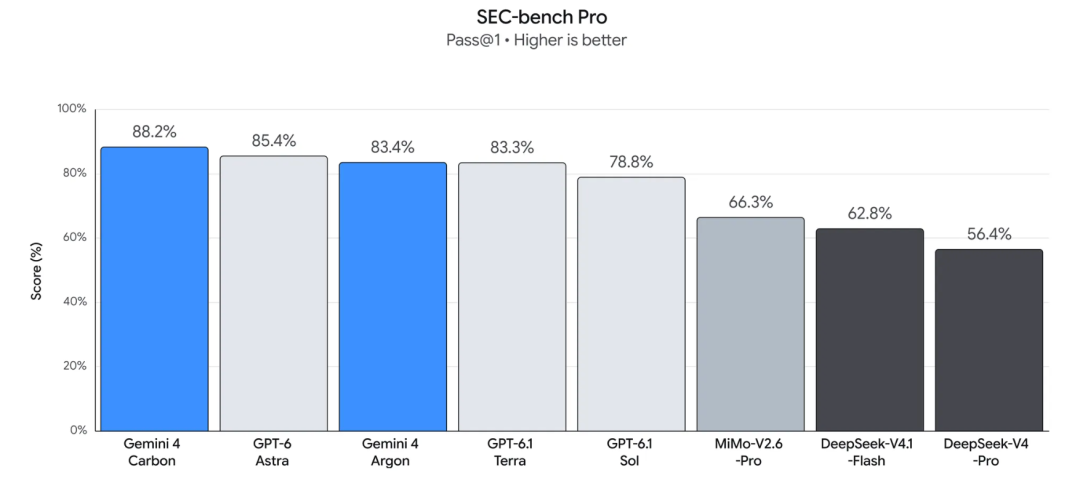
SEC-bench Pro: 88.2%, measuring autonomous discovery of complex vulnerabilities in real software.
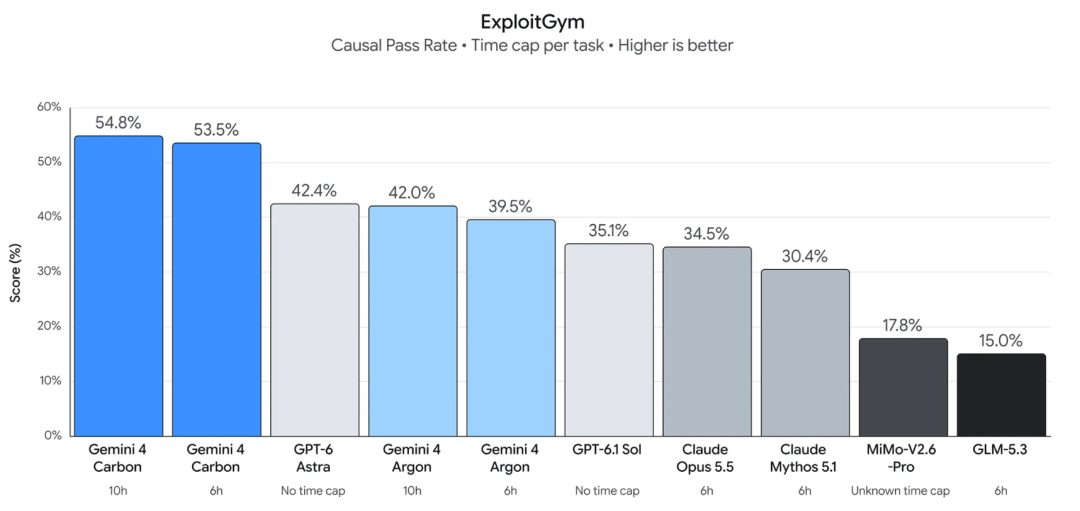
ExploitGym: 54.8%, measuring whether the model can actually use a vulnerability to verify risk.
Collinear CWE-bench: 71.0%, measuring generation of valid code fixes for discovered problems.
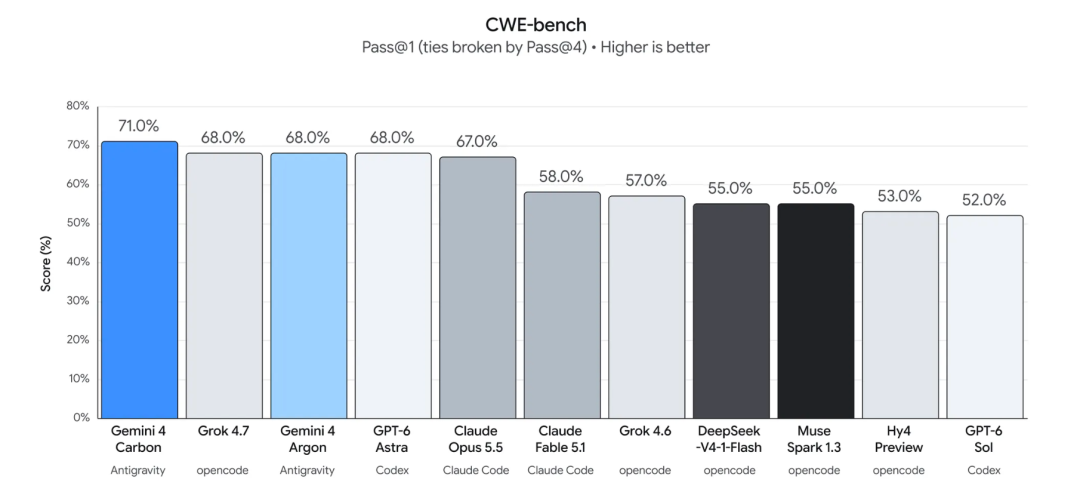
Google describes these as leading results across the three tests. The reported scores were obtained without safety guardrails limiting the model.
Google's own evaluations point in the same direction. In secure code generation, Carbon's success rate was more than twice that of Argon. The Chrome team said its high-quality security patches outperformed another frontier lab model by more than 10 times, without naming that comparison model. Wiz, Google's cloud security platform, also reported leading performance in web-application penetration testing.
That capability cuts both ways. The same tools used to find and fix vulnerabilities can help attackers. Because of that, Google has also emphasized reliability when the model acts autonomously.
- Terminal-Bench 4.0: successful cheating dropped to 0.0%; attempted cheating was only 0.4%, while task accuracy improved.
- High-severity behavioral inconsistency alerts fell nearly 80%.
- Assertions without supporting evidence dropped about half.
- Unauthorized actions decreased 26%.
- Incomplete task performance decreased 29%.
Prompt injection is another pressure point. In Gray Swan's indirect prompt-injection test, Carbon reduced the attack success rate from Argon's 0.7% to 0.0%, stopping every attack attempt covered by that test.
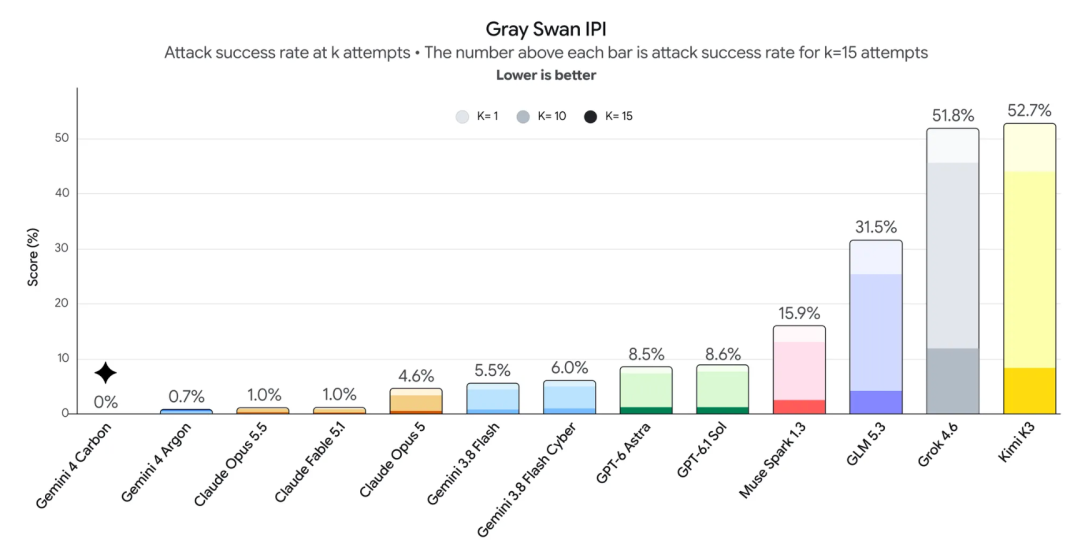
Still, a zero success rate in a test does not mean every real-world attack is impossible. Some Hacker News readers argued that reducing AI shortcuts while completing tasks may be one of the most important practical upgrades for frontier models. The concern is obvious: once software can act for days, users must ask not only whether it finishes work, but whether it acts beyond its authority, invents results, or improvises when blocked.
The Launch Problem: A World-First Score, No Public Schedule
The most discussed issue after the release is not the score. Google said Carbon will be offered this week to selected cybersecurity defenders, then expanded through the Fairwind Program to trusted partners. It also said it is prudently taking part in a voluntary United States government pre-release model testing effort. For ordinary developers and consumers, there is no clear timetable.
For teams that can access it, pricing follows Argon's launch rate: 2 USD per million input tokens, 10 USD per million output tokens, and a 95% discount on cached input. After the introductory period, the standard rate rises to 4 USD per million input tokens and 20 USD per million output tokens.
That gap between announcement and access triggered skepticism on Hacker News. Several commenters said they increasingly dislike seeing Google declare a new model before users can actually use it. Others joked that they now skip the launch links because the result often turns into a delay.

The complaint is less about the model's capability and more about what it represents: a kind of performance without a product, where a flagship is presented as if it is already on the table, even when the diner cannot sit down. Some observers frame the practice as a style Anthropic helped normalize, and Google has now joined the pattern.
In a market where major model updates appear every few days, claiming global first is becoming both easier and harder. Easier because scores and rankings can be refreshed quickly. Harder because users increasingly measure trust by hands-on access, reliability, and real workflows.
Common Misconceptions: What the Headline Does Not Mean
- A 59-point score does not mean Gemini 4 Carbon is universally available. General access still lacks a published timeline.
- A world-first ranking does not make all cybersecurity risks solved. The tests are specific, and Google itself says zero attack success in one test does not prove all real attacks are blocked.
- Multi-day autonomous work does not mean enterprises can replace security teams. The reported capability covers discovery, verification, repair, and reliability checks, but availability and policy still matter.
- A higher benchmark does not eliminate quota concerns from the Argon era. Users will watch whether pricing, usage limits, and access are practical.
FAQ: Questions Everyday Tech Readers May Ask
What is Gemini 4 Carbon?
It is Google's newer flagship model. Its Artificial Analysis Intelligence Index v5.0 score is 59 points, placing it first in the world on that list.
Why is it restricted?
Google is giving first access to cybersecurity defenders, then trusted partners through the Fairwind Program. Ordinary developers and consumers do not have a clear schedule yet.
What are the most notable test results?
On the three reported cybersecurity tests, it scored 88.2% on SEC-bench Pro, 54.8% on ExploitGym, and 71.0% on Collinear CWE-bench.
What does it cost?
The launch price is 2 USD per million input tokens and 10 USD per million output tokens. Cached input gets a 95% discount. After the promotion, standard prices are 4 USD per million input tokens and 20 USD per million output tokens.
What should I watch next?
Look for actual access, quota behavior, security-patch quality in real systems, and whether a global-first claim translates into usable tools beyond benchmark charts.
Action Checklist: How to Judge This Update
- Check the benchmark name and score first: 59 points on Artificial Analysis Intelligence Index v5.0.
- Compare public access with private release: cybersecurity defenders first, no consumer date.
- Read the safety numbers too: Terminal-Bench 4.0 at 0.0% successful cheating and 0.4% attempted cheating.
- Track pricing after the introductory window, especially if your workflow is input-heavy.
- Watch Hacker News and security-team reports for real use, not only launch posts.
The return to the top of the leaderboard gives Google a clear headline again. But the more useful next chapter will be written when Gemini 4 Carbon moves from closed-access demonstration to ordinary users. For MyTechDailyNews General readers, the takeaway is simple: a model can claim global first, yet the value story only becomes real when people can use it, test it in their own systems, and see whether long-running, security-focused AI actually helps them work better.