
MyTechDailyNews General: Why AI is quietly splitting between the cloud and the chip in your hand
By Sarah Chen — MyTechDailyNews, published by Tech Daily.
Every smart feature you use is a logistics decision disguised as software. When an app names the object in a snapshot or answers a question about a document, someone's silicon has to run the model, and where that happens decides what you pay, how long you wait, who can see your data, and whether the product still works when the internet does not. For now the answer is still overwhelmingly "in a distant data center", yet the balance is sliding toward hardware people can hold in one hand — and the honest picture is messier than either camp admits.
The trade-off, first drawn in December 2022
The fault line was visible long before AI features became a marketing line. Back in December 2022, a teardown of an autonomous object-tracking accessory built around a smartphone's integrated camera was used to frame the contest between cloud-based and edge-based AI processing: the small widget stood in for the edge, the servers stood in for the cloud, and the argument between them turned out to be about money, patience and exposure.
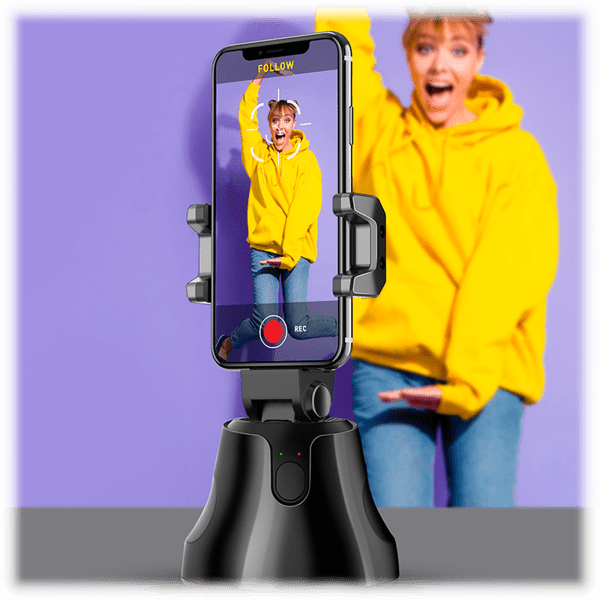
Manufacturers have a plain incentive to pick the server side. Pushing as much required processing, memory and other resource load as possible onto connected devices shrinks the parts list — and therefore the bill of materials — of the thing sitting on the shelf. Four costs come attached to that shortcut, and they matter to suppliers and purchasers alike:
- Distance costs time. Raw data is sent up for processing and the result travels back, which can create substantial roundtrip latency. Self-driving vehicles do all of their processing locally for a reason.
- Distance costs privacy. Uploading data is only as safe as the material involved — baby cam footage is not the same as a shopping list — and only as safe as the encryption and other protections that keep unintended access out.
- Distance costs reliability. At the extreme, if the cloud connection fails, the device becomes a paperweight.
- Distance costs money. A one-time fixed hardware cost is traded for ongoing variable cloud costs: server usage fees such as AWS, plus connectivity bandwidth. Those charges scale with customer count and with per-customer use, both for each device and cumulatively across all devices a customer owns.
Nearly four years later, the server side picked up a public argument
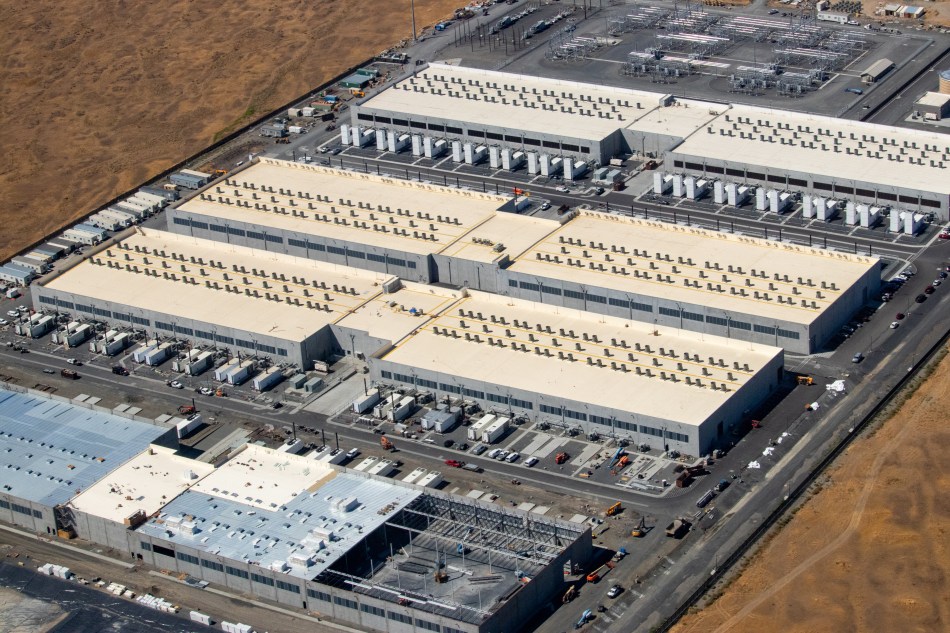
Nearly four years on, those points still hold, and the cloud list has grown at the societal end. Back then the AI data center — the facility type also called a hyperscaler — build-out was still in comparative infancy, and much of the compute capability coming online had been intended for cryptocurrency mining before it was redirected to deep learning processing. Today the data center phenomenon is in fuller stride, and public backlash is understandable:
- Speculative investment deals, frequently circular in structure — a hardware supplier investing in a data center developer that promises to use that supplier's chips and software — contribute to stock-market volatility and broader bubble market concern.
- Governmental jurisdictions offer lucrative tax breaks and other incentives to data center developers, even when any tangible local employment increase lasts only through construction.
- Energy demand is substantially incremental, requiring additional power plant facilities built in parallel, with costs assumed by all.
- That incremental energy comes predominantly from hydrocarbon-based sources such as coal and natural gas, with substantive pollution and noise impacts.
- Water demand for cooling is equally sizeable, redirecting and draining aquifer reserves whether the sources are fresh, recycled or a mix.
- The facilities are massive in size, consuming open space and fields formerly used for various agricultural purposes.
Four ways to place the work, lined up
| Placement | What it saves | What it asks of you |
|---|---|---|
| cloud servers | Keeps the device's bill of materials small and hands you access to the biggest trained models. | Roundtrip latency, exposure of raw data, a paperweight risk when the link drops, and a variable bill (AWS-style usage fees plus bandwidth) that grows with usage. |
| A tethered phone or tablet | Employs computing, storage and imaging the consumer already owns and has already paid for, along with whatever cloud bandwidth that device also funds; latency is notably less and personal data stays out of the provider's training data set. | The offloading app must comprehend Android, iOS and, on tablets, iPadOS, and must keep evolving with them. |
| Hybrid: basics local, heavy work remote | A base level of inference on-device, with cloud resources tapped as needed for heavier functions. | You still need local storage and memory to hold a model, and you still depend on servers for the large ones. |
| Your own local network | Spreads one inference task, agents included, across several LAN-connected machines; a shared NAS can hold models for common access. | RAM limitations will likely preclude full inference processing on the storage box. |
The alternative that was already in your pocket
Here is what was written about edge processing in late 2022, and why it has aged well. Another popular bill-of-materials slimming approach uses a wired or, more commonly, wirelessly tethered local device with abundant processing, storage and imaging resources: a smartphone or tablet. The advantage is convenient — the machine is already in the consumer's possession, already paid for, and its remaining cloud processing bandwidth in the complete solution is also bankrolled. Latency is notably less than with the pure cloud route, privacy worries are lessened even if not fully alleviated, and although the phone's link to the cloud may periodically fail, the link between phone and device generally remains intact.
Two of those benefits have since become sharper. The privacy gain is not only general but specific: it keeps personal data out of the cloud provider's training data set. The end of ongoing-cost outflows covers more than hardware — it also covers monthly AI service subscriptions for consumers and tokens for developers. The burden, meanwhile, sits with the manufacturer. Whatever device-offloading application runs on the tethered mobile device must comprehend all common mobile operating systems, predominantly Android and iOS, along with the related iPadOS for tablets and the various machines that run them, and it must evolve as operating systems and hardware evolve. Otherwise the application will sooner or later stop meaningfully working, as will the device it is tethered to. In defense, the showcased accessory depended heavily on a smartphone-based app and used the phone's built-in image capture and processing resources rather than duplicating costly hardware, so that nuance made sense at the time. What was overlooked was the growing burden of that processing and the associated need for adequate memory — nonvolatile for storage, volatile for code execution and temporary data — and how those capacity and speed needs might expand.
The quiet tax on your storage bar
Now we know how fast. The not-unlimited supplies of SSDs, and interestingly HDDs — those trading raw performance and energy consumption for raw capacity and cost-per-bit — along with DRAM, are being redirected to data centers. Required capacities in PCs, smartphones and similar devices for today's edge AI processing functions are rising in lockstep. Concretely: Gemini AI models embedded in latest-generation Chrome browser installs take up at least 4 GBytes of storage space. Apple Intelligence included with iOS 27 is now required rather than the optional extra it was with the version 26 O/S predecessor, and it uses up to 14 GBytes of capacity. The similarly required-by-default AI model suite included with MacOS 27 is 12-30 GBytes in size, although open source can help.
Compression is the other lever being pulled. PrismML, which specializes in quantizing and otherwise compressing deep learning models for resource-constrained systems, was able to shrink the Alibaba Qwen3.8 27B open-source model by between 9-10x while still matching 98% of Qwen aggregate benchmark scores — and the resultant model was still 5.9 GBytes. Perplexity's Portable Computer, built for local on-computer model storage and processing, is 20 GBytes. The read for anyone shopping for hardware: storage needs in both cloud and edge scenarios will increase further.
Why part of this work is never coming home
One irony inside those facilities is that a not-insignificant percentage of data center processing resources is used, at least part-time, not for inference but for training: initial training, periodic retraining to counteract performance decay, iterative training to encompass new and expanded datasets, and transfer learning to adapt frontier models for specific tasks. OpenAI recently reported, for example, that the training run for its latest-generation Astra GPT-6 fully consumed more than 100,000 GPUs. Operations like that are compute-intensive and highly parallelizable, which explains why GPU-derived architectures came to the fore in this application.
Inference splits differently. Only the opening prefill portion of the total task is parallelizable, and therefore GPU-amenable, though not necessarily GPU-optimal. The subsequent decode portion is memory-intensive from both capacity and bandwidth standpoints, and the latter rationalizes the ascendance of advanced HBM approaches. Translated for everyday use: one half of producing an answer is arithmetic, the other half is fetching.
So any claim that inference will transition fully to the edge in all cases is, again in my view, a pipe dream. Autonomous vehicles and other specific scenarios? Sure. But plenty of applications do not care about latency, do not care about privacy — which can alternatively be handled via encryption anyway — and do care about access to sizeable trained models. Servers rule in such cases, as noted in late-2024 follow-up coverage.
A middle ground you can own: the network down the hall
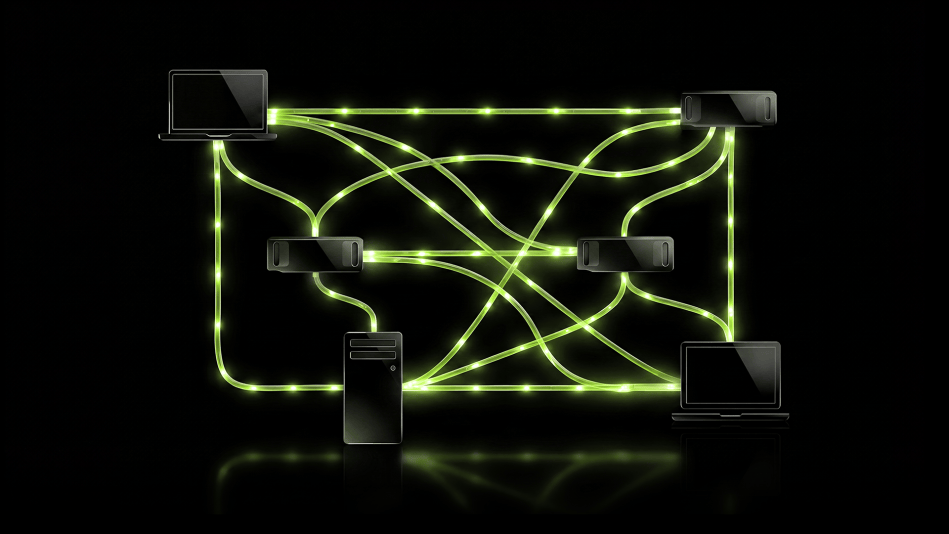
Hybrid approaches, in which a base level of inference occurs locally while cloud resources are tapped as needed for heavier functions, will become increasingly common. Other local-ish, or local networked cloud, scenarios are also emerging. NVIDIA's Personal AI Router, PAIR, enables spreading the overall inference, including agents, processing task across multiple LAN-connected computers, including non-NVIDIA Macs. Alternatively, models can be stored on a LAN-shared NAS for common access, although RAM limitations will likely preclude full inference processing there.
Who is ahead if this keeps playing out
The obvious beneficiaries are memory and broader mass storage suppliers. It is ironic that after countless commodity boom-and-bust cycles, some of them lived through from the supplier side, the semiconductor memory industry may have finally found a path to a predictable and otherwise sustainable business model.
The other candidates are inference chip and IP core suppliers. GPU-based architectures will likely continue to reign from a training standpoint, if for no other reason than the prevalence of proprietary software tools. Yet an ever-increasing percentage of total growth in the AI processing space will instead be in inference, where toolset lock-ins are more fungible and where other parallel-processing, and more memory-centric, architectures may indeed end up more optimal for the necessary tasks.
Common misconceptions, corrected
- "Local AI means private by default." Tethering to a phone lessens privacy worries rather than erasing them, and cloud-side exposure can alternatively be addressed through encryption. Neither option is automatically safe.
- "Storage does not matter for smart features." It has become the limiting consumer: the same task may land on at least 4 GBytes, up to 14 GBytes, or a 12-30 GBytes suite depending on platform.
- "Sending work to a server makes it cheaper." It converts a one-time fixed cost into a variable one that scales with how much each customer uses each device.
- "Everything will run on-device soon." A full move is a pipe dream; workloads that need large trained models stay on servers.
- "Data centers exist to answer prompts." At least part-time, a meaningful share of their capacity is spent on training and retraining instead.
Action advice: check these before your next gadget
- Compare your free space with the footprint of the AI features you actually want, and leave room for the growth described above.
- Confirm the app behind an accessory covers Android, iOS and iPadOS, and that its maker has kept pace with operating-system changes before.
- Ask what still functions when the connection fails — and whether the answer is "nothing".
- Price the whole ownership period: hardware cost versus recurring server fees, subscriptions and tokens.
- If you own several machines, look at local-network patterns such as PAIR or a shared NAS for models, while remembering that RAM, not disk, caps full processing.
- For anything with a camera or microphone in the home, treat data upload and training-data-set use as explicit questions to the seller.
FAQ
Is AI really leaving the cloud?
It is being shared out, not exiled. Inference specifically remains mostly a cloud-centric function, but client devices, tethered phones and local networks are taking a growing base layer of it, with heavier functions still sent off.
Why does a self-driving car not simply ask a server?
Because a roundtrip takes time the car does not have. That is the same latency argument that keeps autonomous vehicles and similar scenarios processing locally.
Why is my laptop running out of space when I have downloaded nothing?
Because AI bundles now ship as part of the system rather than as an option. Apple Intelligence went from optional on version 26 to required on iOS 27 and can consume up to 14 GBytes; the default suite on MacOS 27 runs 12-30 GBytes; Gemini models inside latest-generation Chrome installs take at least 4 GBytes.
Does a compressed model mean a bad model?
Not necessarily, though the gains are bounded. PrismML reduced the Alibaba Qwen3.8 27B open-source model by between 9-10x while matching 98% of Qwen aggregate benchmark scores, and the result was still 5.9 GBytes.
Should I set up a small home cluster?
Only if you already have the machines. Solutions such as NVIDIA's Personal AI Router spread one task across several LAN-connected computers, non-NVIDIA Macs included, and a NAS can hold models — but RAM limits will likely preclude full inference processing there.
Where is the industry's growth heading?
Toward inference rather than training, and therefore toward memory, mass storage, inference chips and IP cores, with GPUs expected to keep their grip on training because of proprietary tool prevalence.
The realistic next chapter is less a handover than a sorting exercise: each workload drifting toward the place where its tightest constraint hurts least, with hybrid and local-network arrangements filling the gap in between. For readers, that means three things worth watching on any product page — how much space the smart features demand, what keeps working when the connection drops, and whether the price you see is a purchase or a monthly stream. Those are the practical fingerprints of the shift from remote servers back toward the chips in your own hands.