
MyTechDailyNews General: What a San Fransisco Visit to Founders, Inc. Shows About Hardware Prototyping
By Sarah Chen — MyTechDailyNews General
A maker-event tour that paused in San Fransisco points to a broader shift in technology: the path from concept to physical demo is becoming shorter. The location is Founders, Inc., a campus where teams explore robotics, drones, edge AI, advanced manufacturing, and other connected products. For readers who follow tech mainly through apps or consumer gadgets, the headline takeaway is easy to grasp: hardware now has a faster entry lane.
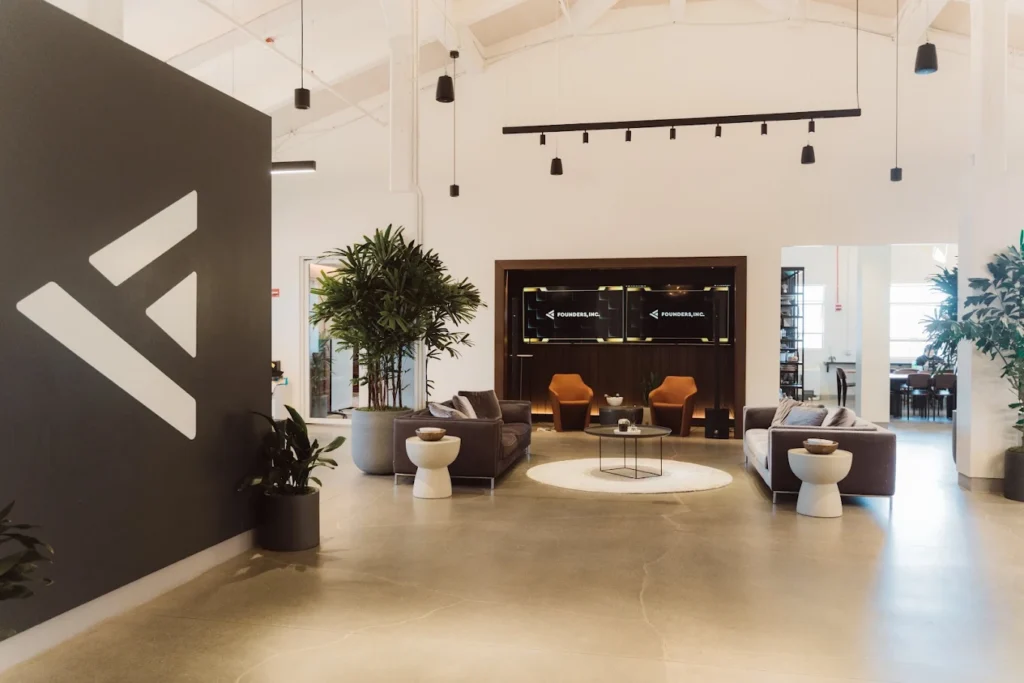
At Fort Mason in San Francisco, the 42,000 sq. ft. environment places people close to the problems they are solving. The campus is not only a workspace; it is a dense set of conversations, tools, and informal support that can move a project from assumption to test.
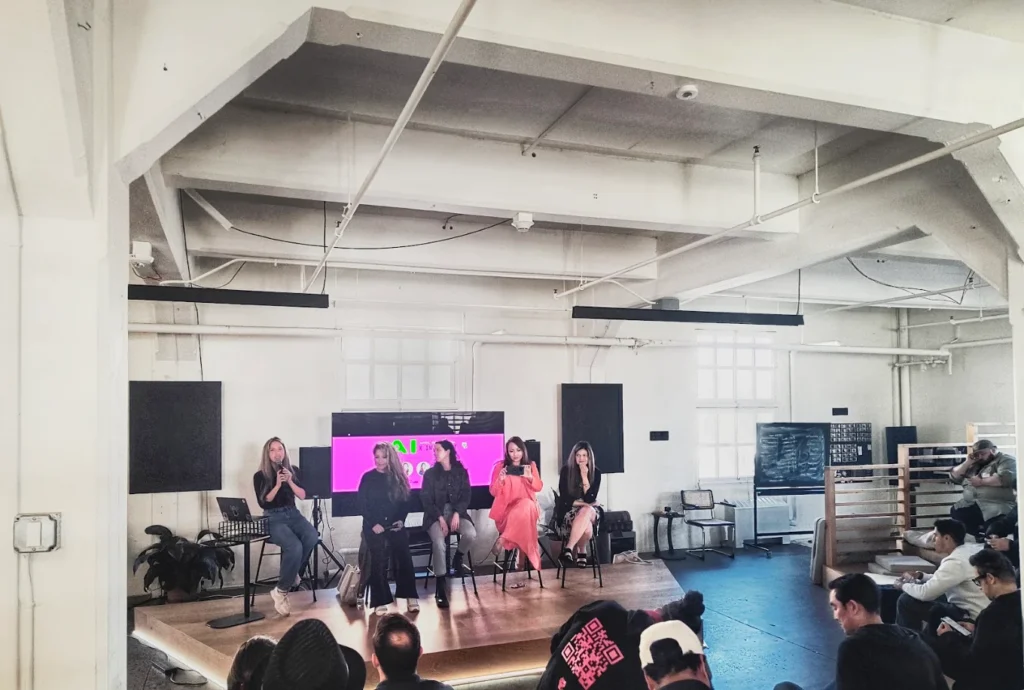
What Founders, Inc. provides beyond funding
The description in the source visit is less about a conventional program and more about an operating setting for technical founders. It combines space, early backing, and a community of builders, so a founder can start making things sooner rather than waiting for a perfect plan.
Furqan Rydhan, Founder and CEO of Founders, Inc., ties the place to an early personal vision:
This is the space I dreamed of having when I was 18 — just tinkering, exploring, and building things with friends, fuelled by curiosity and passion. A place where we could experiment freely, supported by a community of people who deeply believed in us.
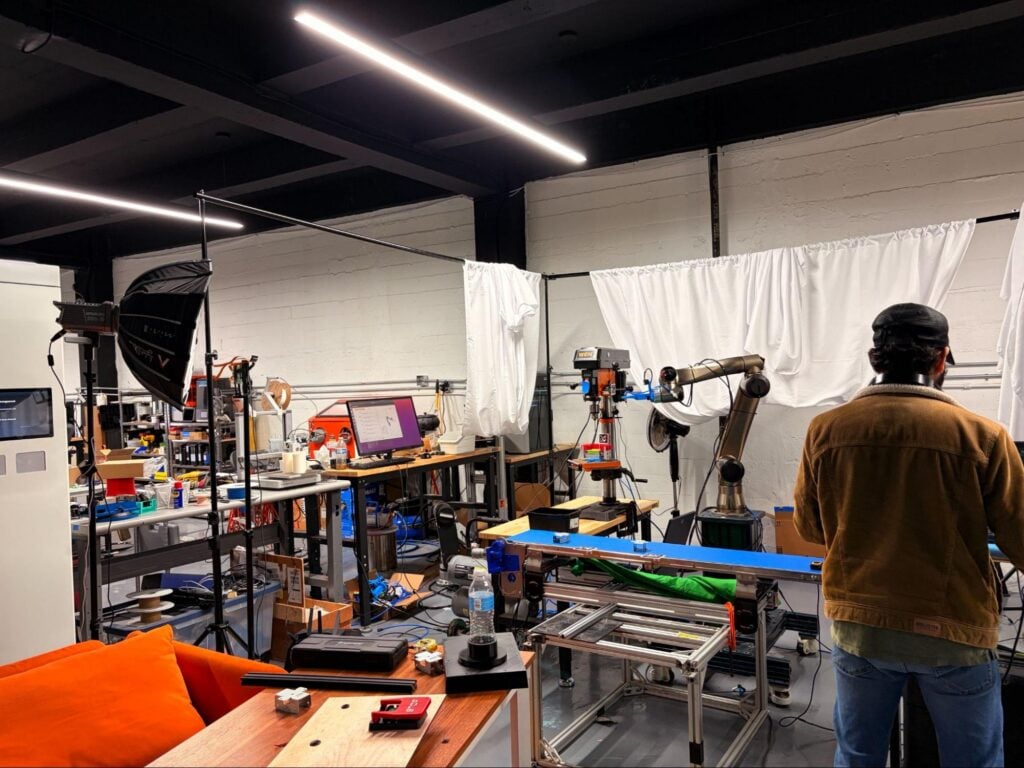
The daily rhythm follows that idea: engineers build robots, test drones, train models, assemble hardware, and help nearby teams through difficult problems. Learning happens through shared work, not separate silos.
Why physical products feel more open now
AI and hardware are no longer separate news categories. Foundation models are making machines more useful, drones are gaining independence, manufacturing systems are becoming more adaptive, and edge AI is bringing capabilities into devices that once would have required a much larger engineering effort.
Hardware still carries friction, but the starting cost has changed. Smaller teams can use better boards, open source software, inexpensive sensors, and accessible production methods to reach useful milestones within weeks.
Now with a 3D printer and a Raspberry Pi, anyone can build a scalable AI hardware product.
The quote from Mike Shin, COO of Founders, Inc., summarizes the practical side of the trend: a modest setup can become the foundation of a serious product experiment.
How Raspberry Pi shortens the first step
Raspberry Pi is presented as a bridge between an idea and a working object. It gives founders a way to test whether a concept can function without first designing a custom platform. In the earliest stage, speed and evidence often matter more than polished engineering.
Across the campus, the examples described cover several categories:
- Control layers for robotic systems
- Computer vision proofs of concept
- Edge AI services that process data close to the source
- Drone flight control and telemetry
- Environmental sensing tools
- Industrial automation experiments
- IoT infrastructure building blocks
- Applications that support smarter manufacturing
For a beginner, that accessibility can turn curiosity into a first robot. For a founder, the same convenience can be the difference between an assumption and a demonstrable result.
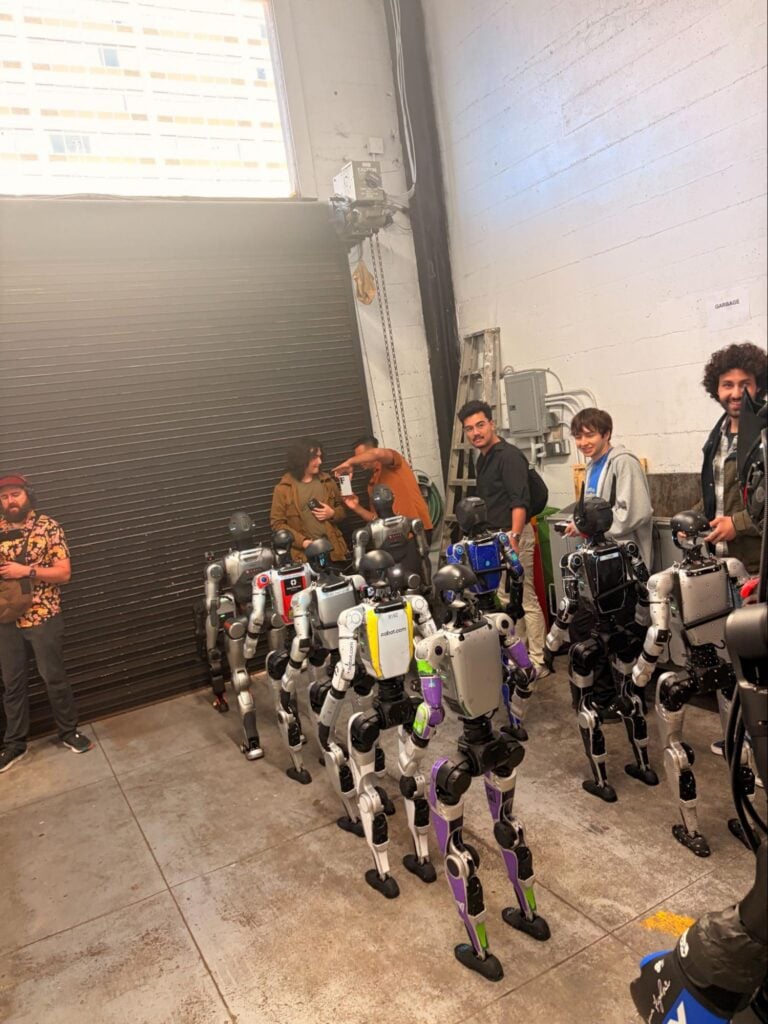
Examples of what teams are building
The report highlights robots that move through complicated environments, computer-vision systems that can operate without relying on the cloud for every decision, manufacturing tools that monitor operations in real time, and drone platforms used for inspection, mapping, and logistics.
It also describes work beyond robotics: agriculture, environmental monitoring, connected medical devices, and educational tools. The pattern is not one hero product. It is the sequence in which a rough experiment can become a company solving a real problem.
Many of the companies we back started exactly this way: build something quickly, put it in front of users, learn, iterate, and keep improving.
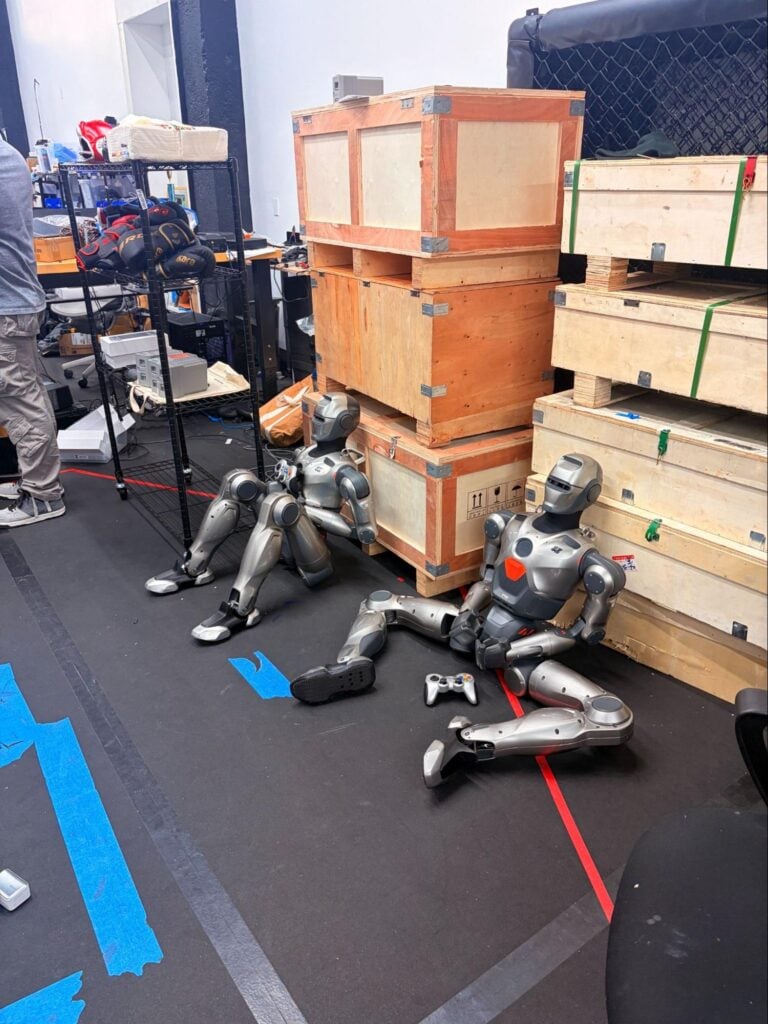
A robot can look exhausted, too, after a long build cycle.
Common misconceptions
- Myth: early testing needs custom hardware. Many first answers come from ready-made boards, sensors, printed parts, and open source tools.
- Myth: Raspberry Pi is only for student projects. The campus use cases include commercial validation as well as early learning.
- Myth: physical AI always needs the cloud. Local processing is central in some edge AI and computer vision examples.
- Myth: spelling changes mean a different product. If a note says Rasberry Pi, the intended platform in this discussion is Raspberry Pi.
- Myth: polish comes before evidence. The founders’ advice is closer to “make it real, then improve it.”
Why community can matter more than a single tool
Hardware problems rarely stay in one discipline. A team may need to manage mechanical parts, electronics, firmware, testing, compliance, supply chains, manufacturing, and AI at the same time. A nearby community can shorten those learning loops because someone may have already found the right supplier, fixed the same defect, or broken the part before the next order is placed.
That shared memory can lower the cost of failure, and it gives the story a wider relevance: the future of physical AI may depend as much on collaboration networks as on chips or robots.
Action advice for readers and builders
For general readers, the useful signal is that intelligent physical products are becoming easier to prototype, so demonstrations may appear sooner and iterate faster. For builders, the next step is concrete: choose a proof question, buy accessible sensors, use a ready-made board, print a part, or run an open source model. Then let someone touch the result.
A practical checklist before scaling
- State what the first demo must prove.
- Build the smallest version with off-the-shelf hardware.
- Let a real user or another builder try it.
- Log the failures that matter.
- Revise quickly before seeking larger commitment.
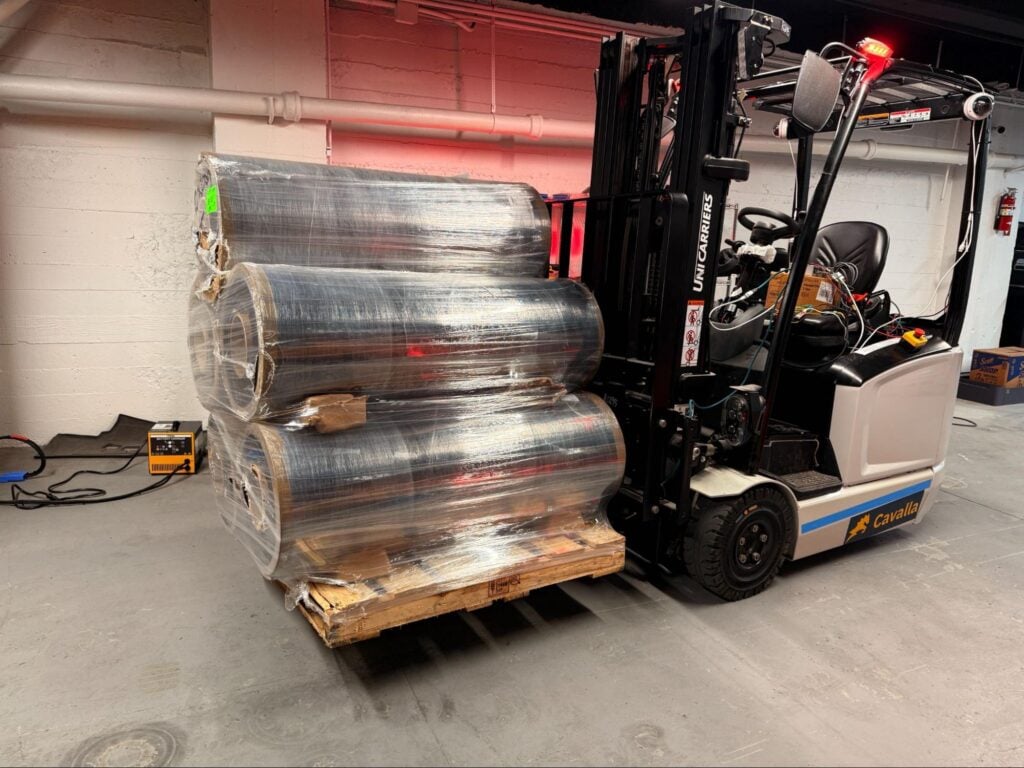
Some campus photos are shared because they capture the spirit of the space, not just the function of the object.
FAQ
What is the campus at Fort Mason?
It is the Founders, Inc. environment described in the article, a 42,000 sq. ft. place in San Francisco where hardware-focused teams build side by side.
Why do both San Fransisco and San Francisco appear?
The visit note preserves the San Fransisco spelling, while the standard place name remains San Francisco.
Who are the founders interviewed?
Furqan Rydhan is Founder and CEO of Founders, Inc., and Mike Shin is COO of Founders, Inc.
What is the central technology trend?
The trend is the convergence of AI with robotics, drones, edge computing, and advanced manufacturing, making physical products more capable and more approachable.
What should readers do with the information?
They can pay attention to proof-of-concept demos rather than only product claims. If you are exploring hardware yourself, the same logic applies: validate early, keep the first build simple, and learn from real use.
We’re excited to see Raspberry Pi continue lowering the barrier to entry for hardware innovation and helping the next generation of founders turn ambitious ideas into real companies. If you’re a hardware founder, come build with us.
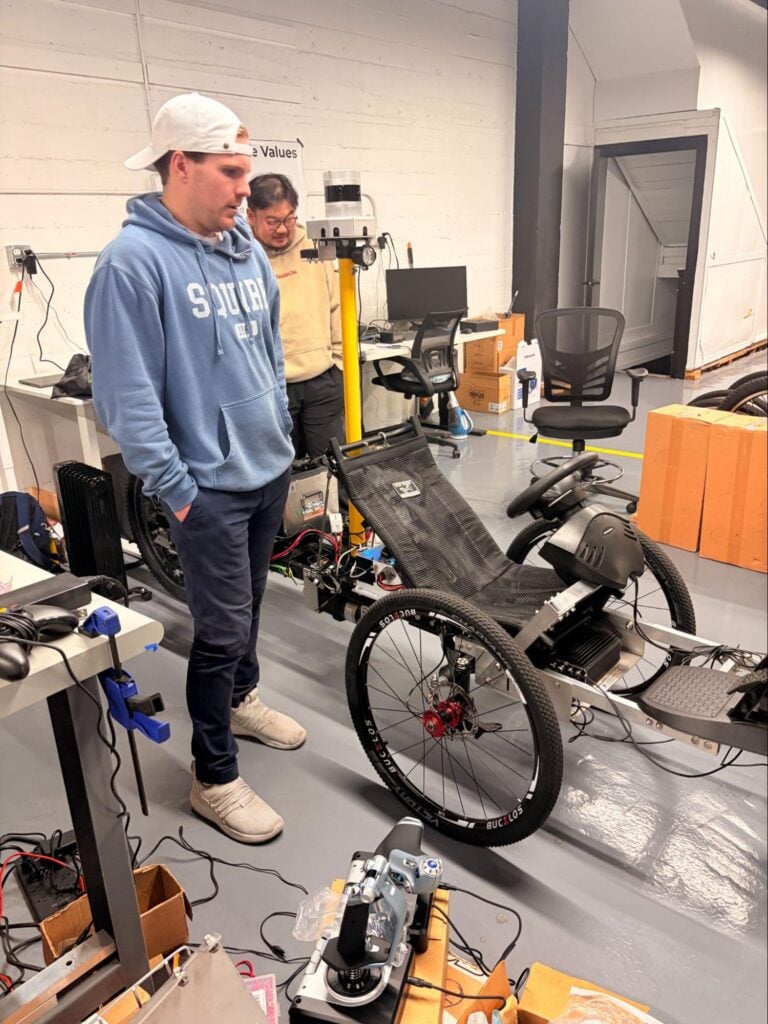
The MyTechDailyNews takeaway
The broader story is about workflow change. When founders have nearby collaborators, affordable parts, and a way to create a touchable prototype, hardware innovation becomes easier to observe and compare. For MyTechDailyNews readers, the signal to watch is not just what a robot can do today, but how quickly ideas are moving from bench tests to products.