
MyTechDailyNews General Tech: A Fine-Tuned Inception v3 CNN Outscored GPT-6 Astra and Claude Fable 5.1 on 200 Skin Lesions — and What It Means When You Ask an AI About a Mole
By Sarah Chen · Tech Daily · MyTechDailyNews (General desk)
Confidence was the wrong thing to trust. In an experiment built in October 2026, three very different AI readers were handed the same set of skin photographs. Two of them were frontier large language models available at that moment — GPT-6 Astra and Claude Fable 5.1. The third was a fine-tuned Inception v3, a convolutional neural network (CNN) first published by Google in 2015 and re-tuned here on public dermatology images. Across 200 biopsy-proven lesions, the CNN named the correct diagnosis 125 times (62%), while the two large models managed 84 and 85 (42%). A ten-year-old architecture, fine-tuned for about twenty minutes, finished ahead of both flagship assistants.
For everyday readers the lesson is not "chatbots are dangerous". It is something simpler and more useful: a small model aimed at one narrow job can beat a much bigger general model at that job — and even the winner was still wrong on a large share of these cases.
One lesion tells the story
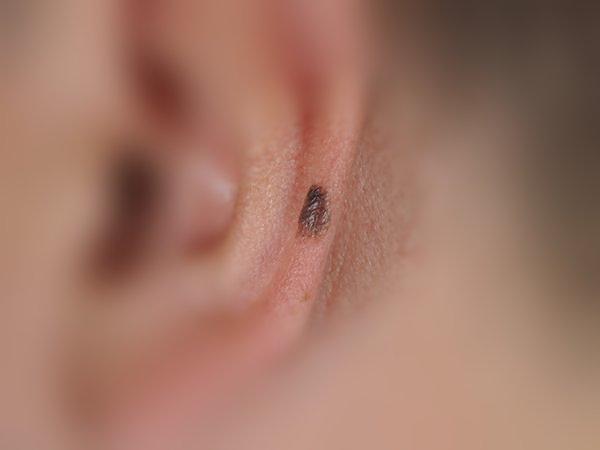
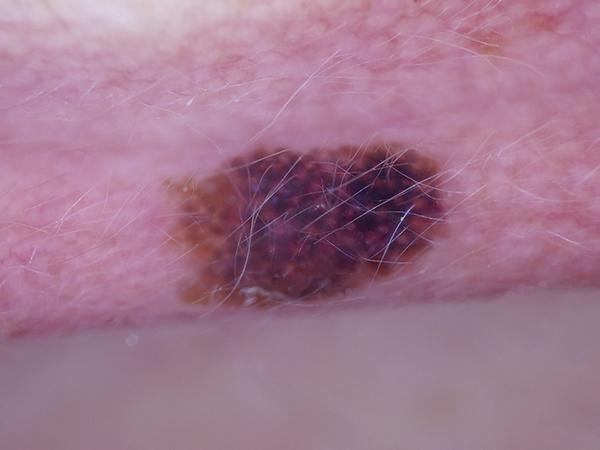
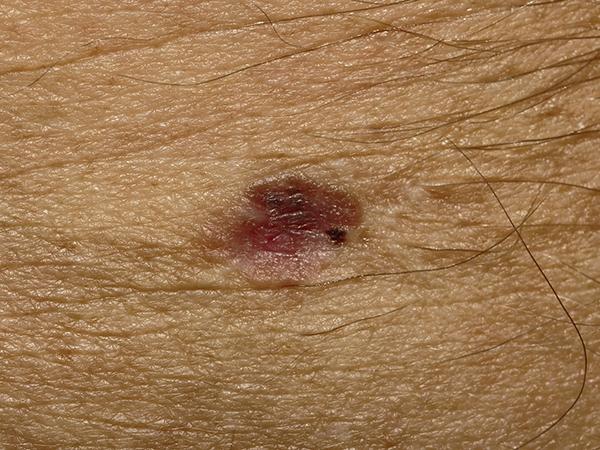
Clinical photograph on the left, dermoscopic image on the right: an invasive melanoma on an ear, under 0.8 mm thick. Both large language models called it a seborrhoeic keratosis — a harmless warty growth — and said the patient could be discharged. The CNN, working from the magnified view, said melanoma. Images: MILK10k, MILK study team, CC BY-NC.
That single case is the whole comparison in miniature. The two LLMs saw both pictures and answered the way a clinician's assistant would; the CNN saw the same pair but weighted the dermoscopic image far more heavily, and that weighting is where its advantage came from.
Where the test material came from
The lesions were drawn from MILK10k, a public dataset released through the International Skin Imaging Collaboration in 2025. Every lesion in it is photographed twice: a clinical close-up, and a dermoscopic image taken through the illuminated magnifying lens dermatologists use. From that pool, 200 lesions were sampled at random, all confirmed by histopathology:
- 100 that should not be discharged: 30 melanomas, 25 basal cell carcinomas, 25 squamous cell carcinomas (including Bowen's disease) and 20 actinic keratoses.
- 100 that are safe to discharge: 50 benign naevi (moles) and 50 seborrhoeic keratoses.
All of them had been biopsied, the harmless ones too, which tilts the sample toward difficulty: a mole that somebody decided to cut out is one that worried a clinician.
Two very different ways of being asked
The LLMs received both images and nothing else. They were prompted, as a clinician might use them, to give the most likely of the six diagnoses or answer 'unsure', to attach a confidence, to name a second choice, and to say whether the lesion could be safely discharged with no treatment, biopsy or follow-up. Both models received the same prompt at default settings, and neither refused a case.
The CNN was not state of the art by design. Inception v3, pretrained on everyday photographs, had all its layers fine-tuned on 68,011 dermoscopic and clinical images from the ISIC Archive on a single H100 GPU. Before training, the 200 test lesions and every other photograph of the same lesion or the same patient were removed from its data, validation set included, so it had never seen them; they were not used to choose the model or set its threshold. It scored both images of each lesion, put most of the weight on the dermoscopic one, and chose from the same six diagnoses.
One practical detail stands out for readers: the CNN is small enough to run entirely in a phone browser using WebGPU. Nothing is uploaded, and its random sample button draws from these same 200 lesions.
Three more cases, three different verdicts
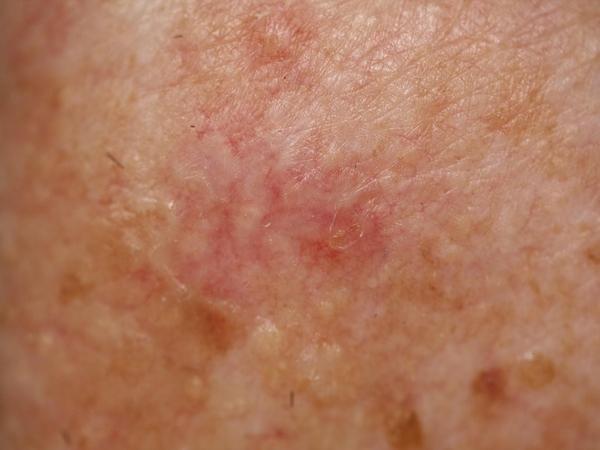
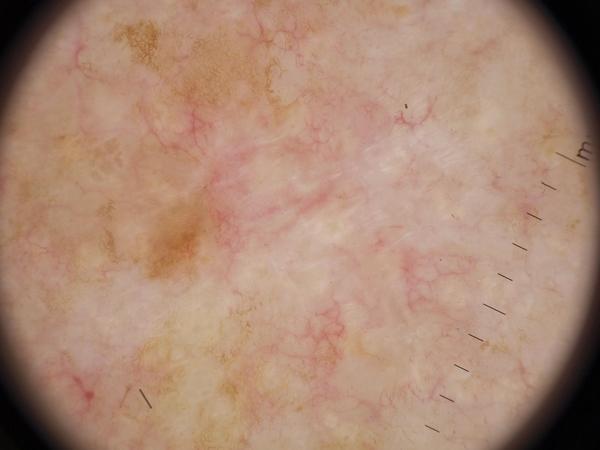
A basal cell carcinoma on the trunk of a 75-year-old man; all three models answered correctly.
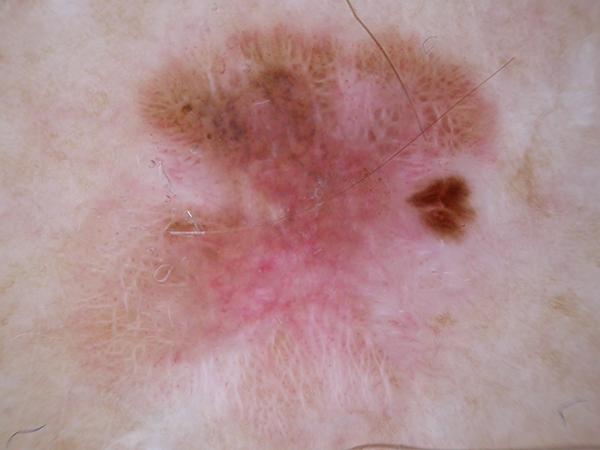
An invasive melanoma under 0.8 mm thick with very little pigment. GPT-6 Astra called it a basal cell carcinoma with 95% confidence, while Claude Fable 5.1 and the CNN called it a melanoma.
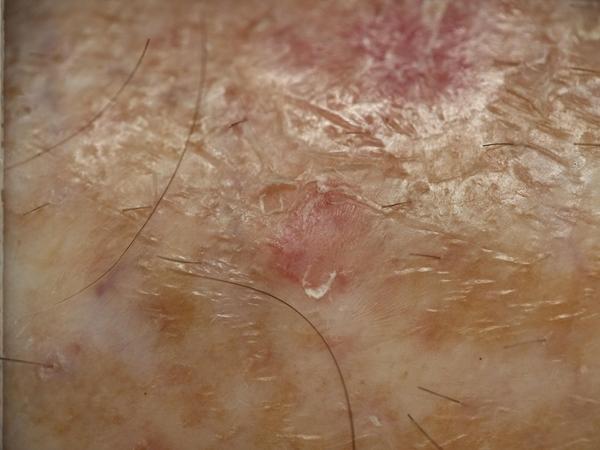
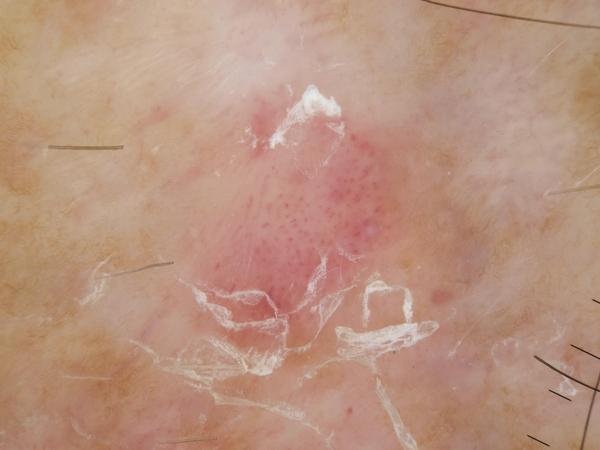
A seborrhoeic keratosis on a leg. Both LLMs called it an actinic keratosis and the CNN called it a squamous cell carcinoma, so all three were wrong — though all three would have kept the lesion rather than discharge it. Images for these three cases: MILK10k, MILK study team, CC BY-NC.
The scoreboard: 62% against 42%
Overall, and on most individual diagnoses, the CNN was correct more often. Allow a second choice and it reached 173 of 200, against 134 and 138 for the two LLMs. Of the 30 melanomas, it named 13 as its first answer, where GPT-6 Astra named 8 and Claude Fable 5.1 named 11.
The largest gap was on harmless lesions: it recognised 37 of 50 moles and 26 of 50 seborrhoeic keratoses, while GPT-6 Astra recognised 16 and 13, and Claude Fable 5.1 recognised 33 and 6. On basal cell carcinoma the CNN was one short of GPT-6 Astra, and on actinic keratosis it trailed both LLMs. The study's Figure 3 plots first-choice correct diagnoses for the two LLMs and the CNN, all selecting from the same six diagnoses, with labels showing correct answers out of the number of lesions carrying that histology.
Different models fail in different styles
Each LLM had a favourite answer it reached for far too often. GPT-6 Astra called 75 lesions basal cell carcinoma when only 25 were, and 14 of the 30 melanomas ended up in that bucket. Claude Fable 5.1 called 53 lesions actinic keratosis when only 20 were. The CNN's errors on melanoma ran the other way: of the 17 it got wrong, it called 8 a naevus and 6 a seborrhoeic keratosis.
Every number in one table
| Measure | GPT-6 Astra | Claude Fable 5.1 | CNN (Inception v3) |
|---|---|---|---|
| Correct diagnosis (of 200) | 84 (42%) | 85 (42%) | 125 (62%) |
| Correct in first or second choice | 134 | 138 | 173 |
| Melanoma as first choice (of 30) | 8 | 11 | 13 |
| Unsafe lesions kept (of 100) | 97 | 96 | 77 at its preset threshold; 98 or 99 when matched |
| Safe lesions discharged (of 100) | 32 | 22 | 76 at its preset threshold |
| Melanomas discharged (of 30) | 3 | 4 | 18 at its preset threshold; 2 or 1 when matched |
What the test cannot prove
- Small numbers. Two hundred lesions can show the pattern but cannot rank close results; with 30 melanomas, the single figure that matters most still carries wide uncertainty. Each LLM case was run once, and answers vary between runs.
- Hard cases. Every lesion was biopsied. On ordinary images from the archive, the same CNN separated lesions that should and should not be discharged far better: area under the ROC curve 0.96, against 0.86 here.
- Contamination. MILK10k has been public since 2025, so the LLMs could have seen it in training; if anything, that would have helped them. The CNN certainly had not.
- Not state of the art. Inception v3 is a baseline. Current skin-cancer diagnosis AI uses ensembles of image transformers trained on more data, and the regulated products built on them perform considerably better.
Ask as a patient and the answers flip
Same images, different role. When the two LLMs were addressed the way a patient would address them — clinical photograph only, and the question 'do I need to see a doctor?' — both advised seeing a doctor in almost every case, harmless lesions included: for 99 and 98 of a further 100 biopsy-proven melanomas. Caution is cheap when a model is not being pushed to commit to a diagnosis.
Common misconceptions
- "The more capable model must be the better diagnostician." General capability did not transfer to this task: the ten-year-old, task-specific network scored 125 against 84 and 85.
- "62% accuracy means a tool can clear a lesion." A first-choice rate of 62% on 200 biopsied cases still leaves the majority of decisions unsettled, and 18 melanomas were discharged at the CNN's preset threshold.
- "Confident phrasing means a correct answer." One model delivered 95% confidence on the wrong lesion; in another case both LLMs sent a real melanoma home as a harmless growth.
- "The big models would simply refuse." Neither refused any case in this test.
- "Local and private means accurate." The browser demo uploads nothing thanks to WebGPU, but privacy and diagnostic accuracy are separate questions, and the study itself warns against reading these results as a product ranking.
A checklist before you show any AI a spot on your skin
- Never let a model discharge you. In this test 3 and 4 melanomas were judged safe to send home by the two LLMs.
- Remember that one run is one answer. Each case here was run once and replies shifted between runs, so asking twice is not a second opinion.
- Give the model the picture it can actually use. The CNN's edge came mainly from the magnified dermoscopic view, which a phone camera cannot reproduce.
- Add what images cannot carry: how the spot changed over time, and what your clinician already knows.
- Treat a stated confidence as tone, not measurement.
- Let a human decide about a biopsy. Every lesion in this set had been biopsied, including all 100 harmless ones.
FAQ
Which model won, and by how much?
The fine-tuned Inception v3 CNN: 125 correct first choices out of 200 (62%), against 84 and 85 (42%) for GPT-6 Astra and Claude Fable 5.1. With a second choice allowed, 173 versus 134 and 138.
Why did an older network do better?
It was aimed at one job. Inception v3 was pretrained on everyday photographs and fine-tuned on 68,011 images from the ISIC Archive on a single H100 GPU, then scored both views of each lesion with most of the weight on the dermoscopic image — the view from which its lead came.
How often did it catch melanoma?
13 of the 30 as a first answer, versus 8 and 11 for the two LLMs. Among the 17 it missed, 8 became a naevus and 6 became a seborrhoeic keratosis.
Can I try the test myself?
Yes, within limits. The CNN runs in a phone browser using WebGPU, uploads nothing, and its random sample button draws from these same 200 lesions; the cases, prompts, every LLM reply and the scoring code ship as one download. None of that makes it a substitute for a clinician when one wants a biopsy.
Does this mean frontier chatbots are bad for health questions?
It means they answered this narrow visual question worse. Asked as a patient with the plain photograph and 'do I need to see a doctor?', the same two LLMs advised seeing a doctor for 99 and 98 of a further 100 melanomas.
How the test was built and reported
The researcher behind the experiment designed the test and made the clinical rulings, with every answer scored by script against the histology. The disclosure published with it states that Claude Code, Anthropic's coding tool, which runs on a Claude model, produced the analysis and the first drafts — worth repeating because one of the two LLMs tested is also Anthropic's. This MyTechDailyNews write-up for the General desk summarises that published test and adds reader context only; no result has been changed or added.
The takeaway for general readers
Read this as a story about fit rather than about ranking AI products. A network first published in 2015, retrained in roughly twenty minutes, beat two of the strongest general models of October 2026 on skin photographs — while still being right on only 125 of 200 lesions and sending 18 melanomas home at its preset threshold. That is the number to hold against any app promise of diagnosing your skin from a photo. Corrections, story tips and reader questions about this coverage go to the Tech Daily editorial desk at hello@techdaily.com.