
Sold Out Despite the Noise: What Ferrari's First EV Says About Waitlists, Design Wars and Premium Tech — MyTechDailyNews Deep Dive
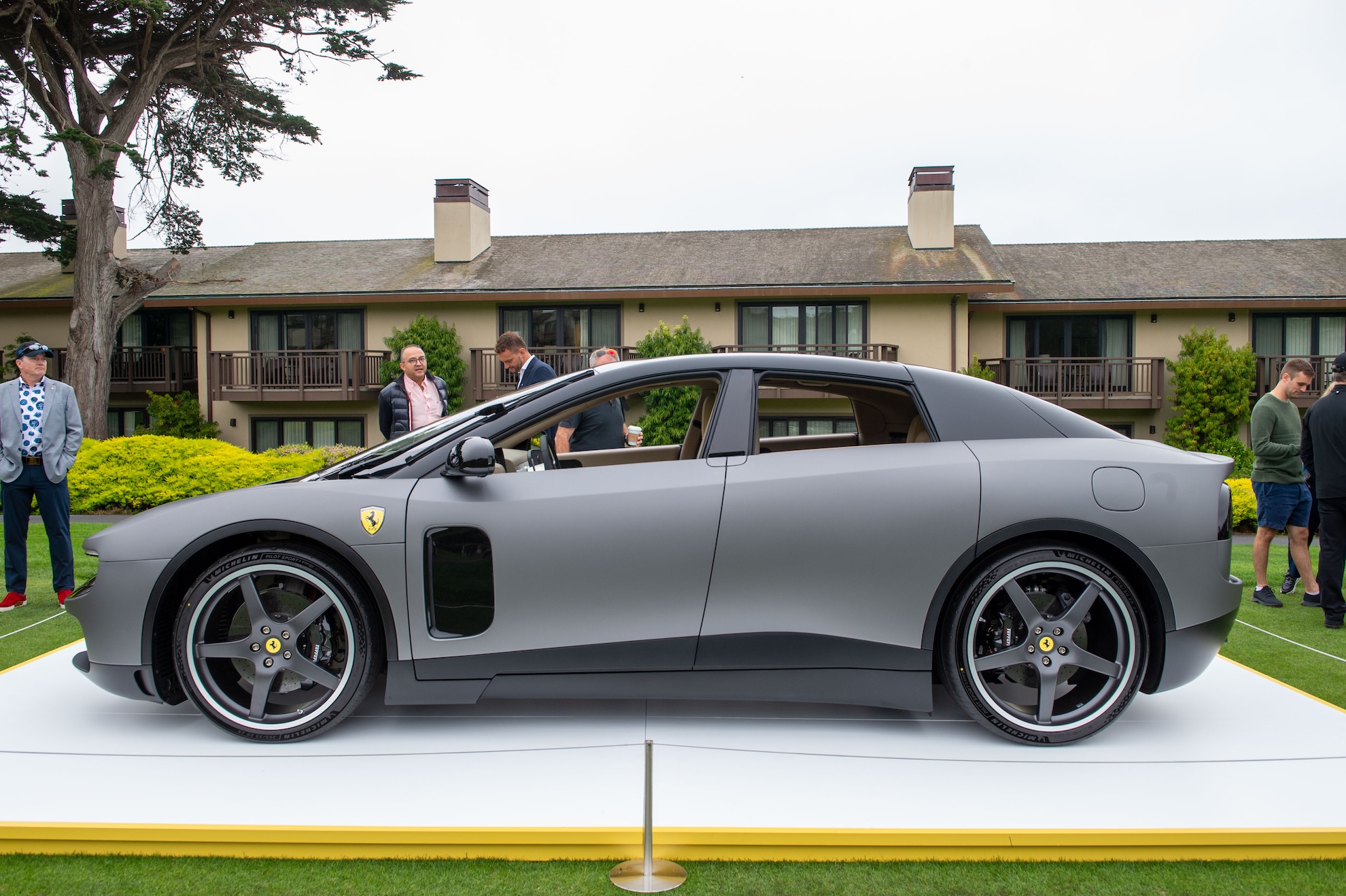
Every few years a product launch stops being about the product and becomes a fight about taste. This year the car industry's version arrived in May, when Ferrari revealed Luce, the first fully electric model in its history, styled with the involvement of designer Jony Ive from Apple's design era. The online reaction was hostile enough to dent the share price for a while. Months later, the company's chief executive, Benedetto Vigna, said the opposite of what the comment sections predicted: the car's entire quota allocation had been assigned, and every unit Ferrari plans to build in 2027 is already claimed by a customer. For readers who follow consumer technology, brand strategy or product launches, that widening gap between the loudest sentiment and the hardest numbers is the actual story. Below is our breakdown of how it happened, why it happened, and what it hints at for premium tech products generally.
The 60-second version
- Luce is simultaneously Ferrari's first electric car and its most divisive release in years — and the controversy appears not to have slowed orders.
- Price on the door: about US$615,000, in line with the 550,000-euro European sticker Ferrari and its CEO have publicly defended; first deliveries are scheduled for the fourth quarter of this year.
- Order now and you are told to expect a wait of at least one year, because the 2027 build plan is already reserved.
- Ferrari has never published Luce production numbers; the Financial Times reported an initial run of nearly 500 units this year and a long-range ambition of a cumulative 2500 cars by 2030, or roughly 600 units a year.
- The financial engine behind all this kept running: third-quarter revenue of €1.9 billion, up 7% year on year, and a raised full-year outlook on adjusted profit of at least €3 billion versus the previous €2.97 billion.
From viral criticism to a two-year queue: how the timeline unfolded
The sequence matters, because most "nobody wants an electric Ferrari" takes were written between step one and step three. Step one was May this year, when the five-seat EV debuted and its minimalist styling split the fan base instantly. Step two was market reaction: the negative commentary briefly pressured Ferrari's shares. Step three was quieter. Vigna has since said the model is sold out in the sense that counts in this business — the allocation was fully distributed and the 2027 plan is spoken for. Anyone starting a configuration today is told to wait at least one year, while the first cars reach owners in the fourth quarter of this year.
Read as a tech story rather than a car story, it is a textbook example of an allocation-and-queue business model behaving exactly as designed: demand is not met, it is metered.
What Ferrari has confirmed, and what nobody has published
| Question | Status | Best public figure |
|---|---|---|
| How many Luce units are sold out? | Not disclosed by Ferrari | Nearly 500 units this year, per the Financial Times |
| Long-term volume plan | Never confirmed directly by the company | Cumulative 2500 cars by 2030, averaging about 600 units a year |
| Who buys it? | Only generalities from Vigna | A healthy spread across regions and client types; no specific owner profile or spending pattern identified |
| 2027 target for Luce specifically | Declined by the CEO when asked | Ferrari confirms only that the whole 2027 output is booked |
| Entry price | Confirmed publicly | About US$615,000; 550,000 euros in Europe |
The scale check: Luce is a small slice of a very profitable machine
It is easy to over-read a launch like this. Ferrari reported 3,368 deliveries in the third quarter of 2026 on revenue of €1,896 million, according to its earnings release coverage. Against that pace, an average of roughly 600 Luce units a year is a rounding error in volume, and one outlet, Gasgoo, pegs the model at about 5% of total annual sales if the 2030 goal is met. In other words, Luce's job inside Ferrari is not to sell cars. Its job is to prove that the badge survives electrification — and to feed a much more profitable habit: individualisation.
That habit is where the money is. Ferrari says customisation revenue already accounts for more than 21% of its car and spare-parts income, and it credits deliveries of the limited-run F80 hypercar plus rising personalisation demand for the fact that buyers increasingly want a car nobody else has. Management pushed its full-year adjusted profit outlook to at least €3 billion from the previous €2.97 billion, and separately raised revenue guidance to €7.65 billion, as CNBC reported after the third-quarter print.
The quarter itself illustrates why investors are relaxed about the design argument. Revenue was €1.9 billion, up 7% year on year; net profit reached €431 million, up 13% year on year; operating profit was €563 million at an operating margin of 29.7%. To translate that for a general audience: for every US$1 of revenue, roughly 30 cents came back as operating profit — a profitability tier most mass-market tech hardware companies only dream about. Reuters also noted that adjusted EBITDA rose 12% in the quarter to €753 million, comfortably ahead of consensus.
Three reasons the backlash never reached the order book
1. Scarcity is engineered, not accidental
Ferrari sells fewer cars than the market will absorb, in every model line, by design. When the entire 2027 plan is already reserved, a waitlist of at least one year is a feature, not an inconvenience: it converts criticism into curiosity and curiosity into proof of exclusivity. The company's own long-range frame — cumulative 2500 cars by 2030 — confirms that Luce was never meant to be chased for volume.
2. The buyers are not the people posting
Vigna declined to describe the customer mix, saying only that buyers look healthy across regions and client types, and that no particular owner profile has emerged. But regional evidence has surfaced elsewhere. When Luce went on sale in China, 88 allocated units were listed at a local price of about US$586,600 — roughly 7% below the European sticker — and sold out immediately, according to CarNewsChina. That kind of allocation clears in minutes when buyers treat the car as both a status asset and a first electric halo car, not as a design debate.
3. Personalisation is the growth engine, and it is badge-neutral
Even before Luce was delivered, Ferrari's results were being carried by the desire for one-off specifications, which is precisely the behaviour a controversial design can amplify: a car you configure yourself is a car you defend. Customisation above 21% of car and spare-parts revenue is the number that explains why a hostile launch window barely moved the guidance.
The Apple thread: what a consumer-electronics design team actually changed
For tech readers, the more interesting question is not whether the styling works, but what happened when a software-era design language was applied to a car. Ferrari and the LoveFrom studio founded by Jony Ive, the former head of design at Apple, have been working together on this programme for more than five years, as Road & Track and Engadget reported around the interior reveals. The result looks less like a cockpit and more like a piece of premium hardware: a symmetric, restrained layout, extensive glass and anodised aluminium, multiple displays, and — counter to every smartphone trend — a deliberate retention of physical knobs, switches and paddles with defined tactile clicks.
That last choice is worth pausing on, because it is the opposite of what most "tech-first" cars do. It suggests the design pitch to Luce buyers is not maximal screen area, but the calmer, more finished feel that consumer electronics makers spent two decades refining. Mechanically, Reuters reported the five-seater has a top speed above 310 km/h and a large trunk — practical touches that a first electric halo car needs if it is to be driven rather than stored.
Common misconceptions
- "The criticism killed demand." Ferrari's own statement is the opposite: the quota was fully allocated and the 2027 plan is booked.
- "Luce is an Apple car." Apple is not the manufacturer; Jony Ive's independent design studio contributed to the styling, with Ferrari owning engineering and production.
- "Sold out means tens of thousands of orders." The publicly reported scale is nearly 500 units this year, with a long-term average of about 600 units a year.
- "This is Ferrari's EV bet to go mainstream." Even the 2030 goal of 2500 cars cumulative is a niche number for this company.
- "Deliveries have started." The first cars are only expected in the fourth quarter of this year.
What this signals for the wider tech industry
Three takeaways travel beyond cars. First, sentiment analytics are becoming misleading for status-driven categories: online backlash measures attention, not willingness to pay, and a brand that controls supply can absorb an ugly launch without an ugly quarter. Second, the queue is now the moat — hardware and luxury brands alike are moving from "how many units can we ship" to "how few units can we credibly ship", which is why waitlists of a year or more keep showing up in categories from performance EVs to high-end audio. Third, design authorship is becoming a partnership sport: a car maker with a century of history and a studio born out of consumer electronics spent five years co-writing one product, and the interesting detail — keeping physical controls while adding screens — is exactly the kind of compromise an interdisciplinary team produces.
FAQ
Is the Ferrari Luce actually sold out?
By the definition that matters to buyers: yes. Vigna has said the entire allocation is assigned and that everything planned for 2027 is reserved. The precise unit count remains undisclosed; the Financial Times reported nearly 500 cars this year.
What does it cost and how long is the wait?
About US$615,000 to start, with a 550,000-euro price in Europe. New orders face a wait of at least one year.
When do the first cars arrive?
Ferrari is targeting the fourth quarter of this year for the start of deliveries.
Why did the shares fall if orders are strong?
Markets reacted to the design debate at launch, before the order-book news. The subsequent full-year guidance increase — adjusted profit of at least €3 billion, up from €2.97 billion — shows the operating numbers were never the problem.
Does the controversy tell me anything about my own product launch?
Yes: if your supply is constrained and your buyers are a small, affluent group, public criticism changes the shape of demand rather than its size. Measure reservations and deposits, not mentions.
Action advice
- Read allocation news as pricing news. A booked-out 2027 plan means resale and configuration premiums, not mass adoption.
- Separate sentiment from sales in your own category. Build a weekly view of deposits, reservations and waitlist length next to social volume.
- Watch the customisation line, not the model line. Above 21% of car and spare-parts revenue is where the margin story sits.
- Compare regions before assuming a global verdict. The China allocation at roughly US$586,600 cleared immediately, while Western forums were still arguing about styling.
- Buy nothing from a queue you cannot verify. Treat third-party offers for "priority slots" on a sold-out product as a risk flag, not a shortcut.
The verdict, for now, is unfinished on purpose. Ferrari has told us the 2027 order book is closed and that the money is still growing, but it has never told us how many cars that actually means, and the first owner reviews only start once deliveries begin this quarter. MyTechDailyNews will keep tracking both: the numbers Ferrari publishes, and the much more useful numbers — early deliveries, resale behaviour and how quickly a disputed design becomes ordinary.