
MyTechDailyNews General: EOS and BIZU Space Push Aerospace Additive Manufacturing Into Rocket Propulsion
A space-manufacturing update from MyTechDailyNews shows EOS and BIZU Space moving closer to rocket propulsion work through design expertise, training and engineering support.
At the center of the story is a practical question: what does it take to make metal-based additive manufacturing useful for demanding space hardware? The answer, according to the new collaboration, is not simply better machines or better materials. It is also better preparation of the engineering teams who will design the parts.
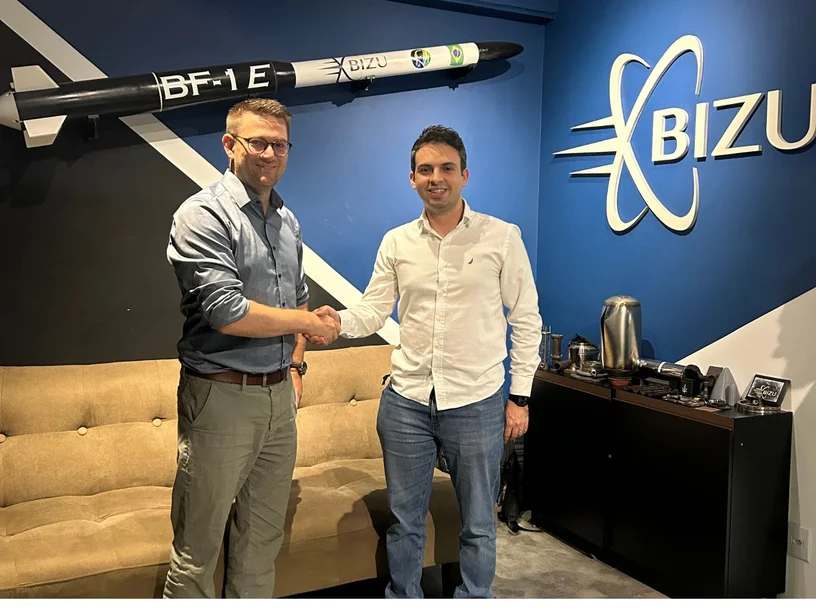 Michael Wohlfart (team manager business development & academy, EOS) and Raphael Galate (co-founder of BIZU Space) are shown from left to right while marking the collaboration.
A separate note accompanying the visuals describes the BIZU Space propulsion system during a hot-fire test in October 2026.
Why this update matters for general tech readers
For readers who follow space technology, product manufacturing, or hardware startup ecosystems, the update is a reminder that advanced production methods often move through partnerships. One side has deep experience in additive manufacturing development, while the other is working on propulsion for a launch vehicle program. The collaboration connects those strengths before the components are finalized.
This is especially relevant for MyTechDailyNews readers because it is not only about a single device or software release. It is about how a space program builds capability: through training, expert support, evaluation of metal printing routes, and design thinking applied to engine hardware.
The core change: EOS and BIZU Space align on design capability
EOS has announced a new collaboration that brings BIZU Space into additive manufacturing work aimed at future space applications. The agreement is described as providing Design for Additive Manufacturing training through Additive Minds Academy, together with engineering support from EOS Additive Minds experts.
In plain terms, the project is not just a manufacturing order. It is a way for the participating engineers to improve how propulsion-related parts are conceived, reviewed and prepared for production using metal additive processes. That distinction is useful because the hardest part of aerospace additive work is often the design stage, not the printing stage.
What the collaboration is designed to support
BIZU Space is described as a Brazilian aerospace startup. It is part of Brazil’s commercial space sector and is working on propulsion technologies for the country’s first privately developed, fully Brazilian orbital launch vehicle program. The stated purpose of that program is to support independent access to space for small satellite missions.
The company’s additive work is aimed at rocket engine parts and propulsion technology. The update identifies combustion chambers and closed-cycle turbopump systems as examples of the hardware under evaluation. Those are not routine consumer components; they sit in the performance-critical heart of a rocket propulsion architecture.
Across the industry, teams looking for faster development and lower manufacturing complexity are turning more often to additive approaches. The partnership gives BIZU Space a clearer path to test how Design for Additive Manufacturing may support its own space systems work.
Quick reference table
| Element | Role in the update | What readers should notice |
|---|---|---|
| EOS | Additive manufacturing partner | Brings engineering expertise and academy training resources |
| BIZU Space | Aerospace startup | Developing propulsion technologies for a Brazilian orbital launch vehicle program |
| Additive Minds Academy | Training route | Provides Design for Additive Manufacturing access for BIZU Space engineers |
| EOS Additive Minds | Expert support route | Engineers can receive support tied to practical design work |
| October 2026 | Hot-fire test timing | A related propulsion system image is associated with a hot-fire test in October 2026 |
| Michael Wohlfart and Raphael Galate | People shown in the partnership visual | Represents EOS and BIZU Space at the moment the collaboration was marked |
Checklist: What the announcement establishes
- EOS and BIZU Space have formed a collaboration around additive manufacturing development for future space applications.
- BIZU Space engineers are connected to training through Additive Minds Academy.
- The support model includes engineering assistance from EOS Additive Minds experts.
- The focus includes Design for Additive Manufacturing rather than production alone.
- The component discussion includes combustion chambers and closed-cycle turbopump systems.
- The broader program context is a Brazilian orbital launch vehicle effort for independent access to space.
- A related propulsion system image is tied to a hot-fire test in October 2026.
FAQ
Who is BIZU Space?
BIZU Space is described as a Brazilian aerospace startup involved in the country’s commercial space sector. Its work in this update is linked to propulsion technologies for a privately developed, fully Brazilian orbital launch vehicle program.
What does EOS bring to the collaboration?
EOS is presented as the additive manufacturing partner. Through the announcement, it provides access to Design for Additive Manufacturing training via Additive Minds Academy and engineering support through EOS Additive Minds experts.
Why are combustion chambers and closed-cycle turbopump systems mentioned?
They are examples of rocket engine hardware under evaluation for industrial metal additive processes. In other words, the collaboration is not centered on generic parts; it is aimed at propulsion components that matter to future launch vehicle development.
Is the partnership about a completed rocket engine?
No. The language in the update points to development, training, evaluation and engineering support. It describes work aimed at future space systems, not a finished product delivered to orbit.
What is the relevance to space manufacturing trends?
The update fits a broader pattern: space programs use additive methods to reduce development friction and manufacturing complexity, while relying on expert design support to implement those methods effectively.
Common misconceptions
Misconception: This is only a new printer partnership
That reading is too narrow. The announcement emphasizes training and engineering support, especially Design for Additive Manufacturing. The more important point is how the teams prepare components for additive production.
Misconception: Metal printing automatically solves propulsion challenges
Not according to the framing. Additive methods are becoming common because they can help with development speed and complexity, but the collaboration highlights expert guidance and academy-based training as necessary parts of implementation.
Misconception: The startup is already operating an independent launch program
The update describes work on a program intended to support independent access to space for small satellite missions. It is not presented as a completed operational launch capability.
Misconception: The named people are separate from the technical story
Michael Wohlfart and Raphael Galate appear in the partnership visual, linking EOS and BIZU Space to the moment the collaboration was marked. Their presence helps readers connect the institutions behind the technical development.
Action suggestions for readers
- Read the announcement as a capability-building update, not a product launch.
- Pay attention to the training channel named in the release: Additive Minds Academy.
- Note that EOS Additive Minds experts are part of the engineering support model.
- Follow how BIZU Space evaluates industrial metal printing for rocket engine parts.
- Use the October 2026 hot-fire test reference as a useful marker for propulsion development context.
- For broader tech watchers, treat this as a clear example of hardware startups and established manufacturing firms pairing up around specialized engineering knowledge.
Why the Brazilian space context matters
Brazil’s commercial space ambitions form the background for the BIZU Space part of this story. The company is working on propulsion for a launch vehicle program described as private, Brazilian and intended to serve small satellite missions. That context explains why additive engineering support may matter: the team is developing complex systems while building independent access capabilities.
For MyTechDailyNews readers, the Brazilian angle also makes the update easier to understand as an ecosystem story. It is not just one startup and one industrial vendor; it is part of a national space program ambition that depends on practical engineering capacity.
The larger takeaway
The EOS and BIZU Space collaboration shows how additive manufacturing in space is often a knowledge problem before it is a machine problem. Components such as combustion chambers and closed-cycle turbopump systems are the visible hardware targets, but the deeper change is the effort to train engineers and integrate expert support into the design workflow.
As the partnership moves forward, readers can watch how Design for Additive Manufacturing shapes BIZU Space’s evaluation of propulsion hardware, while the broader launch vehicle context keeps the stakes tied to Brazil’s commercial space future.