
MyTechDailyNews General: Two eMudhra Key and PHP Flaw Reports Shape an Internet Security Sprint
By Sarah Chen | MyTechDailyNews General
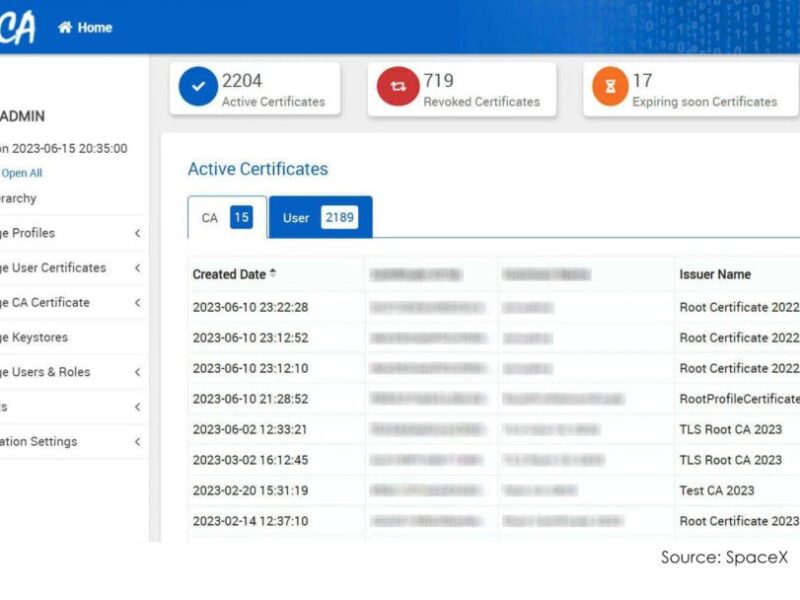
MyTechDailyNews General often explains technology events by separating the visible interface from the infrastructure underneath. This time, the visible interface is a padlock or a login page, while the infrastructure is certificate issuance and server-side code execution. Two disclosures made between 17 and 21 October 2026 describe weaknesses that required urgent action: recoverable eMudhra intermediate keys, and PHP memory flaws that could expose web servers to unauthenticated remote-code execution.
The Two Problems at a Glance
Before the technical detail, the public reports can be read as a map of where trust and runtime assumptions broke.
- Certificate trust issue: Eight intermediate certificate authority keys belonging to eMudhra were said to be easily recoverable, creating a path to fraudulent certificates if clients still trust them.
- PHP memory issue: The PHP2Shell group of flaws, tracked as CVE-2026-109618 and CVE-2026-109619, received a maximum reported CVSS severity score of 9.2 and could allow attackers to run code on web servers without authentication.
- Emergency response: Browser and platform vendors moved quickly, with Google Chrome and Mozilla Firefox blocking affected certificates on 17 October, while the PHP development team published emergency security releases on 21 October.
- Unfinished edge: Major browsers have already blocked the compromised certificates, but other software and embedded devices may remain exposed until their trust stores are updated.
How Weak Key Generation Made eMudhra Certificates Risky
The certificate story starts with randomness. eMudhra, based in India, produced Eight intermediate certificates whose elliptic-curve private keys did not use the broad range of values expected from the NIST P-384 algorithm. Instead of strong random choices from the algorithm’s much larger key space, the private keys were integers smaller than 256. That small numeric range turns what should be a hard-to-guess value into a recoverable one.
Transport Layer Security depended on Six of those intermediates, while two were meant for code signing. A recovered key could support false certificates for websites or software, opening the door to impersonation or man-in-the-middle abuse when a client still trusted the certificate chain.
The problem was reported on 17 October by a researcher identified as Wayne. According to Mozilla’s incident investigation, the compromised keys originated from certificate generation conducted on 30 April 2025. Mozilla independently recovered the private keys shortly after receiving the report.
eMudhra pointed to an error involving a script used during key generation. The company said the affected intermediates had little or no production use, and no malicious exploitation has been confirmed.
Why Blocking Certificates Does Not Close Every Door
Google Chrome and Mozilla Firefox blocked the affected certificates on 17 October through certificate-revocation mechanisms distributed remotely. Apple and Microsoft later implemented protections.
Browser shields are not the whole web, however. Operating systems, command-line utilities, containers and embedded devices often use certificate stores that are updated less regularly. Some also fail to check whether an intermediate certificate has been revoked, which can leave them vulnerable despite the browser response.
Google has additionally announced plans to remove the emSign ECC Root CA – G3 certificate from its root store, with deployment to affected devices expected from 27 October. Because legitimate certificates may rely on that root, some website operators will need to replace certificates rather than wait for a warning to disappear.
PHP2Shell: Memory Flaws That Turn a Server Request Into a Risk
The second incident concerns PHP2Shell, a collection of memory-safety vulnerabilities in the PHP interpreter. The flaws, tracked as CVE-2026-109618 and CVE-2026-109619, have a maximum reported CVSS severity score of 9.2.
Researchers at Wiz and Calif, working alongside OpenAI and the PHP security team, identified weaknesses in how PHP handles memory when requests terminate abnormally. The resulting corruption can allow attackers to access sensitive process memory or execute arbitrary code remotely.
In its technical analysis, Wiz demonstrated unauthenticated remote-code-execution attacks against WordPress, Drupal and Joomla installations. The vulnerabilities reside in PHP itself rather than the applications, meaning that other PHP-based services may also be affected.
The researchers report that AI tools substantially reduced the effort required to construct and adapt complex exploit chains, making previously difficult memory-corruption vulnerabilities more practical to exploit.
Emergency PHP Updates and the Version Picture
The PHP development team published emergency security releases on 21 October after information about the vulnerabilities circulated ahead of the planned disclosure.
Its security advisory identifies PHP 8.5.12, 8.4.27, 8.3.36 and 8.2.35 as patched releases. Versions 8.1 and earlier are no longer maintained by the PHP project, although some vendors provide backported security fixes.
Apache deployments using mod_php are considered particularly exposed because some demonstrated attacks can be triggered before application code executes. PHP-FPM and other PHP server configurations are also affected. The PHP security team states that configuration-based mitigations cannot provide complete protection.
| PHP version label | Status in the advisory | General-reader meaning |
|---|---|---|
| 8.5.12 | Patched release | A supported line can move to this fixed version. |
| 8.4.27 | Patched release | Another current branch receives an emergency fix. |
| 8.3.36 | Patched release | Operators on 8.3 have a named update target. |
| 8.2.35 | Patched release | Operators on 8.2 have a named update target. |
| 8.1 and earlier | No longer maintained by the PHP project; some vendors provide backported fixes | Older stacks may require vendor-specific paths. |
What This Means for Ordinary Users and Connected Products
The practical impact depends on where a person sits in the technology stack. A visitor using an updated browser may not see an immediate danger from the compromised certificates, because the browsers have blocked them. A server owner, container image builder, embedded-device vendor or website administrator, however, may still carry a trust store or software dependency that needs attention.
Both incidents also have consequences for suppliers of connected equipment. Certificate trust stores and third-party software dependencies can remain vulnerable long after fixes become available. As previously examined by eeNews Europe in its coverage of the Cyber Resilience Act, maintaining security updates throughout a product’s supported lifetime is becoming an explicit obligation for European manufacturers.
Frequently Asked Questions
Is the certificate problem only a browser issue?
No. Google Chrome and Mozilla Firefox blocked affected certificates, and Apple and Microsoft later implemented protections. Yet operating systems, command-line utilities, containers and embedded devices may use stores that update less often or check revocation differently.
Are WordPress, Drupal and Joomla the only targets for the PHP flaws?
No. The demonstrations involved those content management systems, but the vulnerabilities reside in PHP itself, so other PHP-based services may also be affected.
Why did the PHP development team release fixes before the planned disclosure?
The team published emergency security releases on 21 October after information about the vulnerabilities circulated ahead of the planned disclosure.
Do older PHP versions have no option?
Versions 8.1 and earlier are no longer maintained by the PHP project, although some vendors provide backported security fixes.
Common Misconceptions About These Reports
- Misconception: If a browser has updated, every device is fixed. Reality: Trust stores in embedded devices and other software can lag behind browser response.
- Misconception: The eMudhra incident proves an active fraud campaign. Reality: The company said affected intermediates had little or no production use, and no malicious exploitation has been confirmed.
- Misconception: PHP flaws are only a CMS problem. Reality: The vulnerabilities are in the interpreter, not only WordPress, Drupal or Joomla.
- Misconception: Patched PHP alone removes all supplier risk. Reality: Connected equipment may still include older libraries, dependencies or certificate stores after fixes become available.
Practical Checklist for Readers Who Run or Support a Website
- Identify every service that depends on PHP, including application servers, plugins, internal tools and hosting images.
- Upgrade supported PHP lines to the patched releases named in the advisory: 8.5.12, 8.4.27, 8.3.36 or 8.2.35.
- If the system is based on PHP 8.1 or earlier, check whether the vendor provides backported security fixes, then plan a migration path.
- Review Apache mod_php deployments first, because they were described as particularly exposed; also check PHP-FPM and other configurations, since configuration-based mitigations cannot provide complete protection.
- For certificate chains, check whether any trusted material includes emSign ECC Root CA – G3 and prepare replacement steps for certificates that rely on that root.
- For devices, containers and custom software, check when their certificate trust stores receive updates, and confirm that revocation checks are performed.
Closing: The General Pattern Behind the Two Incidents
These reports show a pattern that ordinary users can recognize without reading source code: small assumptions in trusted systems can ripple outward. Eight weak keys can undermine certificate confidence. A memory-handling issue in PHP can become a remote code execution path. A browser block can protect many people quickly, but not every machine that silently relies on certificates.
For general-interest technology readers, the useful takeaway is not panic. It is a clearer view of where safety comes from: updated browsers, current PHP versions, trustworthy certificate stores, and long-term update responsibility from software suppliers. When those layers hold, the internet feels invisible; when one of them slips, emergency security actions become necessary.