
MyTechDailyNews Practical Guide: After the Egypt billboard hack, what public screen owners should do now
Public screens are usually judged by brightness, traffic reach and advertising revenue. But an incident involving a large digital billboard in Egypt has shown that the same screen can quickly become a cybersecurity problem, a traffic-safety problem and a reputation problem. The story is not only about one compromised display. It is about the accounts, platforms and maintenance habits that connect a single screen to the internet.
For ordinary readers, the event is a reminder that urban technology often stays invisible until it fails. For marketing teams, city agencies and digital signage operators, the useful response is more practical: what steps should be taken before a screen is switched on, and what should happen in the first minutes after someone sees content that no approved workflow created?
What happened on the July 26 Axis
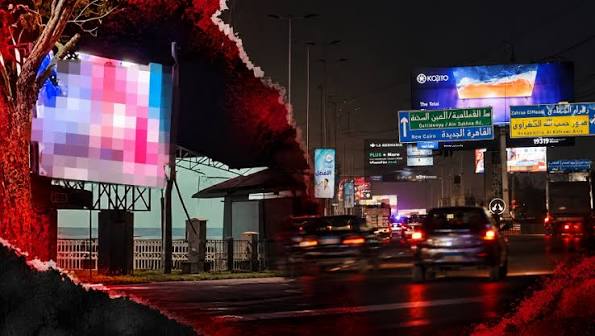
The case drew attention because it happened on a road people drive every day. In Egypt's Giza Governorate, on the July 26 Axis serving Cairo's western urban area, a large digital billboard unexpectedly played obscene video. Drivers pulled over to record it, and the clip spread on social media. The unauthorized content also displayed a Telegram channel name. Telegram, in this context, became part of the trail that investigators needed to follow.
After police reviewed the case, the Egyptian Ministry of Interior confirmed that the incident was a cyberattack. The billboard was operated by a local advertising company that used services from an international advertising content distribution platform. Once the platform's website was breached, unauthorized content appeared in advertising display systems in multiple countries, not only in Egypt. Local authorities launched legal proceedings to investigate the incident.
The Al Arabiya United Advertising Company, which operates the affected screen, said it shut down affected displays after abnormal access was detected. It also said it was working with relevant authorities to trace the intrusion and understand the technical details. The company described the event as an unauthorized external intrusion.
Similar cases reported abroad
The Egypt case was not isolated. In Malaysia, Kluang, Johor, Malaysia, reported that several public screens were tampered with. According to the local city council, multiple public LED display screens were accessed without permission and showed inappropriate content. The council turned off affected displays for safety, while government and suppliers assessed the cause and the security controls around the systems.
Brazil reported a different but related episode. In Campo Maior, Piauí state, Brazil, an LED advertising screen located near a major road was controlled by attackers and used to play obscene video. The operator cut power to the device, apologised to the public and filed a report with police.
Other claimed cases circulated online, but they had not been broadly confirmed by official sources when the first public accounts appeared. The common pattern, however, was clear enough: centralised content management, remote access and public visibility create a high-value target.
What Leakers$ said
A hacking group calling itself Leakers$ later claimed responsibility. Its account said the campaign was not built around manually breaching every single billboard. Instead, the group said it exploited a software vulnerability in a system used to remotely manage LED display content. By using automated scanning, the group claimed to identify thousands of systems exposed on the internet within about two hours.
According to the attackers' description, the bigger issue was not a mysterious superweapon but basic cyber hygiene. Many management interfaces were reachable online, and they lacked simple access-control protections. Once an operator's management system is reachable without proper barriers, a single weak point can let someone push arbitrary content to screens.
Leakers$ stated that its aim was not ransom, extortion or financial profit, but to expose weaknesses in the global digital advertising industry. The group also said the campaign relied on a real software vulnerability rather than a complex nation-state cyber operation.
Why everyday users should care
Digital billboards are not like home gadgets that malfunction quietly. They are large, highly visible and placed where drivers, pedestrians and commuters already split their attention. When a screen behaves unexpectedly, the immediate risk is distraction. The secondary risk is misinformation: a fake emergency notice, a political message or a misleading brand claim can be harder to dismiss than a small pop-up on a phone.
The incident also reveals how much trust the public places in urban infrastructure. A city bus stop screen, a mall advertisement panel and a highway billboard look different, but they can rely on the same types of controllers, cloud dashboards, update channels and vendor support accounts. That makes shared responsibility important: a brand may care about reputation, a vendor may care about patching, and a city operator may care about public safety.
A step-by-step guide for screen owners and advertisers
Use the following checklist as a working guide. It does not need to be implemented by one team. Assign each step to a clear owner, because a screen project usually involves advertisers, integrators, landlords, electrical contractors and cloud services.
- Map every screen as an internet-facing asset. Track the screen, controller, media player, router, SIM card, remote account and support portal. CISA's asset inventory guidance stresses that owners need reliable knowledge of hardware, software and supporting infrastructure before they can respond to incidents.
- Remove default credentials before deployment. Do not assume the installer changed them. CISA's website security guidance says changing default usernames and passwords helps prevent attacks that leverage default credentials.
- Ask what can change content, not just who can log in. Some platforms give each campaign account rights to push media. If one account is weak, the content pipeline is weak.
- Put management panels behind controlled access. Prefer private administrative networks, certificates, multi-factor authentication and vendor support through supervised jump boxes rather than exposed management pages.
- Keep a known-good content baseline. When a screen shows unexpected material, operators need a fast reference copy of the approved playlist, branding file and scheduling state.
- Practice a kill switch. The first response should include a tested way to stop the screen, block the update channel, pause campaigns, disable vendor accounts and notify the team.
- Separate public Wi-Fi from device management. A customer network should not give devices direct routes to controllers unless that is a documented and controlled requirement.
- Review vendor incident notifications. Contracts should require vendors to tell customers quickly when their platform, certificate, support tool or API is under attack.
- Log the important moments. Retain content publication logs, access logs, update timestamps and emergency shutdown records in a format that can support legal review.
- Run tabletop exercises. A simple drill, such as 'a highway screen is showing unapproved video for three minutes', can reveal missing roles, wrong phone trees and unclear shutdown authority.
- Assess before installing. HKCERT reported that 39% of surveyed organisations had not conducted cyber security risk assessments for digital signage in advance. For road-facing displays, that gap can become a traffic-safety risk.
- Document accountability. Each screen should have a named operational owner, a backup, a vendor contact and an escalation path. The question 'who turns it off?' must have one answer, not three guesses.
Common pitfalls that make incidents worse
| Pitfall | What it looks like | Better practice |
|---|---|---|
| Treating screens as furniture | Only facilities teams manage displays, while IT and security never see them in inventories. | Register displays as connected operational technology assets with owners, update schedules and emergency contacts. |
| Relying on shared passwords | One login is reused across campaigns, branches and vendors. | Use unique identities, role-based access and time-limited permissions for each screen or campaign. |
| Assuming the vendor handles security | The advertiser believes the cloud platform is safe, while the platform believes the customer controls access. | Define responsibility in the contract: platform protection, customer account hygiene, logging, patching and incident notice. |
| Stopping only the visible symptom | A screen is turned off, but the compromised campaign account remains active. | Pause content distribution, rotate credentials, preserve logs and verify the update path before restoring service. |
| No traffic-safety rule | Operators wait for a brand decision while a distracting screen runs. | Give field staff pre-approval to stop unsafe or offensive public displays immediately. |
FAQ
Is a hacked billboard always caused by a complex attack?
No. The Leakers$ claim about using a software vulnerability in a system used to remotely manage LED display content suggests that the entry point can be a known weakness and broad scanning. The attack can be high-impact even if the technique is not sophisticated.
Why did the Telegram channel name matter?
A visible channel name gives investigators and researchers a clue about where the attacker may have bragged, sold access or coordinated claims. It does not prove who did it, but it provides a starting point for attribution.
Can one platform breach affect many countries?
Yes. When an international advertising content distribution platform is compromised, the effects can travel with the customer base. A platform update account, API token or administrative panel may control many display systems. That is why advertising display systems in multiple countries can be affected by one upstream weakness.
Should cities shut down all digital signs after such an event?
A full shutdown may make sense temporarily if evidence suggests an active campaign or ongoing exposure. A better long-term plan is prepared containment: known owners, segmented management access, tested kill switches and a pre-agreed incident playbook.
What should a passer-by do if a screen shows disturbing content?
Do not stand in traffic to film it. Move away from the roadway, alert nearby people if it is unsafe, and report it to the screen operator, venue manager, transport authority or emergency number when appropriate. In busy areas, a screen outage can become a distraction problem before it becomes an investigation.
Action recommendations for the first 24 hours
If a public display shows unapproved content, operators should move from reaction to controlled recovery. The following sequence is a practical baseline:
- Minute 0-5: stop the spread. Power down or isolate the affected display and its content player if the safety risk is immediate. Do not wait for marketing approval if the screen threatens driver attention.
- Minute 5-20: freeze the workflow. Suspend automatic campaigns, disable remote publishing accounts and block suspicious update endpoints while keeping logs intact.
- Hour 1-3: find the scope. Check whether the same platform credential, API key, vendor tool or installer account manages other screens. The Malaysia and Brazil cases show that similar weaknesses can surface in different jurisdictions.
- Hour 3-12: verify before restoring. Clean the player, rotate secrets, review playlists and test a known-good content file before reconnecting the screen.
- Day 1-2: review responsibility. Decide what changes are needed for access control, contract terms, logging, emergency authority and customer communication.
The wider lesson
For digital signage buyers, the event is a reminder that a billboard is not merely a display. It is a connected workflow. The screen may be owned by a local advertising company, the campaign may run through an international advertising content distribution platform, and maintenance may be handled by a third-party installer. Each handoff creates a place where responsibility can be dropped.
For regulators and public agencies, the practical question is whether public-facing screens are covered by enough procurement, incident-reporting and vendor-performance rules. A city does not need to understand every line of controller code, but it does need a simple operational expectation: who is accountable when a public screen is compromised, and how fast can it be stopped?
For ordinary readers, the incident should reduce the assumption that physical visibility equals operational seriousness. A screen can be large enough to be seen from a highway but still be managed with passwords and permissions that would be considered weak on a laptop. The path to safer urban technology is not only in advanced detection systems; it is in inventories, account hygiene, tested shutdowns and clear ownership.