
EFS Freezer Breach in France: A Practical Playbook for Anyone Who Runs Connected Cold Storage
On Wednesday, the French Blood Establishment (EFS) confirmed that hackers had broken into refrigeration equipment at three of its sites the previous Monday, deliberately pushing temperature and defrost thresholds upward. No blood products or stored samples were lost. EFS says it was not the intended target: the intrusion reached it through the third-party operator that maintains its cold storage — the same half-open door that many pharmacies, food sellers and laboratories already leave swinging.
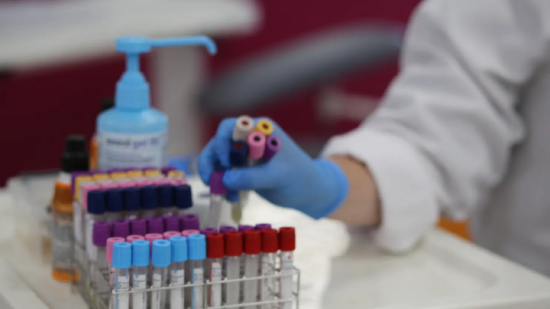
On July 28, 2026, at the Saint-Brieuc blood donation centre in the Brittany region of France, one nurse of the French Blood Establishment holds a collection tube, preparing to take a plasma donation sample.
What exactly was hacked at the three EFS sites?
Conclusion first: attackers did not steal a database. They reached the control layer of real refrigeration hardware. In the statement released by the French Blood Establishment — in the Chinese-translated wording of its French text — the institution put it this way: "Specifically, the hackers set the temperature parameters and the defrost threshold to excessively high levels."
The stakes sit behind that sentence. "These refrigeration units are installed at the preparation and distribution sites of the French Blood Establishment, used to store blood products before they are sent to healthcare facilities, and they also hold the various sample collections of the institution's biobank." Frozen plasma destined for transfusion and for medicine production is kept in the same cold rooms, EFS added.
A practical detail that most coverage skipped: this was a setpoint attack, not a physical break-in. The freezer itself was never touched. Whoever changed the target temperature and the defrost trigger only needed to reach the supervisory interface that decides how the machine behaves.
Why did nothing spoil this time?
Three defences did the work — built-in monitoring, an audible alarm, and staff with authority to act. EFS said its monitoring systems raised an alert quickly; depending on conditions at each site, the affected units were either brought back under control, leaving samples and blood products untouched, or cut off from the network entirely. The institution stated that no samples or blood products were destroyed and that stock was promptly moved to other facilities. It is now handling the incident with the French national cybersecurity agency, ANSSI, and the Ministry of Health, and has stepped up equipment monitoring across France.
The French Ministry of Health, quoted by Reuters, said: "A cybersecurity incident took place at several local sites of the French Blood Establishment, and parts of the monitoring and control systems of the cold rooms were affected." The ministry added that the situation was under control and under close watch: "Thanks to the monitoring and alarm systems built into the facilities, and to the preventive measures applied from the first moment, the safety of the blood supply has been guaranteed."
Physics helped too. Deep freezers are heavily insulated and carry a large thermal buffer, so a changed setpoint does not instantly warm the contents. That gap between command and damage is exactly the window an alarm plus a trained on-call technician can exploit — an analysis of cold-storage practice, not a claim made by EFS.
Which temperatures are actually being protected?
Reader searches often ask why a few degrees matter. The table below maps the main blood components to their storage bands, using publicly documented guidance from Lifeblood, Australia's national blood service.
| Component | Typical storage band | What a forced warm-up does |
|---|---|---|
| Whole blood / red cells | 2–6 °C | Accelerates bacterial growth and shortens shelf life (42 days for red cells under Lifeblood rules) |
| Platelets | 20–24 °C with gentle continuous agitation | Heat spikes degrade function; cold stops them working altogether |
| Frozen plasma | Deep freeze, −30 °C class setpoints | Defrost cycles destroy clotting factors permanently |
| Donor screening samples / biobank collections | Deep freeze | A lost sample can mean a lost donation record and a lost safety test |
Is this a blood bank story or an everything-with-a-plug story?
It is the second. EFS framed the incident as part of the recent wave of cybersecurity attacks on refrigeration systems that has spread across Europe. Earlier, refrigerators in supermarkets in France, Belgium, Sweden and Finland were remotely invaded and their temperatures maliciously raised, spoiling food worth possibly millions of euros. Reuters reported that hackers raised the temperature of refrigerators and freezers at hundreds of French supermarkets to as high as 50 degrees Celsius (122 Fahrenheit), sparking fires.
Two verifiable data points make the timeline concrete. First, Claroty's Team82 published research on the Danfoss AK-SM 800A refrigeration supervisory platform on August 9, 2026, describing multiple flaws in its embedded web management interface, including an authentication bypass tied to a hidden "code of the day" (tracked as CVE-2025-41450); the same class of controller also appears in the CISA industrial control systems advisory ICSA-25-140-03, and Danfoss has since shipped fixed firmware. Second, Belgium's Centre for Cybersecurity (CCB) issued a public warning on the incidents targeting remote controllers of refrigeration installations, telling operators to patch immediately. In other words, the hole was documented months before freezers were heated — a patch-lag story as much as a hacker story.
How attackers actually reach a freezer: four weak links
- Internet-exposed supervisory controllers. Team82 counted thousands of such management interfaces reachable from the public internet in its own scan-based research and noted that, rather than breaching a corporate network first, attackers can simply scan for exposed controllers.
- End-of-life equipment. Older controllers that no longer receive security updates remain in service in retail and logistics cold chains.
- Third-party remote maintenance. Vendors and service contractors need remote access; so do attackers. EFS stressed it was not the direct target — its refrigeration contractor was.
- Flat networks. If the office laptop segment can talk to the cold-room controller, one phishing email is enough to heat a plasma freezer.
Common misconceptions worth correcting
- "The freezer was the goal." In most of these cases it is the collateral damage of a vendor breach, which is why small operators get hit anyway.
- "A hack means data theft." Nothing was exfiltrated at the EFS sites; the payload was a temperature setpoint with physical consequences.
- "Setpoint equals actual temperature." Several outlets reported that freezers normally held near −30 °C were re-targeted at 110 °C overnight, citing the French investigative paper Le Canard enchaîné, and ABC News' wire coverage described the attack as hitting a refrigeration equipment supplier serving three EFS sites. Those numbers were not published in the EFS statement itself, and a setpoint is not the same as the temperature the contents actually reached — treat them as reported, not confirmed.
- "We patched, so we are safe." Patching the controller does not remove its public internet route.
- "An alarm is a response." An alert that only sends an email is a notification; the EFS outcome came from monitoring plus someone authorised to isolate or control the device.
A 30-minute response checklist when the numbers behave strangely
- Confirm physically at the unit, not only in the app or dashboard.
- Log in locally on the device console; assume remote credentials are compromised.
- Disconnect the controller from the internet — do not switch off cooling.
- Check and photograph setpoints, defrost schedules, alarm masks, and the user list for accounts you do not recognise.
- Move stock per protocol before the thermal buffer is exhausted.
- Preserve device and network logs; if you retain 90 days of history, review them for parameter changes.
- Notify your national CERT (in France, CERT-FR and ANSSI) and open a ticket with the maintenance vendor.
- Notify customers or clinicians whose product chain may be affected, with facts only.
Action advice: what to do this month
If you run a shop, pharmacy, lab or cold-room warehouse: inventory every controller with a web interface; confirm each one sits behind a VPN with multi-factor authentication, or is offline; ask your refrigeration contractor, in writing, how its remote access is authenticated.
If you work in IT or OT security: segment refrigeration supervision onto its own network with no internet route, disable default and shared credentials, and force firmware updates on end-of-life gear or schedule its replacement.
If you are a regulated business in the European Union: food production, processing and distribution sit in Annex II of the NIS2 Directive, with Article 21 risk-management measures — including supply-chain security — for entities above roughly 50 employees or €10 million turnover, per the official NIS2 tracking site. A cold-chain controller you do not own is still your risk assessment.
If you are an ordinary reader or donor: EFS said blood supplies were unaffected, so no action is needed beyond understanding that a blood bag's safety now partly depends on an industrial controller's password.
Frequently asked questions
Did donors lose blood products in the EFS incident?
No. EFS said monitoring alerted quickly, affected units were controlled or isolated, and no samples or blood products were destroyed; stock was moved to other facilities.
Why target refrigeration instead of encrypting files?
Because the effect is physical and immediate: spoiled product, equipment fires, and public trust damage. Ransomware steals leverage; a heated freezer creates a supply incident.
Could the same attack hit a supermarket or pharmacy fridge?
It already did — supermarket fridges in France, Belgium, Sweden and Finland were affected, with damages possibly reaching millions of euros, and Reuters reported temperatures pushed as high as 50 °C.
What is "forced defrost" and why is it dangerous?
A normal defrost cycle briefly warms evaporators to melt ice. Remotely latching that cycle on, or raising the defrost threshold, turns a maintenance routine into a heater — which is why the EFS statement referred specifically to both temperature parameters and defrost thresholds.
How do I check my own exposure in ten minutes?
Open the controller's management page from outside your corporate network. If it loads, you have the problem Team82 described; if it does not, confirm that access runs through a vendor VPN with MFA.
Sources consulted
- Reuters — coverage of the refrigeration attacks on French supermarkets and of the French Ministry of Health statement: https://www.reuters.com/business/retail-consumer/french-supermarket-chain-intermarche-hit-by-cyberattack-150-stories-targeted-2026-10-12/
- ABC News (wire story) — cyberattack on a refrigeration equipment supplier serving three EFS sites: https://abcnews.com/Business/wireStory/cyberattack-hits-french-blood-bank-site-blood-products-137846059
- Claroty Team82 — "Freeze the Controller, Defrost the Food", research on Danfoss AK-SM 800A refrigeration controllers: https://claroty.com/team82/research/freeze-the-controller-defrost-the-food-uncovering-vulnerabilities-in-danfoss-refrigeration-controllers
- Centre for Cybersecurity Belgium — public warning on remote controllers of refrigeration installations: https://ccb.belgium.be/advisories/warning-security-incidents-france-targeting-remote-controllers-refrigeration
- Lifeblood (Australia's national blood service) — component storage temperature and shelf-life guidance: https://www.lifeblood.com.au/health-professionals/products/storage-and-handling
- NIS2 Directive tracker — food production, processing and distribution under Annex II: https://nis2directive.eu/foods/
Written by Sarah Chen, MyTechDailyNews General desk, Tech Daily. Editorial and corrections contact: hello@techdaily.com.