
Reaper Hits 491 mph in a Dorm Room Build: A Practical Guide to the Unofficial Speed Record
A number this big does not need much decoration: a jet-powered, radio-controlled aircraft called Reaper, designed and assembled largely inside a college dorm room, has reportedly flown at 491 mph (about 790 km/h) while carrying a 1.2 kg payload. What makes the story worth reading twice is not the airframe but the paperwork. The flight has not gone through the Guinness World Records certification process, so the honest headline is not "new world champion" but "a very fast, very convincing prototype that now has to prove itself the official way."
That gap - between what a builder measures and what a record body accepts - is exactly where most speed projects stall. So on MyTechDailyNews we are treating this less as a spectacle and more as a working manual: here is what was built, what the numbers actually mean, what has to happen next, and where amateur builders and technology readers usually get it wrong.
The aircraft, in plain numbers
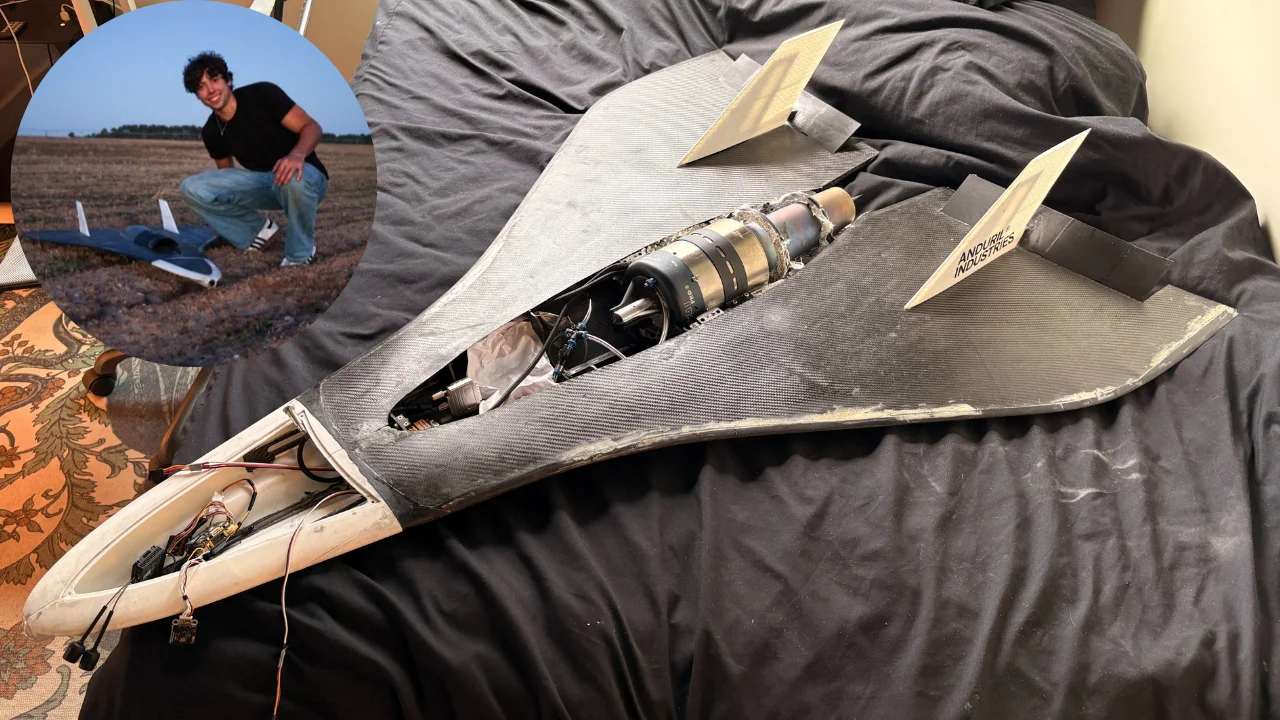
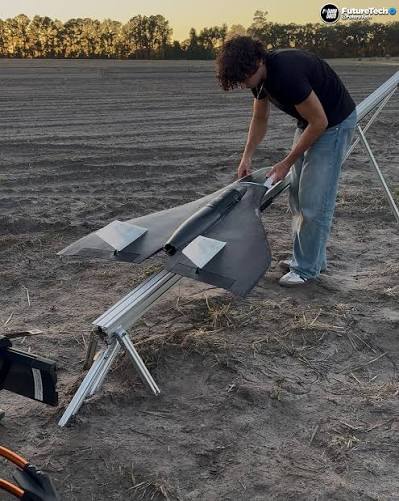
Reaper was built by Tomas Salvo, an aerospace engineering student at the Georgia Institute of Technology. Salvo says he designed every structure from scratch and did the assembly in his dorm, finishing the project in five months at a build cost of roughly $13,000. The airframe uses a carbon-fiber skin formed in custom molds over laser-cut internal structure, powered by a 250 N turbojet. The exhaust nozzle is a 3D-printed titanium part - a small change with a large consequence: it let the engine sit further forward, which cleaned up the center of gravity and removed the need for ballast in the nose. Total weight came out at 11 pounds (about 5 kg).
The reported flight envelope is where the project stops looking like a toy: with the 1.2 kg payload aboard, Reaper can hold 491 mph for 4 minutes on a full tank, climb to 6,500 feet in 20 seconds, and cover 31 miles at full speed.
Fast already, official not yet
The benchmark Reaper is chasing belongs to German pilot Niels Herbrich, who set the record for jet-powered radio-controlled aircraft on August 23, 2017 at Rotenburg, Germany, at 465.544 mph (749.221 km/h). That figure was officially certified by Guinness World Records, which is why the nine-year-old mark still carries weight. Salvo's 491 is higher, but it currently counts as an unofficial best.
Here is the practical difference. Official speed records are not validated from a single best pass. Under record practice derived from the World Air Sports Federation (FAI) and mirrored in Guinness procedures for vehicle speed marks, the machine flies the same measured course in opposite directions and the runs are averaged, so a tailwind cannot inflate the result; the attempt also needs verified instrumentation, independent observers and a complete evidence file. If those elements were not arranged before the aircraft left the ground, the flight becomes a great test - not a record.
Reaper vs Kingchaser: two routes to the same wall
Two projects are now circling the same problem from different directions. Reaper is the closest entry on US soil to the supersonic prize, but its 491 mph still sits 276 mph short of the roughly 767 mph Mach 1 threshold.
| Item | Reaper | Kingchaser (Mach Initiative) |
|---|---|---|
| Builder | Tomas Salvo, a Georgia Institute of Technology student | Mach Initiative team |
| Engine | 250 N turbojet | 300 N turbojet (50 N more) |
| Structure | Custom-molded carbon fiber, laser-cut internals, 3D-printed titanium nozzle | Mostly 3D-printed PETG parts |
| Best confirmed run | 491 mph with a 1.2 kg payload | 273 mph on the first test flight |
| Why it fell short | Awaiting official certification | Not enough acceleration distance at the site |
| Realistic ceiling | Team expects to pass 800 km/h after tuning | Team estimate of 550 mph in ideal conditions |
| Target | Boom Prize and the speed mark | Guinness only - the team is not US citizens, so it fails Boom Prize eligibility |
The lesson from the comparison is cheap and useful: more thrust does not automatically mean more speed. Kingchaser carries 50 N more than Reaper, yet its first flight produced 273 mph because the field ran out of runway. If you ever test your own build, treat the launch and acceleration zone as part of the design, not as luck on the day.
The $800,000 prize everyone keeps quoting
The long-term target is the Boom Prize, created by Boom Supersonic CEO Blake Scholl. The payout is $800,000 in total - about RMB 5.32 million - split into $750,000 in cash and $50,000 in Boom stock. The bar is specific and unusually demanding. An air-breathing, remotely piloted airplane must break Mach 1 (about 767 mph) in level flight or while climbing, hold it for at least 5 seconds, land safely, and then the same aircraft has to do it again the same day - two flights, one airframe, one day.
The rules are deliberately built for garage builders rather than funded companies: entrants must be individuals or teams, and corporate, venture or government funding is off limits. The official description on boomsupersonic.com/prize frames it as a prize for the first amateur team to accomplish this. Coverage of the rule set on dronexl.co adds a further practical constraint - the aircraft must stay under the 55 pound (25 kg) model-aircraft ceiling - and reporting carried from Tom's Hardware notes that earlier sponsor support of the Reaper project, before its later crowdfunding, still has to be reviewed against the eligibility rules. In other words, a winner can be disqualified by a spreadsheet, not by a flight.
What has to happen before anyone writes "world record"
- Run the two-way course. Fly the measured course in both directions and average the passes, with wind recorded the whole time.
- Bring calibrated, redundant measurement. GPS traces alone rarely satisfy a verifier; optics or a surveyed timing gate plus an independent data logger give the file credibility.
- Book independent observers in advance. Witnesses who arrive after the flight are not witnesses.
- Document the airframe as one specific aircraft. Serial-numbered wings, fuselage, engine and flight computer, logged as the same machine for both runs.
- Confirm eligibility before spending money. Funding sources, nationality and weight class are pass-or-fail checks, not tiebreakers.
- Secure the airspace and the site. Recreational model flying in the United States does not need FAA approval, but it does have to follow FAA safety guidance - keep distance from airports, stay below the recreational ceiling, and use spotters. A turbine aircraft at 491 mph forgives nothing.
- Keep an honest margin. If your best pass is 491 mph and the target is about 767 mph, the tuning list is measured in months and test cells, not in one heroic weekend.
Common misconceptions
- "Faster than the old record means it is the new record." It means it was faster on one day, on one pass, by the builder's own instrumentation.
- "491 mph is supersonic." It is not. Mach 1 at sea level is roughly 767 mph, and the Boom Prize requires it in level flight or a climb for at least 5 seconds, without diving for speed.
- "$13,000 bought the whole project." That figure is the reported build cost of this aircraft. Mashable's reporting on Reaper has Salvo estimating roughly $70,000 across the whole programme, with about $40,000 of that tied to engines and testing - a realistic reminder that engines and destroyed prototypes are the real budget.
- "A dorm build must be a flimsy toy." Molded carbon fiber, laser-cut structure and a printed titanium nozzle are aerospace practice in miniature; the dorm is the address, not the method.
- "More thrust always wins." Compare 250 N against 300 N above and you get the opposite result.
FAQ
Is the 491 mph figure real? It is the builder's own reported data for a flight carrying a 1.2 kg payload, shared publicly. It has not been confirmed by Guinness, so treat it as promising engineering rather than an awarded record.
What record does it actually beat? The jet-powered radio-controlled aircraft mark of 465.544 mph (749.221 km/h) set by Niels Herbrich on August 23, 2017 at Rotenburg, Germany - a figure that was Guinness-certified and has stood for nine years.
Is Reaper a drone or an RC airplane? Both labels are in circulation. It is remotely piloted with no human on board, which is the drone part; the air-breathing turbojet and aerobatic airframe are classic RC jet territory - and the Boom Prize specifically demands an air-breathing, remotely piloted airplane, so rocket motors and onboard oxidizers do not qualify.
Can Salvo still win the Boom Prize? That depends on three things at once: closing the 276 mph speed deficit, doing it twice in one day with the same airframe, and clearing the amateur-funding eligibility review.
Should an interested reader try this? Not the 491 mph part. The accessible versions are electric ducted-fan models, club flying fields and engineering student teams, where the same lessons in weight, drag and documentation come far cheaper.
Action checklist
For readers following the story: wait for a certified two-way run before repeating "491 mph world record" in conversation; watch for the Guinness submission itself, since that is the real milestone; and treat the Mach 1 attempt as a separate event from the subsonic record.
For builders and student teams: write the measurement plan before the CAD; budget for a spare engine; put a large share of the money into testing rather than parts; confirm every rule clause in writing; and record every flight as if a stranger will have to audit it a year later.
Why the boring part matters
Speed records rarely fall to a bigger engine. They fall to whoever keeps the notebook, films the flight in both directions, hires the observer and rebuilds the airframe after the crash. Reaper's reported 491 mph is a strong signal that one student with molded carbon fiber, a 250 N turbojet, a 3D-printed titanium nozzle and five months of work can beat a nine-year-old benchmark. The next chapter is administrative: an officially witnessed run, and eventually - if the tuning works out - a pass beyond Mach 1 that the Boom Prize rules require to be done twice in one day. Until then, the most accurate sentence about this drone is the least exciting one: it is the fastest-looking unofficial jet-powered RC aircraft we have seen in years.