
Pierre Barnabé as COO: How Dassault Systèmes' Operating-Model Shift Compares to Siemens, PTC and Aras
When a company that sells platform vision suddenly installs an operations chief, the story is rarely about the person. It is about plumbing: partner channels, delivery speed, pricing rhythm, and how quickly a feature announced on a keynote slide actually reaches a working engineer. Read that way, the news that Pierre Barnabé, 56, was named chief operating officer of Dassault Systèmes in April 2026, reporting to Pascal Daloz as CEO and chairman, looks less like a personnel note and more like a gear change from selling technology to running it at industrial scale. For the general tech reader — and especially for the operations, IT, product and market people who decide whether to renew, adopt or avoid a heavyweight platform — the useful question is not "who is the COO?" but "what does this change about how the product reaches me, and how does that compare with the alternatives?"
The 30-second version
- What happened: Pierre Barnabé joined Dassault Systèmes as chief operating officer in April 2026 and sits on the Executive Committee, reporting to Pascal Daloz.
- Scope: global operations, the relationship with partners and system integrators, and faster deployment of the AI-native 3DEXPERIENCE platform and Virtual Twins across industries.
- Why it matters beyond one company: it signals that platform vendors now compete on execution — channel quality, onboarding, support and delivery — not only on model capability.
- For buyers: expect firmer service-level conversations, more standardised partner pricing, and pressure on slow, bespoke implementations.
- Watch-outs: a leadership change cannot by itself fix soft demand in end markets, and operating-model promises often take two to three product cycles to show up in a customer's invoice and roadmap.
What actually changed in the org chart
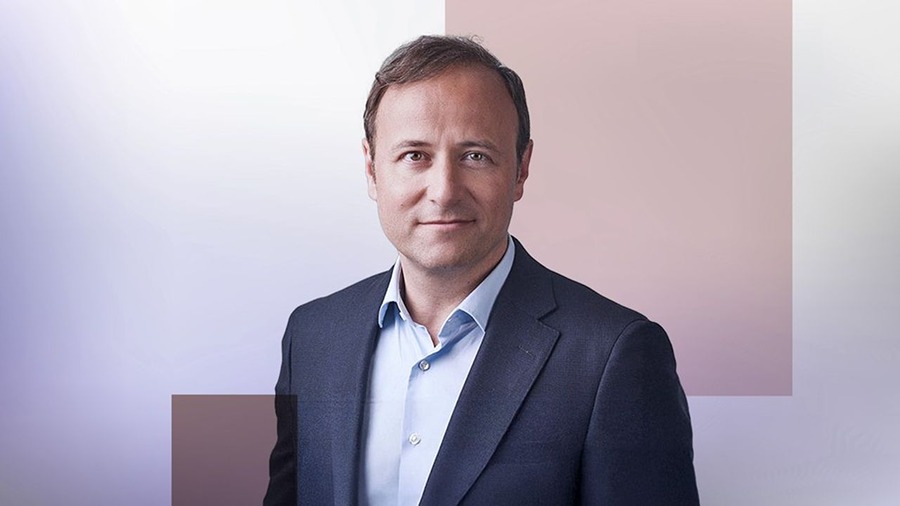
In the new role, Pierre Barnabé is responsible for global operations and for the relationship with partners and system integrators around the world. His remit explicitly includes strengthening operational performance and speeding up the use of the AI-native 3DEXPERIENCE platform and Virtual Twins across industries, helping organizations convert technological breakthroughs into transformative innovation, industrial excellence and new sources of value.
Two details make this different from a routine C-suite reshuffle. First, operations is now owned by someone outside the product and marketing lineages that historically drove this company's story, which usually means delivery economics get a veto in roadmap debates. Second, the partner ecosystem is inside the mandate. In enterprise software, most customer pain is created at that seam: the platform is sold by the vendor but configured, migrated and supported by integrators, so a COO who owns the channel owns the customer experience that people actually complain about.
The résumé, and what it implies
Pierre Barnabé brings more than 20 years of experience in the technology sector and has guided international businesses through periods of transformation, innovation and growth. Before joining Dassault Systèmes, he served as chief executive officer of Soitec, the global semiconductor materials company, and held senior leadership roles at Bull, Nokia (formerly Alcatel-Lucent) and Thales. He graduated from NEOMA Business School and École Centrale Paris, both in France, sits on the board of directors at Ipsos and Bull, and is a Knight of the French National Order of Merit.
The interesting part for general readers is the Soitec stretch rather than the job titles. Publicly reported interviews there were full of operating language: diversification to survive down-cycles, and pushing silicon-on-insulator and photonics substrates into new demand from AI data centres, where the shift to co-packaged optics was framed by the company as a major growth opportunity. A materials CEO runs a business with long qualification cycles, a handful of very demanding customers, capacity that cannot be flexed on a quarterly whim, and a partner network of chipmakers that must adopt a standard before it becomes a standard. That is an unusually close analogue to what platform vendors face today: customers qualify a twin platform over years, adoption requires ecosystem buy-in, and capacity — cloud, support, professional services — has to be planned ahead of demand.
Timeline: the moves behind one appointment
- Early February 2026: Dassault Systèmes and NVIDIA announce a long-term partnership to build a shared industrial AI architecture that powers Virtual Twins — a technology bet that needs an execution machine behind it.
- Mid-February 2026: the group reports a fourth quarter and full-year run that fell short of market expectations, with a sharp share-price reaction and a cautious 2026 outlook, sharpening the need for delivery discipline.
- 21 February 2026: Pascal Daloz becomes Chairman and CEO, succeeding co-founder Bernard Charlès as executive chairman.
- April 2026: Pierre Barnabé, 56, is named chief operating officer and joins the Executive Committee.
- Quarterly reporting through 2026: revenue grew 3% at constant currency to €1.51 billion in the first quarter, recurring annual recurring revenue up 6%, with the platform business cited as the engine; by the third quarter the company reported 3DEXPERIENCE revenue up 25% and completed the acquisition of ArisGlobal to deepen life sciences, raising full-year margin guidance.
How the operating models compare
This is where a horizontal look helps. Independent platform and lifecycle-management comparisons describe the big alternatives as different bets on where the operating complexity lives — which in turn determines who suffers when things go slow.
| Vendor and core platform | Operating logic | Execution signal | Best fit |
|---|---|---|---|
| Dassault Systèmes / 3DEXPERIENCE | One AI-native platform of Virtual Twins spanning design, simulation, manufacturing, life sciences and cities; sold increasingly through partners and subscriptions | A dedicated COO owning operations and the integrator network — the clearest sign yet that delivery, not vision, is the bottleneck being managed | Complex, regulated, multi-domain programmes where context and traceability beat tool count |
| Siemens / Teamcenter and Xcelerator | Engineering and lifecycle data tightly connected to shop-floor automation and electrification stacks | Operations follow the industrial hardware business; strengths are factory and OT integration depth | Discrete manufacturers already standardised on Siemens automation |
| PTC / Windchill | Lifecycle records plus IoT and AR layers for service and field operations | Value concentrates in connected-product and service workflows rather than twin simulation breadth | Equipment makers monetising uptime and aftermarket service |
| Aras / Innovator | Open, model-driven low-code platform with upgrades folded into subscription; third-party comparisons credit it with faster, more customisable deployments | Execution is deliberately pushed to the customer and its developers, trading vendor hand-holding for control | Organisations with strong internal engineering teams that want to own the build |
Read across the table, the appointment is a competitive tell as much as an internal one. Dassault Systèmes is trying to make a very broad platform feel as predictable as a narrow one. If that works, buyers get faster time-to-value but should expect less room for one-off configuration, because standardisation is exactly what operational discipline delivers.
Trade-offs: what improves, what gets harder
Where a COO-led operating model helps ordinary users
- Faster onboarding: lighter, packaged offers aimed at smaller teams sit far more comfortably in a standardised delivery model than they do in a consultative one.
- More comparable partner quotes: when the channel is managed centrally, integration pricing and timelines become negotiable rather than anecdotal.
- Support that scales: platform adoption metrics — seats, usage, cloud growth — are what a COO is measured on, which tends to push investment toward reliability and away from slide-ware.
- Credibility for the AI promise: an industrial AI architecture only earns trust when simulation jobs, data plumbing and twin updates run routinely.
Where readers should stay sceptical
- Execution does not create demand: weakness in automotive and pharma project starts, flagged in the group's own reporting cycle, is a market condition, not an operations problem.
- Standardisation cuts both ways: heavy customisation is precisely how some enterprises get their unique processes modelled; a tighter delivery model can mean longer queues for the unusual request.
- Channel control takes time: indirect models that have run for years rarely transform within one leadership year.
- Total cost still swings on integrators: published comparisons of enterprise lifecycle-management roll-outs consistently cite budgets from the high hundreds of thousands into several million dollars including implementation — the vendor's new operating discipline has to reach that line item to matter.
Four practical decision routes
Choose the route that matches your situation, then use the checklist below it.
- Already on the platform: treat the change as leverage, not risk. Re-open service levels, migration timelines and partner rates now, while the organisation is explicitly optimising operational performance.
- Evaluating against rivals: compare delivery maturity, not feature matrices. Ask each vendor who owns your onboarding, what the median go-live time was last year, and what happens if the integrator, not the platform, fails you.
- Mid-sized teams: a COO mandate usually means more templated offers and less free consulting; price the package and the exit path before signing.
- Just watching the sector: note the pattern across enterprise software — platform leaders are hiring operators, and the competitive frontier is moving from capability to throughput.
Common misconceptions
- "A COO hire is just admin news." In subscription-heavy software, the operations role owns the funnel that turns licenses into usage, and usage is what investors now price.
- "It means the technology was behind." The stated mandate is about spreading an existing AI-native platform and Virtual Twins faster, not building something new.
- "One leader fixes a slow market." Demand cycles in cars and drugs are independent of org structure.
- "External hires bring outsiders' habits." Barnabé's background spans Bull, Nokia, Alcatel-Lucent, Thales and Soitec — deep European technology operations, not consumer app churn. The mismatch risk is commercial model, not industry literacy.
- "Vendor consolidation means fewer choices." The comparison set above still differs sharply in who controls customisation and delivery.
Checklist before you buy, renew or migrate
- Get the named owner of partner performance and escalation in writing.
- Ask for median, not best-case, implementation duration for your industry.
- Price year one and year three: platform plus integration plus data migration.
- Verify who holds the data and models if you leave, and in what portable format.
- Test the AI claims on one real workflow with your own parts, not a demo twin.
- Confirm training and certification depth for your integrator, since they, not the vendor, touch you weekly.
- Re-read the contract for capacity and support-tier caps that standardisation may introduce.
FAQ
Q: What is a chief operating officer actually doing in a software company?
A: Usually owning delivery: the partner and integrator network, professional services capacity, customer onboarding, support economics and the internal metrics that show whether sold licenses become daily usage.
Q: Why is the partner angle so prominent here?
A: In enterprise platforms the vendor builds the system but integrators configure it for each customer. Most complaints about timelines, change orders and usability land in that gap, which is why partner relationships were written into Pierre Barnabé's remit.
Q: Does the appointment change what the platform does?
A: Not directly. The 3DEXPERIENCE platform and Virtual Twins capabilities are the same; the change is in how quickly and predictably those capabilities arrive inside a customer's workflow.
Q: Is this relevant if I never touch industrial software?
A: As a signal, yes. It shows where enterprise technology competition is going: whoever operationalises AI becomes harder to displace, and buyers should start scoring vendors on throughput rather than feature lists.
Q: When will the effects be visible?
A: Practical markers to watch are partner certification depth, published implementation benchmarks, the share of revenue that arrives through the indirect channel, and whether lighter packages for smaller teams move upmarket.
Bottom line for general readers
The headline is a name, but the news is a management posture: the vendor that spent two decades selling a virtual view of how things are made is now paying an operations chief to make sure customers can actually run on it. Compared with Siemens' factory-linked stack, PTC's connected-product emphasis and Aras' developer-led openness, Dassault Systèmes is betting that breadth plus discipline is the winning combination — and, if the mid-year reporting pattern holds, early signs are encouraging: platform revenue growth accelerating through 2026 while the wider market stayed uneven. For readers the advice is simple: treat this as a moment of leverage. Renewal and evaluation conversations that felt immovable last year should feel movable now, because the company's own priorities have shifted from what the technology can promise to how reliably it arrives. More detail is published by the company at 3ds.com.
Written by Sarah Chen for MyTechDailyNews (Tech Daily). This article summarises public announcements and third-party comparisons; figures cited from Dassault Systèmes reporting and market research reflect the dates stated. Corrections and reader questions: hello@techdaily.com.