
Daimler’s Next-Generation Truck Safety Explainer for MyTechDailyNews General Readers
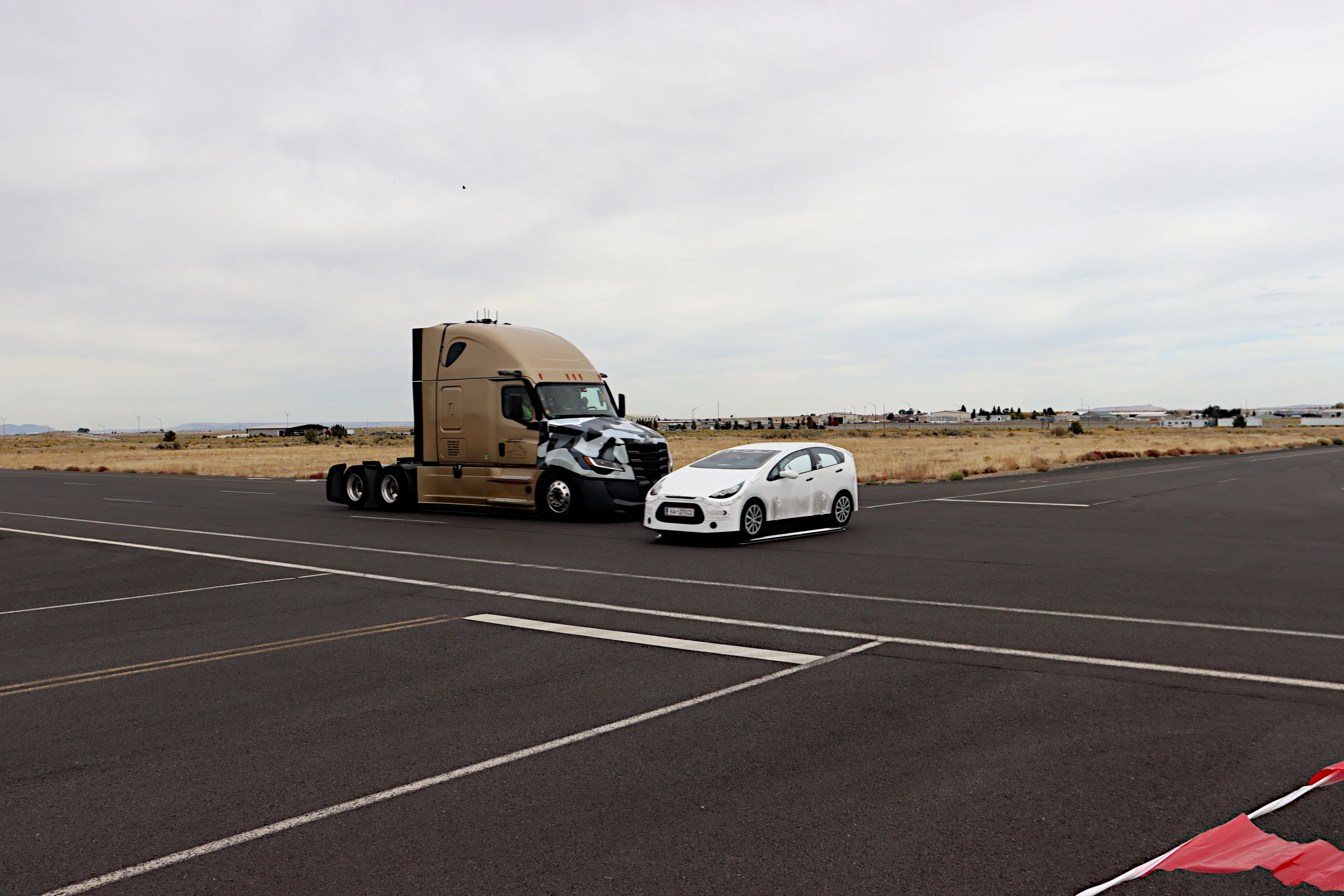
Heavy trucks are no longer judged only by hauling power and fuel economy. The next big question is whether a truck can see enough, understand enough and act before a driver has time to react. Recently, Daimler Trucks showed its next-generation safety assistance systems for Europe and North America, combining radar, cameras and more advanced software to help professional drivers spot dangers earlier and reduce severe consequences when a collision cannot be fully avoided.
For the global market, Daimler announced new technologies including Active Cross Traffic Assist, Active Sideguard Assist 3 and an upgraded Active Drive Assist. They are planned for Mercedes-Benz Actros and Arocs trucks, as well as Mercedes-Benz and Benz Setra long-distance coaches, with market entry starting in April 2027.
At the same time, Daimler North America is pushing safety upgrades for the 2027 Freightliner Cascadia and Western Star X series. The center of the update is an enhanced Detroit Assurance Suite, with particular attention on Active Brake Assist 6, also called ABA6.
Although the Europe and North America systems use different names and have different feature sets, the goal is the same: stronger perception and automatic intervention should give professional drivers a better chance to respond before danger becomes a crash.
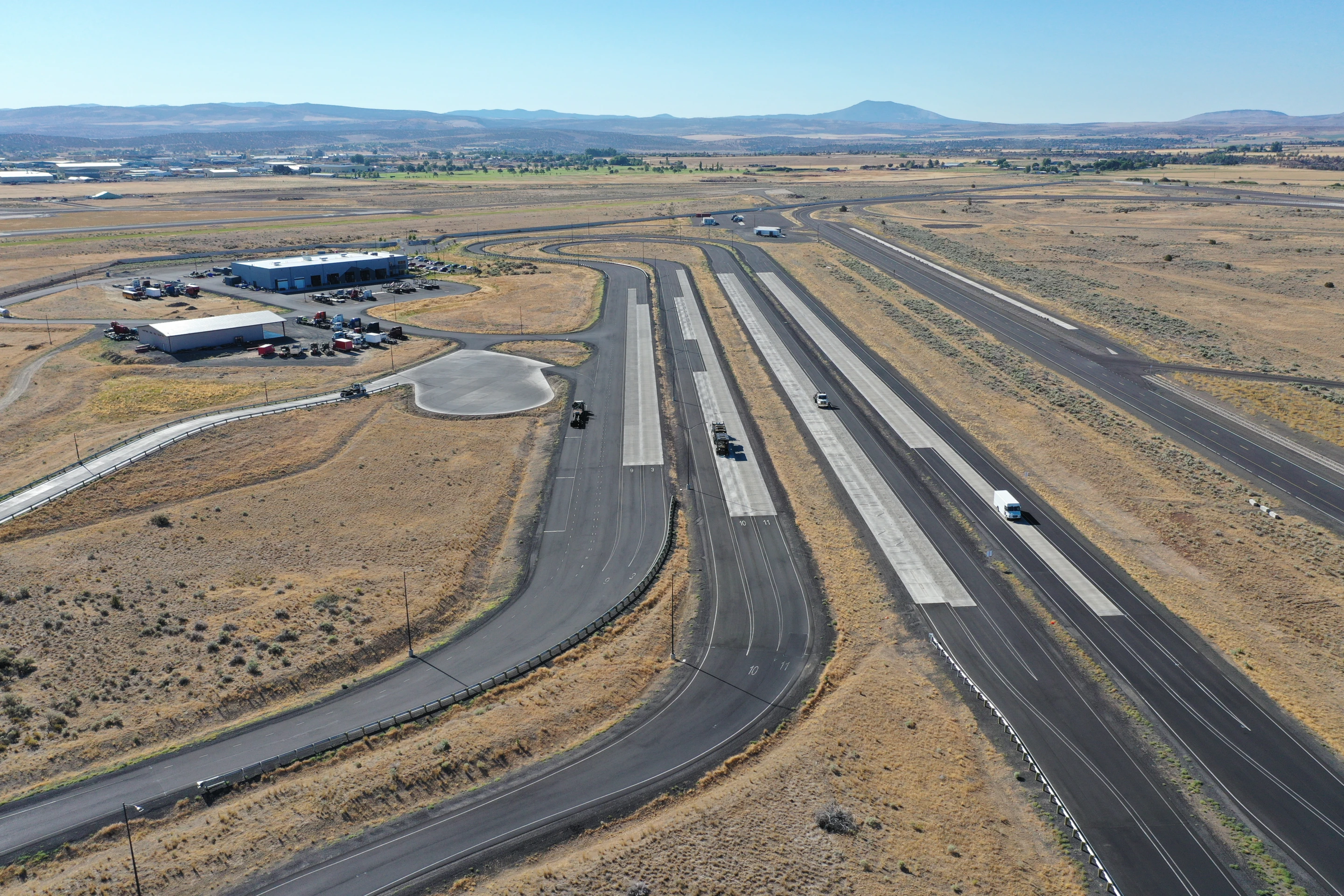
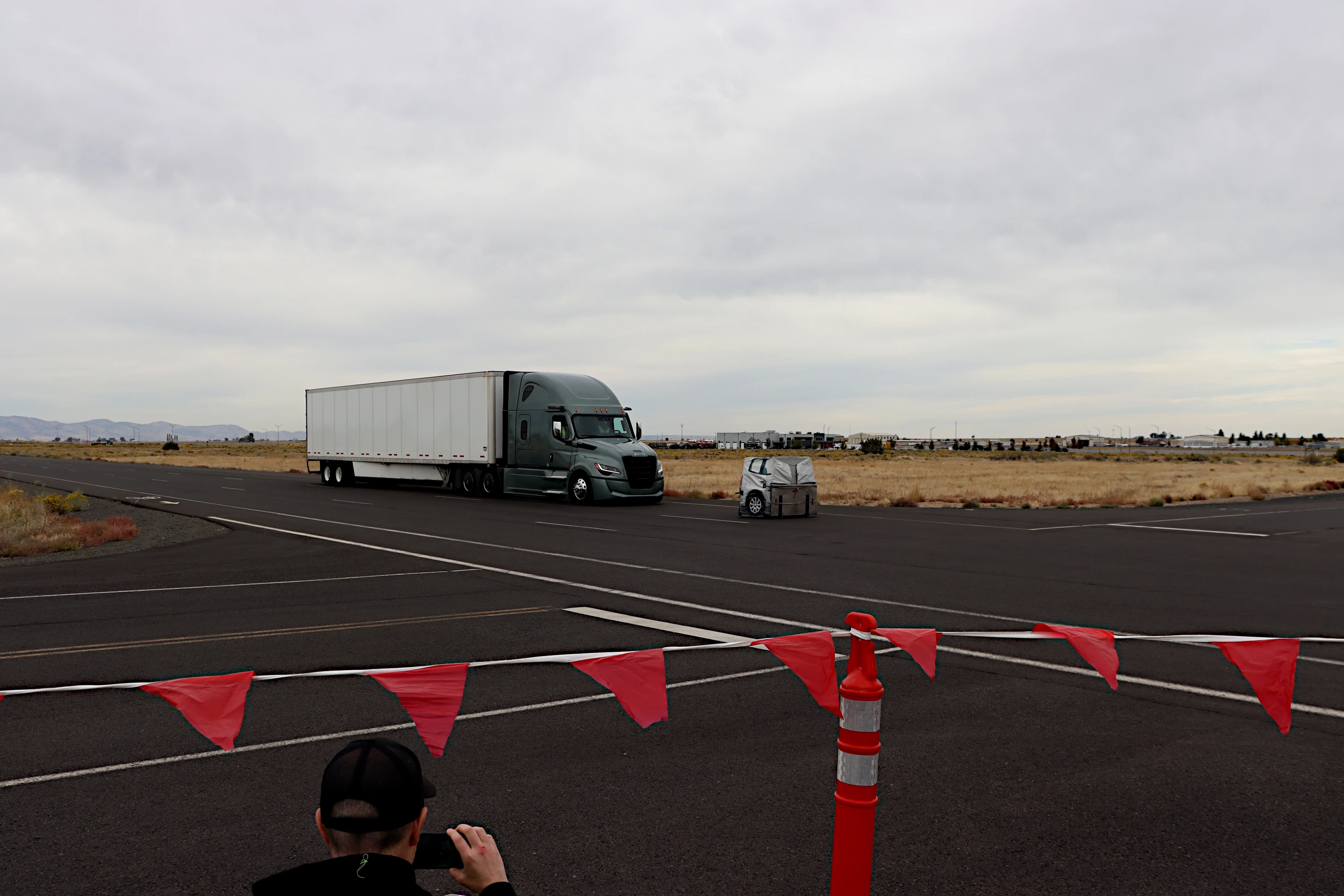
At Daimler’s test field in Oregon, United States, media outlets experienced a Cascadia heavy truck fitted with the latest safety systems. During demonstrations, multiple remote-controlled fake vehicle targets suddenly appeared in front of the truck or entered its path. The system was able to recognize risk in time and avoid or reduce a crash through warnings or automatic braking.
For North America specifically, Daimler announced the new safety features of the fifth-generation Freightliner Cascadia in April 2026: ABA6, a Cross Traffic Assist system and Active Sideguard Assist 2 with left-turn protection. The related models are expected to open for ordering in Q3 2026 and begin production in January 2027.
Because the operating environment of heavy trucks in Europe and the United States is very different, factors such as vehicle weight, travel speed, road conditions and regulatory requirements are not the same. That is why the two regions share the same idea but do not use a simple copy of one system. Europe is getting Active Sideguard Assist 3, while North America uses a Detroit Assurance solution customized for local needs.
What is changing on Daimler trucks?
| Area | Europe | North America |
|---|---|---|
| Main systems highlighted | Active Cross Traffic Assist, Active Sideguard Assist 3, upgraded Active Drive Assist | Detroit Assurance Suite enhanced, especially Active Brake Assist 6 (ABA6) |
| Vehicle platforms | Mercedes-Benz Actros and Arocs trucks; Mercedes-Benz and Setra long-distance coaches | 2027 Freightliner Cascadia and Western Star X series |
| Timeline | Planned to reach the market from April 2027 | Announced in April 2026 for the fifth-generation Freightliner Cascadia; orders expected in Q3 2026; production expected in January 2027 |
| Why the systems differ | Based on European weight, speed, road and rule conditions | Based on United States needs, so Detroit Assurance is customized rather than copied |
Intersections, turning risks and side protection
The new Cross Traffic Assist system is aimed at one of the most dangerous situations for large commercial vehicles: intersections. It can watch vehicles crossing sideways at a junction. If the system judges that a potential collision risk exists, it triggers visual and audible alerts. If the danger becomes more urgent, it can apply partial braking or full automatic braking.
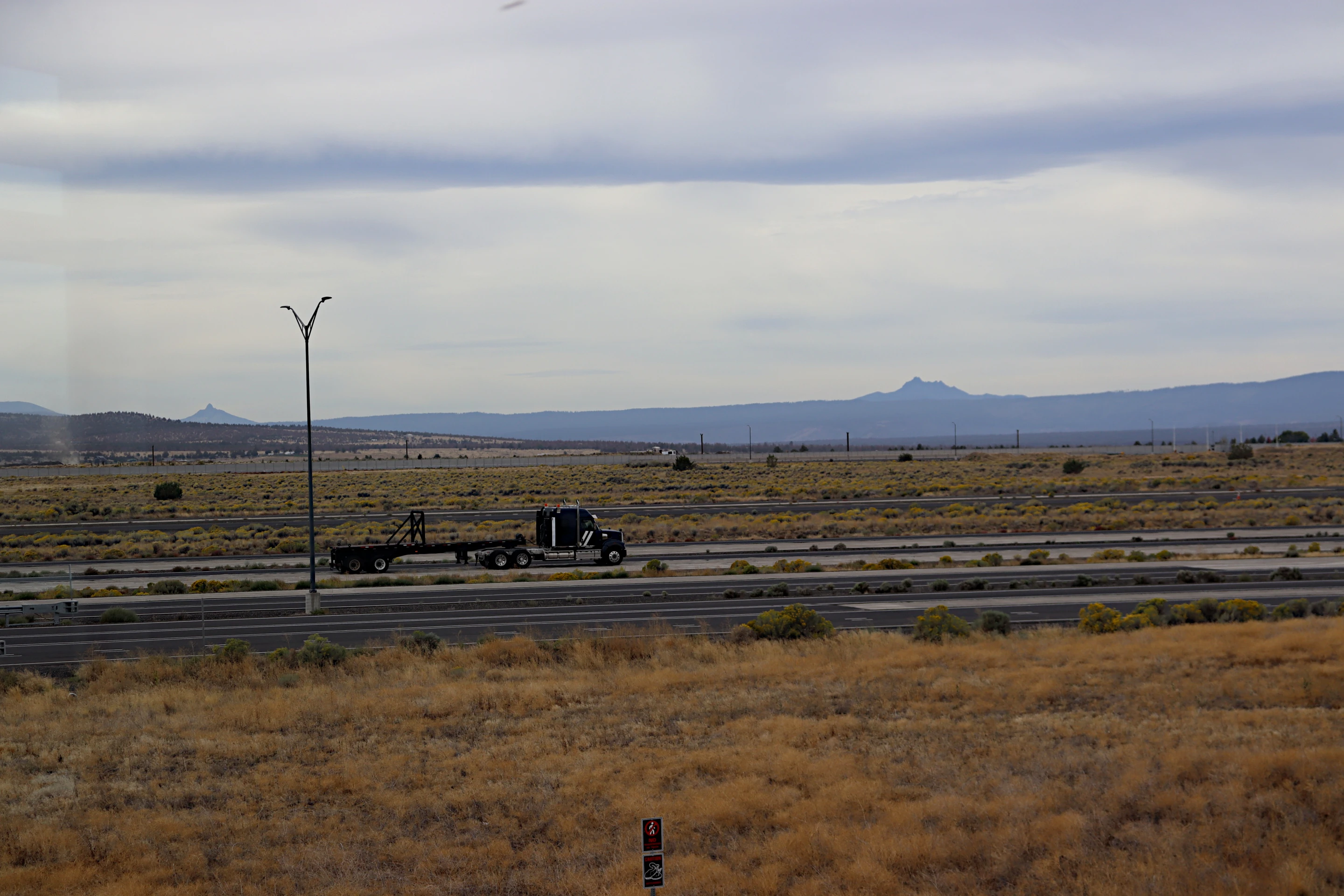
Active Sideguard Assist 2 is focused on turning scenarios. In addition to monitoring risks in the right-side blind zone, it can identify oncoming traffic that may conflict with the truck’s path when the driver activates the left turn signal, helping lower the chance of turning crashes.
For logistics companies, the benefit is easy to understand. Fewer collisions can protect human lives and also reduce equipment damage, transport interruptions and high legal compensation costs.
Daimler says the Cross Traffic Assist system is particularly concerned with the complex environment around large trucks at junctions. A driver often has to scan vehicles coming from multiple directions, plus pedestrians and other road users, while the truck’s huge size makes judgment harder. Through sensor fusion, the new system can identify cars and motorcycles quickly approaching and crossing the vehicle’s path. When a collision risk appears, it warns first; when the situation becomes critical, it starts a staged braking process and can ultimately carry out automatic emergency braking.
The company also argues that driver warnings alone are not enough to prevent every accident. Even experienced drivers can misjudge a rapidly approaching vehicle in a very short time. That is why automatic braking becomes an additional safety layer, taking over part of the task when human reaction speed is not enough.
According to the description, the system can recognize more than cars. It has also been optimized for high-speed motorcycles. The North America team is currently working on further strengthening recognition of bicycles and pedestrians.
During testing, one simulated car suddenly crossed in front of the heavy truck. In the first demonstration, the truck avoided the collision completely. In the second, there was slight contact, but the impact consequence was greatly reduced. Based on the demonstration speed, the small car could very likely have suffered a catastrophic hit without active intervention. In another group of tests, a simulated vehicle suddenly turned left into the path of the truck, and the system also avoided the accident.
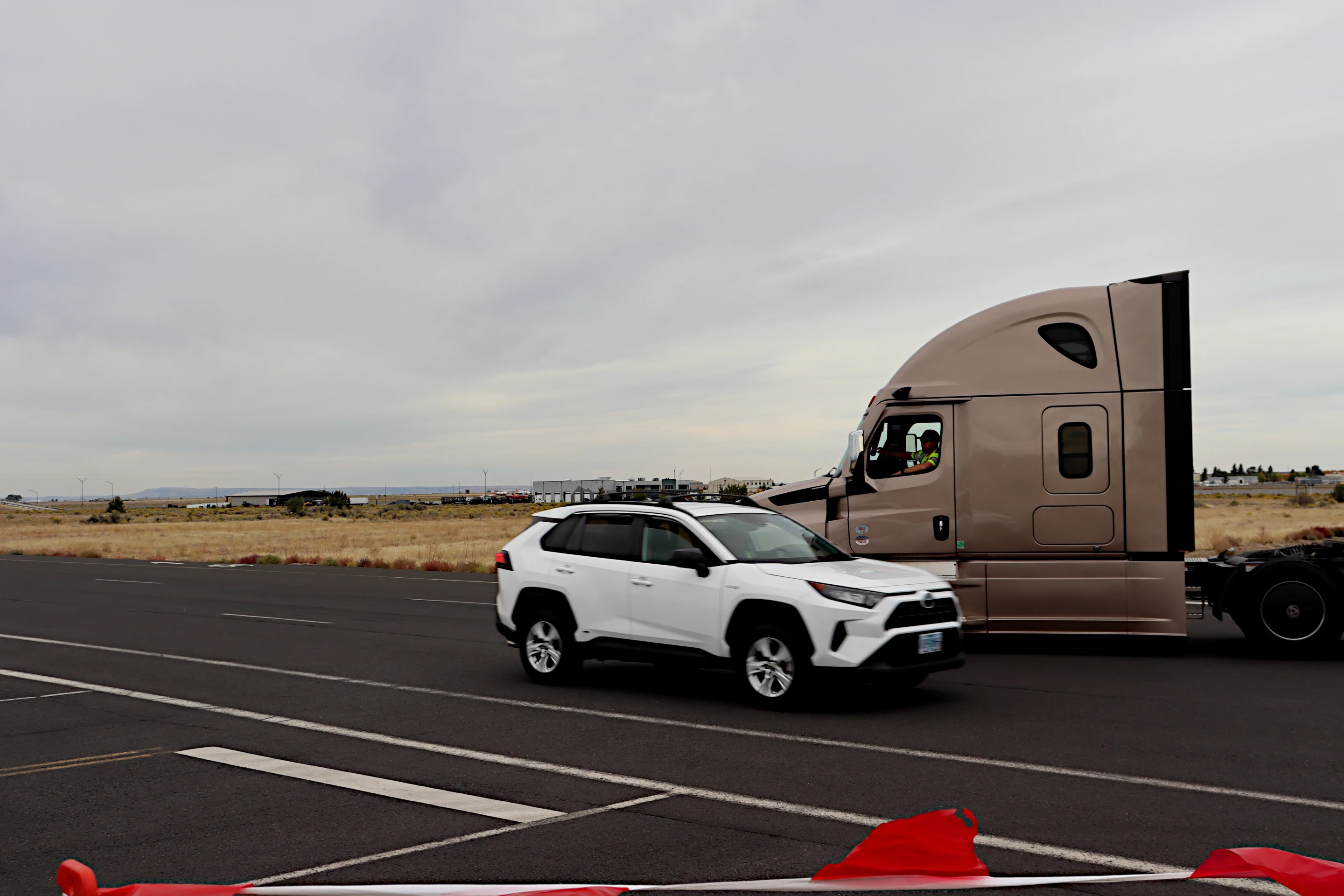
Daimler said the tested vehicle pulled a trailer carrying about 30,000 pounds (about 13,608 kilograms). Most demonstrations were performed at speeds between 40 and 55 miles per hour (about 64 to 89 kilometers per hour). The company emphasized that these systems do not guarantee that a heavy truck will always stop completely. Their core goal is to give warnings as early as possible and, when a collision cannot be fully avoided, reduce impact energy and damage so that lives are more likely to be saved.
ABA6 and wider collision mitigation
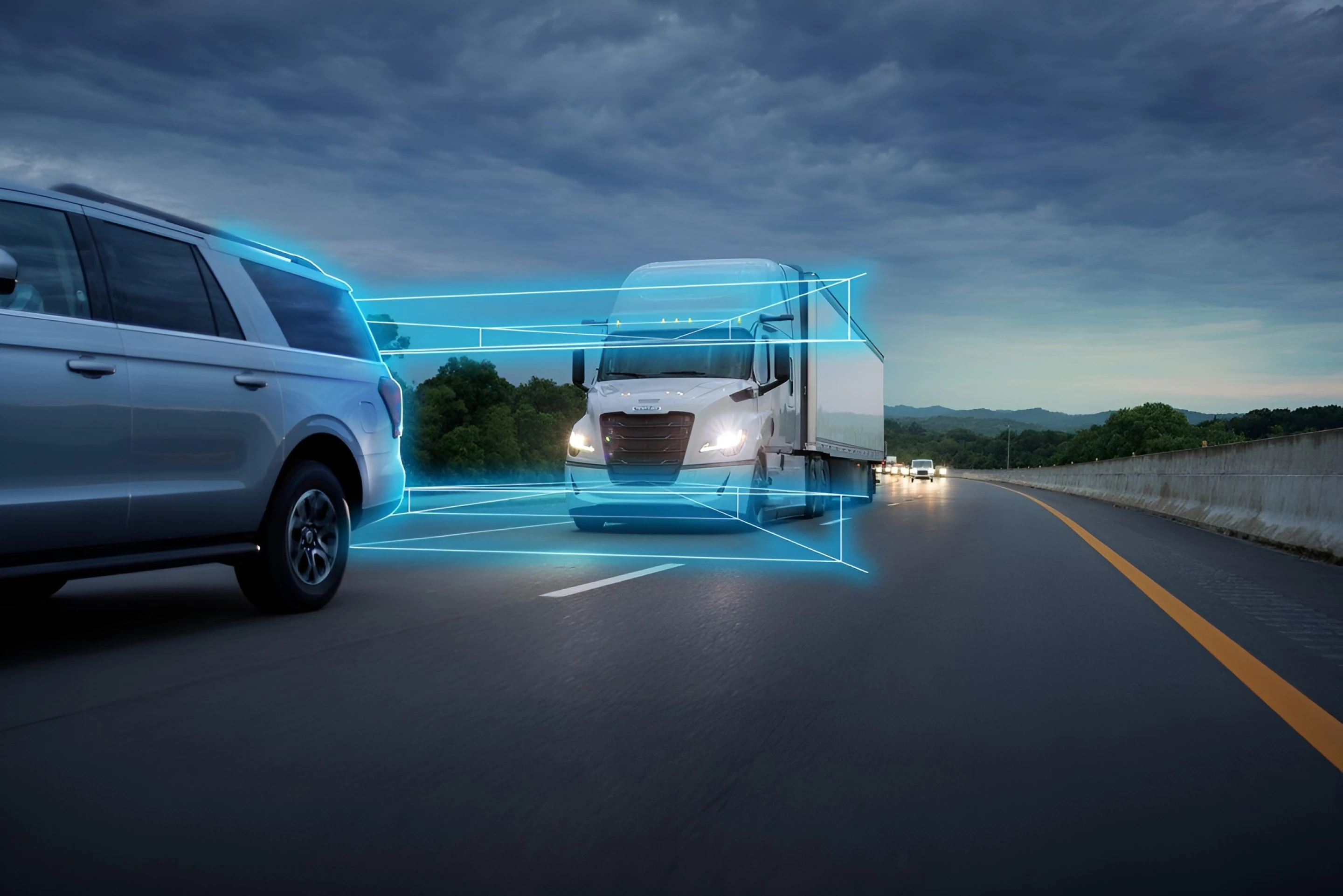
Beyond intersections and turning cases, ABA6 further improves overall collision mitigation. The system uses four short-range radars, one long-range radar and a multifunction camera to create a sensing network. It can monitor an area of about 270 degrees and cover the surroundings of a standard 53-foot (about 16.15-meter) trailer.
It can identify moving and stationary vehicles, pedestrians and cyclists, while also widening the scenarios in which automatic braking may apply. For example, the truck can detect stationary vehicles behind a curve, vehicles parked across several lanes, or broken-down vehicles positioned at unusual angles at an accident scene.
Daimler points out that these are often the situations most likely to cause serious accidents. When a driver approaches a curve or an accident scene, the time left for reaction is extremely short, so a higher level of target recognition becomes especially important. ABA6 is meant to improve recognition efficiency in those special situations and, when necessary, issue warnings and apply braking.
Lane support, driver monitoring and the limits of automation
Alongside collision avoidance, Daimler continues to strengthen driving assistance and driver monitoring technology.
Active Lane Assist 2 can help keep the vehicle near the center of the lane and correct unintended lane deviations. Its steering assistance can also provide extra support in situations such as crosswinds or low-speed operation.
Another notable feature is Attentive Driver Protection. If the system determines that the driver has become unresponsive, the vehicle can slow down and stop automatically while trying to stay centered in the lane and activate hazard warning lights, reducing the risk of loss of control.
However, Daimler stresses that these technologies cannot replace driver rest, health management or reasonable operational scheduling. System performance can still be influenced by weather, sensor condition, vehicle configuration and driver attention.
In the actual test ride, the lane-keeping experience felt similar to many modern passenger cars. The system could not always keep the truck perfectly centered, but it noticeably reduced fatigue for a driver who must control a heavy truck for long periods. At the same time, the system kept checking whether the driver’s hands remained on the steering wheel and issued reminders when needed.
From passive safety to active safety
Daimler believes the heavy truck industry is in an important transition from passive safety to active safety. In the past, protection relied more on driver experience and measures taken after a crash. Today’s next-generation systems can already actively perceive danger, predict risk and intervene at critical moments.
This capability does not only protect truck drivers. It can also reduce threats to passenger cars, bicycle riders and pedestrians. Fewer accidents can also mean shorter vehicle downtime, which is positive for logistics companies and for the transport network as a whole.
Still, sensors remain affected by weather and environment, electronic systems have operating boundaries, and no technology can guarantee that every accident will be avoided. Drivers must keep a reasonable following distance, control speed, use mirrors and fully consider the huge size and large turning radius of heavy vehicles.
Common misconceptions
- Misconception: If the truck has automatic braking, it will always stop in time. Reality: The system is designed to warn early and reduce impact energy when full avoidance is not possible; it does not guarantee a complete stop in every situation.
- Misconception: The Europe system and North America system are simply copied from each other. Reality: The two regions share the same idea but use different vehicle weights, speeds, road conditions and rules, so Detroit Assurance is customized for local needs.
- Misconception: Lane assistance means the truck can handle safety on its own. Reality: Lane help can reduce fatigue and correct deviations, but it does not replace hands-on steering, driver monitoring, rest or attention.
- Misconception: Attentive Driver Protection solves fatigue and health issues. Reality: It can react if the driver becomes unresponsive, but it cannot replace health management, rest and reasonable scheduling.
- Misconception: Experienced drivers do not need warning plus braking. Reality: Daimler notes that even experienced drivers may misjudge fast-approaching vehicles in a very short time.
Checklist for drivers and fleet teams
- Treat Active Brake Assist 6, Cross Traffic Assist and sideguard features as extra safety layers, not replacements for driving judgment.
- Maintain a reasonable following distance, especially at intersections, curves and accident scenes where reaction time is short.
- Control speed in weather conditions that can affect sensors, including environments that may limit radar and camera performance.
- Check mirrors carefully and account for the large size and wide turning radius of trucks and trailers.
- Keep hands on the steering wheel so driver monitoring and lane assistance can work as intended.
- Build rest, health support and operational scheduling into fleet management rather than assuming automation can cover those needs.
- When evaluating future orders, compare the April 2027 Europe market entry with the April 2026 announcement, Q3 2026 ordering and January 2027 production path for the fifth-generation Freightliner Cascadia.
FAQ
What is the main purpose of Daimler’s new heavy truck safety systems?
They are meant to help professional drivers detect danger earlier and, when necessary, intervene automatically through warning and braking so that the consequences of a serious accident are reduced.
Which Europe systems are being introduced?
Daimler Trucks announced Active Cross Traffic Assist, Active Sideguard Assist 3 and an upgraded Active Drive Assist. They will be applied to Mercedes-Benz Actros, Arocs trucks and Mercedes-Benz and Setra long-distance coaches, with a planned start from April 2027.
Which North America models are receiving the safety updates?
The main North America update centers on the 2027 Freightliner Cascadia and Western Star X series, using an enhanced Detroit Assurance Suite and a stronger focus on ABA6.
What does ABA6 detect?
ABA6 uses four short-range radars, one long-range radar and a multifunction camera to monitor about 270 degrees around the truck, covering the area near a standard 53-foot trailer. It can identify moving and stationary vehicles, pedestrians and cyclists, and can expand automatic braking to scenarios such as stationary vehicles behind curves, vehicles across lanes and oddly angled accident-scene vehicles.
Can the Cross Traffic Assist system only see cars?
No. The system has been optimized for fast-approaching cars and motorcycles crossing the truck’s path. The North America team is also developing further improvements for bicycles and pedestrians.
Will the truck always avoid the crash in the demo tests?
Not necessarily. In one test, the first demonstration avoided collision completely. In a second, there was slight contact but reduced impact. Daimler says the goal is early warning and damage reduction, not a guarantee that the truck can stop fully every time.
Does lane assistance work with perfect accuracy?
No. During the test ride, it did not keep the truck 100 percent perfectly centered, but it helped reduce the fatigue of controlling a heavy truck for long periods while also checking hand contact with the steering wheel.
Action advice
MyTechDailyNews readers should view Daimler’s next-generation truck safety push as a shift from accident response toward accident prevention. The practical takeaway is simple: fleet buyers, drivers and ordinary road users should pay attention to when systems arrive, what vehicles are covered and what limitations remain. For drivers, the safest combination is technology plus traditional defensive habits: enough distance, controlled speed, mirror awareness, attention to turns and proper rest. For companies, the safest approach is to use these systems as risk-reduction tools while maintaining clear management of health, scheduling and sensor-dependent conditions. When that is done correctly, radar and automatic braking become less visible in daily operation, but far more useful when a dangerous moment arrives.