
Claude Code Leader Cat Wu Leaves Anthropic Before IPO: A Practical Playbook for Users and Teams
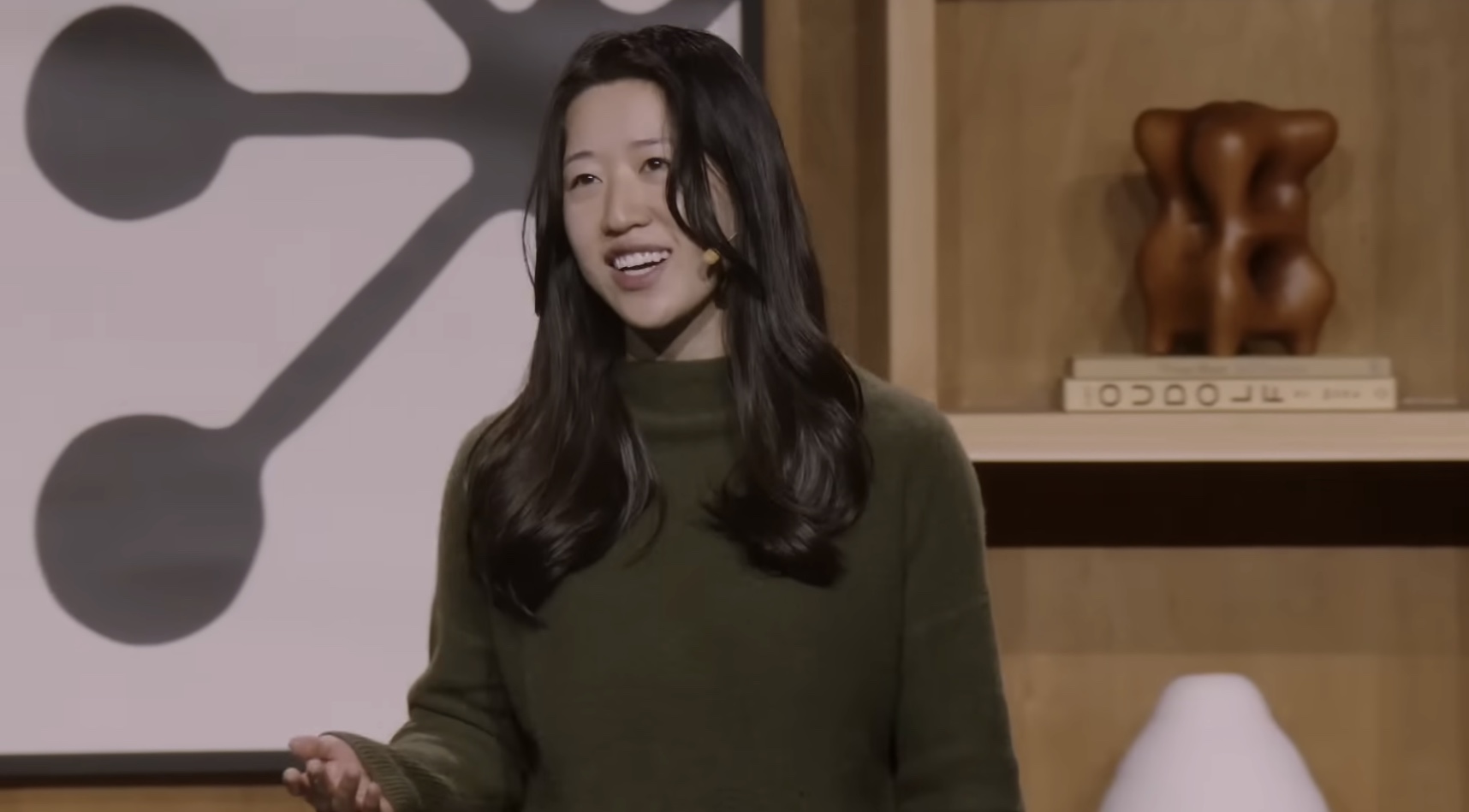
When a product leader at the center of an AI coding tool steps away, the practical question is not only "who left" but "what should users do next". Anthropic's Claude Code product lead Cat Wu announced her departure on X on November 3 local time. She thanked the Claude Code team and users, reviewed the product's journey, but did not give a reason. Anthropic later confirmed the move. Business Insider framed the exit as happening before a big IPO, and that context explains why investors, developers, product managers, and everyday tech readers are paying close attention.
The news in plain language
| Question | What is clear now | Why it matters |
|---|---|---|
| Who left? | Cat Wu, the product leader for Claude Code and Cowork at Anthropic. | She helped turn an internal coding assistant into a mainstream commercial tool. |
| Where did she say it? | On X on November 3 local time. | Public social-media exits are easy to verify, but they rarely include full business context. |
| Who remains central? | The covered reports did not name a public replacement, while Boris Cherny remains the product's creator figure. | Cat Wu and Boris Cherny are widely described as the two core people behind Claude Code's rise. |
| What was her role? | She worked on Claude Code, Cowork, hiring product managers, market and sales coordination, finance-related alignment, and direct user feedback. | That breadth makes her departure feel more important than a routine job change. |
For general readers, the simple takeaway is that this is a leadership-change story with practical consequences. Claude Code is not just a chat window that writes snippets. Anthropic's official Claude Code product documentation presents it as an agentic coding tool that can understand a codebase, edit files, run commands, and operate across terminal, IDE, desktop and browser environments. When the person responsible for direction and coordination leaves, users should think less about drama and more about workflow risk.
Timeline: how Cat Wu became a key name in AI coding
- Summer 2024: Cat Wu joined Anthropic. Her first exposure was the early prototype of Claude Code, and she later said its ability attracted her to the team.
- February 2025: Anthropic released Claude Code as a research preview. A short launch video featured Cat Wu and Boris Cherny.
- That same summer: The two briefly left Anthropic and joined Cursor, an AI coding startup, then returned weeks later to continue leading the work.
- End of 2025: Claude Code entered a period of rapid adoption and became one of the most visible products in AI programming.
- April this year: In a podcast interview, Cat Wu described her goal as moving Claude Code toward the "AGI-ized version" envisioned by Boris Cherny, where AGI means artificial general intelligence, a system capable of performing a broad range of tasks at near-human levels.
- Last month: Thariq Shihipar, another member associated with Claude Code development, announced his departure. The move of one core member already raised stability questions; Cat Wu's exit made it a pattern worth watching.
Why the change matters beyond a headline
Claude Code's rise has been tied to Anthropic's broader strategy. The tool was first shaped around software engineers, then expanded toward enterprise workflows. More developers using it drove more demand for Claude models, while large technology companies increased spending on model services. This helped Claude Code become one of Anthropic's most important commercialization engines and strengthened Anthropic's position against OpenAI in the AI coding market.
Her responsibilities extended beyond Claude Code. Cowork is an AI work assistant aimed at non-software engineers, built on Anthropic's core model capabilities and focused on knowledge-work scenarios. Because Claude Code and Cowork share the same model foundation and product philosophy, a change at the top of one product can affect how people think about the broader AI-agent workflow.
Practical guide: what to do if you rely on Claude Code
Step 1: Separate emotional reaction from operational risk
The first step is to avoid a binary interpretation. The departure does not prove that Claude Code will slow down, nor does it guarantee that nothing will change. Users who depend on it for coding work should treat the news as a prompt to review dependencies: which workflows are built on Claude Code, which are optional conveniences, and which could be temporarily moved to a fallback tool if product behavior shifts.
Step 2: Document your current workflow
Teams should record the model version, permission settings, custom instructions, repository structure, and the types of tasks they delegate to the tool. This sounds basic, but it becomes valuable the moment a product update changes defaults, pricing, or agent behavior. A short internal page that says "how we use Claude Code today" is more useful than a long philosophical debate about AI leaders.
Step 3: Check permission and review habits
AI coding agents can move from "answer questions" to "make changes" very quickly. If your team has enabled automatic approvals, review those settings now. Keep a human review gate for production branches, secrets, dependency updates, database changes, and anything that can alter customer-facing behavior.
Step 4: Plan a 30-day observation window
Give the product a short observation period. Watch release notes, pricing pages, developer-community feedback, and official Anthropic communications. If roadmap updates keep coming and core workflows remain stable, the departure may be absorbed. If documentation, permission controls, or enterprise support changes suddenly, teams may need to adjust adoption plans.
A short checklist for users and teams
- Version control: Make sure every AI-assisted change is in Git, with clear commit messages and review history.
- Permission baseline: Confirm whether Claude Code can edit files, run commands, install packages, or access external services.
- Cost alerts: Track token usage, API spend, subscription changes, and team seats before costs drift upward.
- Security scan: Do not assume generated code is safe by default; run linting, tests, dependency scanning, and secret checks.
- Release-watch: Follow official product pages and docs, not only social media posts, when deciding what changes matter.
- Fallback plan: Know which tasks can move to manual development, another assistant, or a slower review process if needed.
Common misconceptions
- Misconception 1: One departure means the product is doomed. Large AI products usually depend on teams, not a single person. Cat Wu's exit is notable because she and Boris Cherny are seen as two core figures, but that does not by itself prove decline.
- Misconception 2: An IPO automatically freezes product development. Public reporting often links IPO timing to management stability, but the practical effect is usually more scrutiny, more reporting discipline, and more incentive to show consistent revenue.
- Misconception 3: If Claude Code can edit files automatically, it is always safe to leave it on. Automation creates speed and risk at the same time. Teams still need review, testing, and permission boundaries.
- Misconception 4: This news only matters to investors. For everyday users, the direct question is whether tools they rely on will remain useful, stable, and affordable.
- Misconception 5: Because Cat Wu led Cowork too, Cowork must be in immediate trouble. She was responsible for both products, but no covered report establishes that Cowork is being abandoned.
FAQ
Did Cat Wu explain why she left?
No. In her November 3 local time post on X, she thanked the team and users but did not explain the reason. Anthropic confirmed the departure.
Does Claude Code still matter if a product lead leaves?
Yes. Claude Code remains tied to Anthropic's developer and enterprise strategy. The more practical question is whether future product rhythm, feature communication, and trust-building continue smoothly.
What about the IPO angle?
Market coverage focuses on timing because Claude Code is viewed as an engine behind Anthropic's growth, and its momentum affects the company's competitive position against OpenAI. A leadership change before an IPO invites questions about whether internal coordination will remain stable.
Did she say what comes next?
Not in a detailed career announcement. When someone asked whether she would take a long break, she answered jokingly that the pause would have to wait until after AGI is achieved. The reply reads like internet humor, not a business update, but it also signals that her next role may remain in frontier AI.
Action advice by reader type
- Developers: Continue using Claude Code if it works for you, but keep your own guardrails. Do not let an assistant bypass code review, security scans, or team ownership rules.
- Team leads: Assign a clear internal owner for AI-tool governance. That person should track model updates, permission changes, spend, and user feedback.
- Enterprise buyers: Review support terms, data handling, API usage, and model-service spend. If Claude models underpin your workflows, treat product leadership changes as a due-diligence signal, not a panic signal.
- General tech readers: Use this as a reminder that AI tools are products, not magic. They are shaped by teams, pricing, competition, and internal priorities.
The clearest reading is balanced: Cat Wu's departure is significant because she helped define how Claude Code moved from a prototype to a commercial product, but it is not proof of a broken strategy. For users, the next step is practical. Watch the roadmap, protect your workflows, and judge Anthropic by what it releases, supports, and prices after the news cycle moves on.