
Power That Doesn't Fail: What Circuit Protection Really Does for Your Home, Business and the Grid
The little panel on the wall rarely gets a second thought until power drops in the middle of something important. Yet that panel — and its far larger relatives inside substations and factory floors — is running a continuous risk-management process: sensing abnormal current, judging how fast to react, and cutting energy before heat, arcing or shock turns an ordinary afternoon into an outage or an incident. This guide takes a plain-language tour of that invisible protective layer, from the appliance cord in a kitchen to the medium-voltage backbone that delivers power to your street.
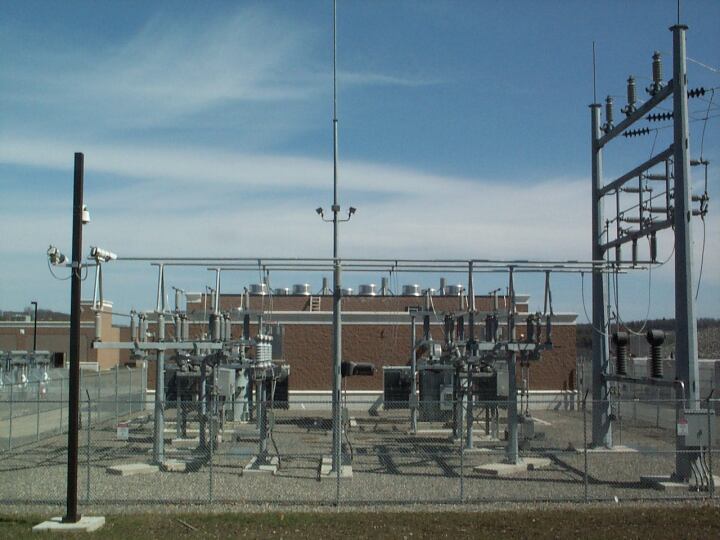 Figure 1: A utility-scale electrical substation, the level of the network where protection systems decide whether one local fault stays local. Image courtesy: CDM Smith
What you should take away from this read
- Why electricity needs guardians in the first place: how overloads, short circuits, ground faults and surges push a circuit past the limits it was designed to carry, and how protective devices intervene before damage is done.
- How the major device families differ — fuses, circuit breakers, ground fault circuit interrupters, arc fault circuit interrupters, surge protection devices and medium-voltage relaying systems — and where each one earns its keep.
- Why coordination, rather than any single gadget, is what keeps homes, plants and grids online, and how digital relays plus smart-grid automation extend that logic to the utility level.
Start with the water analogy: four faults do most of the damage
Engineers still lean on a plumbing picture because it makes the abstract concrete. Current is the flow rate, voltage is the pressure pushing that flow, and resistance is anything that slows it down. A circuit behaves while those three stay balanced, and every circuit is vulnerable to invisible faults the moment operating conditions exceed the safe design limits.
The most familiar problem is the overload, which shows up when too many devices share one circuit and the draw stays above the safe limit. Heat accumulates gradually, degrading insulation and plastic — the leading cause of long-term electrical fires. The most catastrophic fault is the short circuit: a low-resistance path such as frayed wiring joins two conductors, resistance collapses to nearly zero, and current jumps instantly to explosive levels, producing violent arcing and immediate equipment destruction.
Two more faults operate on a human timescale and an electronics timescale. A ground fault happens when current finds an unintended path to the ground, for example through a metal enclosure; anyone touching that fault can have current pass through the body, which means severe or fatal shock. An overvoltage condition arrives when voltage spikes suddenly, usually from lightning or utility switching, and those high-pressure surges can destroy sensitive electronic components in an instant.
| Fault | What happens electrically | How it shows up in daily use | Main risk |
|---|---|---|---|
| Overload | A circuit consistently draws more current than its safe limit. | Too many devices sharing the same circuit. | Sustained heat degrades insulation and plastic, leading to long-term electrical fires. |
| Short circuit | A low-resistance path joins two conductors and current surges instantly. | Frayed wiring or damaged insulation. | Violent arcing and immediate equipment destruction. |
| Ground fault | Current takes an unintended path to the ground, such as through a metal enclosure. | Touching equipment that is energized where it should not be. | Severe or fatal electric shock if current passes through a person. |
| Overvoltage | Voltage rises suddenly from lightning or utility switching. | A storm overhead or a switching event on the network. | Instant destruction of sensitive electronic components. |
Left uncontrolled, these four conditions translate into equipment damage, unplanned downtime and genuine safety hazards. Protective devices exist precisely to mitigate them before damage — or worse — occurs.
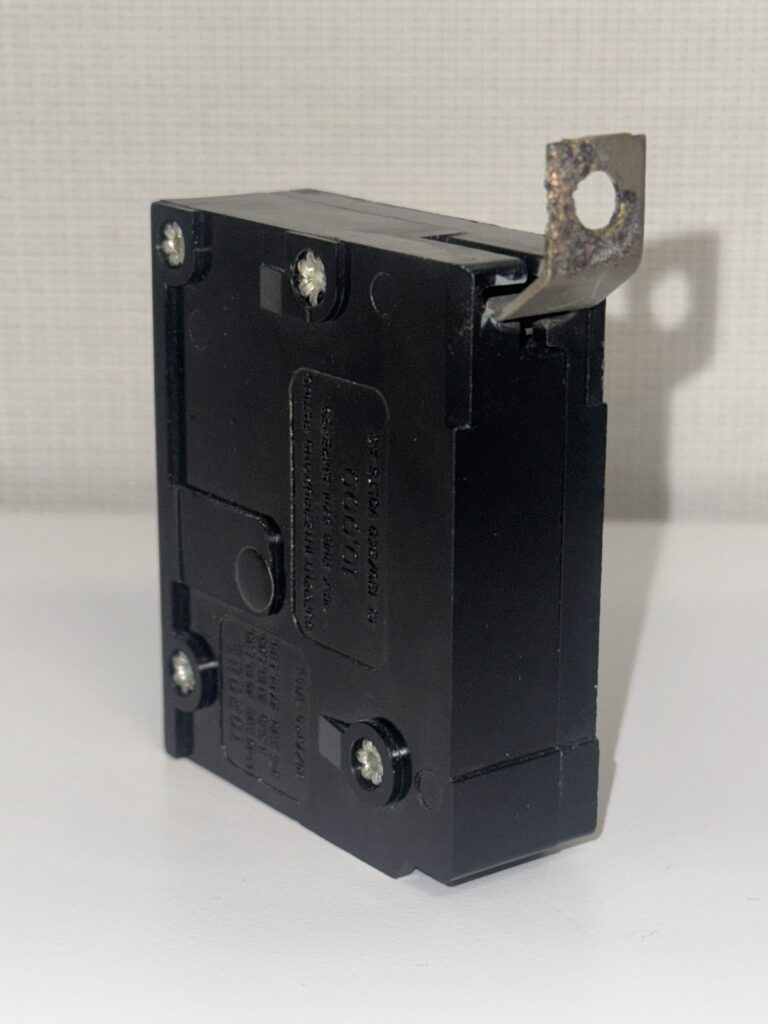 Figure 2: Electrical equipment damaged by abnormal operating conditions — a reminder of the hidden risks carried inside ordinary wiring. Image courtesy: CDM Smith
Layer one: fuses and circuit breakers, the overcurrent workhorses
Every electrical system, from a single home circuit to an entire grid, leans on overcurrent protection devices (OCPDs) for safe and reliable operation. These components are built to interrupt current automatically and rapidly once it exceeds safe design limits, shielding wiring and equipment while reducing fire hazard. Fuses and circuit breakers are the two primary families.
Fuses: protection through deliberate sacrifice
A fuse protects by failing on purpose. It is a sacrificial element that permanently breaks the circuit during a fault so that the load downstream is spared. Inside sits a conductive wire or strip calibrated to melt when heated, and the operating principle is I²R heating, also called Joule heating. When current stays above the fuse's ampere rating long enough, the element reaches its melting point and blows, opening the circuit and quickly isolating the faulty section — whether the trigger was a short circuit or a prolonged overload.
Because the mechanics are simple, fuses spread into many roles defined by voltage and current needs:
- Cartridge fuses: cylindrical elements in an insulating fiber or ceramic tube, common in control panels and motor circuits.
- Blade fuses (automotive fuses): a nonencased metal strip used in low-voltage direct current systems.
- High-voltage fuses: found in utility distribution and substation equipment; they often use arc-quenching fillings such as borax, or a compressed gas such as sulfur hexafluoride (SF₆), to safely interrupt the high-energy arc that forms at the moment of breaking.
With no moving parts to wear out, fuses are simple, reliable, cost-effective and fast during short-circuit events. Their trade-off is that they must be replaced after clearing a fault, which adds maintenance work and downtime.
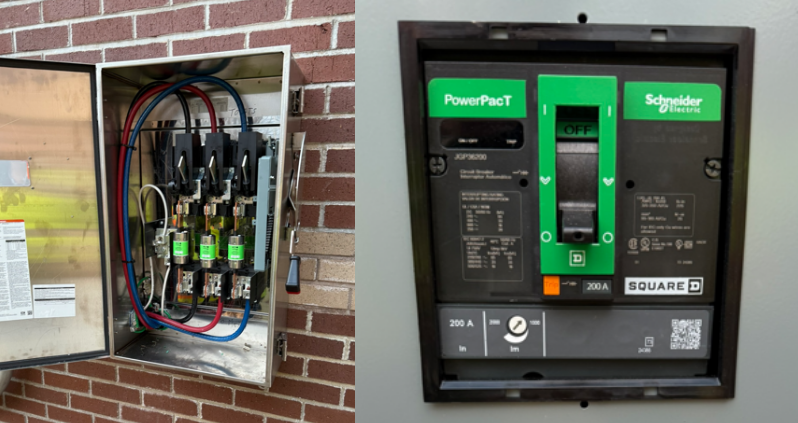 Figure 3: Overcurrent protection devices — a fused disconnect switch alongside a molded-case circuit breaker — both designed to interrupt excessive current before conductors and equipment are damaged. Image courtesy: CDM Smith
Circuit breakers: the reusable twin
A circuit breaker performs the same protective job as a fuse but is electromechanical and reusable, so it can be reset once the fault condition is corrected. That flexibility lowers maintenance cost and is why breakers dominate modern panels.
Breakers carry two separate mechanisms, each aimed at one fault type:
- Thermal trip for overloads: sustained overcurrent heats a bimetallic strip made of two metals with unequal thermal expansion rates. The strip bends and mechanically trips the contacts. Because the strip must heat and deform first, this is a time-delayed path — harmless temporary current spikes pass through, while sustained overloads still trip the device.
- Magnetic trip for short circuits: the enormous surge of a short circuit passes through a solenoid, or electromagnet, whose field instantly pulls an armature. This bypasses the thermal path and trips the contacts in milliseconds, which is what limits the damage from catastrophic faults.
Breakers are then scaled and specialized according to the fault current they must interrupt:
- Molded-case circuit breakers: rugged insulating cases used on main distribution feeders and heavy industrial loads, often with adjustable trip settings for a specific application.
- Miniature circuit breakers: compact versions for lighting panels, generally without adjustable settings.
- Air, gas and vacuum circuit breakers: high-voltage transmission and distribution devices that extinguish the arc using techniques such as SF₆ gas or a vacuum.
Compared with fuses, breakers add sophistication: customizable selective coordination through settings, plus integrated ground-fault and arc-fault protection. The price of that capability is greater complexity and cost, along with periodic testing to confirm the mechanical trip mechanism is still sound.
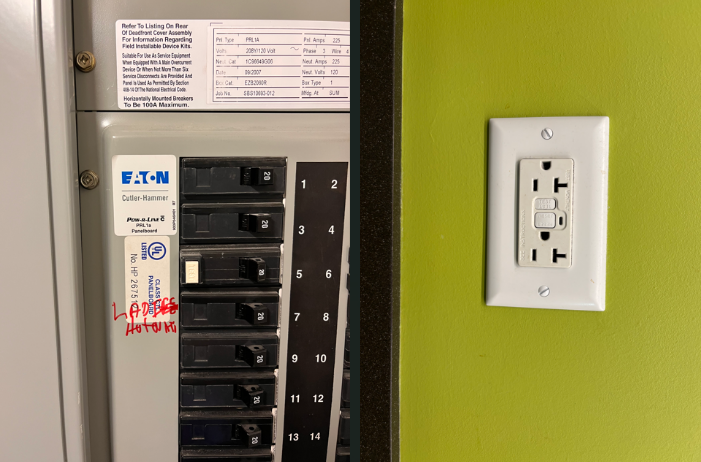 Figure 4: Layered personnel protection in practice — an upstream arc fault circuit interrupter breaker feeding a downstream ground fault circuit interrupter receptacle. Image courtesy: CDM Smith
Layer two: three devices that protect people and electronics
Commercial and industrial settings, and increasingly modern homes, need defense against hazards that overcurrent devices alone do not cover. Specialized detection and diversion equipment now forms the second tier of that defense.
- Ground fault circuit interrupters (GFCIs) compare the current flowing into a circuit with the current flowing out. A small imbalance — typically 4 to 6 milliamperes — triggers a power cutoff, keeping current from passing through a person or an unintended grounding path. Wet or damp rooms such as bathrooms and kitchens are exactly where these devices matter most.
- Arc fault circuit interrupters (AFCIs) target fire risk from damaged wiring or loose connections. They analyze current waveforms and pick out high-frequency components, typically in the 40 to 100 kilohertz range, that signal series or parallel arcing, then disconnect power when a hazardous arc is identified.
- Surge protection devices (SPDs) clamp damaging voltage spikes from lightning strikes or utility switching by diverting excess energy away from sensitive equipment. They are specified by nominal discharge current, voltage protection level and maximum continuous operating voltage, and are typically installed at service entrances or distribution panels so that everything downstream benefits.
Applied together, these three cover ground faults, arc faults and overvoltage on top of the overload and short-circuit protection from layer one — a genuinely layered defense for sensitive electronics.
Layer three: the medium-voltage backbone you never see
Medium-voltage systems, generally operating between 1 and 35 kilovolts, form the spine of electrical distribution. They sit as the intermediary between high-voltage transmission and low-voltage use, carrying reliable power to industrial and commercial facilities. At that level, circuit protection is not just a safety measure; it is a requirement for grid stability and for protecting expensive equipment.
Why a single fault can travel
Utility grids and power plants handle immense loads, so fault isolation is critical. One fault on a medium-voltage circuit can cascade through the distribution system, creating outages and equipment damage. Breakers, fuses, relays and other protective devices act as the first line of defense by limiting fault currents and isolating the affected section, which prevents critical failures in generators, transformers and switchgear, reduces repair costs and supports ongoing utility plant operations.
Protective relays: the brains of the operation
Protective relays continuously monitor current, voltage and frequency, and isolate the circuit when a fault appears. Digital relays add fault location, event logging, remote communication and selective coordination, so that only the faulted circuit is dropped and service is preserved everywhere else. If relay operation is inaccurate, the whole protection scheme becomes slow and ineffective, putting equipment and personnel at risk.
Selective coordination: who trips, and who waits
Selective coordination makes devices operate in a logical sequence, blending technical discipline with practical skill. Done properly in a medium-voltage system, downstream devices clear localized problems while upstream devices stay closed. Engineers build this using time-current curves and selective settings, trading speed against reliability and safety. Poor coordination produces unnecessary outages, extra stress on equipment and a higher risk of power interruptions.
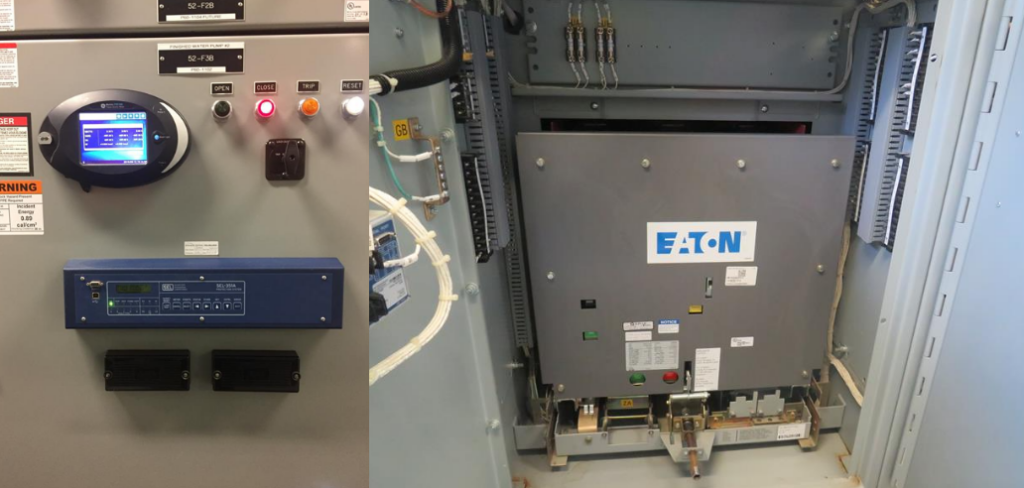 Figure 5: Medium-voltage switchgear with a digital protective relay and a draw-out breaker working together to detect faults, isolate only the affected circuit and keep the distribution system running. Image courtesy: CDM Smith
Self-healing grids
As distribution networks transition to smart grids, automation and real-time analytics enter protection directly. Self-healing grids combine sensors, relays and automated switches to detect a fault and reroute power within several cycles, drastically shortening outage durations and improving resilience against natural disasters or equipment failures. Layered with smart-grid technology, this also opens the door to preventative maintenance and more flexible load management, which points toward a more sustainable and efficient energy infrastructure.
Four common misconceptions
- "A breaker I can reset means nothing is wrong." The thermal path is deliberately time-delayed so harmless spikes pass through; a device that operates repeatedly is reporting a condition worth investigating rather than a minor inconvenience.
- "The fuse held, so I am protected." Fuses and breakers address overcurrent. Electric shock from a ground fault, arcing from damaged wiring and voltage spikes each need their own dedicated devices.
- "Coordination only matters for utilities." The same layered idea appears inside ordinary buildings, such as an upstream AFCI breaker supplying a downstream GFCI receptacle.
- "Surges only happen in thunderstorms." Utility switching events produce overvoltage as well, which is why SPDs are placed at service entrances and distribution panels rather than only at the point of use.
A practical checklist for readers
- Open the panel and note which breaker serves which area, and whether any devices are marked as arc fault protection.
- Check that receptacles in bathrooms, kitchens and other damp locations are the ground-fault-protected kind, since that is where shock risk concentrates.
- If a circuit keeps operating because too many devices share it, redistribute the load rather than relying on repeated resets.
- Ask whether surge protection at the service entrance or distribution panel fits your mix of sensitive electronics.
- When a fuse blows, replace it with the correctly rated type — and record what was running at the time, because that context is what professionals need.
- For facility, plant or multi-unit readers, confirm that upstream and downstream devices are intended to operate in a sequence, and request that documentation.
- Treat any device that needs periodic testing, such as a mechanical breaker, as part of a maintenance schedule rather than as installed-and-forgotten hardware.
FAQ: the questions readers ask most
Is a fuse better than a circuit breaker?
They achieve the same protective goal by different means. Fuses are simple, reliable, cost-effective and fast during short circuits, but must be replaced after clearing a fault. Breakers reset after the issue is addressed and add adjustable settings plus integrated ground-fault and arc-fault features, at higher complexity, cost and a need for periodic testing.
Why does a GFCI care about such a tiny imbalance?
Because the danger to a person is not total current but the current leaking onto an unintended path. Detecting an imbalance in the milliamperes range and cutting power quickly is what prevents that leakage from passing through a body.
How is an arc fault different from a short circuit?
A short circuit is a low-resistance connection between conductors that sends current surging instantly. An arc fault is a discharge through air caused by damaged wiring or loose connections; AFCIs catch it by reading the waveform for high-frequency signatures rather than by waiting for a massive current rise.
Do surges always destroy equipment on the spot?
Overvoltage spikes from lightning or utility switching can instantly destroy sensitive electronic components. SPDs limit those spikes by diverting excess energy away from the equipment they protect.
What is a self-healing grid in plain terms?
It is a distribution network that finds a fault and reroutes power automatically within several cycles, so fewer customers lose supply and service is restored faster after disasters or equipment failures.
Why the quiet layer deserves attention
Read as a system rather than as a box of parts, circuit protection is the reason reliability is invisible: overloads, short circuits, ground faults, arc faults and overvoltage are each met by a device designed for that specific threat, and fuses, breakers, GFCIs, AFCIs, SPDs and protective relays operate in coordinated layers to isolate faults, keep service continuous and shrink the hazard zone. As installations get more complex and automated — from a single receptacle to a self-healing medium-voltage network — the strength and intelligence of that unglamorous layer is what the power-dependent future actually rests on.