
MyTechDailyNews General Read: China Smartphone Share Splits as Premium Phones Rise and Foldables Await a Next-Quarter Turn
For general tech readers, the latest China smartphone market update reads less like a simple winner-takes-all story and more like a split-screen report: established brands are moving in opposite directions, price tiers are rearranging, and foldable devices remain the one segment that still needs a fresh catalyst. MyTechDailyNews breaks down the share, price, and product-line changes without turning the story into a component-supply-chain lecture.
Brand share: leaders, laggards, and a different kind of winner
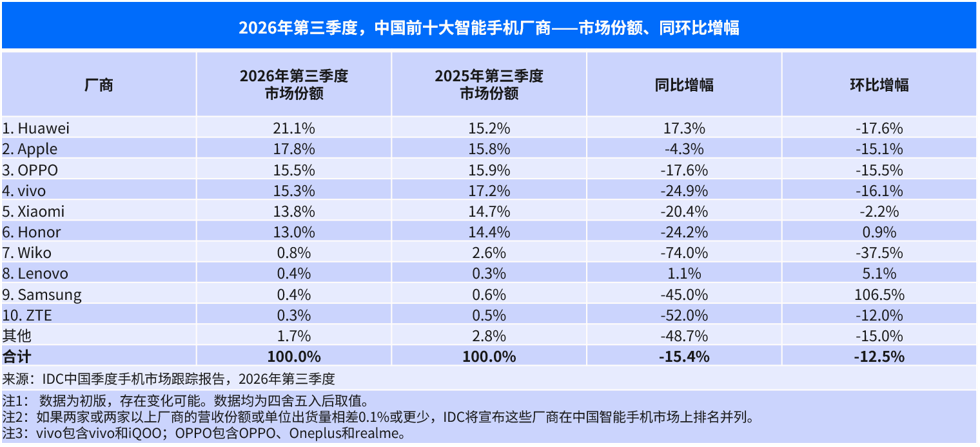
Huawei is the share leader in China at 21.1%, and its shipments recorded double-digit growth. Apple follows in second place with 17.8%; its new models were more popular than expected, but a reduced model count pushed shipments down slightly. OPPO holds 15.5% and has remained in the top three for four consecutive quarters. In the above $600 premium market, OPPO shipments achieved three-digit year-on-year growth for three consecutive quarters.
vivo sits in fourth place with 15.3%, and it ranks first among Android brands in the above $600 segment. Xiaomi is fifth with 13.8%; it has returned to third place in the foldable market and is in first place in both the above $1,000 Android market and the below $100 price segment. Honor has 13.0% and is the only major vendor with positive shipment growth versus the previous quarter. The Magic9 series is the only mainstream new flagship this year with a significant first-sale gain compared with the prior generation.
| Brand | Reported share | Reader-relevant signal |
|---|---|---|
| Huawei | 21.1% | Leads China smartphone share, with double-digit shipment growth. |
| Apple | 17.8% | Stays second; stronger new-model reception did not offset fewer models. |
| OPPO | 15.5% | Top three for four consecutive quarters; three-digit year-on-year growth for three consecutive quarters in the above $600 segment. |
| vivo | 15.3% | Fourth; ranks first among Android brands in the above $600 segment. |
| Xiaomi | 13.8% | Third in foldables, with first place in above $1,000 Android and below $100 segments. |
| Honor | 13.0% | Only major brand with positive quarter-on-quarter shipment growth; Magic9 series stood out in first-sale momentum this year. |
Price structure: volume down, prices up
The China smartphone price mix is moving into a clear "volume down, prices up" pattern. The above $600 premium category expanded by 7.1 percentage points year on year, while the $400-$600 midrange and upper-midrange category increased by 4.6 percentage points. At the same time, the below $200 low-end category lost 13.9 percentage points of share. With cost pressure shaping the market, the overall structure is shifting faster toward midrange and premium devices.
Foldable phones: another quarter of decline, then a possible turn
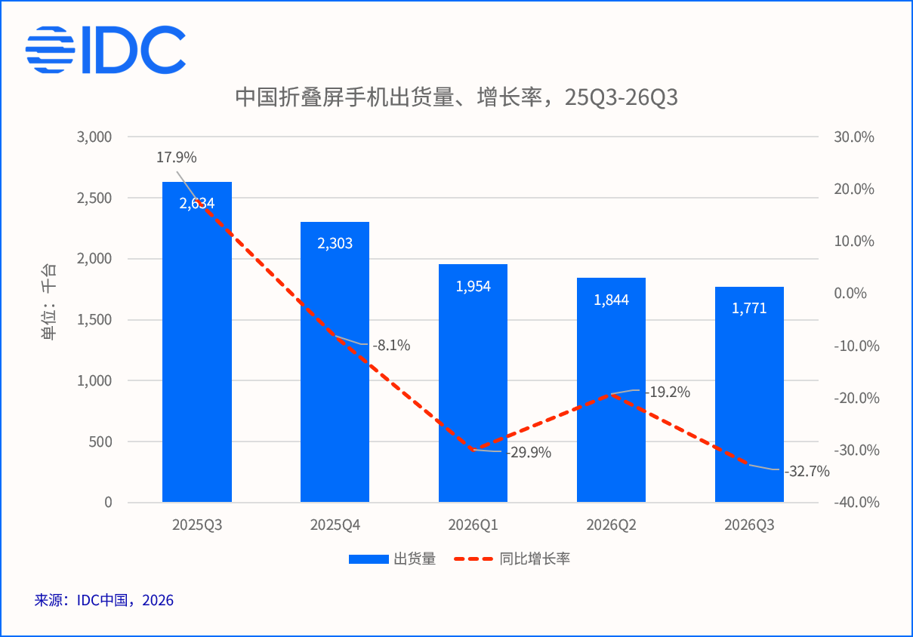
China foldable phone shipments in Q3 reached 1.77 million units, down 32.7% year on year, extending four consecutive quarters of year-on-year decline. Huawei leads this category with over 70% share. Samsung is second with 8.0%, while Xiaomi is third with 6.4%. With Apple entering the foldable category, and more brands expected to introduce wide-foldable new products in the first half of 2027, the market is projected to stop falling and begin recovering from the next quarter.
Market outlook: high costs and a later recovery window
IDC expects storage and component costs to stay elevated over the coming quarters. The research firm does not see the market becoming strong in the fourth quarter of 2026, and it expects the overall decline to continue through most of 2027. Once buyers gradually adapt to the new price structure and new replacement cycles arrive, other brands will gain more market opportunities.
Key changes checklist
- Huawei leads with 21.1% share and shows double-digit shipment growth.
- Apple remains second at 17.8%, despite a slight shipment decline caused by fewer models.
- OPPO stays in the top three for four consecutive quarters and records three-digit year-on-year growth for three consecutive quarters above $600.
- vivo is fourth at 15.3% and ranks first among Android brands in the above $600 category.
- Xiaomi is fifth at 13.8%, returns to third in foldables, and holds first place in both above $1,000 Android and below $100 segments.
- Honor has 13.0% and is the only major brand with positive quarter-on-quarter shipment growth; the Magic9 series showed this year's most notable mainstream flagship first-sale increase.
- The price structure is showing volume down, prices up: premium and upper-midrange shares grow while low-end share falls sharply.
- Foldables remain weak in Q3, at 1.77 million units down 32.7%, but Apple entry and wider foldable launches in the first half of 2027 could support a turn from the next quarter.
- IDC points to elevated storage and component costs in the coming quarters, with limited improvement in the fourth quarter of 2026 and continued decline through most of 2027.
FAQ: common reader questions about the China smartphone split
Which brand is leading the China smartphone market?
Huawei is the leader, with 21.1% share and double-digit shipment growth.
Why did Apple remain second if new models were welcomed?
Apple's new models performed better than expected, but a smaller model lineup led to a slight shipment decline. Apple still keeps second place with 17.8%.
Which price bands are growing?
The above $600 band grew by 7.1 percentage points, and the $400-$600 band grew by 4.6 percentage points.
Which price band is losing the most?
The below $200 band lost 13.9 percentage points, showing a clear contraction in low-end share.
Why are foldables still under pressure?
China foldable phone shipments in Q3 were 1.77 million units, down 32.7% year on year, marking four consecutive quarters of decline. Huawei still leads the segment with over 70% share.
What could make foldables recover?
Apple's entry and more brands launching wide-foldable new products in the first half of 2027 are expected to help the market stop falling and recover from the next quarter.
What does IDC expect next for the overall market?
IDC expects storage and component costs to remain high over the coming quarters. It sees little improvement in the fourth quarter of 2026 and continued decline through most of 2027, with later openings for other brands as buyers adjust to new prices and new replacement timing.
Common misconceptions
- Misconception: Premium growth means every brand is getting stronger at once. Reality: Huawei, Apple, OPPO, vivo, Xiaomi, and Honor show different directions; some are growing, while others are constrained by model lineup or category pressure.
- Misconception: The low-end phone market is stable because low prices are common. Reality: The below $200 segment lost 13.9 percentage points, indicating major contraction in that band.
- Misconception: Foldable phones are already a mature mainstream category. Reality: China foldable phone shipments in Q3 were still down 32.7% year on year, after four consecutive quarters of decline.
- Misconception: Apple's entry will change foldables immediately. Reality: The expected recovery is framed from the next quarter, with wider foldable launches by more brands in the first half of 2027.
- Misconception: Cost pressure only affects flagship phones. Reality: IDC expects storage and component costs to remain high over the coming quarters, influencing the broader market through the fourth quarter of 2026 and most of 2027.
Action suggestions for readers following the market
- When comparing phones, place each model into the relevant price band first: above $600 premium, $400-$600 mid-to-upper, or below $200 low-end.
- Treat premium growth as a clue that buyers and brands are moving toward higher-priced devices, but also check the vendor's specific share trend before assuming every brand benefits.
- For foldable shoppers, note that Huawei currently leads with over 70% share in China's foldable segment, while Samsung has 8.0% and Xiaomi has 6.4%.
- If waiting makes sense for your upgrade plan, watch the expected next-quarter change point in foldables and the wider foldable launches planned for the first half of 2027.
- Remember that market timing is still under pressure: storage and component costs are expected to remain high over the coming quarters, and the broader decline is projected to continue through most of 2027.
The practical takeaway is that the market is not moving in one uniform direction. Premium and upper-midrange bands are expanding, low-end share is contracting, and foldables remain the most fragile category even as Apple entry and 2027 first-half wide-foldable products point toward a recovery from the next quarter.