
MyTechDailyNews General Explainer: iPhone Duo in China Spec Dispute Is Mostly About Rules, Not Apple Cutting Features
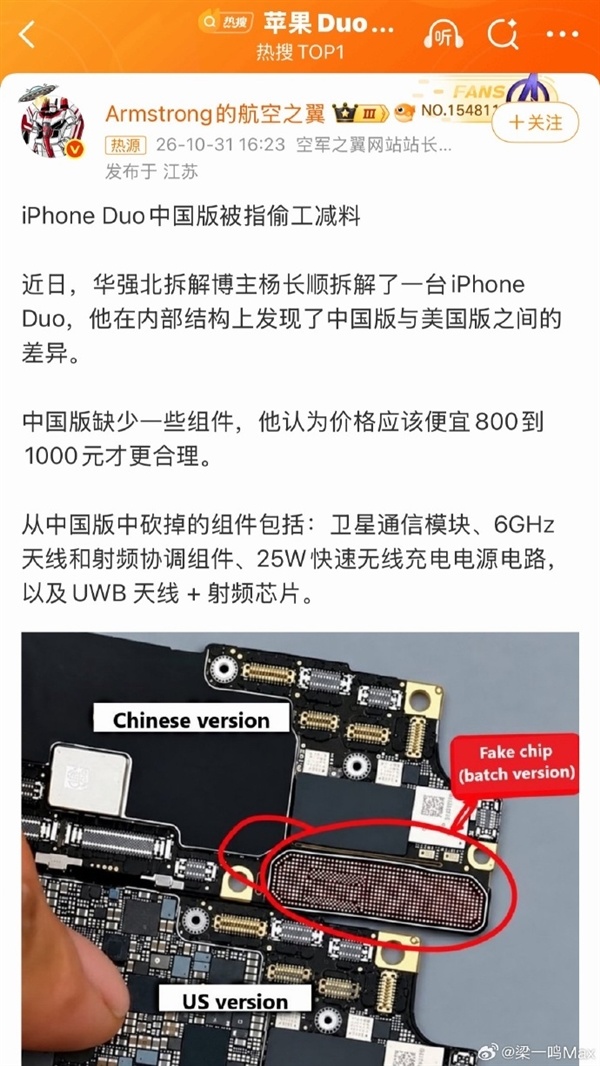
In this MyTechDailyNews General explainer, the recent conversation around the China edition of Apple iPhone Duo is worth a calmer look. Many readers want a quick way to separate real product differences from exaggerated online claims. A closer review of the public information suggests that a large part of the dispute comes from a misunderstanding of Apple's position. Several differences often described as reductions in hardware are better explained by local legal and regulatory requirements.
The core issue in plain language
For general readers, the question is simple: Does Apple remove features in the China model to save cost, or does the product follow a different set of rules after the same features are built? The available information points toward the second explanation for many of the contested items. It does not mean every variation is caused by the same reason, and it does not turn every rumor into fact. But it does show that the online argument often skips the step between hardware presence, service activation, and regulatory permission.
Apple China official website gives the UWB answer
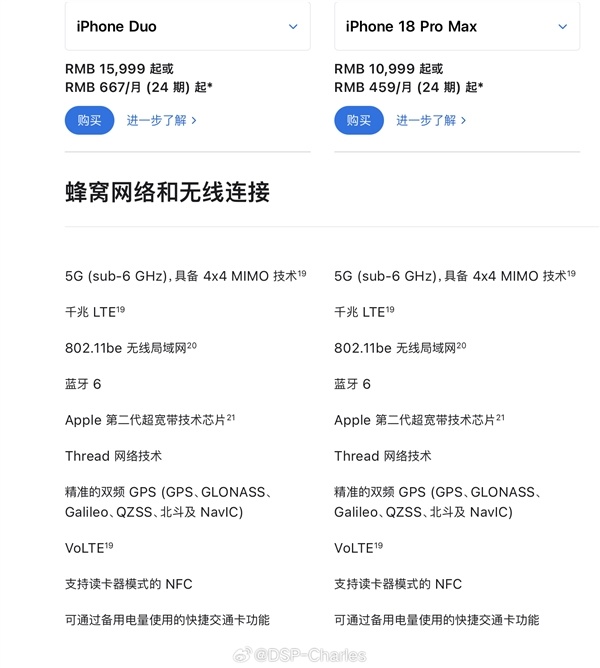
One of the most repeated claims says the China edition does not carry the UWB chip. That claim is contradicted by public specification information. On Apple China official website, the page states that the China edition iPhone Duo uses a second generation ultra wideband technology chip. In other words, the relevant chip is listed as present, and the related function has not been described as removed from the device.
Why teardown differences can still be misleading
A teardown can show that two devices are physically different, but it does not automatically prove why they are different. The original review of China and United States models found several functional gaps. In many cases, the explanation is not Apple choosing a weaker part for the China edition, but the need to follow rules that apply to wireless communication, satellite services, or charging frequencies.
Satellite communication: the hardware point is different from the service point
The United States model can send a SOS emergency signal and share its real time location in places where normal mobile signal is absent. The China edition is described as containing a related hardware module. The difference is service availability. Because the relevant communication rules do not allow the same satellite service to be enabled in China, users may not experience the feature even though the hardware is not said to be absent.
Wi-Fi 7 bands: 6GHz is the most visible speed difference
Another technical point that often gets misunderstood is Wi-Fi band availability. The China edition is restricted by local radio management rules. For Wi-Fi 7, it can only use the common 2.4GHz and 5GHz bands, while the higher 6GHz band cannot be opened for use. This is why wireless transfer speed tests can show a lower result than the United States model, which is described as able to use the full band set.
MagSafe charging: 15W and 25W are not just marketing numbers
MagSafe wireless charging is also often cited as evidence of difference in cost cutting. The China edition reaches a maximum of 15W in the related specification. The United States edition reaches a maximum of 25W. The review links this parameter gap to domestic wireless charging frequency rules. The claim should be read carefully: it says the gap is not simply Apple withholding better charging hardware for the China market.
Quick checklist for readers before repeating claims
- Look first at Apple China official website or Apple official website for the model specification page.
- Separate three layers: hardware existence, service activation, and regulatory permission.
- Do not treat a teardown photo as proof of intent. Physical difference and legal reason are different questions.
- Check band names carefully: 2.4GHz, 5GHz, and 6GHz do not behave the same way.
- Check charging wording: maximum power numbers such as 15W and 25W can depend on local rules.
Common misconceptions
- "No 6GHz Wi-Fi means Apple removed the radio capability." The public explanation given is regulatory band limitation, not a general statement that the feature chip was taken away.
- "Lower satellite visibility in China means the hardware must be missing." The reviewed information says the hardware module is present, while service enablement is constrained by communication rules.
- "15W MagSafe compared with 25W proves Apple cut charging parts." The argument in the original review is that the difference comes from frequency rule requirements, not solely from Apple reducing hardware.
- "The UWB chip debate is settled by teardown rumors." The official specification wording on Apple China official website is a stronger point: it identifies the second generation ultra wideband technology chip.
FAQ: how ordinary readers can understand this
Q1: Are the China edition and the United States edition identical?
A1: No. The discussed differences can be seen in satellite service, Wi-Fi 7 band availability, and maximum MagSafe wireless charging power. However, the central clarification is that many differences are described as regulation based, not proof that Apple removed hardware to save cost.
Q2: What should I check before deciding a phone is 'cut down'?
A2: Check Apple China official website, then distinguish whether the issue is absent hardware, disabled service, or an unavailable frequency band. For Wi-Fi 7, note that 2.4GHz and 5GHz are permitted for the China edition in this discussion, while 6GHz is not opened. For charging, compare 15W with 25W as a specification outcome under local rules.
Q3: Does this mean every difference is caused by regulation?
A3: No. The reviewed information says many differences are linked to regulations, especially the UWB rumor, satellite service, Wi-Fi bands, and MagSafe power. It does not turn all claims into proof of cost cutting, and it does not say the two versions have no differences.
Action suggestions for tech readers
- Save the official specification page for the exact model before quoting another user's screenshot.
- If you compare phones across markets, write down the market name, model name, chip label, band label, and maximum charging power.
- When reporting speed or charging differences, mention that 6GHz restrictions can affect Wi-Fi 7 test results.
- When discussing satellite features, separate "can the device use the service?" from "does the device contain a related module?"
- If you are shopping by features, check whether the features you care about are actually allowed and active in your local market, not just whether the hardware appears inside the phone.
The practical takeaway is less dramatic than many online posts. The China edition of Apple iPhone Duo may behave differently from the United States model in satellite service, Wi-Fi 7 band use, and MagSafe charging power. Yet the reviewed explanation says the UWB chip issue is not a removal story, because Apple China official website lists the second generation ultra wideband technology chip. For general readers, the useful habit is to ask three questions: is the hardware listed, is the service permitted, and is the band allowed. That framework turns a confusing rumor about "missing features" into a clearer technology story about regulation, market rules, and user experience.