
MyTechDailyNews: Inside the STAR 50 Reset — How China’s AI Stock Pullback Touches Everyday Tech
For everyday tech readers, the latest shakeout in Chinese artificial intelligence shares is less about one ticker and more about the signal sent to a broad market: the mainland STAR 50 index, which groups together AI and semiconductor leaders, fell about 40% in nearly four months. The reset happened fast: in less than four months, roughly US$480 billion evaporated. That kind of reset matters beyond finance because it connects policy narratives, retail participation and cross-border technology supply chains.
The slide ended a gain that had continued for two years. That earlier move began when economic-stimulus promises lifted prices, and it also stalled Beijing’s attempt to break a long cycle of sharp rallies followed by sharp crashes and build a slower bull market. The mainland blue-chip CSI 300 index has fallen about 20% from its June high.
“The stock market later turned into a speculative crazy bull run,” said Dong Baozhen, a fund manager based in Beijing. “Now we see the bubble bursting.”
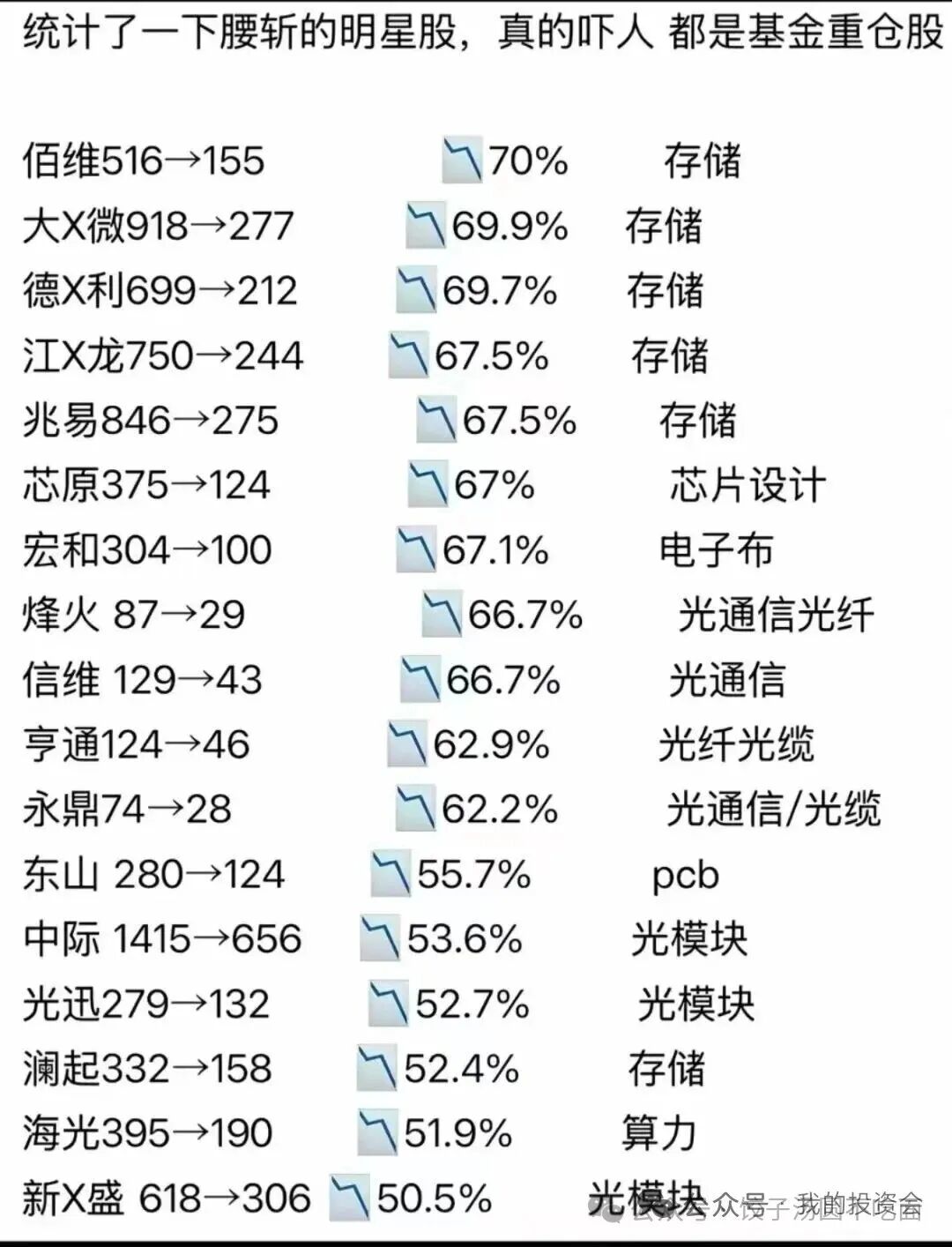
The reversal was steeper in China than in many Western markets and than in other Asian markets because the preceding advance had been stronger. In the United States, AI stocks were only lightly pricked, and the Nasdaq index is 6% below the historic high set three weeks ago. The selling in China had no single obvious trigger, but traders pointed to high prices, tax bills and the threat that the United States or other countries could bar Chinese equipment from entering data centers.
Goldman Sachs data cited in the report puts AI stocks at 42% of China’s market capitalization and 57% of turnover across mainland A shares and Hong Kong H shares. In a retail-heavy market, that concentration means few investors can step aside while prices compress.
Favorites of retail investors have fallen sharply. Unitree Robotics, a robot maker, has seen its share price halve since it began trading in August, even though it was oversubscribed by 8000 times when it listed. Changxin Memory Technologies, a chipmaker, lost more than a quarter of its market value in the past month. MetaX Integrated Circuits and Moore Threads, two chip firms that rose 700% and 400% on their first trading days last year, have also halved since July.
Chen Wensheng, a small business owner and investor in Hainan, said he entered during the rally because he believed official circles supported companies such as Unitree Robotics, whose shareholders include funds with state-linked backgrounds. He and friends are now absorbing losses. The sense of frustration among investors who chased Beijing-backed themes can push them toward defensive assets and may slow equity financing for technology companies. Shares of Zhongji Innolight and Eoptolink, makers of optical components, are about 60% below their June and July highs, partly because Washington is pushing to ban these once-popular firms from supplying United States data centers.
Valuation still sits at the center of the debate. The STAR 50 index’s price-to-earnings multiple remains about 100 times, down from a level near 250 times, while Hong Hao, partner and chief investment officer at Hao Capital Management in Hong Kong, pointed to the Nasdaq 100 index’s roughly 30 times multiple as a contrast. That gap fuels worry that the sell-off could deepen before conditions improve.
“What is happening now will make many companies seeking listings pause,” Hong Hao said.
The boom and its aftermath stand in contrast with regulatory moves aimed at lifting returns, reducing volatility and curbing leverage and high-frequency trading. Investors with state-linked backgrounds sold during the advance to limit gains. Reuters sent questions last week, and the China Securities Regulatory Commission did not immediately reply. The regulator’s website showed that Chairman Wu Qing had met market participants earlier this month to hear suggestions for improving the capital market.
“Overemphasizing 'technology content' — meaning the weight of technology companies in major-index market capitalization — can cause capital behavior to deviate and even distort,” said Leo Wang, a partner at Qianchuang Capital in Beijing. “This created serious bubbles in some sectors while severely draining others.”
Not everyone sees only damage. HSBC research noted that, although Asian funds were generally sellers over the past three months, they remained overweight China. Goldman Sachs’ updated recommendation list published early this month included dozens of Chinese AI stocks, such as Zhongji Innolight and Changxin Memory Technologies. William Bratton, a securities strategist at BNP Paribas, said the market has also offered buying opportunities for cautious investors. Still, many mainland participants are watching other sectors or waiting for lower valuations before stepping back in.
The longer argument is harder. “Just like all other Chinese manufacturers, (chipmakers and AI suppliers) will ultimately fall into price wars,” said Wang Zhuo, a partner and fund manager at Zhuozhu Investment Management in Shanghai. “No exceptions. All bubbles burst eventually.”
Quick checklist: the facts to keep straight
- The main index at the center of the story is the mainland STAR 50, a benchmark associated with artificial intelligence and semiconductor leaders.
- The measured decline is about 40% in nearly four months, with roughly US$480 billion in value erased.
- The pullback ended a two-year advance and put pressure on Beijing’s goal of a slower bull market.
- The CSI 300 index is down about 20% from its June high, while the Nasdaq index is down 6% from the historic high set three weeks ago.
- Goldman Sachs estimates AI stocks account for 42% of China’s market capitalization and 57% of turnover in mainland A shares and Hong Kong H shares.
- Individual stories include Unitree Robotics, Changxin Memory Technologies, MetaX Integrated Circuits, Moore Threads, Zhongji Innolight and Eoptolink.
What the numbers actually show
| Signal | Reading for general tech readers | Anchor from the story |
|---|---|---|
| STAR 50 reset | A concentrated AI and semiconductor trade became expensive enough that a short, sharp unwind could move the entire narrative. | About 40% decline in nearly four months; roughly US$480 billion evaporated. |
| Valuation gap | The index can fall a lot and still look expensive next to a global benchmark. | P/E about 100 times, down from near 250 times; Nasdaq 100 index around 30 times. |
| Market participation | When AI names dominate trading, retail sentiment can spread losses and caution quickly. | 42% of China market cap and 57% of A-share and H-share turnover. |
| Policy and capital formation | A stalled slow bull may make it harder for policymakers to channel savings into technology financing. | Beijing’s slow-bull effort stalled; listing pace concern cited by Hong Hao. |
| Cross-border pressure | Supply-chain and export-control signals can re-rate once-popular hardware suppliers. | Washington pushing restrictions on supplying United States data centers; Zhongji Innolight and Eoptolink about 60% off June and July highs. |
FAQ: what this tech-market shift means for ordinary readers
What is the STAR 50 index?
It is a mainland benchmark that groups together prominent technology companies, especially names tied to artificial intelligence and semiconductors. Because those names dominate the index, an AI-stock decline can look like a technology-market reset.
Why did the decline draw attention?
Because it ended a two-year advance and put pressure on a policy aim: creating a slower, more stable bull market rather than repeating violent swings. The story also connects household savings, financing for technology firms and global concerns about AI demand and export restrictions.
Are the named companies all equally affected?
No. The report highlights different pressures. Unitree Robotics fell after a retail-driven debut; Changxin Memory Technologies and chip names linked to high-profile listings saw steep declines; Zhongji Innolight and Eoptolink are tied to data-center supply-chain risk, partly because Washington is pushing restrictions.
Does the sell-off mean the AI theme is finished?
The article does not make that claim. It says valuation concerns, speculative excess and cross-border risk triggered caution. It also cites HSBC, Goldman Sachs and BNP Paribas views that investors may find selective opportunities even while others wait for lower prices.
What should readers watch next?
The useful signals are not single daily moves. They include valuation levels, regulatory tone, policy meetings, export-control developments, listing pace and whether capital flows away from speculative technology names toward defensive assets or other sectors.
Common misconceptions
- Misconception: one index move explains the whole tech story. Reality: the report ties the reset to valuation pressure, market structure, policy support and supply-chain threats.
- Misconception: official backing guarantees investor returns. Reality: investors such as Chen Wensheng followed Beijing-supported themes and still suffered losses.
- Misconception: global tech markets are unaffected. Reality: the United States saw a 6% Nasdaq pullback from its recent historic high, though China’s earlier gains were larger.
- Misconception: falling prices automatically create bargains. Reality: the STAR 50 still traded near 100 times earnings, down from near 250 times, so some investors continue to wait.
- Misconception: only speculative funds care. Reality: Goldman Sachs shows AI stocks account for a large share of both market capitalization and turnover, touching retail-heavy participation.
Action suggestions: how to follow the story without overreading it
- Treat index moves as a signal about market structure, not proof that every technology company is failing. The STAR 50 is concentrated in AI and semiconductor names, so its swings can amplify sector-level fear.
- Keep valuation in view. The STAR 50’s price-to-earnings ratio of about 100 times, down from near 250 times, is the central number readers should compare with global benchmarks such as the Nasdaq 100 index at about 30 times.
- Separate narrative drivers from one-day noise. The story highlights tax bills, high prices, and fears that Chinese devices could be barred from data centers; none of these can be read as a single isolated event.
- Watch financing consequences. If investors move toward defensive assets and companies pause listings, the pipeline that supports technology capital raising may slow.
- Follow policy communication as a practical signal. The regulator’s public meetings and emphasis on returns, volatility, leverage and high-frequency trading help explain the shift from speculative fever to caution.
- Read contrarian reports with conditions attached. Goldman Sachs, HSBC and BNP Paribas are mentioned as still seeing value in parts of the market, but many mainland investors are still waiting for lower valuations.
For a general tech audience, the STAR 50 reset is best read as a stress test for a popular investment theme: when AI and semiconductor names become a dominant share of a market, optimism can compress valuations, and a short decline can quickly change the conversation from growth potential to risk, policy and funding. The story is not only about paper losses; it is about whether China’s technology ambition can move from speculative excitement to durable financing.