
MyTechDailyNews General: Calix Subscriber Agent Turns CommandIQ Into a Conversational Wi-Fi Helper for Connected Homes
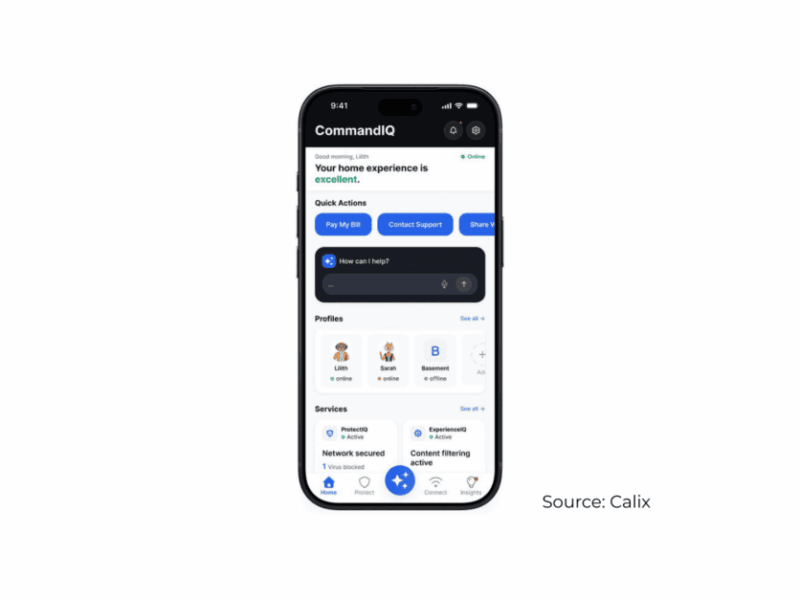
For general tech readers on MyTechDailyNews, the launch of Subscriber Agent inside CommandIQ reads less like a narrow telecom update and more like a small change in the way connected homes are handled. The assistant is offered by Calix, and it lets people use voice or text to manage Wi-Fi troubleshooting, inspect connected devices, adjust settings, create guest networks, review parental controls, and work with SmartHome services. The announcement was previously framed for eeNews Europe readers as an industry development; for everyday consumers, the more useful question is what changes when network control becomes conversational.
The assistant is embedded in the refreshed CommandIQ app, which is already used by millions of subscribers and can be customized with each service provider branding. Subscriber Agent runs on the Calix One platform and uses information about a customer network and connected devices to tailor assistance to the home environment. In other words, the help is not generic advice about routers in the abstract; it is aimed at the devices and conditions in that specific household.
What Changes When Help Is Inside the Network App
Home networking problems often feel awkward because the user must translate the issue into the right menu. A person may not know whether to open device settings, security alerts, parental controls, or guest access. Subscriber Agent changes that interface pattern by accepting requests in conversation form. A user can ask the assistant to identify devices connected to the Wi-Fi, investigate unfamiliar activity, or diagnose connectivity problems. The assistant can also recommend changes that improve wireless performance.
Instead of only providing instructions, Subscriber Agent can help users carry out network management tasks directly through the app. That distinction matters for general audiences. A FAQ or manual can explain steps, but the value here is that the explanation can move into an action path within CommandIQ, while the user still sees proposed changes before they take effect.
Tasks That Become More Accessible
The launch is best understood as a collection of household network tasks becoming easier to reach. The following list summarizes the capabilities described around Subscriber Agent:
- Check which devices are connected to the home Wi-Fi.
- Ask about unfamiliar activity on the network.
- Troubleshoot connectivity issues without navigating multiple menus.
- Request suggestions to improve wireless performance.
- Create guest Wi-Fi networks through conversation.
- Generate QR codes for secure guest access and set expiration times.
- Establish recurring internet controls for parental use without moving through multiple settings screens.
- Review proposed changes before they take effect.
- Access SmartHome services such as ExperienceIQ, ProtectIQ, and ScamWatchIQ from the same interface.
How the SmartHome Services Fit Together
Subscriber Agent does not stand alone. It works with existing Calix SmartHome services. ExperienceIQ is positioned as family internet management, ProtectIQ as network security, and ScamWatchIQ as online threat awareness. Through the same interface, users can review security alerts, understand potential risks, and take action.
For a general audience, the practical benefit is continuity. Instead of treating network setup, family controls, security alerts, and scam awareness as separate app journeys, the conversational assistant can bring them into one place. The result is less about AI novelty and more about reducing friction around decisions that already affect connected homes.
A Quick View of the Before-and-After Experience
| Household task | Old pattern | Conversational pattern |
|---|---|---|
| Find connected devices | Open settings and compare device names | Ask what is connected to the Wi-Fi |
| Respond to guest access needs | Navigate guest network options | Create a guest network through conversation |
| Set family controls | Move through multiple screens | Establish recurring internet controls with review |
| Handle alerts | Check separate security services | Use the same interface for SmartHome alerts |
Why Service Providers See a Business Case
For broadband providers, the motivation is not only customer convenience. The goal is to handle more everyday questions through CommandIQ, leaving support teams available for more complex problems. This also creates a route for service providers to lower routine support requests while customers gain more control over connected homes.
Calix is providing training resources, marketing materials, and guidance so broadband operators can introduce the new assistant to subscribers. The company also describes a broader strategic view in this statement: “In the past, digital experiences required people to figure out what to do next. Subscriber Agent changes that. A new conversational AI experience in CommandIQ makes it easy for subscribers to address their everyday issues around their connected homes, simply by asking for help. We are infusing decades of network experience into our AI-native Calix One platform, so we can move beyond smart answers into taking relevant action. For service providers, every subscriber interaction is an opportunity to deliver exceptional value, strengthen loyalty and brand differentiation with experiences subscribers actually crave,” said Juergen Lindner, chief marketing officer at Calix.
The Subscriber Agent launch extends the Calix One platform, which serves more than 1,200 customers.
FAQ
What is Subscriber Agent? It is a conversational AI assistant from Calix that helps people manage home networks by voice or text inside CommandIQ.
What can it help with? The described capabilities include Wi-Fi troubleshooting, inspecting connected devices, adjusting settings, creating guest networks, reviewing parental controls, and working with SmartHome services such as ExperienceIQ, ProtectIQ, and ScamWatchIQ.
Who uses CommandIQ? The refreshed CommandIQ app is used by millions of subscribers and can be customized with each service provider branding.
Why does this matter for ordinary users? Fewer menu steps can mean less friction when household network tasks need attention. The key benefit is making familiar actions easier to reach, not replacing all human judgment about connected-home security.
Why does this matter for providers? Routine questions handled through the assistant may reduce support volume and give customers a simpler path to manage connected homes.
Common Misconceptions
- It is not just a chatbot for generic advice. The described value is that Subscriber Agent can help users carry out network management tasks inside CommandIQ.
- It does not mean the whole connected-home setup becomes invisible. Users can still review proposed changes before they take effect.
- It is not only about speed. Guest networks, parental controls, device visibility, security alerts, and scam awareness all address confidence and control.
- It is not limited to Calix software in isolation. Subscriber Agent works with existing Calix SmartHome services and is built on the Calix One platform.
Action Suggestions for Readers Watching This Trend
- If your provider exposes CommandIQ features through an assistant, ask what can be checked without opening settings. Start with connected devices and guest access.
- Before accepting any proposed network change, review it. The described flow includes checking changes before they take effect.
- Use guest-network expiration as a routine habit for temporary visitors.
- Pair parental-control features with SmartHome alerts, including ExperienceIQ, ProtectIQ, and ScamWatchIQ, rather than treating each as an unrelated task.
- If you work in service operations, treat this as a signal that support reduction and customer-facing AI are converging around everyday network tasks.
The Larger Picture
The most meaningful reading for a general audience is not that AI has arrived in telecom software; it is that conversational layers are starting to reduce the distance between a household problem and the tool that can act on it. Subscriber Agent places voice and text help inside CommandIQ, connects that help to Wi-Fi, SmartHome, and service-provider workflows, and turns routine network questions into more direct interactions.
For users, the takeaway is simple: the future of connected-home management may be less about finding the right screen and more about asking a clear question, reviewing the suggested action, and deciding what should happen next in the home network.