
Two Pallets of Zotac GeForce RTX 5090 Cards Vanished Inside an Airport: Three Guarulhos Workers Now in the Frame
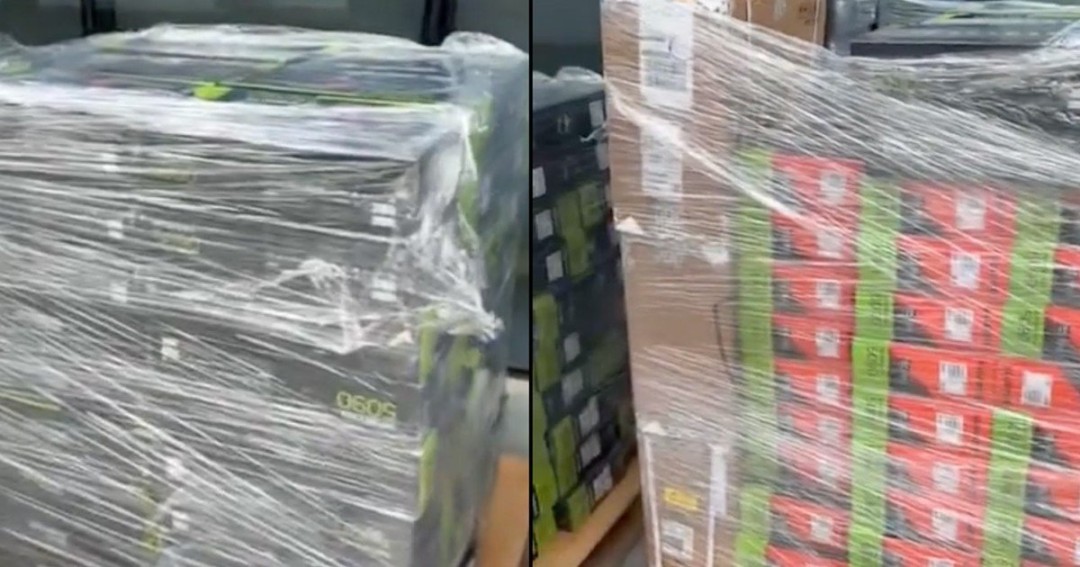
If the most wanted consumer graphics card on the market can slip off a bonded cargo floor without anyone producing a video of it, the weak point in the hardware supply chain is usually not the factory or the courier. It is a badge, a keyboard and a loading dock that nobody is watching. Brazilian authorities are working from exactly that assumption after two pallets loaded with Zotac GeForce RTX 5090 cards, worth about $470,000, disappeared inside Guarulhos airport in São Paulo, and three airport employees became the focus of the inquiry.
Below is a plain-language tour of the case: what has been confirmed, what is still only suspicion, how one online advertisement reopened an investigation that had stalled, and what the episode should change if you are planning to buy a high-end GPU from Brazil this year.
The case at a glance
| Question | What is currently known |
|---|---|
| What went missing | Two pallets of Zotac GeForce RTX 5090 graphics cards |
| Reported value | About $470,000 |
| Where it disappeared | Within the grounds of Guarulhos airport, the main international gateway serving São Paulo, Brazil |
| Who is complaining | Oderço Distribuidora, a Brazilian hardware importer and distributor |
| Where the goods were bought and headed | Purchased in the United States; scheduled for the importer's warehouse in Maringá |
| What reopened the trail | A single listing on the classifieds platform OLX, priced slightly above $6,000, whose photos showed a matching serial number |
| Status of the accused | Three employees are suspects only; no conviction has been reported |
| Separate rumour touched on in coverage | A claim that Nvidia would end the RTX 5090 and shift GB202 silicon to professional cards, which Nvidia has denied |
A shipment that never arrived in Maringá
The story begins as an ordinary import. Oderço Distribuidora bought the flagship cards from suppliers in the United States and arranged for them to reach its warehouse in Maringá, a city in southern Brazil that has become a hub for PC component distribution. The cargo never made that last leg: it vanished while it was inside the airport perimeter, in a zone where handling, customs processing and security screening all touch the same boxes.
What pushed the importer to stop working the problem quietly was the absence of answers rather than the loss itself. Company leadership says government bodies and the airport operator never explained what happened to the goods, and the importer was never shown surveillance footage covering the movement of the pallets. Facing silence on both fronts, the firm decided to describe the loss publicly instead of keeping it inside procurement and customs channels.
One advertisement, one serial number, one deleted listing
The breakthrough did not come from a warehouse sweep. A Brazilian television station was browsing OLX, a classifieds marketplace widely used across the country, and noticed a card being offered for a price slightly above $6,000. The photographs attached to the advertisement showed the serial number clearly enough to read.
When that number was checked against the importer's shipment records, it matched the stolen batch. That single detail turned an unexplained logistics failure into a resale problem: someone was already trying to move individual cards from the pallets into the open market. The advertisement itself carried nothing that would let a buyer or a reporter identify the seller, and the listing was taken down after the story ran, which is why the paper trail currently ends at suspicion rather than proof.
The internal release flag and the truck nobody has found
Reporting around the case points to something more mundane and more worrying than a raid on a warehouse. One of the three employees under suspicion may have used the airport's internal handling system to record the graphics cards as already released, a status entry that would let the cargo pass electronic security checks as though it had cleared normally. Once that flag existed, the two pallets could leave as if they belonged to someone who had signed for them.
From there, the account goes, the freight was loaded onto one truck that investigators have still not located. Everything after the gate is unknown, and the inquiry remains open. Two clarifications matter for readers: the three people named have not been convicted, and no authority has published a figure for how many cards, if any, have been recovered.
The discontinued-card rumour is a different story
Around the same time, a separate claim spread online: that Nvidia was preparing to drop the GeForce RTX 5090 and redirect its GB202 graphics silicon towards professional products. Nvidia has denied it, and the two threads should not be braided together. Cargo going missing at an airport tells you nothing about a chipmaker's roadmap, and conflating them mainly serves whoever wants a scarce model to look scarcer so a slightly-above-market asking price feels reasonable.
Before you pay: a checklist for a heavily discounted flagship card
- Photograph the serial number on the box and on the card before payment, and keep the image; in this case a photo already in the advertisement was what exposed the link to the stolen batch.
- Ask the seller for the original invoice from the authorised importer, and check that the importer name matches a distribution channel that actually handles the model.
- Confirm the exact brand and model: the goods flagged in this case are Zotac GeForce RTX 5090 units, a configuration that is easy to identify and easy to trace.
- Treat vanished listings as a warning. A seller who deletes an advertisement the moment serial numbers are requested is not protecting privacy.
- Refuse cash-only, no-receipt arrangements; insist on a payment method with a record and a receipt carrying the seller's legal name.
- Register the warranty directly with the manufacturer using your own details, not the seller's, and note the purchase batch if the distributor publishes one.
- If you resell components, log serial numbers at intake so you can prove provenance later instead of inheriting someone else's stolen stock.
Common misconceptions about this case
- Myth: the theft proves the RTX 5090 is being retired. Reality: Nvidia has denied the GB202 and production claim; a lost shipment at Guarulhos and a product roadmap are unrelated.
- Myth: the three employees have been found guilty. Reality: they are suspects in an open investigation, and nothing published says any of them has been charged or convicted.
- Myth: a cheap card from a marketplace is a victimless bargain. Reality: until the goods are recovered they belong to Oderço Distribuidora, and a serial number match can undo a purchase months later.
- Myth: airport cargo losses must involve a professional crew and forged paperwork. Reality: the reported mechanism here is one status entry in an internal system, which is why audit trails, not just fences, protect freight.
Frequently asked questions
Has anyone been convicted in this case?
No. Three employees of Guarulhos airport are suspected of taking the cargo. The investigation is still running, and the available reporting does not describe any conviction.
Were the missing cards recovered?
No figure has been confirmed. One card was traced through an advertisement on OLX whose photos showed a serial number matching the stolen batch, but the listing was removed and the seller was not identified, so recovery of the two pallets remains unverified.
Who reported the loss, and what exactly was lost?
Oderço Distribuidora, which bought the merchandise in the United States for delivery to its Maringá warehouse, says two pallets of Zotac GeForce RTX 5090 cards worth roughly $470,000 disappeared inside the airport without an official explanation.
Why did the importer go public?
According to the company, neither the government agencies involved nor the airport operator explained the whereabouts of the goods, and the importer was never shown the surveillance footage of the pallets being moved.
Is Nvidia ending the GeForce RTX 5090?
There is no support for that claim: Nvidia has denied rumours that it would discontinue the model and move GB202 chips to professional cards.
Does this affect GPU prices outside Brazil?
The reported volume is two pallets, which is small next to global supply. The practical effect is on buyers in Brazil, where a batch of flagship cards may surface through resale channels without invoices or warranty coverage.
Action suggestions
If you are shopping for a flagship card
- Buy through an authorised importer or a retailer that can show a distributor invoice, and skip marketplace listings priced in the same band as the OLX advertisement that triggered this investigation.
- Ask for the serial number before you commit; a seller who cannot or will not provide one is not worth the discount.
If you run a small reseller or system-integration shop
- Record serial numbers at intake and keep supplier invoices with each batch, so a disputed unit can be traced to you rather than to a stolen shipment.
- Reputational risk outweighs a short-term margin on hardware with no provenance.
If your company imports or ships high-value electronics
- Write into your contracts the right to review handling footage and system logs when freight disappears inside a terminal.
- Request itemised status history for every release flag applied to your cargo, and reconcile it against your own records.
- Treat the absence of an explanation as an escalation trigger, not as normal administrative delay.
What remains unresolved in this case is not mysterious: the goods, the value, the airport and the number of suspects are all on the record, while the surveillance footage, the whereabouts of one truck and the identity of the seller behind the OLX listing are not. That gap is exactly where buyers get hurt, which is why provenance questions deserve more attention than the price sticker. MyTechDailyNews will keep following the investigation and any recovery of the cards in its General coverage.
Written by Sarah Chen, Tech Daily. Questions or corrections about this story can be sent to hello@techdaily.com.