
MyTechDailyNews How-To: The “Unpushable” Smart Ring Was Pulled From Sale — How to Vet Any Wearable Health Claim in 7 Steps
A smart ring sold on the promise “wear it and you cannot be pushed over” is now offline across major e-commerce platforms, after Cheetah Mobile chairman Fu Sheng published a video taking the demonstrations apart one by one and said that tricks of this kind keep multiplying. If you keep wondering whether a gadget health claim is real, this guide gives you the sequence to follow, the proof to demand, the traps that make demos look convincing, and the concrete steps to take if you already paid.
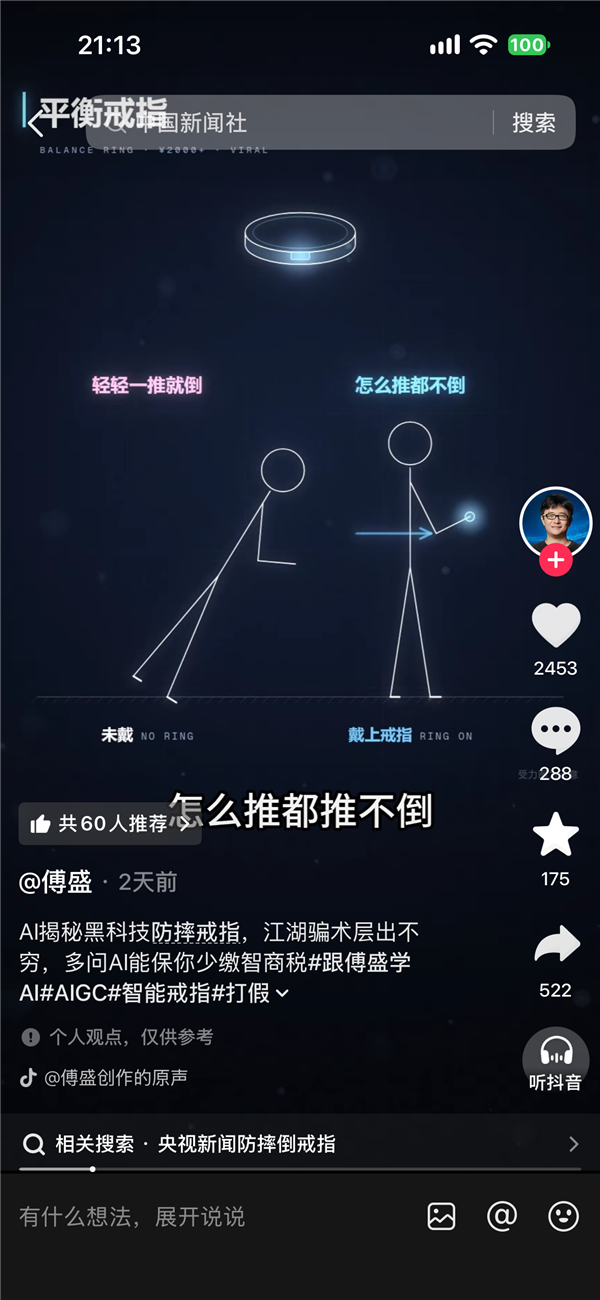
What was the ring actually claiming?
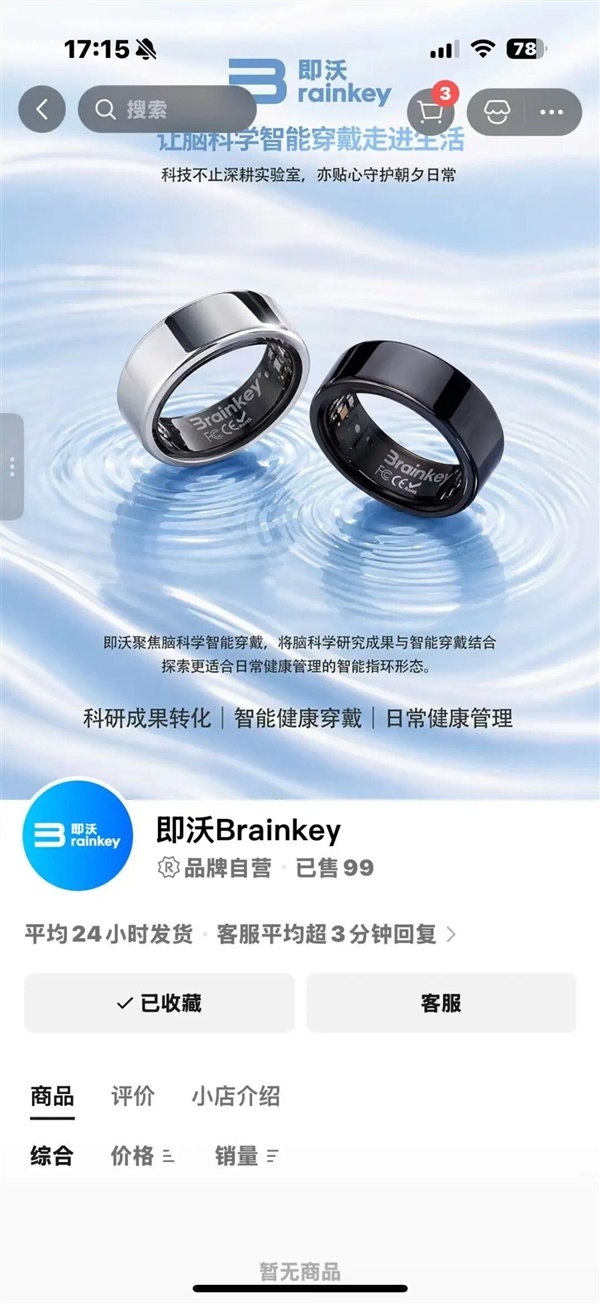
The short answer: a passive, wear-it-and-go balance boost, sold as a consumer wellness gadget rather than a registered medical device — and that distinction is the single most important thing to establish about any health wearable. The product is the Brainkey Jiwo smart ring, previously listed at 2,699 yuan on WeChat Mini Shop. Its description said the ring could “reshape the balance instinct”, describing a transfer of brain-science research into an advanced composite micro-magnetic material that assists the vestibular system’s balance perception and nerve-signal conduction, in order to support the body’s balance and coordination.
Promotion clips showed several older wearers performing the “golden rooster stands on one leg” pose to display the alleged balance effect: put the ring on, stand steadier, resist being pushed. Marketing positioned it as a brain-science new-material wearable focused on optimising human balance perception and sleep experience, weighing only 3.5 grams so the wearer barely notices it. The product also appeared at the Global Digital Trade Expo, where exhibitor records list the party behind it as Wuchan Zhongda Digital Security Technology (Zhejiang) Co., Ltd.
Why did the demo fall apart under review?
Conclusion first: the clips show performance under favourable conditions, not an effect measured against any control. Recently, Fu Sheng released a video combining AI-assisted frame-by-frame review with a live push test, walking through the demo effects one at a time, and bluntly wrote that “con tricks like these never run out”. In the sales material, the ring’s general agent, Yan Shuaishuai, argued that in an experience area a spectator standing on one leg with eyes closed sways visibly less with the ring than without it, and that older wearers become steadier and therefore less likely to fall.
Read as a test protocol, that description has no randomised order, no blinding, no repeated trials and no measurement beyond the observer’s eye. Three known biases do the work: the person being pushed knows when to brace; an eyes-closed single-leg stance is unstable for almost everyone, so short “steady” moments can be cherry-picked; and failure attempts are simply not filmed. The same verify-first discipline that applies to an unannounced phone spec sheet — the checklist we lay out in what everyday buyers should verify — applies with much more force to a device claiming to change how your body stays upright.
What happened to the listing, and where does the product history lead?
Conclusion: the retail footprint was small and the retreat was fast, which tells you how little evidentiary ground there was to defend. On November 7, a search across major e-commerce platforms found that Brainkey Jiwo smart ring product links had been taken down. Before that, the WeChat Mini Shop page had shown a cumulative 99 units sold — small enough for the seller to withdraw quietly, large enough that about a hundred households had already paid 2,699 yuan each.
The history matters because these claims rarely stop at one SKU. Public information shows that the same company registered a software copyright in April this year for the KRing APP (iOS version) (V1.0). In May this year, media reported a sibling device, the KRing smart ring, weighing only 3.2 grams, also built on composite micro-magnetic material and likewise advertised as helping the wearer keep balance. As of now, the brand has issued no public response to the doubts raised about its science.
Can a ring on your finger change your balance?
Conclusion: no peer-reviewed trial demonstrates that a passive magnetic ring improves balance, gait or fall rates in older adults, so the burden of proof sits entirely on the seller. Staying upright is a closed loop. The vestibular organs in the inner ear, your vision and the pressure sensors in your feet, ankles and hips all feed the brainstem and cerebellum, which then send continuous correction commands to hip and ankle muscles. A 3.5-gram object resting on a finger cannot deliver graded, adaptive input into that loop; a training stimulus has to challenge the system repeatedly and let it adapt over weeks.
Where passive magnets have actually been tested, the results are negative. The US National Center for Complementary and Integrative Health states plainly that research does not conclusively support the use of static magnets for pain relief. A 2004 randomised controlled trial of magnetic bracelets for knee osteoarthritis found no reliable advantage over sham wear, and a 2009 controlled trial of magnetic and copper bracelets concluded they were generally ineffective for pain, stiffness and physical function. Wrapping a product description in “brain science” plus a materials noun does not move a claim up the evidence ladder.
The demand side explains why the pitch travelled so quickly. In its falls fact sheet updated on 21 October 2026, the World Health Organization estimated roughly 842,000 deaths from falls worldwide in 2023, with about 71% of them among adults aged 60 and older. In the United States alone, the National Council on Aging reports that falls caused about 38,000 deaths among people aged 65 and older in 2021 and led to roughly 3 million emergency department visits. Fear of falling is the most reliable emotional hook available to a gadget seller.
What does have an evidence base is training, not jewellery. The World guidelines for falls prevention and management for older adults, published by Montero-Odasso and colleagues in Age and Ageing in 2022, recommend exercise programmes for community-dwelling older adults that include balance-challenging and functional work such as sit-to-stand practice, and a 2023 systematic review reached the same conclusion for strength, balance and aerobic training. A category that is genuinely growing makes lookalike claims more likely, not less: Fortune Business Insights projects the global smart ring market expanding from about USD 518.9 million in 2026 to about USD 3,772.4 million by 2034.
How do you vet a wearable health claim? The seven-step sequence
- Establish the regulatory identity. Ask for a medical device registration number. Without one, efficacy wording is advertising, not a clinical claim, and your negotiation position changes completely.
- Ask for the study, not the science word. Request the trial title, journal, sample size, control condition and effect size behind phrases such as “vestibular system” or “micro-magnetic material”.
- Price it against the proven alternative. At 2,699 yuan, the ring costs multiples of a supervised 12-week balance and strength programme — the intervention guidelines actually endorse.
- Run your own demo protocol. Three trials eyes-open, three eyes-closed, three after walking, filmed by a second person, and never with the tester knowing when a push is coming.
- Check who is speaking. Note whether the strongest claims come from a seller’s general agent rather than a clinician or a published author.
- Trace the company behind the brand. Search the registrant, software copyrights and exhibition records; that is exactly how reporters surfaced a sibling ring with the same material claim here.
- Read the exit terms before paying. Refund window, who pays return shipping, whether the platform mediates disputes, and whether a formal invoice is issued.
Marketing wording versus the proof that would satisfy it
| Marketing claim | Proof that would settle it | Red flag when missing |
|---|---|---|
| “Reshape the balance instinct” | A pre-registered trial with a sham-wearable control and a balance score change | Only demonstration videos and adjectives |
| Assists vestibular balance perception via composite micro-magnetic material | Published mechanism data showing measurable vestibular input from a finger-worn object | Mechanism asserted, never measured |
| Older wearers fall less often | A fall-rate endpoint in an older cohort over at least several months | Balance pose on camera substituted for fall incidence |
| 3.5 grams, almost weightless, sleep and balance optimisation | Separate evidence for each claimed benefit | Comfort specs doing the work of efficacy specs |
| Exhibited at the Global Digital Trade Expo | Booth rental says nothing about claim review | Stage legitimacy treated as scientific legitimacy |
Four misconceptions that make these demos convincing
- “It was on an expo stage, so someone vetted it.” Exhibition space is rented; curators do not audit efficacy wording.
- “It only weighs 3.5 grams, so what is the risk?” The risk is behavioural: a false sense of steadiness makes an older person take the unlit stairs.
- “A big group is behind it, so it is safe.” Parent-company scale does not certify a product claim; here the maker was simply recorded as Wuchan Zhongda Digital Security Technology (Zhejiang) Co., Ltd.
- “So many videos can’t all be wrong.” Clip volume measures distribution skill and paid reach, never evidence.
What to do if you or your parents already paid
- Preserve the evidence. Screenshot the listing, price, sales count, health wording and chat records before the page disappears — this is why the 99-units figure still matters.
- Request a refund citing the description. Anchor the request to the specific efficacy wording, not to general disappointment.
- Escalate through the consumer channel. Complaints can be filed with the 12315 platform or hotline. Under Article 55 of China’s Advertising Law, publishing false advertising can trigger an order to stop publication plus fines of 200,000 to 1,000,000 yuan where advertising costs cannot be calculated or are obviously low. Enforcement is real: on November 3, a district market regulator in Beijing fined a traditional-medicine retailer 30,000 yuan over illegal efficacy wording in printed promotional material, as reported by The Paper.
- Do not let a gadget change the safety plan. Keep medications, lighting, grab bars, non-slip footwear and a vision check as the actual fall defences, and book a falls-risk review with a clinician.
- Talk to the buyer, not at them. Frame it as an unverified claim rather than a personal failure; shame is what keeps these products repurchased.
FAQ: what readers keep asking
Did the platforms say why the links disappeared?
No public explanation had been given. On November 7 the Brainkey Jiwo smart ring links were simply no longer findable on the platforms searched, and as of now the brand has not responded to the scientific doubts.
So are all smart rings a scam?
No. A ring that senses heart rate, temperature and sleep stages can be a useful tracker. The line to hold sellers to is measurement versus modification: recording your sleep is a claim about a sensor; promising you will not fall is a clinical claim.
What is the cheapest thing that genuinely improves balance?
Progressive, challenge-based practice: sit-to-stand repetitions, heel-to-toe walking and supervised group programmes, escalated over weeks rather than months — the approach the 2022 world falls-prevention guidelines recommend.
How do I judge my parent’s real fall risk?
Look for a fall in the past year, swinging the leg up to stand from a chair, slower walking, unsteady rises, dizziness after medication changes, and poor night lighting. Bring that list to a clinician along with a medication and vision review instead of outsourcing the question to a wearable.
What should I do before buying any “science-backed” gadget from a short video?
Stop at the registration number, ask for the study, and check whether the seller can issue a refund on the platform you are buying through. If any of those three is unavailable, treat the video as entertainment.
References
- World Health Organization, “Falls” fact sheet (updated 21 October 2026) — https://www.who.int/news-room/fact-sheets/detail/falls
- NCCIH, “Magnets for Pain: What You Need to Know” — https://www.nccih.nih.gov/health/magnets-for-pain-what-you-need-to-know
- Harlow et al., randomised controlled trial of magnetic bracelets for knee osteoarthritis (2004) — https://pmc.ncbi.nlm.nih.gov/articles/PMC535975/
- Montero-Odasso et al., “World guidelines for falls prevention and management for older adults”, Age and Ageing (2022) — https://academic.oup.com/ageing/article/51/9/afac205/6730755
- National Council on Aging, “Get the Facts on Falls Prevention” — https://www.ncoa.org/article/get-the-facts-on-falls-prevention/
- Fortune Business Insights, Smart Ring Market report — https://www.fortunebusinessinsights.com/smart-ring-market-111418
- The Paper report on the ring’s claims, price and takedown — https://m.thepaper.cn/newsDetail_forward_34428926
- The Paper / Sina Finance report on a November 3 advertising-claim fine — https://finance.sina.com.cn/jjxw/2026-11-03/doc-inixmxcz8697989.shtml