
Stretch Gen 2 vs. Crews, Conveyors and the Old Stretch: How Boston Dynamics' New Unloading Robot Stacks Up | MyTechDailyNews General
By Sarah Chen — Tech Daily content desk, MyTechDailyNews General
Short answer: the new machine Boston Dynamics unveiled on November 3, 2026 is not chiefly a speed robot — it is an availability robot. The headline figure of up to 1,000 cases per hour only converts into money if the unit keeps running between inbound trailers, and almost every meaningful change here serves that goal: a rewired body, swappable modules, a repair clock measured in hours instead of shifts, and performance gains delivered by software rather than by a new hardware purchase.
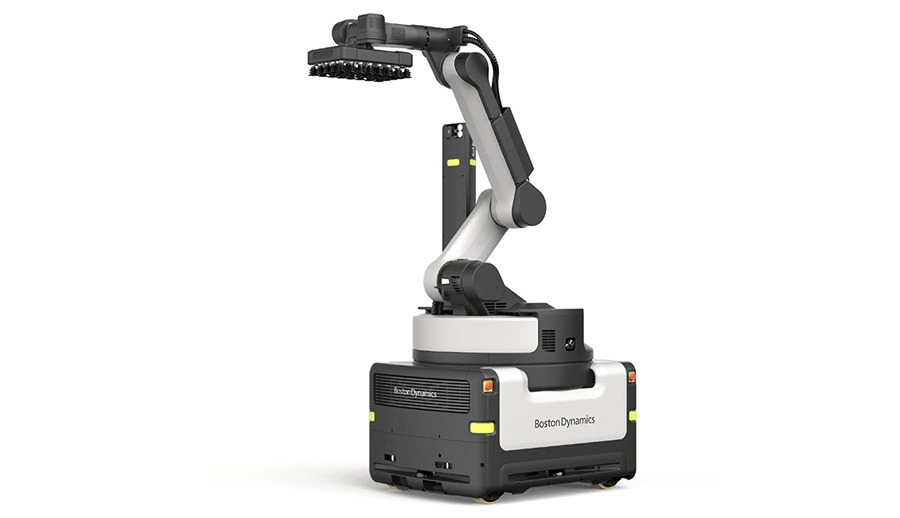
Stretch Gen 2.
What has actually changed for people who watch the dock
Conclusion first: this is a hardening pass on a working product, not a new concept. Second, unloading a floor-loaded trailer is still one of the last physically punishing jobs that automation has barely touched — the U.S. Bureau of Labor Statistics groups hand laborers and material movers among occupations with “some of the highest rates of injuries and illnesses,” and supply-chain surveys published in early 2026 reported roughly 78 percent of facilities struggling to hire and retain warehouse staff. Third, the commercial field is no longer empty: in December 2025 a rival supplier was handed one of the largest unloading-robot orders to date.
Boston Dynamics positions Stretch as the market’s first mover in robotic unloading, and says the Gen 2 build was distilled from more than 100,000 operating hours and tens of millions of boxes already handled by the first generation. That data-first framing matters for readers because it explains the odd mix of upgrades: fewer exotic features, more bolts, connectors, cables and service procedures. The modular architecture is designed around “plug and play” part swaps, which is the phrase buyers should now put into every vendor conversation.
Is 1,000 cases per hour comparable with earlier claims?
Conclusion first: treat “up to” as a ceiling, not a shift average. The honest way to judge the number is to line it up against what the same product line has publicly claimed before, and against what competitors publish.
| Reference point | Public case rate | Source type | How to read it |
|---|---|---|---|
| Original Stretch at launch (2021) | Peak of 800 cases per hour | IEEE Spectrum and Reuters launch coverage | A peak on idealised stacks, not a nightly average |
| Stretch in customer deployments | Up to 700 cases per hour achieved | FreightWaves, citing Boston Dynamics | What real mixed freight looked like before Gen 2 |
| Stretch Gen 2 (2026) | Up to 1,000 cases per hour | Vendor announcement | Rate still swings with case weight and how messy the wall of boxes is |
| Mujin TruckBot | Up to 1,000 cases per hour | Vendor product page | Roughly the same ceiling class as Gen 2 |
| XYZ Robotics at a European site | About 600 cases per hour on unpredictable shipments | Vendor field report | Shows how far real-world disorder drags numbers down |
| Pickle Robot at UPS | About two hours per trailer | Supplier claim carried in Bloomberg reporting | A trailer-based metric, easier to compare with your own dwell time |
Two practical takeaways. First, the gap between the 2021 peak figure and the deployment figure is the most important row in the table: real freight is irregular, and the vendor itself stresses that the current ceiling is heavily influenced by package weight and by how neatly or disorderly cases are stacked. Second, a “multipick” capability — grabbing two boxes in one motion — is what pushes a run toward the top of the range. Ask any supplier to demonstrate on your own trailers, not on a perfect wall.
Why the durability work matters more than the speed headline
Conclusion first: downtime, not cycle time, is what makes or breaks a dock robot, and this is where the redesign is most concrete.
- Cables out. The team removed 81 percent of internal cabling — about a half-mile’s worth per the vendor — targeting the single biggest source of intermittent electrical faults and wiring wear on a machine that flexes thousands of times a shift.
- Joints without end stops. New continuous-rotation joints travel beyond 360°, removing the hard mechanical stops that previously stressed the arm.
- Connectors built for vibration. Heavy-duty automotive-grade connectors are specified for high-torque handling and bumpy trailer floors.
- A gripper that senses better. An upgraded gripper with new valve systems and finer sensing is meant to cut missed and dropped picks at speed.
- Failures that do not stop the line. The emergency stop sits lower and recessed, and new exterior panel materials make a falling box far less likely to trigger an unintended safety stop or crack a panel.
For a non-specialist reader, the analogy is a smartphone that no longer breaks because it fell off a table. In a warehouse, a box bumping a control button is not an incident report — it is an idle dock, a late trailer and, in most contracts, detention exposure that carriers commonly price in the $50–$100 per hour range after free time expires.
How much does servicing a dock robot cost you in labour hours?
Conclusion first: the maintenance clock, not the purchase price, is the number operations managers should demand in writing. Boston Dynamics gives one clean benchmark: a full swerve drive swap now takes about one hour rather than a full day. Dynamic cables and complex harnesses are gone, standardised high-strength fasteners cut tool changes, and new onboard diagnostics deliberately hand routine service to the customer’s own maintenance team instead of waiting on a visiting field engineer.
Read alongside the fleet-scale context, the direction of travel is obvious. UPS is reportedly investing $120 million in around 400 trailer-unloading robots from Pickle Robot as part of a $9 billion automation programme — a purchase order that, if divided evenly, works out to roughly $300,000 per unit (our arithmetic, not a published price), with payback the supplier estimates at about 18 months from labour savings. Engineering guides are more conservative on cheaper options: portable ergonomic conveyors are typically only 25 to 50 percent the cost of most robotic unloaders and can pay back in 9 to 18 months. In other words, automation is no longer a single all-or-nothing bet — there is a ladder of commitments, and uptime decides which rung you can actually afford.
Stretch Gen 2 vs. the alternatives: which fits which dock?
| Option | Handles floor-loaded trailers | Flexibility and moveability | Typical commitment | Best fit |
|---|---|---|---|---|
| Manual crew or lumpers | Yes, and the only option for badly mixed loads | Maximum | Per-trailer labour cost plus hiring risk | Low, irregular volume; sites with no maintenance role |
| Portable ergonomic conveyor | Partially — still needs people inside the box | High, no fixed structures | Smallest capital outlay, fastest payback signal | Sites wanting relief from lifting before full automation |
| Fixed dock automation | No — needs palletised or uniform freight | Low; tied to one dock | Highest capital and retrofit burden | Stable, high-volume, uniform inbound |
| Stretch Gen 2 (mobile robot) | Yes, it drives into the trailer | High; shared across docks | No reprogramming for most packages from day one | Multi-dock sites with recurring floor loads and chronic staffing gaps |
| Other mobile unloaders (Mujin, XYZ, Pickle) | Yes, approaches vary | High | Compare per-unit cost and demonstrated trailer time | Buyers benchmarking more than one supplier before a pilot |
Where the new robot looks strongest on paper is the software side: a redesigned onboard computing platform is meant to keep improving, with regular releases advancing case detection, motion planning, pick strategies and world modelling across an entire fleet without hardware changes. For a General reader, this is the closest thing in industrial robotics to a phone update — capability that arrives overnight instead of a capital request.
Where Stretch Gen 2 is still the wrong tool
- Volume that cannot fill a shift. A machine running two shifts per charge, with a fast charger reaching 90 percent charge in about 75 minutes, earns its keep only when the dock is busy enough to keep it fed.
- Freight that defeats the ceiling. If inbound cartons are light-but-flimsy, extremely heavy, or stacked like a collapsed wall, the published maximum is the wrong planning figure; benchmark against your observed average instead.
- No in-house maintenance capacity. Onboard diagnostics push routine service to the customer team — a benefit only if someone is trained and on site.
- Different job, same budget. Outbound pallet building and case picking are adjacent use cases; Boston Dynamics’ own warehouse automation materials frame unloading as one slice of a wider case-handling picture, so scope the job before scoping the robot.
- Dark-trailer myths. Onboard lighting is designed for unlit trailers and the pre-trained vision system is built to recognise most packages from day one with no programming — but “most” is not “all”, so damaged or unlabelled cartons still need a human plan.
Four misconceptions worth clearing up
- “A faster robot means a faster dock.” The dock is a system. Pulling cases at 1,000 cases per hour into a staging area that cannot absorb the flow just moves the queue.
- “Automation removes the crew.” In practice the mix shifts toward exception handling, quality checks and maintenance — the roles the same labour surveys say are hardest to fill.
- “Gen 2 is a brand-new product category.” It is an evolution of a shipping product, built from more than 100,000 operating hours of field evidence.
- “Up to a number means you get that number.” Weight, stacking disorder and pick strategy decide what you actually see on a Tuesday night.
A practical checklist before a pilot
- Pull 30 days of inbound data: trailers per shift, average cases per trailer, weight distribution and stacking style.
- Convert dwell time into money using your carrier detention terms, so the pilot has a financial target rather than a hunch.
- Ask for demonstrated rates on freight like yours, plus the gap between peak and mean.
- Get maintenance in writing: part-swap times, onboard diagnostics access, spare-parts stock and escalation windows.
- Confirm charging geometry — how two shifts per charge and a 90 percent charge in about 75 minutes fit your break patterns and available power.
- Run the pilot on one dock across a full inbound season, not one busy week.
- Track injuries, near-misses and turnover alongside throughput; safety is the part of the business case most often under-counted.
FAQ
What is Stretch Gen 2?
The second-generation autonomous mobile trailer-unloading robot from Boston Dynamics: it drives into a trailer, recognises cartons and hands them to a conveyor or staging point, with no programming needed for most package types.
Is 1,000 cases per hour a realistic planning number?
No — it is a ceiling. The vendor ties the achievable rate to case weight and stacking disorder, and earlier Stretch deployments were publicly described at up to 700 cases per hour, which is the safer comparison basis.
What is the biggest hardware change?
The electrical architecture: 81 percent of internal cabling removed, or about a half-mile’s worth, plus automotive-grade connectors, joints that rotate beyond 360°, and a lower, recessed emergency stop.
Does a breakdown still stop operations?
Far less than before. A full swerve drive swap now takes about one hour instead of a full day, parts swap on a plug and play basis, and routine service moves to the customer’s own maintenance team through onboard diagnostics.
Should a smaller logistics site pay attention?
Yes, as context rather than as an immediate buyer. The pattern — reliability and software updates as the headline rather than raw speed — signals how warehouse robotics is maturing, and it is what makes cheaper intermediate options such as portable conveyors a credible first step.
Reference sources
- Boston Dynamics, “Boston Dynamics Launches Next Generation Stretch Robot”, press release dated November 3, 2026 — https://bostondynamics.com/news/boston-dynamics-launches-next-generation-stretch-robot/
- Boston Dynamics, warehouse automation solutions page — https://bostondynamics.com/solutions/warehouse-automation/
- IEEE Spectrum, launch coverage of the original Stretch and its 800 cases-per-hour peak rate — https://spectrum.ieee.org/stretch-is-boston-dynamics-take-on-a-practical-mobile-manipulator-for-warehouses
- Reuters, “Boston Dynamics introduces ‘Stretch’”, March 29, 2021 — https://www.reuters.com/technology/boston-dynamics-introduces-stretch-new-warehouse-worker-robot-2021-03-29/
- FreightWaves, reporting on trailer-unloading robot deployments and rates achieved in the field — https://www.freightwaves.com/news/fedex-moves-closer-to-deploying-robots-that-can-load-trailers
- Bloomberg, UPS to invest $120 million in 400 truck-unloading robots, December 15, 2025 — https://www.bloomberg.com/news/articles/2025-12-15/ups-buys-hundreds-of-robots-to-unload-trucks-in-automation-push
- Gorbel, “Augment Trailer Unloading Before Automating It”, on conveyor versus robotic-unloader cost and payback — https://www.gorbel.com/docs/default-source/warehouse-solutions-resources/reps/gorbel_ebook_augment-trailer-unloading-before-automating-it_2025.pdf
- U.S. Bureau of Labor Statistics, Occupational Outlook Handbook: Hand Laborers and Material Movers — https://www.bls.gov/ooh/transportation-and-material-moving/hand-laborers-and-material-movers.htm
- SPS Commerce, 2026 supply-chain trends on warehouse hiring and retention difficulty — https://www.spscommerce.com/community/articles/2026-supply-chain-trends-labor-robotics-warehousing
Reporting note: performance and design figures for Stretch Gen 2 are the vendor’s own claims, reproduced here as claims — independent verification on your own freight is the whole point of the checklist above. Corrections or additions to this comparison are welcome at hello@techdaily.com (Tech Daily editorial desk).