MyTechDailyNews General: How to Read the BMW G58 3 Series Filing
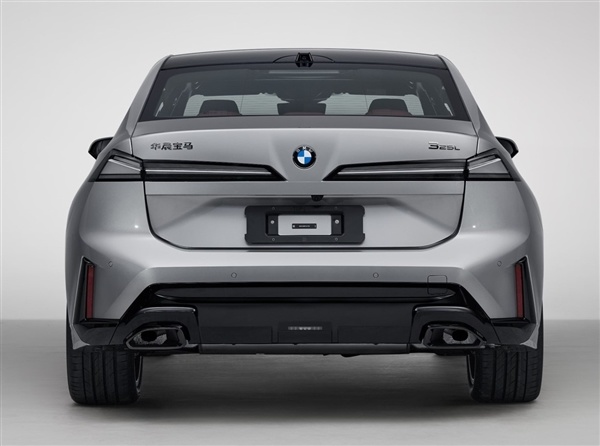
China’s Ministry of Industry and Information Technology (MIIT) has published Batch No. 413, and the entry most general-tech readers should watch is the domestic long-wheelbase BMW 3 Series, codenamed G58. It lists two models, 325L and 330L, and points to a market launch in 2027, within 2027. For readers who do not want to decode a filing database line by line, this guide turns the announcement into a practical checklist: what changed, what it means for buyers, and which details are easy to misread.
The eighth generation petrol 3 Series, codenamed G50, was introduced globally on September 30, 2026, alongside the electric i3. The G58 is not a separate world premiere; it is the China long-wheelbase version arriving through the regulatory route. That matters because the story shifts from concept to production details: design cues, dimensions, engine ratings, naming rules and factory timing.
Quick facts at a glance
| Filing point | What the document says |
|---|---|
| Model code | G58 |
| Declared models | 325L and 330L |
| Launch window | 2027, within 2027 |
| Body size | 4865/1852/1461mm |
| Wheelbase | 2970mm |
| Engine | 2.0T petrol, 172kW and 211kW declared |
Step 1: read the design change, not just the photos
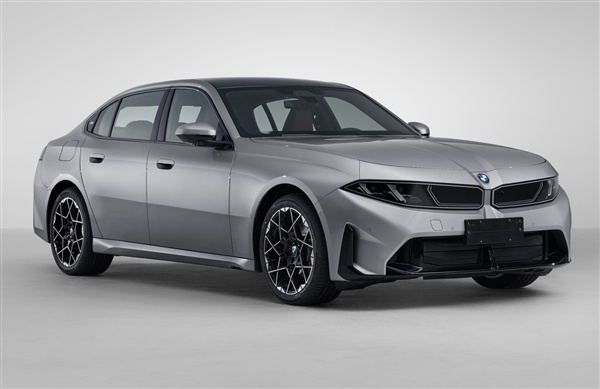
The most visible change is the end of the classic Angel Eyes. The circular halo daytime running light appeared in 2001 on the E39 5 Series and became BMW’s visual signature, lasting a quarter-century across many models. In the Neue Klasse design language, it is replaced by a quad-eye vertical light-strip layout. BMW presents this as a modern interpretation of the original idea rather than an abrupt deletion of a brand memory.
There is another design break: the front grille no longer follows the “big nostril” escalation of previous decades. The kidney grille is flatter and horizontally stretched, then visually merges with the headlights. The result is a connected face that feels more digital and less mechanical than the earlier generation.
Step 2: compare dimensions with context
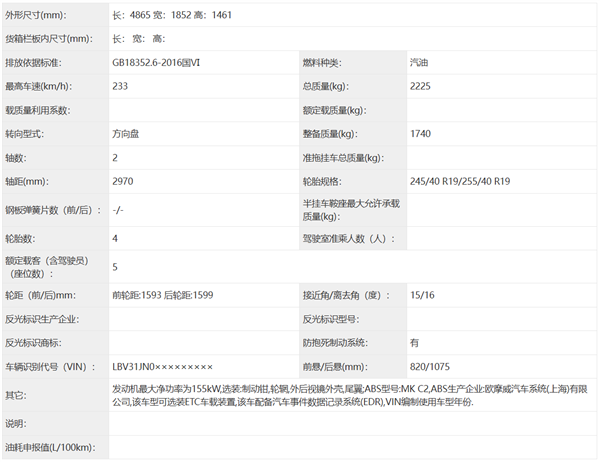
MIIT gives the G58 length, width and height as 4865/1852/1461mm, with a wheelbase of 2970mm. Compared with the current 2026 model-year long-wheelbase 3 Series, whose length is 4838mm and wheelbase 2961mm, the new filing adds 27mm of overall length and 9mm of wheelbase. Those numbers are modest, but they are not the whole story.
Read the filing against the overseas standard-wheelbase G50 as well. A Sina Auto comparison of the MIIT filing notes a 2860mm wheelbase for the standard version, so the domestic G58 extends that by 110mm for its rear-seat priority. In practical terms: the domestic car may look close to the global model from the side, but its length budget is spent differently.
Step 3: check the badge, then check the platform
Naming rule: why the badges lose the “i”
BMW has adjusted naming. The suffix “i” is removed from petrol model badges and reserved for electric vehicles. Therefore the filing lists 325L and 330L rather than 325Li and 330Li. The previous long-wheelbase petrol versions used 325Li and 330Li.
Platform reality: similar looks, different bases
Although the exterior borrows Neue Klasse design language and looks close to the electric i3, the G58 is a petrol car built on the developed CLAR II platform. The i3 uses a separate Neue Klasse architecture. This is the kind of detail that affects long-term product planning: the two cars share visual family resemblance, but their engineering paths are independent.
Because of that split, the domestic long-wheelbase 3 Series and the electric i3 long-wheelbase model are expected to be sold together rather than replacing one another in a single step.
Step 4: understand the power numbers before comparing them
Both 325L and 330L use a 2.0T petrol engine. MIIT declares 172kW for 325L and 211kW for 330L. News18A’s filing summary adds a useful distinction: these are rated figures, while the corresponding net maximum power values are reported as 155kW and 190kW. For readers comparing spec sheets, that difference explains why the same car can appear with two power numbers in different databases.
In everyday terms, the filing numbers are administrative and category-defining; net power is closer to usable output. The practical takeaway is not to treat 172kW and 211kW as the only numbers, and not to mix them with marketing horsepower figures without checking the definition.
Step 5: turn timing into a buyer checklist
The filing itself only establishes the regulatory record and the 2027, within 2027 launch window. A separate production report from BMW Blog, also summarized by News18A, says G58 production is expected to begin at BMW Brilliance’s Shenyang plant in April 2027, initially for the 325L and 330L models. That timing is consistent with the launch window, but it still does not fix dealer arrival or pricing.
Use the following checklist if you are tracking the car from announcement to purchase:
- Watch the badge: 325L and 330L now signal petrol long-wheelbase models, not electric versions.
- Compare the right baseline: check against the current 2026 model-year long-wheelbase car, not only the overseas standard version.
- Check platform: if you expected the Neue Klasse architecture, note that G58 remains CLAR II.
- Clarify power: note whether a source is citing rated 172kW and 211kW or net 155kW and 190kW.
- Separate production from delivery: April 2027 production plans do not automatically equal April showroom dates.
Common mistakes readers make
- Assuming G58 is the Neue Klasse car. It shares the Neue Klasse design language, but the petrol G58 is CLAR II; the i3 is the architecture-based electric model.
- Reading 9mm of wheelbase growth as no change. The growth looks small compared with the previous domestic car, but the filing still redefines exterior proportions, grille shape and light signature.
- Thinking the missing “i” is cosmetic. It marks a wider naming strategy: “i” is being reserved for electric vehicles, while petrol long-wheelbase badges stop using it.
FAQ
When will the BMW G58 reach the market?
The MIIT filing states a launch in 2027, within 2027. Production reports mention April 2027 as the planned start at the Shenyang plant, but actual sales timing can depend on homologation, trim allocation, local pricing and dealer logistics.
Is the G58 the same as the new BMW i3?
No. The two look closer because they use the Neue Klasse design language, but the G58 petrol model is based on CLAR II, while the i3 uses the new electric Neue Klasse architecture.
Why is Angel Eyes being removed?
BMW is replacing it with a quad-eye vertical light strip that it frames as a modern reinterpretation. The change reflects a Neue Klasse front-end language where the headlights and grille are integrated, rather than treated as separate classic cues.
Action tips
If you are a buyer, do not decide on the filing alone. Wait for official pricing, trim tables and confirmed delivery windows. If you are a reader following the industry, focus on three signals: the platform split between CLAR II and Neue Klasse architecture, the naming separation between petrol and electric badges, and the local production timeline in Shenyang. For general tech users, this filing is less a car review than a data point in how legacy automakers translate design language into market-specific versions.