
MyTechDailyNews General: Bluetooth HDT Pushes Bluetooth LE Toward 7.5Mbps — What It Changes and What to Check
By Sarah Chen · MyTechDailyNews General
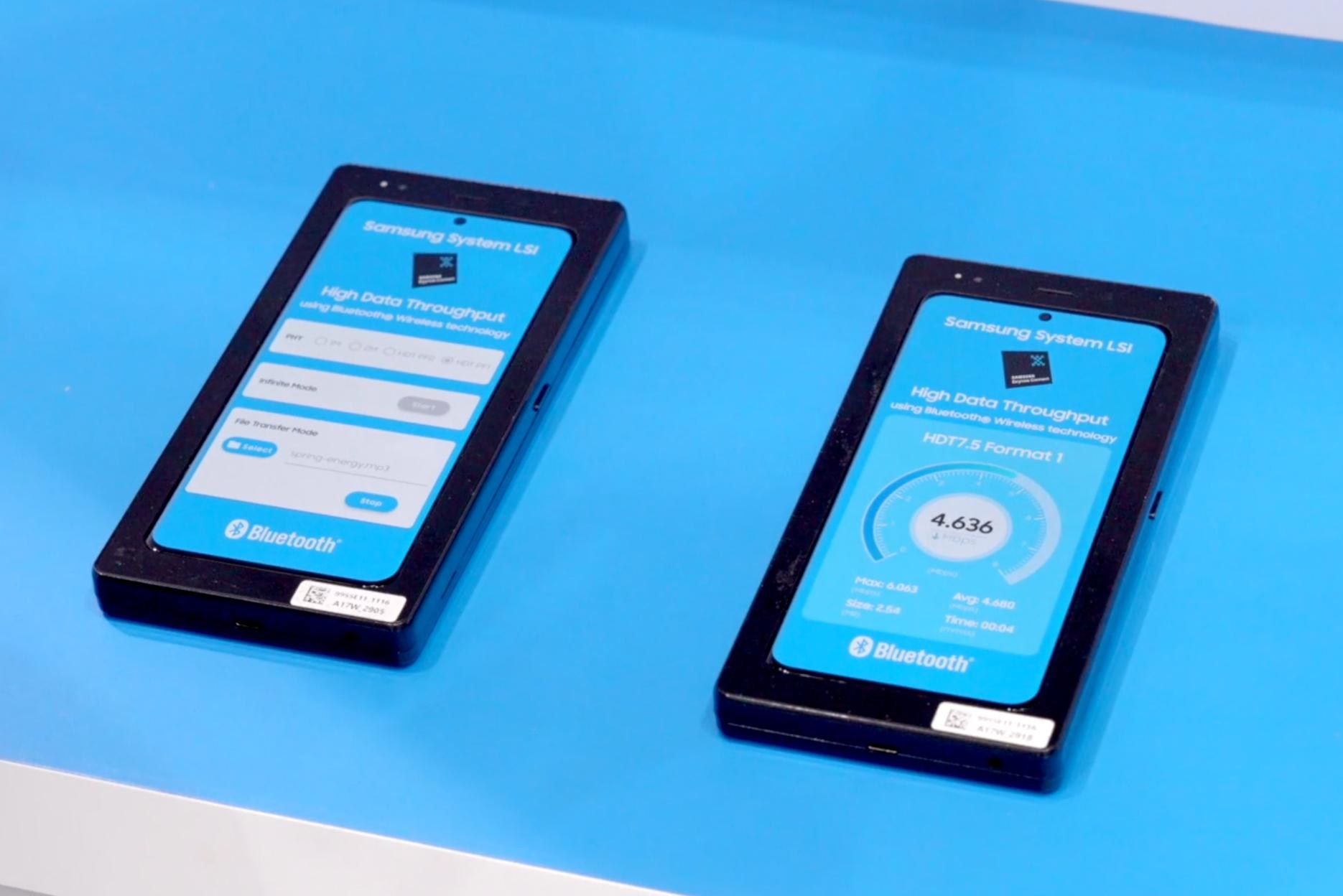
Bluetooth SIG has recently introduced High Data Throughput (HDT), moving Bluetooth LE from the current 2Mbps ceiling to up to 7.5Mbps — a near four-times increase that can shorten file transfers, improve firmware updates, and support richer Bluetooth LE Audio without giving up low-power design. For everyday users, the practical effect is less waiting and fewer forced fallbacks to Wi‑Fi, but older headsets and phones will not become faster through a software update alone.
What exactly did Bluetooth HDT change in Bluetooth LE?
At its core, Bluetooth HDT is a new radio link capability for Bluetooth LE, not simply a firmware flag that older devices can activate. The Bluetooth SIG's High Data Throughput description points to a new PHY and better packet handling, enabling nominal peaks up to 7.5Mbps versus the 2Mbps ceiling of Bluetooth LE 2M PHY.
That gap matters because many tasks are not about a single number: larger packets, fewer retries, adaptive rates, and stronger error correction can make connections feel more stable while carrying more data in the same window.
| Connection profile | Nominal maximum rate | Everyday implication |
|---|---|---|
| Bluetooth LE 2M PHY | 2Mbps | Good for controls, short audio, sensor updates, but can bottleneck larger payloads. |
| Bluetooth HDT | 7.5Mbps | Opens room for richer audio, quicker transfers, and heavier device data without switching to Wi‑Fi. |
Why will ordinary users feel the difference?
Users usually notice throughput when a task takes time: syncing photos, installing headphone firmware, pairing multiple devices, or listening without compression anxiety.
- Audio: Bluetooth LE Audio already depends on the LC3 codec, but high-resolution and lossless formats have long been limited by available bandwidth. A 7.5Mbps ceiling gives future headphones and speakers more room for hi-res streams.
- Updates: Wearables and earbuds often need long battery cycles during firmware updates. HDT can compress the transfer window and reduce interrupted update risk.
- Sharing: Contact sharing, media handoff, log export, and device configuration may move faster when both endpoints support Bluetooth HDT.
- Interference: With adaptive bitrate, the link can step down in noisy places instead of failing outright, which may improve reliability more than raw speed.
How soon can buyers actually get HDT support?
Not overnight. Since the speed boost depends on new radio hardware, a phone, laptop, headset, or smartwatch made before the change will usually not gain full 7.5Mbps support through a software update alone. Adoption will appear first in next-generation Bluetooth chips, audio platforms, and phones. In the coming years, buyers should start to see the feature become common in mid-range and premium accessories.
The ecosystem signal is already visible. A January 2025 connectivity-platform announcement cited HDT as part of the path to higher-bandwidth Bluetooth and lossless multichannel audio, while a March 2026 industry test release described Bluetooth LE HDT as "a cornerstone" of next-generation Bluetooth LE and explained that the new PHY can combine multiple modulation and FEC options to provide five data rates between 2Mbps and 7.5Mbps. Those milestones show testing is maturing before the feature becomes a normal product checkbox.
For readers who want an official starting point, Bluetooth SIG's developer resource library keeps specification overviews and build materials in one place, which is useful when verifying whether a product claims the feature itself rather than just a Bluetooth version number.
What should users check before buying new Bluetooth gear?
- Search the spec sheet for "Bluetooth LE High Data Throughput," "HDT," or a clearly named high-throughput mode; avoid assuming a Bluetooth 6.x label alone proves support.
- Check both ends of the connection. A pair of HDT-ready earbuds still needs a phone, tablet, or dongle that supports the same radio profile.
- For music, look for the audio profile, codec, and sample-rate claims, not only the 7.5Mbps headline. Bluetooth LE Audio with LC3 may be high quality even without HDT; lossless support must be stated by the maker.
- For file transfer, confirm which app or profile does the syncing. Some transfers depend on vendor software rather than Bluetooth alone.
- For gaming or meetings, test latency first. Throughput can reduce transfer time, but echo, lip sync, and input delay are set by the whole signal chain.
- For smart-home sensors, ask whether the device sends large bursts. Tiny status packets may benefit little, so price should still reflect battery life and range.
Which scenarios gain the most from HDT?
| Use case | Likely gain | Caution |
|---|---|---|
| Wireless hi-res audio | More bandwidth for lossless or high-resolution streams. | Depends on new codecs, hardware, and licensed audio source support. |
| Quick media sharing | Shorter wait when transferring larger packets. | Actual file speed may be below the nominal rate. |
| Firmware updates | Less time in unstable update windows. | Device firmware must be updated and the link must stay stable. |
| PC and TV accessories | Room for multiple high-rate peripherals. | Interference and USB receiver design still matter. |
Common misconceptions about Bluetooth HDT
- "A software update will make my current earbuds faster." Usually no; HDT needs radio hardware that can implement the new physical layer.
- "7.5Mbps means a file will always move at 7.5Mbps." It is a nominal air-interface ceiling. Packet overhead, distance, interference, and protocol layers reduce the user-visible rate.
- "HDT replaces Wi‑Fi." Wi‑Fi is still better for cloud streaming and bulk network traffic. HDT is more useful as a low-power point-to-point link with a wider pipe.
- "All Bluetooth audio becomes lossless." No. Bandwidth is necessary but not sufficient; the product must implement a lossless profile and enough decoding power.
- "Higher speed always saves battery." It can shorten transfer time, but peak-rate modes may demand better link quality, so overall energy depends on payload size and radio scheduling.
FAQ: what everyday users ask about Bluetooth HDT
Is Bluetooth HDT the same as a Bluetooth version update?
No. Bluetooth version numbers can include many changes, but the useful question is whether the product supports Bluetooth LE High Data Throughput and the relevant audio or transfer profile. Treat HDT as a feature checklist item, not a brand name.
Will my old phone lose support for new earbuds?
Not immediately. Old phones and earbuds will continue to work at older Bluetooth rates. The benefit of HDT appears when both devices adopt compatible new silicon.
Can HDT improve wireless microphones or live meeting audio?
It could help in environments where multiple audio streams need a stable low-latency link. The March 2026 test release also associated HDT with low-latency audio streaming, fast media sharing, and accelerated wireless software updates, but final device performance still depends on DSP and microphone design.
Should gamers wait for HDT headsets?
Only if your current setup is limited by bandwidth or firmware update delays. Competitive latency is a system problem, so a headset's radio, codec, dongle, and host software matter as much as the peak rate.
Action advice after the Bluetooth HDT announcement
Do not rebuild your entire desk just for a number. Keep using devices that already feel good, then upgrade selectively. When you do shop, make HDT one of several checks: range, latency, comfort, battery life, codec, and ecosystem support. If you manage a product roadmap, start early testing of antenna layout, power delivery, and firmware update behavior, because real-world gains appear when the hardware stack is tuned together.