
Gates Sees AI Work Shock as a 20-Year Transition: A MyTechDailyNews General Guide
By Sarah Chen
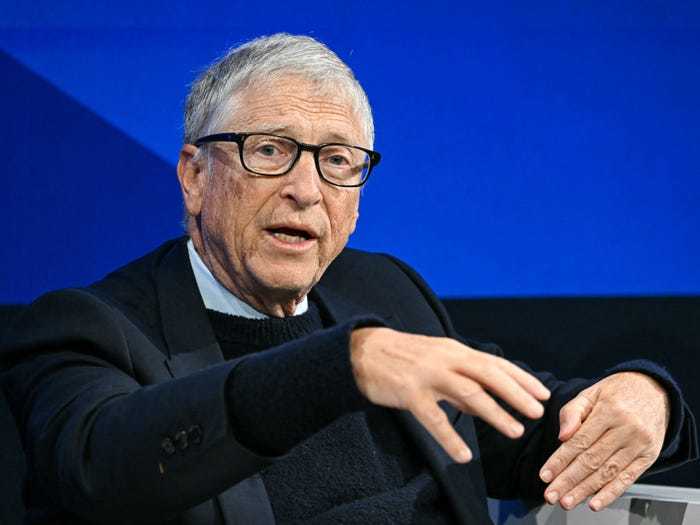
For ordinary readers, the most useful question in this story is not whether machines will someday do everything. It is what happens while they are still learning to do many ordinary tasks. Bill Gates has put his sharpest concern on the passage itself: this 20-year transition period, he warned, is where people will see the disruption most clearly.
Why a 20-year transition period matters
Gates' warning is not a simple prediction that robots will suddenly occupy every workplace. His concern is that AI can move through different sectors at uneven speed, creating a long middle phase in which some workers become more productive, some roles disappear, and some institutions cannot adjust fast enough. In his words, "there will be winners and losers, and a lot of chaos."
He addressed the widespread worry about white-collar job losses directly. Telephone sales, telephone customer service and accounting, he said, will disappear because AI can complete those tasks in a far cheaper, far faster, and even more accurate way. Blue-collar work, in his framing, is the next area to face humanoid robots.
The longer view, Gates argued, depends on whether society chooses to restrict the technology. "If we do not choose to slow down or stop on a large scale, then we will have robots that can build houses, grow food and perform surgery. Everything human labor provides to the economy will no longer be necessary for most goods and services." That sentence is important because it connects two debates usually kept apart: the speed of AI adoption and the pace of public adjustment.
The personal part of the warning
What makes the comment notable is that it comes from a person who has spent resources on global health and humanitarian work. Gates said the shift could surprise even someone like him, because AI may become better at complex tasks that he has long tried to solve, such as fighting malaria and responding to crises. He described the hypothetical moment when AI says, "No, I am better at this than you. You go play pickleball, and I will come back and handle this," and added that this is a little funny, but it is not funny.
For him, work is not only an economic transaction. It gives people a sense of purpose, income, a reason to show up each day, a way to build relationships with colleagues, and a path to create things and solve problems. He suggested that some activities could remain human-centered: art, sports, cooking and childcare, even if AI can do it better. He also mentioned possible buffers such as early retirement and limiting work hours, measures that could help maintain a certain level of human employment.
Gates imagined a future in which some people decide, "Let us use AI like the Amish, only for certain things," so they do not have to give up helping one another and coming up with unique ideas.
What other technology leaders have said
Gates is not alone in treating AI job disruption as a serious public question, though the leaders do not agree on the remedy.
Amazon founder Jeff Bezos and JPMorgan chief executive Jamie Dimon have suggested shortening weekly working hours as a less painful alternative after AI causes unemployment.
Elon Musk has described the transition as "bumpy" and proposed that the government send checks to everyone as the best way to deal with job losses caused by AI. He has also argued that technology will push production costs so low that all people can have "anything they want," making work "optional." In his view, in 10 or 20 years it is not worth saving for retirement, because money will no longer matter.
Anthropic's Dario Amodei has said AI could improve everyone's quality of life, but he also warned that the scale of the short-term shock will be unprecedented.
OpenAI's Sam Altman has offered a different adjustment. This May, he said AI has eliminated fewer white-collar jobs than he expected, and he no longer expects a "jobs apocalypse."
The data picture remains mixed: Amazon and Meta have carried out high-profile layoffs during the AI boom, yet the nationwide unemployment rate has not shown a substantial rise.
Common misconceptions
- That AI will end work at once. Gates' core concern is a transition, not an instant endpoint. The chaos he describes belongs to the years of adjustment.
- That only office jobs are at risk. White-collar roles such as telephone sales, telephone customer service and accounting are part of the story, but blue-collar work is also expected to face humanoid robots.
- That a stable unemployment rate means no disruption. A nationwide rate can stay broadly steady while industries, employers and individual careers shift underneath it.
- That leaders have one agreed solution. Proposals mentioned include shorter weekly working hours, government checks, early retirement, limiting work hours and selective use of AI.
Quick checklist for readers
- Map tasks in your job that are repetitive, language-based or rule-following, because those are the categories where AI can be far cheaper, far faster, and even more accurate.
- Watch whether your employer introduces AI tools first in customer service, reporting, scheduling or administrative work.
- Track signs that robots are moving from demonstrations into construction, food production, healthcare and warehouse tasks.
- Read policy debates about weekly working hours, retirement, early exit options and income support as signals of the transition, not final promises.
- Ask whether the new technology is being used like the Amish model: only for certain things, while humans keep helping one another and coming up with unique ideas.
FAQ
Does Gates think human labor will become unnecessary?
His conditional point is that if society does not choose to slow down or stop on a large scale, robots could build houses, grow food and perform surgery, making human labor unnecessary for most goods and services. He also still values human work in art, sports, cooking and childcare.
Why does he talk about pickleball?
It is a way to show that even someone who leads major disease and humanitarian projects could be pushed aside from some tasks if AI becomes better at them.
Is the jobs apocalypse already ruled out?
Not by every leader. Sam Altman said this May that he no longer expects one because fewer white-collar jobs have disappeared than expected, but other warnings still focus on the short-term shock.
Do layoffs mean the AI transition has already begun?
High-profile cuts at Amazon and Meta show pressure on certain roles, while the nationwide unemployment rate not rising substantially suggests the overall labor market has not collapsed into a single visible trend.
Action suggestions
For workers: keep an inventory of the tasks you do weekly, then ask which parts could be completed in a far cheaper, far faster, and even more accurate way by a system. Use the answer to move toward judgment, coordination, customer understanding, quality checks and creative problem solving.
For managers: introduce AI where the benefit is clear, but protect the non-economic value of work. Teams need income, purpose, daily routines and relationships. If automation changes weekly working hours, make the adjustment visible and explain whether the goal is productivity, cost control, or maintaining a certain level of human employment.
For general readers: treat the AI jobs debate as an information hygiene issue. Compare statements from Gates, Musk, Amodei and Altman, then look at whether actual hiring, layoffs and nationwide unemployment statistics point to gradual change or abrupt shock.
The value for MyTechDailyNews readers is a clearer way to follow the story: not as a distant robot takeover, but as a 20-year transition period where job descriptions, workplace rules and public policy may all move at once.