
Why ASML Is Sold Out Through 2028: What the EUV Crunch Means for AI Chips, Prices and Your Next Device
ASML is the choke point of the AI build-out. Reporting by Digitimes on the company's third-quarter 2026 earnings release says demand from advanced logic and memory fabs is so strong that supply will stay short until at least 2028, and ASML's own output has become the bottleneck for the whole chip chain. For readers, the practical translation is longer lead times, higher machine prices and a slow trickle-down to memory, accelerators and device launch cadence.
By Sarah Chen, MyTechDailyNews Tech Daily desk
What is ASML actually running out of — and why does 2028 matter?
Short answer: capacity, not appetite. Customers want more lithography scanners than ASML plans to build, and the company has said that even its planned 2027 and 2028 supply will not fully cover demand.
That is the core message ASML president and CEO Christophe Fouquet delivered with the earnings release, as carried by Reuters and Digitimes: some customers have already moved past near-term buying and are negotiating long-dated orders for 2029 and even 2030.
The expansion math is where 2028 becomes the wall. ASML had planned to lift low numerical aperture EUV and immersion DUV output by about 30% in 2027; because orders kept climbing, it is now studying a further increase of more than 30% for 2028. Trade coverage of the same release put the 2026 low-NA EUV capacity base at roughly 65 tools, so the Bank of America projection of 120 EUV machines in 2028 implies both steps landing on schedule, plus supplier upgrades.
How big is the squeeze? The numbers in plain terms
| Signal | Figure | What it tells a general reader |
|---|---|---|
| Quarterly revenue | Net sales of 11.662 billion euros in Q3 2026, up 55.2% year on year and a record; the Chinese outlet MyDrivers converts that to about 87.7 billion yuan | Demand is not a forecast, it is already paid for |
| Full-year outlook | Guidance raised three times within 2026, now 44 billion to 45 billion euros (MyDrivers: about 331.1 billion to 338.6 billion yuan) | The upcycle is being revised upward, not walked back |
| Profitability (company release, Oct 14, 2026) | Gross margin of 57.5% and net income of 5.0 billion euros | Scarcity is showing up in margins before it shows up in shelves |
| Supply side | About 30% more capacity in 2027, a further increase of more than 30% under study for 2028 | Even aggressive expansion still trails orders |
| Selling price | Bank of America expects an average price lift of about 5% alongside the 120-unit 2028 shipment estimate | Chipmakers absorb the increase first, buyers later |
Prices are moving deliberately. Chief financial officer Roger Dassen has said ASML finished value-based pricing discussions with its main customers and has already pushed up the price of some lithography products — a shift that only works when buyers have few alternatives.
Why can't ASML simply build more machines, faster?
- One supplier, no substitute. EUV lithography is a single-source market, so there is no second vendor to absorb overflow orders.
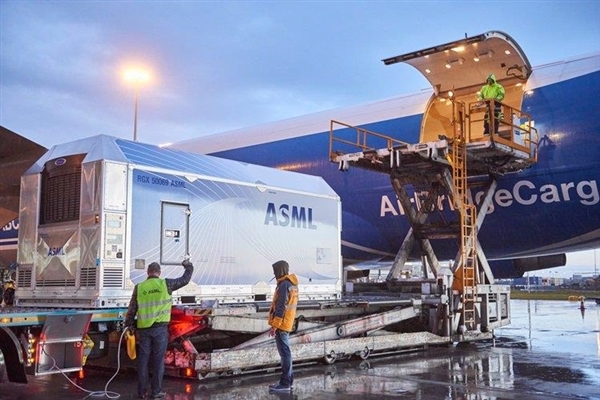
- The machines are enormous projects. The first High-NA EUV tool took about six months to install, using roughly 250 containers and 250 engineers, as ASML spokesperson Monique Mols described during a media tour reported by IT Home.
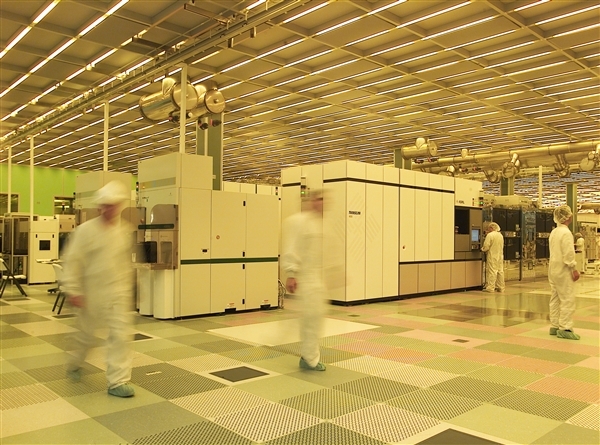
- Fabs set the pace too. Current construction templates count on a 12-to-15-month window for tool install and qualification before lithography scanners are useful — see the 2026 fab timeline breakdown from SupplyICS. Ordering a machine for 2027 only works if the cleanroom exists.
- Component supply is part of the plan. The July capacity decisions ASML reiterated — 30% in 2027 and another 30% in 2028 — were premised on its own suppliers scaling optics, stages and sub-systems in step.
Read together, this explains why customers are locking slots two to four years out: reservation, not price, is becoming the scarce good.
What does a lithography bottleneck change for everyday tech?
Expect the effects to arrive indirectly, in this order: tool lead times, then wafer capacity, then component prices, then device specs and launch timing.
- Memory first, consumer devices second. The new wafer capacity being funded is skewed to high-bandwidth memory and server DRAM. Samsung alone has outlined more than 110 trillion won (about 73.3 billion US dollars) of 2026 capital expenditure and research spending, heavily weighted to chips, according to Invezz via TradingView. My own read of that allocation: cheap, generous phone and laptop memory is the last thing the industry is rushing to expand.
- Flagship silicon gets expensive before it gets scarce. High-end EUV tools are already priced near 400 million US dollars each, as CNBC reported when TSMC and Samsung confirmed plans to use them for AI chip production.
- Service capacity is a hardware story. Cloud AI features, model upgrades and on-device assistants all trace back to how many advanced chips ship per quarter.
Common misconceptions about the EUV shortage
- "Sold out means no new chips until 2028." It means no extra lithography capacity; existing fabs keep producing and already-booked tools still arrive.
- "Expansion solves it." A 30% jump in 2027 and more than 30% in 2028 still fell short of demand in ASML's own assessment.
- "Rising machine prices hurt every vendor equally." Cash-rich leading fabs can pre-book 2029 and 2030 slots; smaller designers and regional foundries cannot, which narrows the competitive field.
- "Orders equal shipments." Orders are booked years ahead of delivery and installation, so today's backlog is tomorrow's revenue, not today's supply.
Action checklist: how to use this as a reader or product team
- Buying a laptop or phone with large storage and RAM? If the spec matters for work, don't wait for a price dip tied to memory supply through the next two years.
- Planning AI features that depend on accelerator capacity? Treat model-serving cost as a supply problem, not just a software optimisation problem.
- Tracking a chip supplier's roadmap? Check whether its fab expansion is limited by tool delivery or by cleanroom readiness — those are different risk profiles.
- Reading supply-shortage headlines? Anchor on two dates already in the record: ASML reported the quarter on 14 October 2026, and its guidance horizon for supply adequacy now runs to 2028.
- Investing? Note that pricing and shipment estimates from Bank of America are analyst forecasts, not company commitments.
FAQ: the questions readers keep asking
Why should I care about a machine I will never buy?
Because one company's monthly output caps how fast advanced logic and memory capacity grows, and that feeds into device prices, launch timing and the availability of AI services you pay for.
Is 2028 really the relief date?
Not exactly. Digitimes reports that ASML expects the shortage to last at least until 2028, and the company's own planned 2027 and 2028 supply still cannot fully cover orders — which is why some customers are already discussing 2029 and 2030 delivery.
Will lithography machines get more expensive?
The direction is set: Roger Dassen confirmed value-based pricing conversations with key customers and price increases on some products, and Bank of America's 2028 model assumes an average selling price lift of about 5% on top of 120 EUV units.
Could demand collapse and undo this?
That is the counter-risk every capital-intensive industry carries. ASML's guidance was raised three times during 2026 to 44 billion to 45 billion euros, so for now the evidence points to sustained rather than fading demand; any AI capex slowdown would show up first in long-dated 2029 and 2030 negotiations.
Reference sources
- Digitimes reporting on ASML's third-quarter 2026 earnings release and 2028 supply outlook
- ASML investor relations, quarterly results and the 14 October 2026 press release: investor.asml.com/quarterly-results
- Reuters, ASML orders and capacity commentary, 14 October 2026
- CNBC, High-NA EUV pricing and AI chip adoption by TSMC and Samsung, 8 September 2026
- IT Home, installation record for the first High-NA EUV scanner
- SupplyICS, 2026 semiconductor fab construction and tool-install timeline
- Invezz via TradingView, Samsung 2026 capital expenditure plan
Edited by the Tech Daily desk, MyTechDailyNews. Questions or corrections: hello@techdaily.com