
A Touchscreen MacBook Pro Could Be Apple's Next Mac Experiment: OLED, Dynamic Island and a Stronger Hinge in View
A brief teaser from Apple's chief executive John Ternus appeared on social media on Oct. 28, local time, and it said far less than the rumors around it. The video showed Apple's logo thrown onto a dark wall in front of a night city skyline, with no visible new hardware and no explicit mention of a touchscreen. The timing, however, made it hard to read as anything other than a warm-up: Apple was expected on the same day to present a MacBook Pro built around an OLED touchscreen.
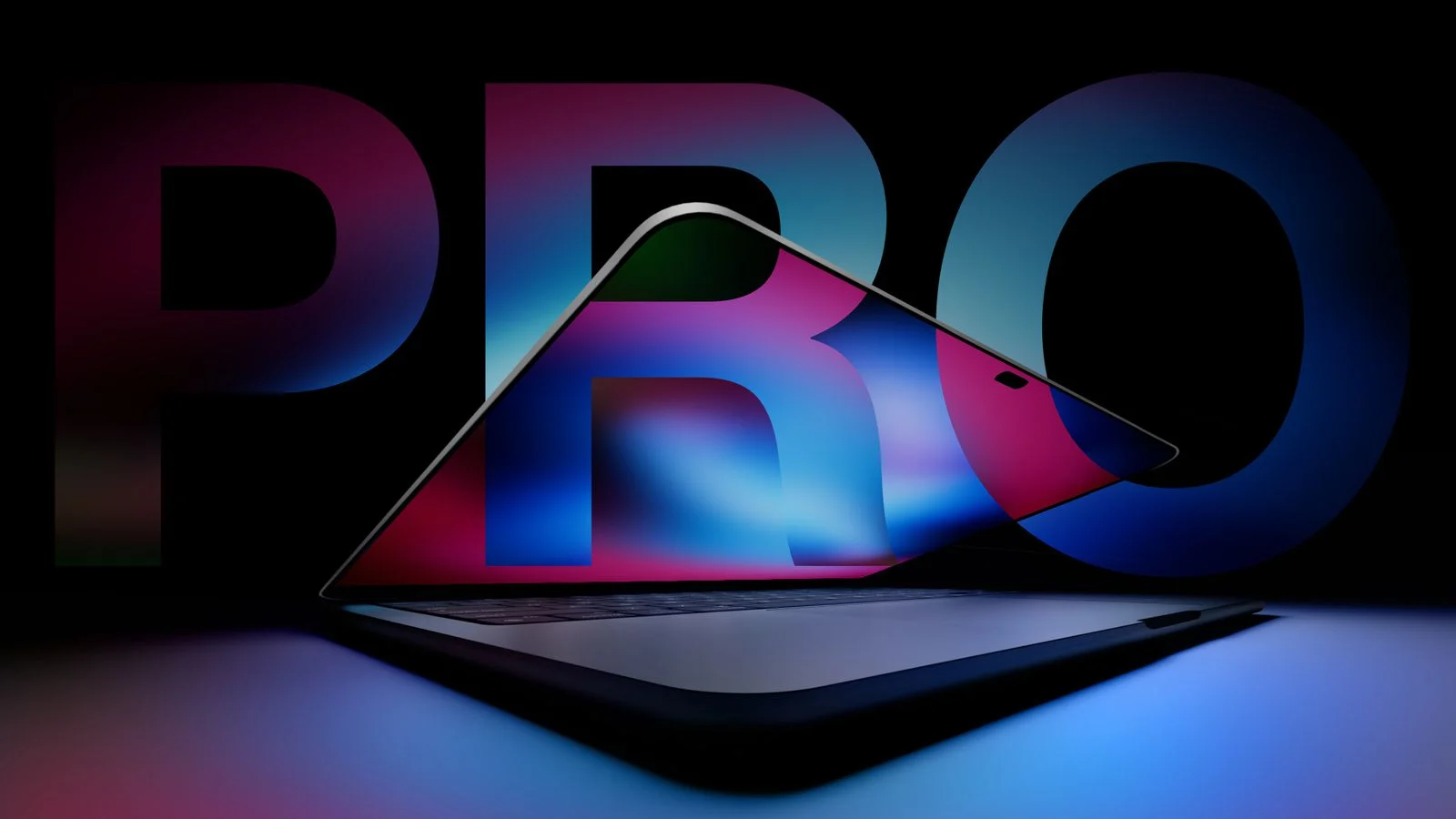
The event, the invite list and what could be demoed
A group of technology reporters and creators were invited to Los Angeles for a product experience session named Pro and tell. It is scheduled for 10 a.m. local time. According to the rumor-driven coverage, the room may contain Apple's first touchscreen MacBook, along with a new iPad mini, a refreshed iMac and the 14-inch MacBook Pro that had been introduced earlier this week.
If the touchscreen model is confirmed, the change will not be limited to a new screen panel. It would represent Apple placing a touch surface on the main MacBook line for the first time, a line where the company has kept keyboard-and-trackpad interaction as the default for years.
OLED, touch input and the line between MacBook and iPad
The rumored display options are 14-inch and 16-inch sizes, with OLED replacing the Mini-LED or LCD technologies used in the current MacBook Pro lineup. OLED is often described as a display upgrade not because one number becomes larger, but because each pixel can produce light on its own. When a pixel needs to render black, it can turn off, which supports deeper contrast, stronger color saturation and better detail in dark scenes. Reports also suggest the new screen may reach higher peak brightness.
- Contrast: individual pixels can switch off, improving black-level detail.
- Color: OLED is expected to deliver more vivid output than the current panels.
- Brightness: peak brightness may rise, though the exact figure is still unconfirmed.
- Input style: touch can serve as an additional way to reach screen content while keyboard and trackpad remain available.
Apple is not expected to turn the notebook into an enlarged iPad. The software base would still be macOS, with touch-related optimizations layered onto existing workflows. That means the touch layer would not replace the traditional controls; it would give people another choice for tasks where pointing directly at the display is faster or more intuitive.
The move could make the product boundary between MacBook and iPad less crisp, especially for users who think of both as screens that respond to a finger. But the two categories would keep different jobs. MacBook Pro is still positioned around full desktop applications, multi-window work and keyboard-based production, while iPad remains Apple's more direct touch-first computer. A touchscreen MacBook would simply offer another interaction path on the Mac side.
Why a new hinge and airflow redesign matter
The mechanical details may decide whether touch feels useful. A notebook display is attached to its base by a hinge, and when someone presses the panel, that force travels into the hinge structure. If the hinge lacks enough damping or support, the screen can sway forward or backward with the finger, making touch input feel unstable. The rumored MacBook Pro is said to use a redesigned hinge with stronger support to limit that rocking motion.
Thermal design is the second physical constraint. High-performance processors generate heat when running demanding apps and complex calculations. The new model is said to include a redesigned cooling system with improved airflow through the hinge area. Still, how far that helps with sustained performance, fan noise or surface temperature cannot be judged until hands-on testing.
Dynamic Island, slimmer borders and a lighter chassis
Alongside the panel and hinge changes, Apple is rumored to narrow the screen bezels and replace the long-standing MacBook Pro notch with a Dynamic Island-style element, a design idea more familiar from iPhone. If it arrives on Mac, the island could surface system notifications, background activities and other live information, tying the camera cutout to the interface rather than leaving it as a simple blank area.
The body itself is expected to become thinner and lighter. For professionals who move between meeting rooms, studios, airports or home offices, that reduction in weight could make carrying a Mac more comfortable. The harder question is how Apple preserves structural rigidity, battery endurance and cooling margin while trimming mass and thickness.
Chips, macOS Golden Gate and the upgrade pattern
The rumored processor choice is another signal about what this product is trying to do. The touchscreen MacBook Pro may continue using existing M5 Pro and M5 Max chips instead of moving to a newer-generation professional platform. In that scenario, the main reasons to pay attention would be the display, the new touch interaction and the redesigned mechanical body, rather than a leap in raw compute performance.
On the software side, the machine is expected to run macOS Golden Gate, tuned for touch use. The operating system could add finger-friendly controls, menus and interaction patterns designed to reduce the awkwardness that can appear when a desktop interface is used with a finger without adaptation. The challenge is delicate: Apple must make touch feel natural inside the existing macOS workflow while keeping keyboard and trackpad users from losing speed or familiarity.
Price rumors and what they imply about positioning
According to pricing rumors compiled by MacRumors, the United States starting price for the 14-inch touchscreen model may be no lower than 2899 USD, while the 16-inch model may be no lower than 3399 USD. If Apple lands near those levels, the touchscreen version would be positioned for high-end professional buyers instead of becoming the default option for everyone currently shopping for a MacBook Pro.
These figures should be read carefully. They are prelaunch rumors, not official prices released by Apple. The final cost, storage configuration and regional availability can differ from what is circulating now.
From Jobs to Tim Cook: why Apple was once a holdout
Apple's past comments help explain why a touch Mac feels notable. Steve Jobs argued in 2010 that putting a touchscreen directly on a traditional laptop created ergonomic problems, and Tim Cook has questioned whether forcing different device types into one product makes sense. Apple has delivered touch computing primarily through iPad, while MacBook has stayed centered on keyboard and trackpad.
Outside Apple, touchscreen notebooks have existed for years in the Windows world. As consumers use multiple devices daily, expectations for consistent interaction have also shifted. At the same time, Apple's software work on iPad and Mac has advanced, and the company may be reexamining how much value a touch layer can add to a laptop.
Common misconceptions about the rumored device
- A touchscreen does not automatically mean the MacBook Pro becomes an iPad with a keyboard. The product is still expected to run macOS and retain keyboard and trackpad input.
- A new hinge does not by itself guarantee a better laptop. It needs to reduce screen movement without making the device bulkier, harder to open, or weaker in cooling.
- OLED does not automatically mean the machine is a full performance upgrade. The rumored chips may remain M5 Pro and M5 Max.
- 2899 USD and 3399 USD should not be treated as confirmed retail prices until Apple publishes them.
- Apple's earlier skepticism does not prove the new design will fail, but it does explain why Apple may avoid simple touch-for-touch's-sake changes.
FAQ: the questions a general reader is likely to ask
Is the touchscreen MacBook Pro already confirmed? Not in this text's terms. Apple's event and the device list are based on expectations and rumored coverage, and the teaser video was interpreted as a preview rather than an official specification sheet.
What screen sizes are rumored? The circulating specification mentions 14-inch and 16-inch models with OLED display technology.
Will Apple's MacBook Pro line stop using a keyboard and trackpad? No. The description repeatedly points to touch as an additional input, not a replacement for existing Mac controls.
What is the Dynamic Island doing on a Mac? If the rumor is correct, it could replace the notch and display notifications, background activity and other live information in a more integrated way.
Are the chips the main upgrade? The rumors suggest Apple may keep M5 Pro and M5 Max, making display, touch and mechanical redesign the central story.
What to watch for when Apple presents the hardware
- Check whether the display is officially described as OLED and whether the 14-inch and 16-inch sizes match the rumored range.
- Watch how Apple explains the hinge and cooling changes; the key test is whether touch feels stable without hurting portability or noise.
- Look for macOS Golden Gate details that show how menus, controls and workflows handle touch without slowing keyboard and trackpad use.
- Compare the announced prices with the rumored 2899 USD and 3399 USD figures before judging whether the product is mainstream or high-end.
By the time Apple has said more, the question will no longer be simply whether the company will put touch on a Mac. It will be whether Apple can combine OLED, the Dynamic Island, the hinge, macOS Golden Gate and its traditional input habits into an experience that feels distinct from the long-running Windows touchscreen laptop idea.