
MyTechDailyNews General: Apple's Touchscreen MacBook Pro Price Test and What Buyers Should Watch
A Bloomberg report says Apple has this month concluded that some customers may be willing to pay $2,000 or more for a foldable iPhone. The next reported question is whether a touchscreen MacBook Pro can carry an even higher premium. This General breakdown focuses on what the report says, which buyers may care about, and what remains unconfirmed.
Apple is described as preparing to show new premium 14-inch and 16-inch MacBook Pro models at its Wednesday Pro and Tell event. The change most likely to matter for daily browsing is not just a faster chip, but the arrival of an OLED XDR touchscreen display and Dynamic Island on Mac for the first time. These are two features that have not previously appeared on Mac.
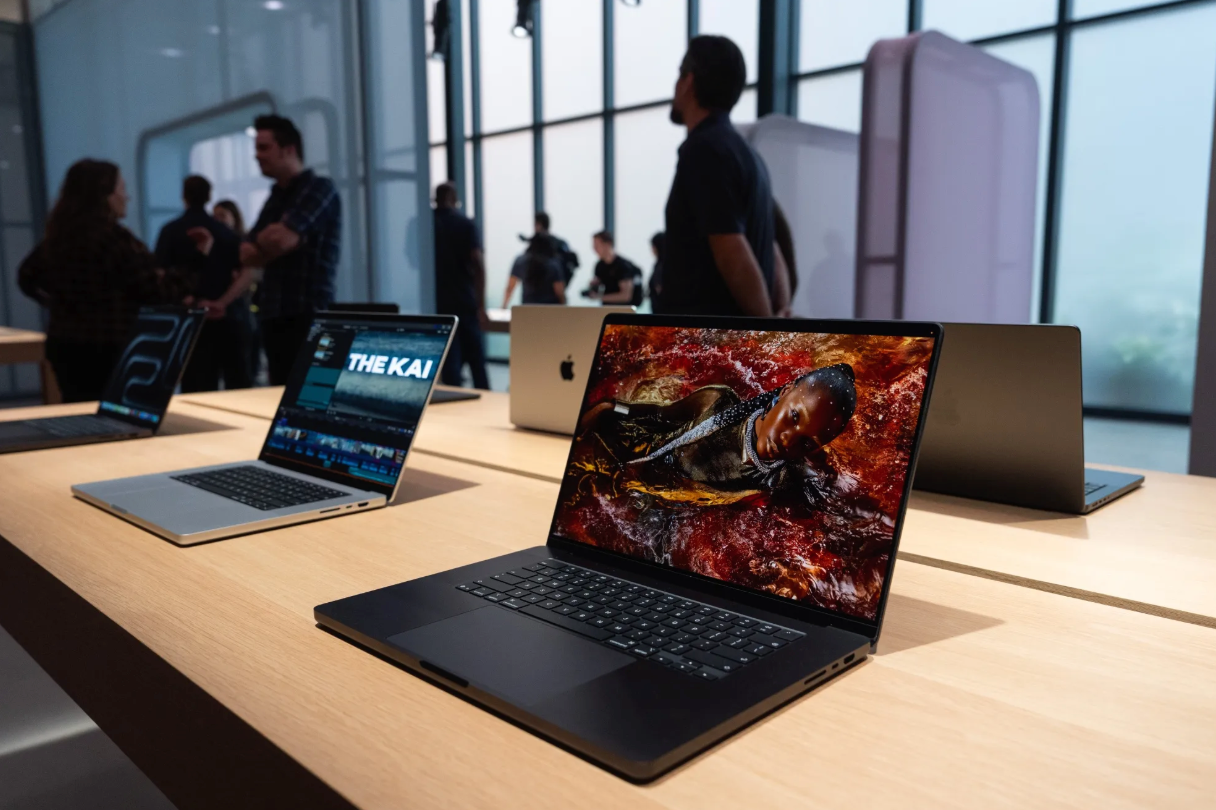
The current 16-inch MacBook Pro.
Pricing signals behind the reported MacBook Pro move
A person familiar with the matter said Apple has discussed a $2,899 price for the M5 Pro model of the new 14-inch MacBook Pro. That reported starting price would be $400 higher than the current M5 Pro model released this March and then repriced in June. The math matters because it shows the new device would not be a simple refresh; it would become a more expensive product tier.
The existing 16-inch MacBook Pro, without a touchscreen, is described as starting at $2,999. Under that baseline, a 16-inch touchscreen version would at least start at $3,399. If the larger model gets a bigger premium, the reported gap could become a central reason buyers compare 14-inch and 16-inch options.
If $2,899 becomes the official starting price for the 14-inch model, the report says it would set a new high for MacBook Pro launch pricing, above the $2,799 starting price of the 17-inch model introduced in 2006. It would also place Apple among the makers of some of the most expensive touchscreen laptops, close to Dell's premium OLED-equipped products in the same price range.
Who the reported event is trying to reach
Apple is planning the Los Angeles event around content creators, influencers, and media editing professionals. The report presents those groups as the main audience Apple believes will buy the new MacBook Pro. That framing helps explain the push toward touch, OLED, Dynamic Island, and a higher price: it targets users who may treat the machine as a production tool rather than a general-purpose laptop.
As of the report, an Apple spokesperson had not commented. Because the pricing and product details come from reporting and a person familiar with the matter, buyers should treat the numbers as planned or discussed scenarios until Apple confirms them.
Quick comparison for General readers
| Reported product | What changed | Price signal | Best fit question |
|---|---|---|---|
| New 14-inch MacBook Pro with M5 Pro and touchscreen | OLED XDR display and Dynamic Island on Mac | Reported $2,899, $400 above current M5 Pro | Would touch and display changes justify the step-up? |
| New 16-inch MacBook Pro with touchscreen | Same premium feature direction, larger size | At least $3,399 if based on non-touch $2,999 | Is size alone enough to cross a higher price line? |
| Current non-touch 16-inch MacBook Pro | Continues as existing option | Starts at $2,999 | Do you still prefer a traditional MacBook Pro? |
Common misconceptions to clear up before the event
- Higher starting price does not automatically mean every buyer needs it. The report frames the premium around creators and editing professionals, not average laptop shoppers.
- A touchscreen MacBook Pro would not simply change the price category. The source only states that OLED XDR and Dynamic Island are arriving on Mac as two first-time features.
- The 16-inch number is not a confirmed price. It follows from the non-touch 16-inch $2,999 starting price, which would make a new version at least $3,399.
- Touchscreen does not guarantee that older configurations disappear. The report suggests Apple may keep non-touch models on sale alongside the premium line.
Checklist: How to judge the Pro and Tell news
- Watch whether Apple confirms the 14-inch and 16-inch touchscreen models and the OLED XDR and Dynamic Island details.
- Compare announced prices with the reported $2,899 and $3,399 starting points.
- Check whether the old non-touch MacBook Pro remains available and how close its configuration is to the new line.
- Match features to your workflow: editing, creator use, portability, or general laptop tasks.
- If budget is fixed, note whether the reported $400 step-up is tied to the display changes or to a specific M5 Pro configuration.
Action advice for readers
If you are waiting to buy, the practical move is to pause for the Wednesday Pro and Tell event rather than acting on early pricing. If you need a laptop now, compare your current workload with the non-touch options and decide whether touch and display changes would alter your daily routine.
For creators, the report is useful as a warning and an opportunity: it suggests Apple is aiming for a more expensive category, so evaluate whether the claimed feature changes solve real production tasks. For general buyers, the safest approach is to treat the story as a price test to verify, not a guaranteed specification sheet.
FAQ
Is Apple's new MacBook Pro price confirmed?
No. The Bloomberg report describes discussed or planned pricing, and an Apple spokesperson had not commented at the time.
What is the key change reported for the premium MacBook Pro?
The key reported changes are an OLED XDR touchscreen display and Dynamic Island, which would appear on Mac for the first time as two new feature points.
Will the new models replace current MacBook Pro options?
The report says Apple plans to continue selling non-touch versions while launching the new touchscreen models.
Why does the price matter for ordinary readers?
It shows how Apple may be testing whether customers will pay more for display, size, and interaction changes rather than only performance upgrades.