
MyTechDailyNews General: Apple’s 2027 MacBook Pro Touchscreen Shift May Leave Traditional Premium Models Behind
For readers who follow everyday technology decisions as much as headline product announcements, the current MacBook Pro conversation is not only about a display feature. It is about how a premium computer category may be separated into what a touchscreen can offer and what a traditional keyboard, trackpad, and non-touch panel still make practical for cost-conscious buyers. Bloomberg reporter Mark Gurman reported in Power On that Apple’s first touch-enabled MacBook Pro models may be only the opening move in a wider lineup reset.
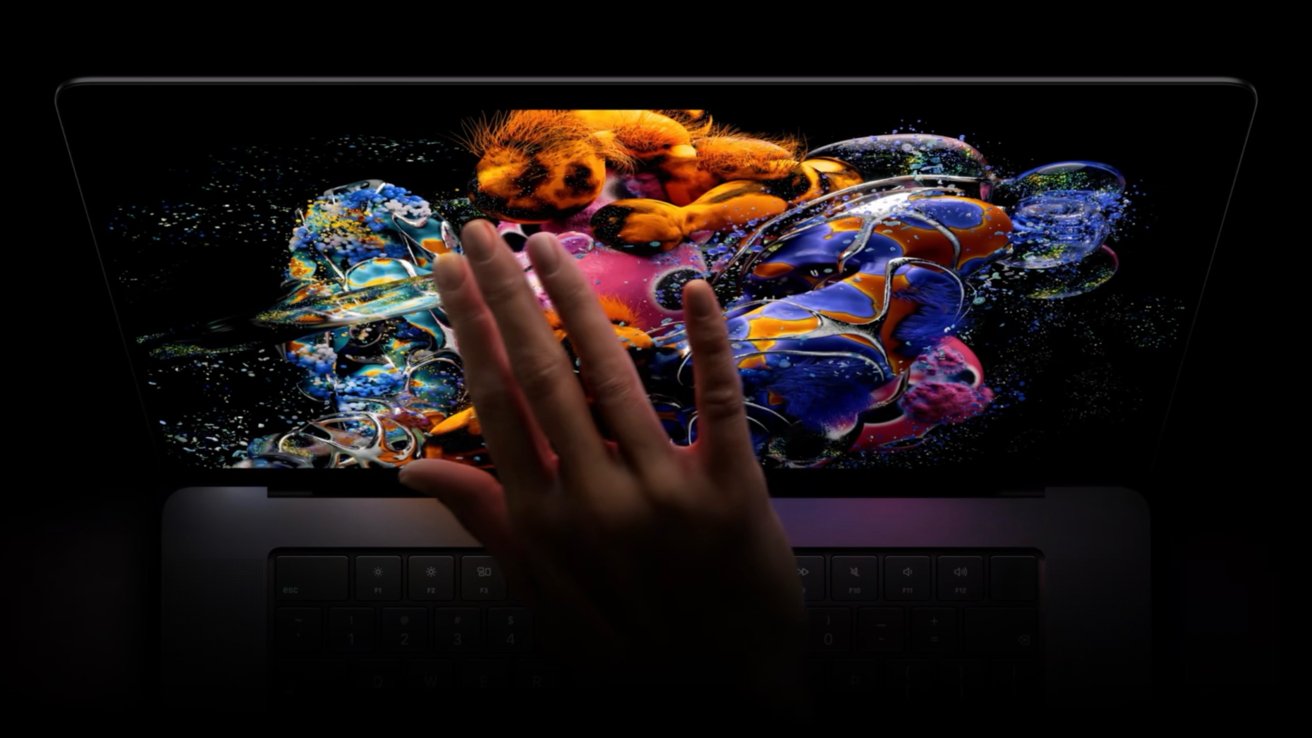
From keyboard-first computing to a new premium interface
Apple introduced the first touchscreen MacBook Pro models in late October 2026, in 14-inch and 16-inch sizes, with the PROLED XDR display and M5 Pro or M5 Max processors. Gurman’s account suggests the company is preparing a second generation of touch-enabled MacBook Pro for 2027. The reported direction is not a simple refresh: traditional high-end non-touch versions may gradually give way, leaving the 14-inch entry model as the remaining conventional option.
What is still available today
Non-touch M5 Pro and M5 Max MacBook Pro models have not disappeared. They continue in parallel with new touch models. This overlap gives professional users who do not need touch a lower-priced choice and slows the pace at which Apple’s laptop pricing can move upward. For now, the choice is not a clean either/or; it is a temporary bridge between an established MacBook design and a newer touch-focused design.
The reported 2027 lineup
Based on Gurman’s reporting, the 2027 transition could separate MacBook Pro into two tiers with different roles. The reported split is:
- Entry-level 14-inch MacBook Pro: expected to move to M7 and a thinner body, but still without touch.
- High-end MacBook Pro: expected to use M7 Pro or M7 Max, keep touch as a defining feature, and add stronger AI-related capabilities.
- Display direction: high-end models may continue moving toward OLED-level premium display expectations, while touch becomes the clearest visible difference.
Price is the real dividing line
Price appears more likely to shape consumer reaction than the touchscreen itself. The new touch MacBook Pro starts at 2899 dollars, written as $2,899, for the 14-inch M5 Pro version, while the 16-inch touch version starts at 3399 dollars, or $3,399. Traditional non-touch high-end models remain lower priced. Apple also continues an entry-level 14-inch MacBook Pro at 1999 dollars, $1,999, powered by M6. That model lacks touch but offers more performance than MacBook Air, richer ports and a higher-spec display.
| Reference model | Touch | Processor or note | Reported price anchor |
|---|---|---|---|
| Touch 14-inch | Yes | M5 Pro | 2899 dollars |
| Touch 16-inch | Yes | Touch lineup note | 3399 dollars |
| Entry 14-inch | No | M6 | 1999 dollars |
| Upgrade gap | — | Entry to touch premium | about $900 |
If prices stay roughly at current levels, moving from the entry-level 14-inch MacBook Pro to the lowest-priced touch premium model could cost about $900, or about 900 dollars. For a user who does not value touch, that is a large premium.
Why Apple may keep two levels
Apple has previously kept older-generation or non-touch configurations alive when new premium products raise prices. The pattern is not nostalgia; it is market coverage. A lower-priced conventional model can serve students, offices, developers who prefer keyboard and trackpad workflows, and buyers who treat a laptop as a long-term tool rather than a novelty interface. A touch-focused premium model can serve creators and developers who want a different interaction layer, a higher-end panel, and stronger AI-related capabilities.
The Mac and iPad boundary
The MacBook story also touches a longer-running Apple design question: how much should Mac and iPad share? Apple has historically kept interaction modes separate, with iPad leaning toward touch and Mac relying on keyboard, mouse and trackpad. Gurman’s reporting suggests that separation is being re-evaluated as touch display technology matures and as users become more comfortable expecting similar gestures across devices. The reported change does not erase the Mac or iPad category; it narrows one of their visible differences.
Common misconceptions before the plan is confirmed
- Myth: Every MacBook Pro will become a touchscreen in 2027. What the report says: The 14-inch entry model may remain non-touch, while high-end models move toward touch.
- Myth: Touch will replace keyboard and trackpad workflows. What the report says: It adds an interaction option; the reported plans still describe conventional input for entry models and premium touch features for higher tiers.
- Myth: This is Apple’s official announcement. What the report says: The 2027 details are based on Bloomberg reporting from Power On by Mark Gurman and could change.
- Myth: Price alone proves value. What the report says: Buyers who do not need touch may face about $900 extra to reach the cheapest reported touch premium tier, so use case matters more than the feature label.
Action checklist for readers
- Before replacing a current machine, decide whether touch is a daily convenience or a workflow requirement.
- Compare entry-level 14-inch and 16-inch options by screen size, ports, display quality, performance and price, not by the touch label alone.
- For buyers watching 2027, note three signals: Apple’s official wording, final M7 or M7 Pro or M7 Max configurations, and whether the $1,999 to $2,899 gap remains.
- For teams and organizations, preserve a non-touch evaluation path until the product plan is confirmed, because the reported entry 14-inch model would still use traditional interaction.
Frequently asked questions
Which MacBook Pro models already have touch?
The models introduced in late October 2026 include 14-inch and 16-inch options with PROLED XDR and M5 Pro or M5 Max processors.
What is expected in 2027?
According to Gurman, Apple may launch second generation touch-enabled MacBook Pro models and phase out high-end non-touch variants, while a 14-inch entry model may remain non-touch.
Which chip may appear in the 2027 entry model?
The reported entry model would use M7, while high-end models would use M7 Pro or M7 Max.
Why does the price gap matter?
Current reference prices are $2,899 for the 14-inch touch M5 Pro model, $3,399 for the 16-inch touch model, and $1,999 for the M6 entry model. If those levels persist, the upgrade could require about $900.
Does this make the Mac like an iPad?
It narrows the interaction gap between Mac and iPad, but the reported plans do not say one device replaces the other.
Is the 2027 plan confirmed?
No. It is a reported product direction from Bloomberg’s Power On, and timing, chip choices and prices may change.
The bigger picture
Apple has taken the first step by putting touch into the MacBook Pro lineup. The more revealing question is not whether the first step happened, but whether the company can turn touch into a premium reason to move up without pricing out users who buy MacBook Pro for stability, ports, keyboard precision and long-term value. If the 2027 report holds, the lineup may become a clearer two-part market: a conventional entry point and a touch-forward premium branch.