
MyTechDailyNews Playbook: Buy the MacBook Neo Now, or Wait for the 2027 A19 Model?
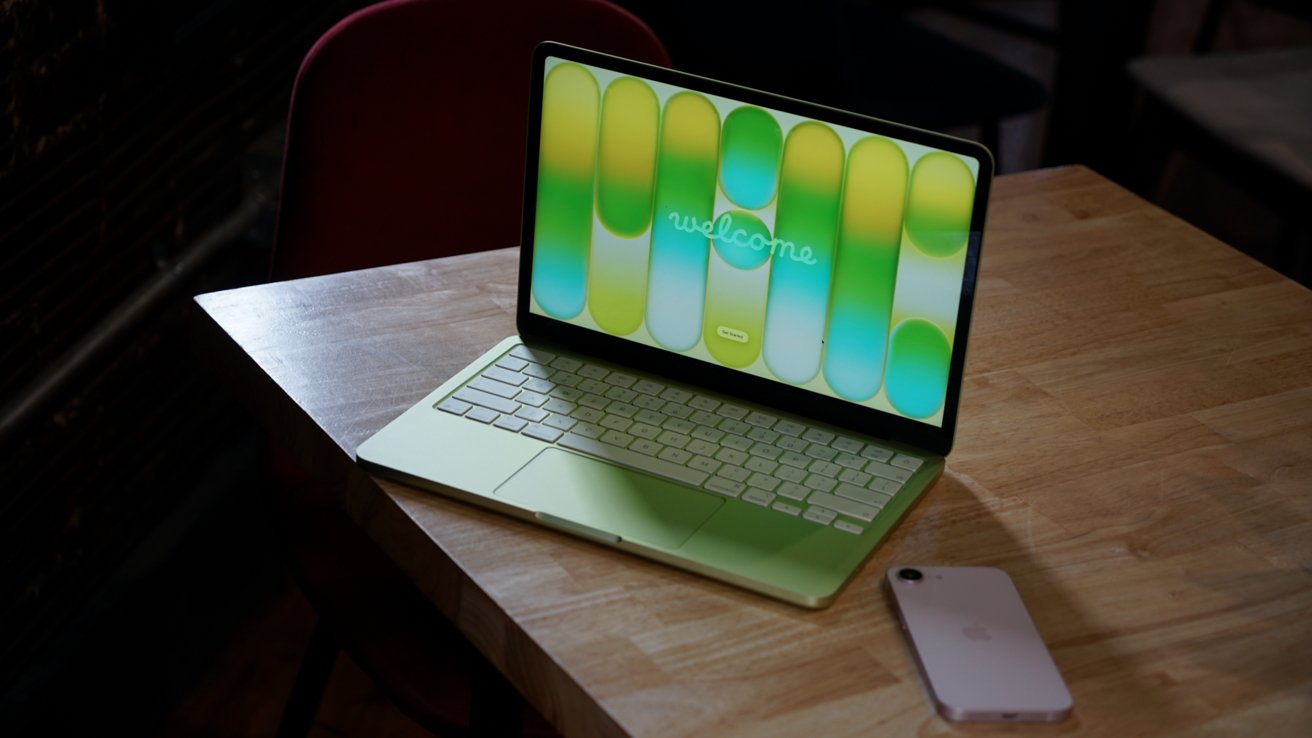
Short answer: buy it now if you need a working laptop this year. The first-generation MacBook Neo starts at $599 in the United States and $499 for education users, runs an A18 Pro chip borrowed from the iPhone line, and is the least expensive entry into Mac that Apple has ever offered. Waiting for the second generation makes sense only if your workload genuinely needs 12GB of memory instead of 8GB. Below is the decision table, the buying checklist, and the traps that trip up first-time Mac owners.
What did Apple's supply chain actually forecast?
The forecast itself is the clearest signal: Taiwan-based tech outlet DigiTimes reported that material Apple shared with its supply chain puts first-generation shipments at about 8 million units in 2026, while the target for the second generation in 2027 was lifted to 16 million units. A product line that begins as a budget sidekick and ends up carrying a six-figure-per-week sales quota has clearly stopped being a side experiment.
Read those two numbers as a rhythm change, not a straight doubling. The first MacBook Neo launched in early March 2026, so the 2026 figure of roughly 8 million units covers only about 10 months on the market, while the 16 million target corresponds to a full calendar year in 2027. On a month-by-month basis — and this is our own arithmetic on the same figures, not a published statistic — the implied run rate moves from roughly 800,000 units a month to about 1.3 million, closer to a two-thirds gain than a clean 2x. That is still aggressive, but it does not mean every dealer shelf will suddenly hold twice as many laptops.
Why does a $599 laptop move so many units?
Three levers explain it, and each one also tells you something about whether this machine fits you.
Price is the first lever. Apple's own newsroom announcement of the product confirms the $599 starting price and the $499 education tier, which pushed this laptop under every other MacBook in the lineup. Apple's former chief executive Tim Cook said the market response exceeded the company's expectations and produced the strongest debut sales record among buyers purchasing a Mac for the first time. Demand outran what the company had planned: in May of this year Apple raised the production target for the first generation from the original 5 million to 6 million units to about 10 million units.
The chip swap is the second lever. Instead of the M-series silicon used in traditional MacBook models, the Neo ships with the A18 Pro, a processor that came from iPhone. Porting iPhone silicon into a laptop is what let Apple cut the hardware cost of an entry machine without cutting the aluminium body or the display. Market research firm IDC found that MacBook Neo helped Apple keep shipping momentum while the global PC market slowed overall: Apple's global PC shipments in the second quarter rose 13% year on year, a result IDC and other watchers attribute partly to this entry-level notebook.
Colour and identity are the third lever. The launch palette — silver, blush, citrus and indigo — is the visible reason this machine reads differently from a corporate laptop, and it matters in segment purchases. As one concrete example of that third lever, Sina Finance reported on 3 November that Apple disclosed on its fiscal fourth-quarter 2026 earnings call that 170,000 MacBook Neo units had already been delivered to teachers and students in the Philippines, one of the largest institutional education orders the Mac line has seen.
Should you buy, or wait for generation two?
The honest answer depends on your workload, because the second generation is aimed squarely at the one specification the first generation is weakest on.
| Your situation | Verdict | Why |
|---|---|---|
| Student or first Mac, mostly browser, docs, streaming, light photo work | Buy now | $499 education pricing and A18 Pro performance already cover this workload; waiting costs you a school year of use. |
| Twenty-plus tabs, containers, VMs, heavy video or large spreadsheets | Wait, or step up | The first generation is capped at 8GB of memory. The second generation is expected in the first half of 2027 with A19 and 12GB. |
| You want fingerprint unlock | Buy, but skip the base model | Reviews from Tom's Guide and Wired note that Touch ID only appears on the 512GB tier, priced at $699. |
| You regularly attach external displays and fast storage | Compare against MacBook Air first | Apple's layering puts the A-series on price-sensitive buyers and reserves the M-series for performance and professional work. |
| You are switching from Windows | Buy, after an app audit | The price barrier is gone, but peripheral and software compatibility on the Windows side still needs checking before you commit. |
A six-step checklist for getting one at the best price
- Test your education eligibility before anything else. The $100 gap between $599 and $499 is the single biggest discount most buyers can access, and it applies to enrolled students and staff rather than to seasonal promotions.
- Decide on storage before you look at colour. The 256GB model is the headline price; the 512GB model is where Touch ID lives. Buying the wrong tier to save $100 usually costs more in convenience over three years of use.
- Compare delivery quotes across channels instead of assuming Apple.com is fastest. 9to5Mac reported on 7 April that Apple was quoting two to three weeks for all configurations while some retailers sat at three to four weeks in most metro areas; iDropNews reported on 17 April that Best Buy and Target were showing dates one to two weeks out.
- Watch the promised date, not the in-stock badge. Yahoo Finance wrote on 20 April that orders placed that day were being quoted delivery between 1 and 8 May, i.e. the whole of April inventory had effectively been sold forward.
- Buy the two accessories the laptop does not solve for you. A USB-C hub with display output and a decent charger cable are the usual gaps on a two-port machine, and ordering them in the same window avoids a second delivery wait.
- Plan the migration before the box arrives. Move passwords, browser profiles and any Windows-only files onto a cloud account or external drive, then set up the new machine on day one rather than over a weekend panic.
Five mistakes first-time buyers keep making
- Assuming the base model has fingerprint login. It does not; Touch ID is tied to the higher storage tier, a detail that surprise-reviews flag more often than any other.
- Not knowing the keyboard has no backlighting. Mashable's hands-on comparison against the MacBook Air M5 singled out the missing backlight and the Air's Force Touch trackpad as the visible cost of the lower price.
- Reading "A18 Pro" as "almost an M-series". Apple's product layering is deliberate: the A-series covers price-sensitive buyers, the M-series carries performance, professional applications and high-end experience. Same brand, different job.
- Waiting indefinitely for a second generation that may not arrive when expected. Supply reports push the timeline both directions, so a "I'll just wait" decision can leave you without a laptop for months.
- Treating a supply-chain forecast as a promise. The 16 million figure is a target reported by DigiTimes, not an official sales goal published by Apple, and it says nothing about stock availability in your region.
How the A18 Pro bottleneck reshapes the wait-vs-buy math
This is the piece most coverage leaves out, and it changes the practical advice. AppleInsider reported in early April that the A18 Pro parts inside the notebook are previously produced, binned chips that are no longer being manufactured, which caps how much supply Apple can add no matter how many units it wants to build. Macworld argued from the same constraint that Apple may bring the follow-up model forward — as early as late autumn 2026 or January 2027 — rather than holding to the first-half-of-2027 slot described in the supply-chain briefing.
Two implications follow. If you need a laptop in the next few months, do not hold out for a second-generation reveal that is being driven by parts availability rather than by a product roadmap you can predict. And if you are hunting a deep discount on the first generation, our analysis is that a chip-constrained supply pool is not the environment in which retailers cut hard: scarcity has historically protected this model's price rather than eroding it.
Frequently asked questions
Is the MacBook Neo really the cheapest MacBook Apple has made?
Yes. The $599 starting price and the $499 education price confirm it as Apple's most affordable notebook, achieved by using the A18 Pro chip from iPhone rather than an M-series part.
Did Apple confirm the 16 million unit target?
No. That number comes from supply-chain material reported by DigiTimes, covering the second generation for 2027. It is a forecast, not an announced company goal.
What is actually new in the second generation?
Supply-chain reports point to an A19 processor and memory raised to 12GB from the current 8GB, plus additional body colours, with a launch window in the first half of 2027.
Will a first-generation Neo be upgradable to 12GB later?
No. The memory is unified and fixed at build time, which is exactly why the 8GB ceiling is the main reason to consider waiting or paying more for a different model.
Is the MacBook Air a safer buy than the Neo?
For heavier workloads, yes — the Air sits above the Neo in Apple's performance tier. For first-time buyers whose ceiling is a budget, the Neo is the cheaper way into the ecosystem.
Key takeaways
- Check education pricing and storage tier before you compare colours; those two choices decide the real price you pay.
- Read delivery dates at checkout, not availability labels — April reports showed quotes sliding into May.
- Buy now for study and everyday work; wait only if 8GB is a genuine blocker for you.
- Treat the 2026 and 2027 shipment figures as reporting, not as a guarantee of stock or of a product launch date.
Reference sources
- DigiTimes, reporting on Apple supply-chain material for 2026 and 2027 shipment targets.
- Apple Newsroom, "Say hello to MacBook Neo" — https://www.apple.com/newsroom/2026/03/say-hello-to-macbook-neo/
- IDC global PC shipment data for the second quarter (as cited in the original report).
- 9to5Mac, 7 April 2026, on MacBook Neo delivery windows — https://9to5mac.com/2026/04/07/macbook-neo-facing-3-week-delays-at-apple-heres-how-to-buy-one-sooner/
- AppleInsider, 7 April 2026, on the limited A18 Pro parts pool — https://appleinsider.com/articles/26/04/07/incredible-macbook-neo-demand-may-finish-off-apples-a18-pro-stock
- Macworld, 8 April 2026, on an earlier MacBook Neo 2 window — https://www.macworld.com/article/3108728/why-the-macbook-neo-2-may-arrive-sooner-than-expected.html
- Yahoo Finance, 20 April 2026, on April inventory selling out — https://finance.yahoo.com/markets/stocks/articles/macbook-neo-demand-strong-apple-164813845.html
- Sina Finance, 3 November 2026, on the Philippines education order — https://finance.sina.cn/tech/2026-11-03/detail-inixmnqf8816069.d.html
- Tom's Guide and Wired reviews on Touch ID and the $699 tier.
Compiled by Sarah Chen, technology editor at MyTechDailyNews. Spotted an error or have a story tip for our General desk? Write to hello@techdaily.com and we will follow up.