
Apple's J595 Home Robot, Explained for Real Buyers: Timelines, Price Traps and a 10-Point Checklist
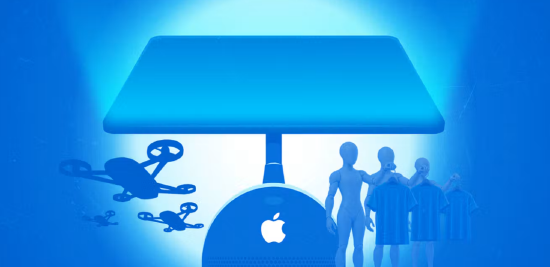
A round screen on a jointed arm that swivels to follow you from room to room: the consumer robot Apple began building in 2019 has been compared inside the company to the desk lamp from a Pixar film. It carries the internal code name J595, it is meant to be sold on the open market, and after nearly a decade of work it still does not have a date anyone will commit to.
John Ternus, Apple's new CEO, has told people around the project that he wants the robotics business pursued in earnest. Judging by how the first retail device is progressing, that ambition is going to be tested. This MyTechDailyNews guide turns the reporting into something you can actually use: what the machine is today, why the software is the bottleneck, how firm the roughly $1,000 price really is, who is racing Apple into the living room, and a checklist you can reuse before paying for any home robot.
What the machine is — and what it is not
On paper, the current design is a smart display that can move. It pairs a 9-inch screen with an articulated arm, plus cameras and an array of sensors that let it read a room and act on what it sees: when someone walks in, it can switch on the lights; it will even try to shoo a cat off a table, and it has obstacle avoidance baked in so it does not knock over furniture.
That is the ambition. The shipping plan is much smaller. According to people who worked on J595, most of the hardware design was frozen about two years ago, yet the software team never caught up with it. The hardware group pushed to speed the cadence and release the product; the software group argued for holding it back. Over the past year the software side has been steadily cutting the feature list, narrowing the core experience to FaceTime calls and simple home-automation chores such as turning lights on.
| Question readers ask | What the reporting says | Why it matters to you |
|---|---|---|
| What does it look like? | 9-inch screen on a movable arm, Pixar-lamp silhouette | A furniture-class object, not a walking humanoid |
| What ships on day one? | FaceTime plus basic automation like lights, after a year of feature cuts | Advanced agent features are deferred, not delivered |
| How much? | Planned at about $1,000, and component pricing could push it higher | Treat the number as a floor, not a promise |
| What will it be called? | Several former employees say it may be Home View Ultra, extending the Home View family | Naming signals positioning next to the fixed desktop device |
| When? | Apple originally hoped for next year; it could slip to 2028. The hardware team first wanted it out this year | A two-year spread is the honest planning window |
A decade of handovers in five beats
The earliest prototype was finished in 2018. The following year, Tim Cook watched a demo and authorised the project to continue, and 2019 became the formal start date. That first machine was bigger than today's plan; engineers joked that it looked like an iPad stuck on a stick.
Ownership moved constantly. The hardware team was led by Matthew Costello, who previously ran Beats, the headphone brand Apple bought in 2014. Software went to the Apple Special Projects Group, the same unit then driving Titan, the car programme. For a long stretch the veteran iPod-era engineer Brian Lynch ran both the car cockpit and J595 at once, because he pictured the robot living not only in a home but also on the dashboard of an Apple car.
In 2021 the Special Projects Group changed hands: Doug Field left for Ford, and Kevin Lynch took over, famous inside Apple for building the health tracking that rescued the Apple Watch. His attention stayed on the car, and robotics was largely run by Chris Sali, who had previously led Apple Watch software. Many leads juggled several programmes at once, which is one reason the project took nearly a decade.
Even early on, team members understood that a machine at this price could not be a fancy FaceTime terminal. After ChatGPT arrived in 2022 and set off the AI rush, the group started bolting on AI capability and building more complex experiences, and it wanted a large share of that work to be proactive, agent-style intelligence that let the device act on its own. A dedicated agent-AI research branch was created under Vladan Kortun, who had led AI work at Intel before joining Apple in 2021.
When the car was cancelled in 2024, Lynch swung his full weight behind the home robot and much of the former automotive staff was reassigned to it. Three people close to the project said staff who had been on robotics longer were disappointed by his management style, describing him as rarely communicating or taking input from the front line. His answer was to lower the first generation's expectations: ship a base version, then add capability through updates, exactly the route taken with the original Apple Watch, which launched in 2015 and only gained the health and fitness sensors that made it a hit later on.
Why the AI layer kept slipping
Apple is superb at annual refreshes of the iPhone and the Mac. It is far less comfortable inventing a category from zero, and its default tempo is gentle. The Vision Pro headset was refined for roughly eight years before launching two years ago to lacklustre sales; if J595 reaches shelves next year, its gestation will have taken about the same length of time.
The AI gap is the sharper problem. Apple's in-house models trail rivals, so the team was cleared to reach outside, using available third-party systems including open-source models and a model licensed from Google. A tie-up with Siri was planned for later, but early on the two groups were separate, and the Siri team was already strained by its own rebuild, which has stretched over several years. Even with new AI features released this year, Apple remains behind rivals on AI agents, trailing Meta's Muse and OpenAI's Dots. Reporting from Bloomberg by Mark Gurman in October described J595 as a higher-end Home View with a roughly 9-inch screen on a motorised arm, targeted at 2027 or 2028, which lines up with the same uncertainty.
The Ternus effect: leaner teams, faster landings
Before he was CEO, Ternus ran hardware and was sceptical of many speculative programmes, including the aborted car and the Vision Pro headset. Yet three people familiar with the robot work said he holds higher expectations for Apple in robotics than he did for those projects. Last year the reporting line for Kevin Lynch and the Special Projects Group moved from senior vice-president John Giannandrea, who once oversaw Apple's AI efforts and left earlier this year, directly to Ternus.
Apple confirmed in April that Ternus would take over as CEO within the year, taking the seat in September. Even while preparing the handover, he reportedly attended nearly every J595 and other robotics demo and planning session. His company-wide playbook is simple: trim teams, land products sooner.
The maths shows why that is hard. Robotics staffing stays small; people who have seen the org charts estimate the number of genuine robotics specialists at about 10, while Lynch's software group totals roughly 300 people, with around 30 of them in research. Attrition is draining the founding cohort: Brian Lynch, the hardware lead, moved to the fitness hardware maker Oura, and Jian Zhang, the robot research lead, jumped to Meta. Team members are already arguing about a second generation, planning to restore functions cut from the first one.
The launch wave that came ahead of the robot
Cook staggered several product introductions so they would land around Ternus's September start. What followed was Home View, a fixed desktop device that shipped last month, then the folding iPhone Duo and a touch-screen MacBook. Reviews were mixed: the $2,899 MacBook was attacked for its price, the Duo generated buzz but also repeated complaints about cracked screens, and Home View was dismissed by critics as an oversized Apple Watch that leans on a Siri that still underdelivers.
Two numbers from that launch are useful context. Home View went on sale at $299, according to CNET's hands-on coverage, positioning it as an accessory rather than a hub — which makes the robot's roughly $1,000 target a very different ask. And Home View's debut did not include every market: reporting around launch noted that availability was tied to where Apple's upgraded assistant could be offered, a reminder that the robot's automation story inherits Siri's regional and schedule problems.
Who else is selling the same promise
Ternus inherits a crowded field. A year ago OpenAI bought the hardware start-up co-founded by Jony Ive, Apple's former chief design officer; Ive has since been building an AI hardware line for OpenAI full time, and OpenAI has also hired more than 400 Apple engineers for related work. OpenAI is expected next year to ship a donut-shaped smart speaker with a moving body and a camera that senses the user and the room, and in a CNBC interview Ive said the company would reveal its device within two years or less.
Meta keeps pushing hardware too, from AI glasses to VR headsets, and some of its programmes go from concept to shipping abnormally fast: its Charm pocket AI device reportedly took less than a year and is expected to start shipping in December. Tesla is developing the Optimus humanoid, which Elon Musk says will help with housework. Start-ups are crowding in: 1X originally planned to put a humanoid in homes this year, and its Neo, unveiled last year, went viral in clips of it washing dishes and folding clothes. Worth noting for price comparison: 1X's own product page lists Neo at $20,000 for early access or $499 a month, so Apple's roughly $1,000 arm-mounted display sits in a completely different category.
Apple's own bench is broader than one robot. Under Kevin Lynch the team has also explored a wheeled follower robot and an indoor flying robot, and there is a separate project for machines that do one specific chore, such as folding laundry. Narrow, single-task robots are far easier to build than a general humanoid that must handle whatever a household throws at it. Meeting records reviewed by Ternus indicate he is most interested in exactly that chore-specific direction.
One former engineer who worked on J595 summed up the mood bluntly: Apple has been "torn apart trying to catch the AI wave."
Checklist: ten checks before you spend on a home robot
- Ask what ships on day one, not what a demo showed. J595's own scope narrowed from proactive agents to FaceTime and lights.
- Find out who controls the schedule. When a hardware team wants to launch this year and a software team wants to wait, buyers inherit the gap.
- Confirm whether intelligence runs on-device or through outside models. Third-party open-source or licensed models change what leaves your home.
- Test the assistant dependency. A robot that rides on a voice assistant still being rebuilt will feel dull in the first version.
- Read component costs, not just the sticker. Memory prices rose 40-50% in one quarter after a roughly 50% surge the year before, according to Counterpoint analysts cited by Reuters — that is how a planned $1,000 becomes a higher $1,000.
- Compare the ladder honestly: $299 for Home View, roughly $1,000 for J595, $20,000 for 1X's Neo humanoid.
- Check regional availability. A device that skips markets because its AI features are not cleared there is not a global purchase.
- Ask whether a human is involved. Early Neo units learn chores with teleoperation assistance, which reframes what "autonomous" means.
- Look for the roadmap in the cuts. Features deleted from generation one are already being discussed for generation two.
- Watch the talent pipeline. Roles around robotics experts, in Apple's case counted in the single digits, predict how fast software can mature.
Four misconceptions worth dropping
- "J595 is a humanoid." It is not: it is a screen with an arm, closer to a smart display that can turn, while Tesla's Optimus and 1X's Neo handle the walking category.
- "The delay is a hardware problem." Most hardware was locked about two years ago. The squeeze is software, AI models and product scope.
- "The price is final." Apple's plan is roughly $1,000, but component markets could lift the actual figure.
- "Waiting is risk-free." Team members themselves worry that the longer Apple waits, the higher expectations climb as industry AI capability improves — while Home View's cool reception shows what a muted launch looks like.
FAQ: what readers keep asking us
When will Apple's robot actually appear?
Apple originally wanted next year. The realistic band runs to 2028, since the hardware team's initial plan was a launch this year and the software side has argued for delay.
Will it be called Home View Ultra?
Several former employees expect that name, keeping it inside the Home View family created by the fixed desktop device Apple released last month.
What can the first model realistically do?
FaceTime and simple home automation such as switching on lights, after a year of trimming. Ambitious agent features are being pushed to later updates or the next generation.
Is roughly $1,000 good value right now?
Only if you already live inside the ecosystem and want a moving family display. If you want chores done, a dedicated appliance or a humanoid on a rental plan covers more ground for different budgets.
Why does Siri matter to a robot?
Because the robot's automation layer is planned to plug into it. Siri's multi-year rebuild, and Home View's dependence on it, are the reason reviewers describe the device as an oversized Apple Watch rather than a home hub.
Is Apple really serious about robotics?
The interest is now coming from the CEO directly, with Ternus attending demos and planning meetings and pushing leaner teams and faster launches. The constraint is depth: about 10 robotics specialists against roughly 300 software staff, with the research slice at around 30 people.
Action advice: what to do in the next two quarters
If you are a household buyer
Do not budget for the robot yet. Buy the appliance that solves your actual problem today, and treat J595 as a 2027-or-later decision. Re-check three things before ordering: the launch feature list, whether AI runs locally, and which countries it will ship in.
If you run products or marketing
Steal the useful lesson and avoid the trap. Apple's phased plan — base version first, upgrades later — is the same move that saved the Apple Watch, and it works when the first version still earns its price. Where it fails is when a frozen hardware platform waits years for software, as most J595 hardware has been waiting since roughly two years ago.
If you are tracking the sector
Watch three tells: whether Apple names the device officially, whether the ~$1,000 number survives the component cycle, and whether chore-specific robots and flying or wheeled companions graduate from demos to product pages. Each of those converts a story into a shippable category.
None of this needs a robotics degree to follow. A screen that turns toward you, an arm that learned to fetch the room's light switch, and a decade of handovers are enough to show how hard new categories are even for the most valuable company in the world. We will keep the running tally at MyTechDailyNews as soon as Apple says the next word.