
iPhone Duo's First Week: Inner-Screen Cracks, a Green Line on the Outer Panel, and What Buyers Should Do
A folding phone is usually judged in the first seven days, not at the launch event, and that is precisely the window Apple's first foldable has just entered. Barely one week after the iPhone Duo reached customers, owner posts began describing the same failure along the crease of the inner display — and today the conversation moved to a part of the phone that many buyers quietly assumed was the low-risk half: the outside screen.

The pattern that keeps repeating in owner posts
Put the reports next to each other and a shape becomes visible. The common thread is the moving part. Think of the crease as the seam of a jacket: it is the spot that takes the stress every single time the garment is opened, so it is the first place a weak stitch shows. On the iPhone Duo that seam is the hinge region of the inner panel, and it is where cracks are being spotted, sometimes together with visible display abnormalities on that same screen.
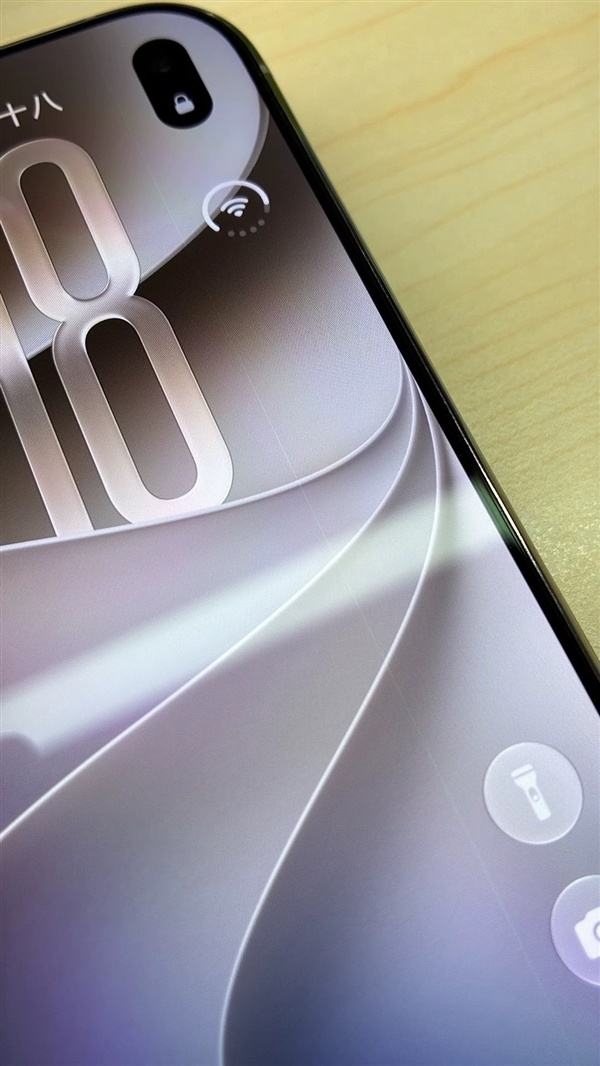
The newest report, filed today, breaks the pattern in one important way. The green line appeared on the outer panel, not the folding one. The owner behind it says the line runs along exactly the zone a short-video app that has not been adapted to the display leaves as a black band, and states clearly that the phone was never dropped and never knocked against anything. On that basis the post is being described as possibly the first case of outer-display damage on the device.
| Reported symptom | Where it shows up | What the record says so far |
|---|---|---|
| Crack at the fold | Inner screen, hinge line | Several owners report it within the first week of sale |
| Display abnormalities | Inner screen | Described by some of the same owners alongside the crack |
| Green line | Outer screen | Owner says no drop and no impact; the line sits where an unadapted short-video app leaves a black band |
Where Apple stands
Previously, Apple published a statement acknowledging that a small number of iPhone Duo units have shown inner-screen problems, and told affected owners to contact AppleCare to arrange a replacement. Two parts of that message matter for anyone scrolling comment threads and getting nervous.
First, the company says the vast majority of units will not be touched by the issue at all, so the reports describe a defect rate rather than a universal condition. Second, Apple says a unit that is going to fail tends to reveal its symptoms inside a short window — which is exactly why the opening week of a folding launch is such a sensitive period to watch, and why today's outer-panel post is getting so much attention.
Why the industry read this week as a reality check
Over the past few days, a commentator summarised a mood many readers probably recognise: the cluster of iPhone Duo stories has punctured some of the automatic assumption that Apple's industrial design, quality control and supply chain management cannot be questioned. That is less a verdict on this one phone than a shift in how the coverage is being received.
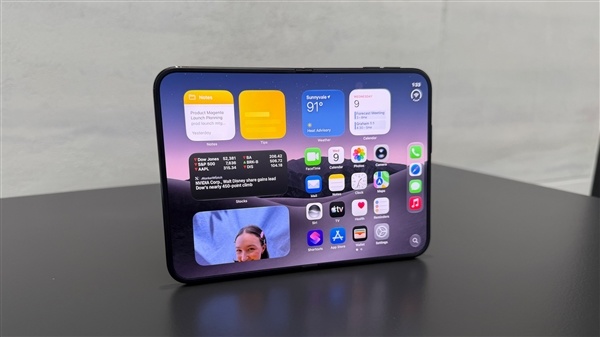
IDC framed the same development in cooler terms, noting that this run of problems shows even a company with Apple's engineering resources and supply chain discipline faces a steep learning curve in folding hardware. The Verge offered the assessment a shopper can actually use: the direction of the iPhone Duo is clear, but the product is not mature and contains a great many compromises — in its words, a first-generation exploration device rather than a finished mainstream product.
Price is part of the argument
Then there is the number on the box. The iPhone Duo opens at a very high price; as the Kuai Keji note in the source coverage points out, the mainland China edition starts at 15,999 yuan. Early-batch reviews conclude that the combined experience and that price do not line up, and that ordinary users are simply not the right audience for this particular unit — a phone that reads more like a technical trial from Apple than a safe default purchase.
The practical position taken in the original coverage is blunt: if you are curious rather than committed, let the second generation do the persuading.
Four misconceptions worth clearing up
- "Every early unit is broken." The company's stated position is the opposite: only a small number of devices are affected, and most units will not show the problem.
- "A coloured line always means I dropped it." The owner who reported the green line today says there was no fall and no impact, which is the whole reason the case stands out.
- "Screen faults stay hidden for years." Apple says a defective machine usually shows its symptoms quickly, not after a long silence.
- "Criticism means the idea failed." Even the doubting coverage credits a clear direction; the repeated objection is maturity, compromises and price — not the concept itself.
If the phone is already in your pocket: a one-minute inspection list
- Open the device fully and look across the fold of the inner screen under a bright light, checking for a crack rather than the normal crease line.
- Cycle through apps that have not been adapted to the display and watch the black-band areas on the outer panel for any coloured stripe.
- Treat the first days as the test window, since that is the period in which a faulty unit is expected to reveal itself.
- If you see anything, go to AppleCare — the replacement route Apple has pointed affected owners toward.
- Decide honestly whether a device starting at 15,999 yuan is the right first attempt at this form factor, or whether the second generation is your real entry point.
FAQ
What exactly is going wrong with the iPhone Duo?
Owner reports describe cracks and display abnormalities at the fold of the inner screen within the first week of sale. A separate report filed today claims a green line on the outer screen, with no drop and no impact behind it.
Has Apple said anything official?
Previously, the company stated it had noticed a small number of affected units and advised owners to contact AppleCare for a replacement, while insisting most devices would not be impacted.
Does this prove folding phones are not ready?
The coverage from the past few days suggests a narrower lesson. IDC points out that even Apple is working through a steep learning curve, and The Verge describes the hardware as a first-generation exploration device: clear direction, immature execution, many compromises.
Should an ordinary buyer wait?
Early feedback says maturity is short, pricing is high, and the fit is better for enthusiasts than for everyday use — so the advice carried in the original reporting is to wait for the second generation.
Is the outer screen as fragile as the inner one?
Today's report raises the question rather than answering it: it is being described as possibly the first case of outer-panel damage, and it was reported on a device the owner says was never dropped.
The takeaway
Here is where things stand: the crease is the weak point that early owners keep pointing at, Apple is routing affected users to AppleCare and insisting the problem is limited to a small number of units, and the outside panel has just added a question nobody had asked yet. None of this is a reason to write off the project — reviewers still call its direction clear — but it is a reason to shop with your eyes open. Watch the fold, watch the black bands, keep the first weeks as your own test window, and if the price tag is the deciding factor, let the second generation earn your money instead.