
MyTechDailyNews Explains: Apple's Nationwide iPhone Duo Inner-Screen Guidance Lands This Week
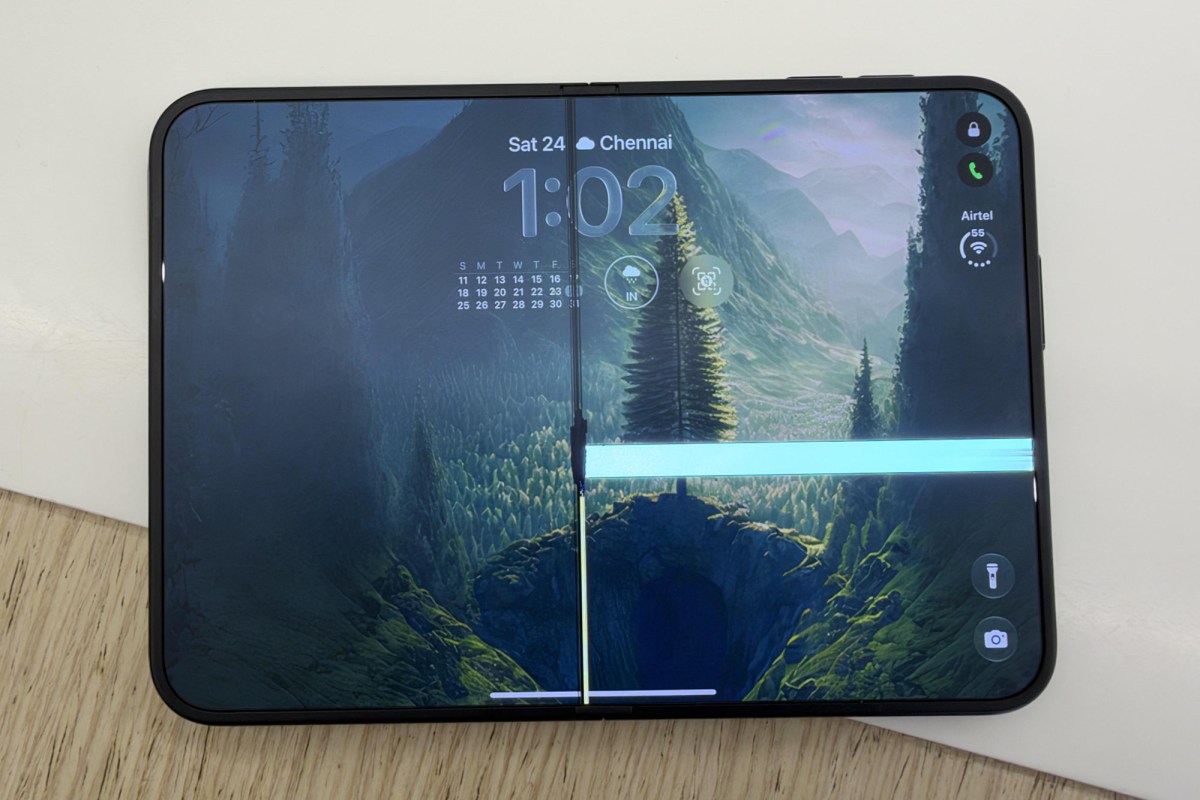
The panel you stare at most is the one that fails in the most visible way — and that is what turns a piece of internal paperwork into consumer news. This week, a dedicated handling guideline made its way to every Apple Store in Apple's nationwide retail network and to third-party authorized service providers, setting a single fixed route for reports of cracked inner screens on the iPhone Duo.
For readers who follow tech headlines rather than service manuals, the interesting part is not the wording of the memo but the change at the counter: instead of case-by-case judgement by whichever technician happens to be on shift, there is now one agreed procedure for detecting the fault, confirming it and deciding what the owner walks away with.
What Apple put in front of its counter teams
The guideline reached downstream channels in full — company retail stores across the nationwide network, and independent authorized repair partners that Apple has licensed to touch its hardware. Two steps sit at its centre.
- Detect and verify under one standard. When a user reports an iPhone Duo inner screen crack, store technicians are required to run a unified, prescribed inspection to confirm the fault, rather than relying on individual experience.
- Then repair, or swap the device. Once the failure is confirmed, the case moves through the standard after-sales route: repair the unit, or hand the customer a brand-new replacement device.
That pairing — a common test followed by a common remedy — is what the memo is really about. It converts scattered customer complaints into one repeatable workflow that thousands of staff are expected to execute the same way.
The public line, restated inside the memo
Internally, Apple has not changed its story. The guidance repeats the position the company had already put out publicly: previously it stressed, and currently it still stresses, that only a very small number of iPhone Duo units show inner-screen cracking, and that the problem has not spread widely.
Apple's earlier public response went further. The first batch of users, it said, has given generally positive feedback on the iPhone Duo overall, and developers have been updating their apps quickly to suit the product's unique new form factor, with a number of eye-catching results along the way. At the same time, the company acknowledged that a small number of iPhone Duo devices do carry inner-screen faults, and told owners hitting screen-related problems to contact AppleCare directly to apply for a free replacement.
So the memo is best read as alignment rather than reversal: the same facts, the same channel (AppleCare), now enforced with one script across every outlet.
Why a channel-wide memo reads as an external signal
Industry observers take the opposite view of "nothing to see here". A quiet, company-wide operating instruction sent to the entire downstream network carries its own information. If the cracking were confined to a handful of isolated cases, the reasoning goes, there would be little need to issue standardised handling rules to every after-sales outlet in the nationwide service footprint and require all of them to follow one unified line.
The practical translation: the real footprint of iPhone Duo inner-screen cracks has, in their assessment, most likely run past Apple's original expectations. A single-store workaround is an anecdote; a chain-wide script is policy.
Recall, repair programme, and what is still missing as of now
Two questions matter most to an owner holding a cracked device, and Apple has answered only one of them so far.
On recall: the company has stated clearly that there is currently no plan for a whole-device recall tied to the iPhone Duo inner-screen fault. On a published protection scheme: as of now, Apple's official website has not put out a dedicated, public-facing repair and warranty programme for this specific issue. The channel guidance is the working reference; there is nothing yet for customers to enrol in or cite on their own.
The wider lesson for first-generation hardware
The iPhone Duo is Apple's first trial product in its wide-screen, new-form-factor direction, and that context is doing a lot of work here. A completely new shape pushed to market on a compressed schedule tends to expose weak points at the supply-chain quality-control layer, and an inner-screen cluster is exactly the kind of defect that surfaces only once real users start folding and unfolding a device daily.
The risk is not one cracked panel. It is the pattern: if Apple is slow to bring forward a more comprehensive, more sincere protection programme, concentrated quality complaints of this kind can quietly spend down the credit that users extend to the company's innovation experiments in the first place.
Checklist: if your iPhone Duo inner screen is cracked
- Name the fault precisely. Describe it as an iPhone Duo inner-screen crack — that is the exact issue the nationwide guideline covers, and the inspection is built around it.
- Go through the official route. Apple has directed owners with screen-related faults to AppleCare to apply for a free replacement, so start there or at a service counter.
- Expect verification first. Staff must confirm the fault under the standardised check before any remedy is offered; a visual guess at the counter is not the process.
- Ask which outcome applies. The two permitted resolutions after confirmation are repair under the standard after-sales flow, or replacement with a new device.
- Do not assume you need a company store. Third-party authorized service providers received the same instruction, so an authorized partner should follow the same procedure.
- Keep checking the official site. As of now no dedicated public programme is posted, and no recall is planned; anything published later would change what you can point to.
Common misconceptions worth clearing up
| What people assume | What the record so far supports |
|---|---|
| A chain-wide memo must mean a recall is next. | Apple has stated there is currently no whole-device recall plan for the iPhone Duo inner-screen fault. |
| Only an Apple Store can help you. | The guideline was distributed to the nationwide Apple Store network and to third-party authorized service providers. |
| Any screen complaint is fixed on the spot. | A unified inspection and confirmation step comes first; only a verified fault moves to repair or replacement. |
| Free replacement is a brand-new special scheme. | Apple has already been pointing iPhone Duo screen-fault cases to AppleCare for a free replacement; what is new is internal standardisation. As of now, no dedicated public programme is posted on its website. |
| The problem is everywhere. | Apple's position, previously stated and repeated in this memo, is that only a very small number of devices are affected. Industry observers read the unified rollout as a sign the practical scope exceeded early estimates. |
FAQ
What exactly went out this week?
A special operating guideline for handling iPhone Duo inner-screen crack reports, delivered to all Apple Store retail locations in the nationwide network and to third-party authorized service providers, defining standardised inspection, confirmation, repair and device replacement.
Does Apple consider this a widespread defect?
No. Its stated position, unchanged from earlier public comments, is that currently only a very small number of iPhone Duo devices show inner-screen cracking and it has not spread broadly. Independent industry commentary argues the channel-wide standardisation suggests a larger real-world footprint.
Can I get a free replacement?
Apple has told users encountering iPhone Duo screen-related faults to contact AppleCare to apply for a free replacement. At the counter, the confirmed fault is resolved through repair or a new-device swap under the standard after-sales flow.
Is a recall coming?
Not announced. Apple has explicitly said there is currently no plan for a whole-device recall over the inner-screen fault.
Is there an official repair programme page I can cite?
As of now there is not. Apple's website has not published a public-facing dedicated repair protection scheme for this issue.
Why does this matter beyond the affected owners?
Because the iPhone Duo is the first trial product of Apple's wide-screen new form factor. How the company handles a quality problem on a rushed, brand-new shape will shape how much trust users place in its next one.
What we will be watching
Here at MyTechDailyNews, the next datapoint we want is not another internal instruction but a public one: whether Apple publishes a dedicated repair protection programme for the iPhone Duo inner screen, and whether its "very small number" framing survives contact with a standardised, chain-wide repair workflow. For owners, the short version is simpler — the complaint now has a defined path, the path runs through AppleCare or any authorized counter, and the outcome is either a repair or a replacement device. What is still absent as of now is a published promise, and that gap is precisely where trust is won or lost for a first-generation product.